
Introduction
The most useful battery backup sump pump reviews 2026 usa do not talk about one brand. They talk about one job: keeping the sump pump running when the power fails. A main sump pump runs on house power. When a storm knocks out that power, the main pump stops. Water keeps flowing into the pit. That is when a battery backup pump takes over. It runs on a deep-cycle battery and moves water out of the pit until the power returns or help arrives. For homes in flood-prone areas, this second pump is as important as the first.
This guide follows the same simple plan as the rest of our plumbing reviews. It explains why the pump matters, what to look for, the types you can buy, what they cost, how to care for them, and how to stay safe. It answers the questions buyers ask most. Links to trusted home and plumbing sources appear in the text and in the references at the end.
Why a Battery Backup Sump Pump Matters: Battery Backup Sump Pump Reviews 2026 Usa
Sump pumps fail at the worst time. Heavy rain raises the water table. Strong wind knocks down power lines. The two problems arrive together. The main pump needs power to move water. Without power, the pit fills in minutes. Water then seeps across the basement floor. It damages the floor, the walls, and anything stored low.
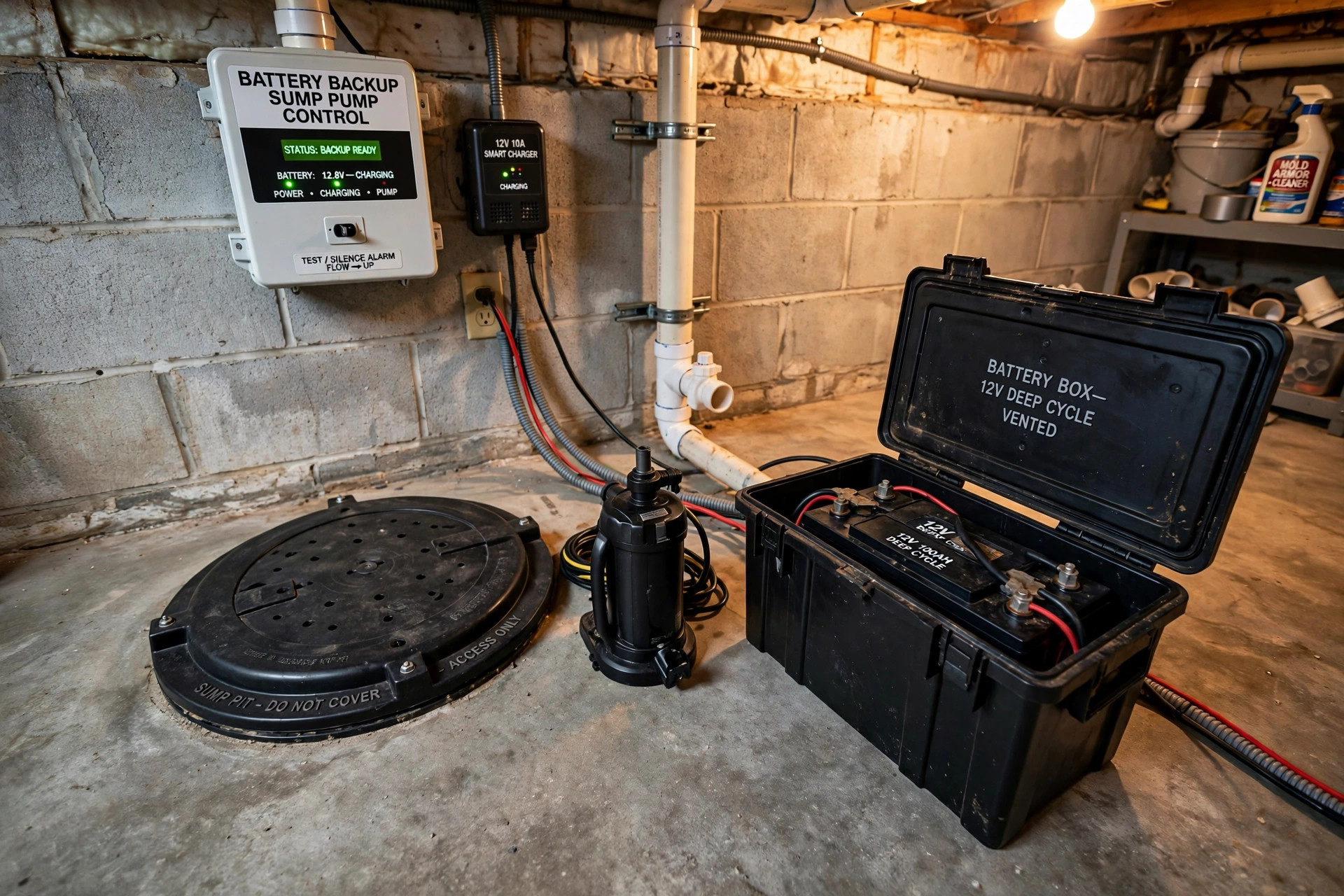
A battery backup pump sits beside the main pump in the same pit. It has its own float switch. When the water rises past a set point and the main pump is silent, the backup float switch turns on. The pump draws power from a 12-volt deep-cycle battery. Most batteries give 6 to 12 hours of steady pumping. That is usually enough to carry the home through an outage.
Insurance figures show that basement water damage is one of the most common claims in the country. A good backup pump costs far less than a cleanup. It also gives the homeowner peace of mind during storm season. For these reasons, many plumbers now recommend a backup pump in every home that has a sump pit. A smart sump pump alarm can add another layer of warning when water rises.
What to Look For When You Read Reviews
Reviews in 2026 point to a few facts that matter more than the brand name. Use them as a checklist.
Pumping capacity. Reviews list capacity in gallons per hour or gallons per minute. A common backup pump moves about 2,000 gallons per hour at a lift of 10 feet. The lift is the height from the pit to the discharge point outside. More capacity gives a wider margin in a heavy storm.
Battery type. Most systems use a 12-volt deep-cycle marine battery. Some new systems use lithium batteries. Deep-cycle lead-acid batteries are cheaper and easy to find. Lithium batteries are lighter and last longer but cost more. Reviews note that the battery, not the pump, is often the weak point.
Charger and monitor. A good system has a smart charger that keeps the battery full without overcharging. Many units also have a small display or lights that show battery health and pump status. Some connect to a phone app for alerts.
Float switch quality. The switch turns the pump on when water rises. Cheap switches stick or fail. Reviews favor systems with a separate, proven float switch rather than one built into the pump body.
Fit and noise. Check that the backup pump fits in the pit next to the main pump. Most pits are 18 inches across, but some are smaller. Also note the noise level if the pump sits under a living room floor.
When shoppers compare units online at large retailers, sites like Home Depot and Lowe’s carry side-by-side ratings that make these facts easy to check.
Types and Options
Battery backup sump pumps come in three main forms.
DC backup pump. This is the common type. It is a 12-volt pump that sits in the pit and runs only on battery power. It needs no house power to work. It pairs with a battery box and charger. This type is simple and has the fewest parts that can fail.
Combination system. A combination unit has an AC main pump and a DC backup pump in one frame. Both share one discharge pipe. These cost more than a separate backup pump. They are a tidy choice when the pit is narrow and two separate pumps will not fit.
AC backup with inverter. A few systems use an inverter that turns battery DC power into AC power for the main pump. This lets the main pump run during an outage. The inverter adds cost and a point of failure. Most reviewers prefer a separate DC pump instead.
There are also high-end systems with dual batteries and wi-fi alerts. They suit homes with a history of flooding. For a dry basement that only floods in rare storms, a basic DC backup pump is enough. Readers who want a full survey of main pumps first can start with our best sump pump for basement reviews usa guide, which covers primary pump types in detail.
Cost and Price
A battery backup sump pump kit in 2026 usually costs between 200 and 600 dollars. The kit normally holds the pump, a float switch, a battery box, and a charger. The battery is often sold apart and costs 100 to 250 dollars more, depending on type. Lead-acid deep-cycle batteries sit at the low end. Lithium batteries sit at the high end.
Professional installation adds 150 to 400 dollars in most markets. The job takes a plumber one to two hours if the pit and discharge pipe are already in place. Homeowners with basic tools often install the pump themselves. The steps are simple: set the pump in the pit, mount the float switch, connect the discharge pipe with a check valve, and wire the battery and charger. Our sump pump installation cost near me article gives price ranges by region.
Running costs are low. The charger draws only a few watts to hold the battery full. The battery needs replacing every 3 to 5 years. That is the main long-term cost. Budget 40 to 60 dollars a year over the life of the system.
Care and Upkeep
A backup pump does nothing most of the year. That is the danger. A pump that never runs can fail silently. Reviewers stress testing the system every three months.
Pull the plug on the main pump or lift its float switch to fake an outage. Pour water into the pit. Watch the backup pump turn on and move water. Check the discharge outside the house to be sure water flows freely. Then plug the main pump back in.
Check the battery water level if it is a flooded lead-acid type. Top it up with distilled water when low. Keep the battery box clean and dry. Look at the charger lights to confirm the battery is holding a full charge. Many chargers show a simple green light for a healthy battery.
Clean the pit once a year. Silt and small stones can jam a pump. While the pit is dry, check the float switch by hand to be sure it moves freely. Replace the battery on schedule even if it still seems to work. An old battery fails fast under load, and the day it fails is the day of the storm.
Guidance from plumbing product makers stresses the same routine. Moen, Delta Faucet, and Kohler publish care guides for home water equipment that follow this test-and-replace cycle, and the hands-on repair pages at Family Handyman walk through pit cleaning step by step.
Safety
Water and power meet at the sump pit, so safety comes first.
Always plug pumps into a ground-fault protected outlet. If the outlet near the pit has no ground-fault protection, have an electrician add it. Keep the battery in its box with the terminals covered. Batteries give off hydrogen gas while charging, so the box should sit in open air, not in a sealed closet.
Never handle the pump or float switch while it is plugged in and the pit holds water. Unplug the unit first. Wear rubber-soled shoes when working around the pit. Keep the discharge pipe clear of ice and debris in winter. A blocked pipe makes the pump work against a closed line and can burn it out.
Water safety rules from the Environmental Protection Agency remind homeowners that floodwater in a basement may carry germs and chemicals. Do not wade into flooded water if the floor is wet and wires are near. Call a professional if the damage is deep. This Old House covers safe basement pump work in its home repair guides.
FAQ
How long will a battery backup sump pump run? Most systems run 6 to 12 hours of steady pumping on a full charge. Real run time depends on battery size and how much water flows in. A large deep-cycle battery lasts longer. In heavy inflow the pump runs more and the battery drains faster.
Can a backup pump replace my main pump? No. The backup pump is smaller and weaker than a main pump. It is built for outages, not for daily duty. Keep a strong main pump for normal rain and let the backup unit stand by for power cuts.
Do I need a backup pump if I have a generator? A generator solves the outage problem only if it starts. Storms knock out power at night when no one is home to start a portable generator. A battery backup pump starts on its own. Many homes with generators still add a backup pump as a second layer.
What size battery should I buy? Buy the largest deep-cycle battery the box and budget allow. A group 27 or group 31 battery is a common choice. Larger batteries hold more charge and pump longer. Do not use a car battery. Car batteries are built for short bursts, not long steady draw, and they fail fast in this job.
How often should I test the system? Test every three months and before storm season. The test takes ten minutes. Pour water in the pit, watch the pump run, and check the discharge outside. Replace the battery every 3 to 5 years on schedule.
Does a backup pump need its own discharge pipe? It can share the main pump’s discharge pipe with a check valve, or it can have its own line. A separate line is more reliable. If the shared pipe clogs, both pumps fail. A separate line gives each pump its own path out of the house. Homes with crawl space sump pumps often use separate lines for the same reason.
A Short Final Word
The best battery backup sump pump reviews 2026 usa agree on a simple point. The value of the pump is not in its brand. It is in its state of readiness. A charged battery, a free float switch, and a clear discharge line are what save a basement. Choose a pump with honest capacity numbers, test it each season, and replace the battery on time. The pump will then do its one job on the worst night of the year.
References
Delta Faucet. (n.d.). Kitchen and bathroom faucets. https://www.deltafaucet.com Family Handyman. (n.d.). DIY home repair and maintenance. https://www.familyhandyman.com Kohler. (n.d.). Bathroom and kitchen fixtures. https://www.kohler.com Lowe’s. (n.d.). Home improvement products. https://www.lowes.com Moen. (n.d.). Faucets and plumbing fixtures. https://www.moen.com The Home Depot. (n.d.). Home improvement products. https://www.homedepot.com This Old House. (n.d.). Home renovation guidance. https://www.thisoldhouse.com U.S. Environmental Protection Agency. (n.d.). Protecting human health and the environment. https://www.epa.gov
Was this guide helpful?

About Robert Taylor
The My Garden US editorial team writes practical, in-depth home and garden guides for American homeowners — tested advice, no fluff.
You May Also Like
Well Pump Replacement Cost Near Me: What Homeowners Should Know
May 9, 2026 0 views
Sulfur Smell in Well Water Filter Solution: A Complete Guide
March 14, 2026 0 views
Polybutylene Pipe Replacement Cost USA: What Homeowners Should Know
April 14, 2026 0 views