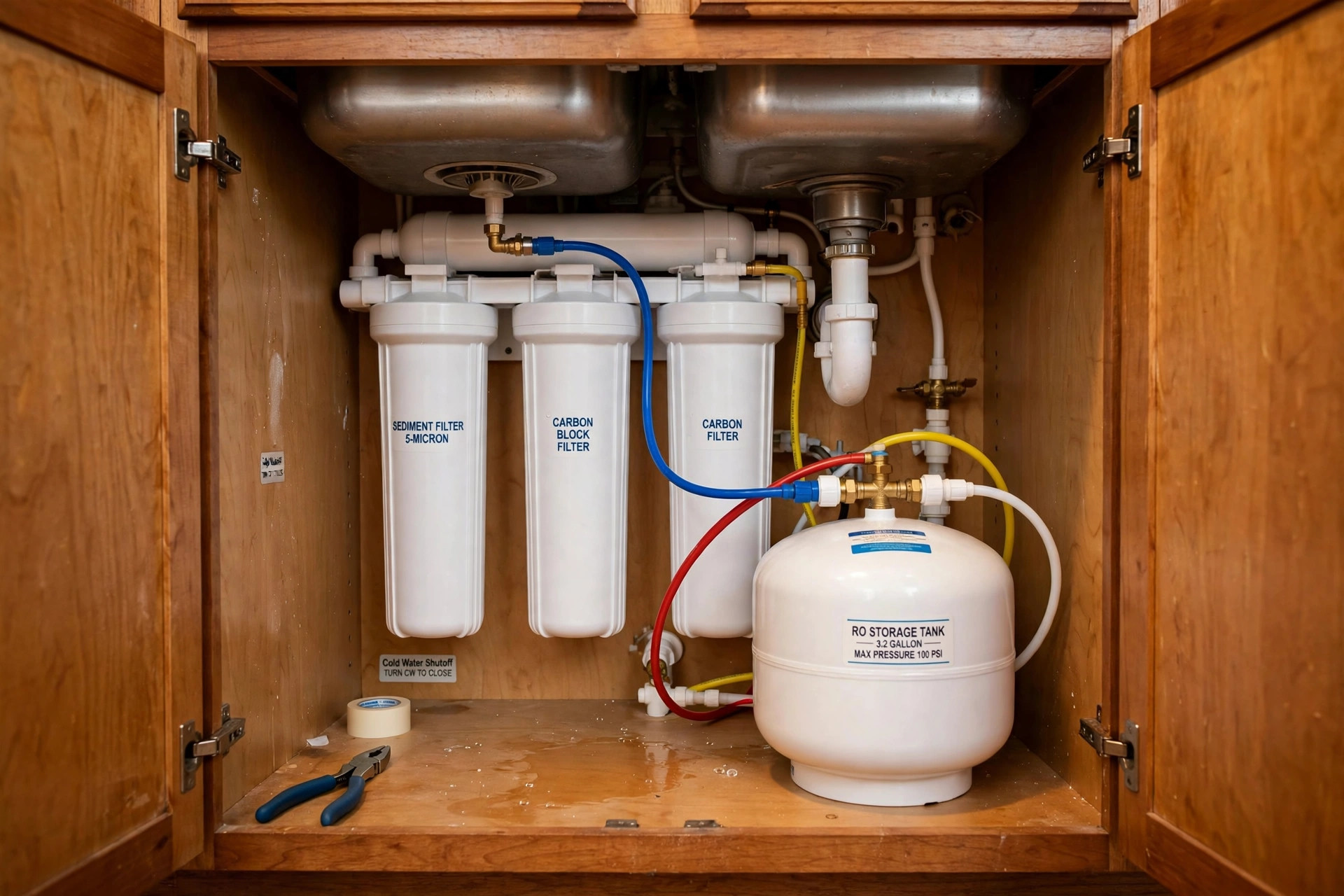

A reverse osmosis system under sink is one of the most reviewed water products in the United States. Shoppers read many pages before they buy. The reverse osmosis system under sink reviews USA homeowners write tell a clear story. Most buyers are happy. They like the taste of their water. They like the low running cost. A few warn about the drain water, the slow flow, and the space the tank takes under the cabinet. This guide gathers the main points from those reviews so a buyer can choose with confidence.
Why American Buyers Choose Reverse Osmosis
Tap water quality varies from city to city. Some homes draw from a city supply. Others draw from a private well. Many buyers say their water tastes of chlorine. Others worry about lead from old pipes or minerals that leave white scale. Reviews across the country repeat the same wish. People want clean drinking water from their own kitchen tap without buying bottled water.
Reverse osmosis removes a wide range of dissolved solids. It takes out most lead, fluoride, nitrates, and many salts. That is why it gets more reviews than any other best under sink water filter 2026 usa option. Buyers who test their water before and after report large drops in total dissolved solids. A reading that was 400 parts per million often falls below 30. For many families, that result alone is worth the price.
The United States Environmental Protection Agency keeps public records on drinking water standards. The EPA site explains which contaminants are regulated and how public systems must test. Homeowners who read those pages often decide to add a final barrier at the kitchen sink. Reverse osmosis is that barrier for many of them.
How an Under-Sink System Works: Reverse Osmosis System under Sink Reviews Usa
The unit hides inside the kitchen cabinet. A cold-water line feeds it. The water passes through three or four stages. A sediment pre-filter catches sand and rust. A carbon pre-filter removes chlorine and taste. Then the water meets the reverse osmosis membrane. The membrane is the heart of the system. Its pores are so fine that only water molecules pass through with ease. Dissolved salts and most contaminants stay behind and wash to the drain.
A storage tank holds the clean water. A small separate faucet on the sink delivers it. Many buyers say the dedicated faucet is the visible part of the purchase. It sits beside the main faucet and gives a slow, steady stream of filtered water. Guides on This Old House describe the same layout in their plumbing how-to articles, which helps a first-time installer picture the job before buying.
What Reviewers Praise Most
Taste is the first thing buyers mention. Reviews say the water tastes clean and light. Coffee tastes better. Tea tastes better. Cooking water leaves no smell in the pot. Families with babies note that formula water feels safer. People on sodium-restricted diets note that a softened supply plus reverse osmosis gives them very low-sodium drinking water.
The second praise is cost. After the first purchase, the yearly cost is the price of replacement filters. Reviews often do the math. A family that bought cases of bottled water may have spent four hundred dollars a year. The same family now spends about eighty dollars a year on filters. Over five years, the savings are large. That math appears in review after review.
The third praise is the long life of the membrane. A good membrane lasts two to five years. Pre-filters last six to twelve months. Buyers like that the upkeep is simple. Change two small cartridges once a year. Change the membrane every few years. That is the whole job. Homeowners who follow the Moen product guides report that they can plan the whole maintenance calendar in an afternoon.
The fourth praise is ease of installation. Most buyers with basic tools finish in one to two hours. The kit comes with a saddle valve or a tee, color-coded tubing, and a tank. Reviews from do-it-yourself homeowners often say the instructions are clear. Those who hire a plumber pay for an hour of labor and report that the visit was simple.
What Reviewers Warn About
The most common warning is waste water. A reverse osmosis membrane sends some water to the drain. Old systems may waste three or four gallons for every gallon of drinking water made. Newer high-efficiency systems do better. Reviews that measure the ratio report numbers near one to one. Buyers who care about water use should read the efficiency rating before buying. That single number matters more than the brand name.
The second warning is slow flow. The tank refills slowly. A family that fills many large pots at once may wait. Reviews suggest buying a system with a larger tank if the kitchen is busy. An eleven-gallon tank serves a large family better than a three-gallon tank. Some buyers add a second tank later.
The third warning is cabinet space. The tank is about the size of a large bucket. It takes a real share of the under-sink cabinet. Buyers with small kitchens sometimes move cleaning supplies to make room. Reviews with photos show the fit clearly. Measure the cabinet before ordering.
The fourth warning is filter changes. If the pre-filters are not changed on time, the membrane wears out faster. Reviews from long-time owners say to set a phone reminder. A neglected system still works, but the water quality falls. The Family Handyman site offers upkeep schedules for many home systems, and owners who keep a log report fewer surprises.
A final warning concerns water pressure. Reverse osmosis needs decent feed pressure. Homes with pressure below forty pounds per square inch may need a booster pump. Reviews from well-water homes mention this often. A pump adds cost but restores full performance.
Types and Options Buyers Review
Standard tank systems
These are the classic choice. A tank stores three to eleven gallons. The faucet flow is steady. The price is modest. Most reviews in the USA cover this type. It suits families who want a proven, simple design.
Tankless systems
These have no tank. The membrane makes water on demand. They save cabinet space. Reviews note that the flow is slower than a tank system, and the price is higher. They suit small kitchens where space is the main concern.
Systems with remineralization
Some buyers dislike the flat taste of pure water. A remineralization stage adds a little calcium and magnesium back. Reviews say the water tastes more like premium bottled water. The stage adds a small yearly cost.
Systems with UV or alkaline stages
A few models add an ultraviolet lamp or an alkaline stage. Reviews treat these as extras, not needs. A best faucet water filter reviews 2026 usa buyer may compare these add-ons, but under-sink reverse osmosis buyers mostly judge the core membrane. Simple systems with fewer stages often get the best long-term reviews because there is less to service.
Brand landscape
Reviewers mention the big filtration brands often. Aquasana draws praise for clear manuals and filter subscription plans. Kohler and Delta are known for faucets and fixtures, and buyers often pair a reverse osmosis system with a matching faucet finish from these makers. Retailers like Lowe’s and Home Depot carry the full range, and their review sections are where many buyers leave their reports.
Cost and Price in the USA
Prices run from about one hundred fifty dollars to six hundred dollars for the unit. The middle of the market sits near two hundred fifty to three hundred fifty dollars. That buys a four- or five-stage system with a three-gallon tank and a decent faucet.
Filter sets cost forty to one hundred twenty dollars a year, depending on the brand and the stage count. The membrane costs fifty to one hundred twenty dollars and lasts two to five years. A plumber charges about one hundred to two hundred dollars for installation. Many buyers install it themselves and spend nothing on labor.
Reviewers who track total cost say the first year costs about three hundred to five hundred dollars all in. Each year after costs under one hundred dollars. Compared with bottled water, the system pays for itself in the first year for most families.
Care and Upkeep
Upkeep is a short list. Change the sediment and carbon pre-filters every six to twelve months. Change the membrane every two to five years. Sanitize the tank once a year. Check the tubing for kinks. Test the water once a year with a simple meter or a lab kit.
Many reviewers keep a notebook or a phone note with the install date and the filter change dates. That habit comes up often in long-term reviews. It takes one minute and saves the membrane. Owners who buy an alkaline water filter system reviews usa style unit with extra stages say the same habit matters even more, because extra stages mean extra dates to track.
One more care point: if the house will be empty for weeks, drain the tank and let the system sit dry. On return, flush the tank twice. Reviews from vacation homeowners say this keeps the first glasses of water fresh.
Safety and Certification
Buyers should look for NSF certification. NSF International tests water treatment products against set standards. Standard 58 covers reverse osmosis systems. A certified system has been tested for the claims on its box. Reviews that mention certification are more trustworthy, and buyers who check the certification list report fewer disappointments.
The shutoff valve deserves attention. A good system has an automatic shutoff that stops feed water when the tank is full. Cheap kits sometimes skip it. Reviews warn that a missing shutoff wastes water around the clock. Buyers should confirm the feature in the parts list.
Lead is a special case. If the home has lead pipes or lead solder, the pre-filter carbon stage handles some lead, and the membrane removes most of the rest. The EPA notes that no filter lasts forever, so the filter change schedule matters most in these homes. Reviews from older neighborhoods often pair the system with a water test every year.
Frequently Asked Questions
Does reverse osmosis remove fluoride? Yes. It removes most fluoride from drinking water. Reviews from buyers who wanted fluoride-free water report success. Those who want fluoride in their water should know this before buying.
Is the water too pure to drink? No. It is safe to drink. Some people find the taste flat. A remineralization stage fixes that. Reviews are split on taste, but no reviewer reports harm from drinking it.
How much water does it waste? Old systems waste three to four gallons per gallon made. New efficient systems waste about one gallon or less per gallon made. Check the rated efficiency before buying.
Can I install it myself? Most buyers say yes. The job needs a drill, a wrench, and one to two hours. The kit includes the parts. If the sink has a garbage disposal or a crowded cabinet, the job is harder. A plumber can finish it in an hour.
How often must I change filters? Pre-filters every six to twelve months. The membrane every two to five years. Reviews agree that the exact timing depends on feed water quality. Hard or dirty feed water shortens filter life.
Will it work on well water? Yes, with care. Well water should be tested first. High iron or sediment calls for a pre-treatment filter before the reverse osmosis unit. Reviews from well owners say the extra pre-filter protects the membrane and pays for itself.
A Short Final Word
The reverse osmosis system under sink reviews USA buyers write point to one conclusion. The systems work. They cut dissolved solids, improve taste, and cost little to run. The trade-offs are real but small: some drain water, a slow tank refill, and a share of cabinet space. A buyer who measures the cabinet, checks the home water pressure, and picks a certified system with good efficiency will likely join the large group of satisfied reviewers. Read the reviews, pick a simple proven design, keep up with filter changes, and enjoy the water.
References
Aquasana. (n.d.). Water filtration systems. https://www.aquasana.com Delta Faucet. (n.d.). Kitchen and bathroom faucets. https://www.deltafaucet.com Family Handyman. (n.d.). DIY home repair and maintenance. https://www.familyhandyman.com Kohler. (n.d.). Bathroom and kitchen fixtures. https://www.kohler.com Lowe’s. (n.d.). Home improvement products. https://www.lowes.com Moen. (n.d.). Faucets and plumbing fixtures. https://www.moen.com The Home Depot. (n.d.). Home improvement products. https://www.homedepot.com This Old House. (n.d.). Home renovation guidance. https://www.thisoldhouse.com U.S. Environmental Protection Agency. (n.d.). Protecting human health and the environment. https://www.epa.gov
Was this guide helpful?

About Emily Rodriguez
The My Garden US editorial team writes practical, in-depth home and garden guides for American homeowners — tested advice, no fluff.
You May Also Like
Best Under Sink Filter for Apartments USA: A Complete Buyer Guide
June 13, 2026 0 views
RO System Waste Water Ratio Explained USA
January 9, 2026 0 views
Sewer Line Replacement Cost Per Foot USA: What Homeowners Pay in 2026
April 23, 2026 0 views