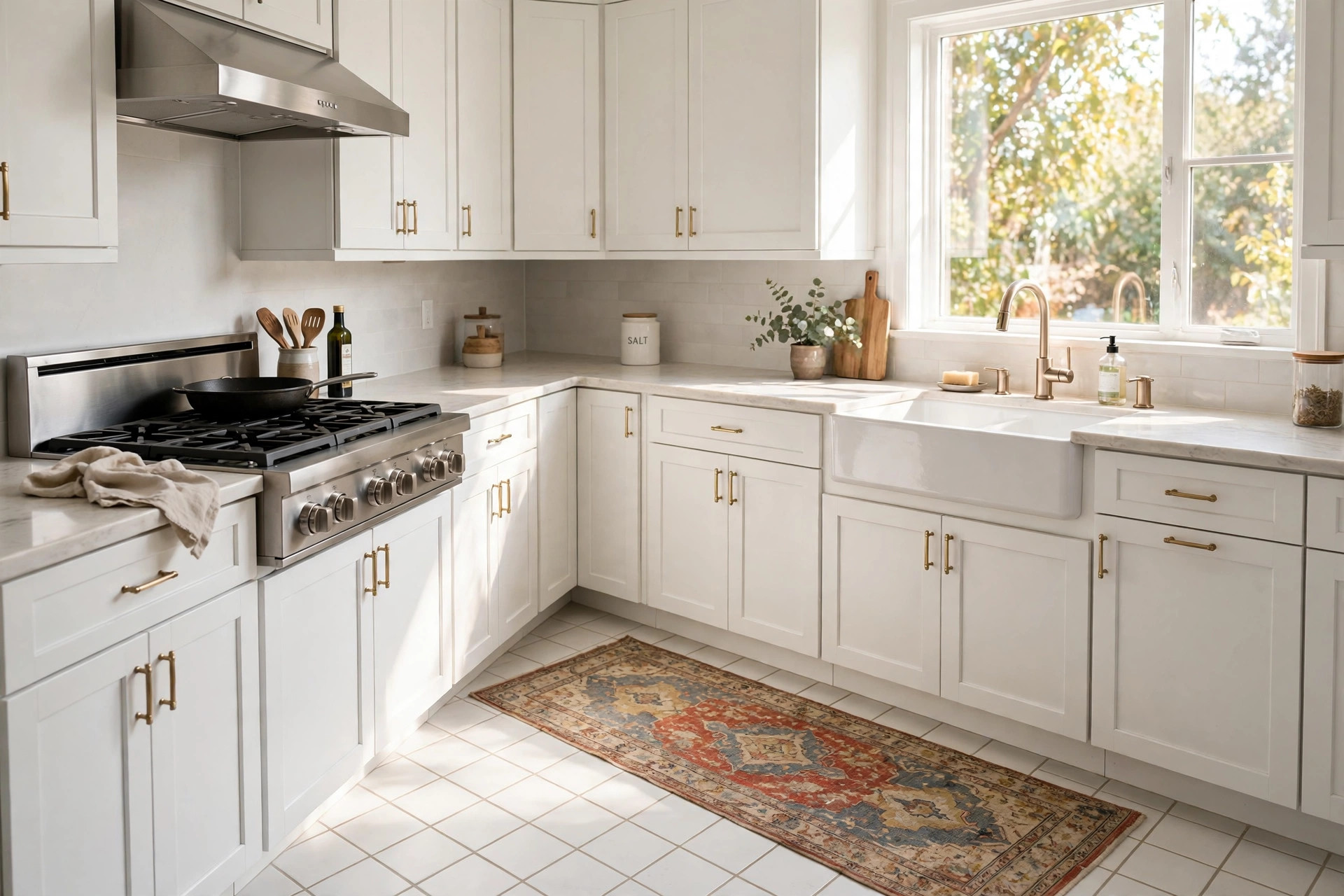

A Rug That Works as Hard as the Cook
The kitchen is the hardest working room in the house. Flour dusts the floor in the morning. A little oil spatters at noon. Juice spills in the evening. A runner along the main work aisle takes all of this punishment. It also protects the floor under it from scratches, dents, and worn paths. For that reason, the best kitchen runner rug washable USA shoppers choose is not a showpiece. It is a tool. It should soften the floor underfoot, catch spills, and then go into the washing machine without a fuss.
A good runner also changes the look of the room. A long strip of color or pattern can pull a plain galley kitchen together. It can mark the path from the stove to the sink. It can warm up a cold tile floor under bare feet on a winter morning. But looks must come second to function. A runner that cannot be washed will age fast in a kitchen. Within a year it will show stains and smells. The washable runner stays fresh for years.
Shoppers across the United States now expect this feature as standard. Machine-washable rugs have moved from specialty shops to every major retailer. Prices have fallen. Patterns have grown more attractive. The result is a wide market with many honest choices, and a few traps. This guide walks through sizes, materials, price ranges, care, and safety, so the choice is a calm one.
Why a Washable Runner Matters in the Kitchen: Best Kitchen Runner Rug Washable Usa
The Floor Takes the Worst of It
Kitchen floors face more daily wear than any other floor in the home. Water, grease, food scraps, and grit from shoes all land in the same narrow aisles. Hard floors such as tile, vinyl, and wood handle this better than carpet. But they still scratch and dull under grit. A runner catches much of that grit before it grinds across the finish. Tile makers note that grout lines wear faster under grit, so a runner along the main path also protects the joints between tiles, as Daltile explains in its flooring care notes.
Standing Time Is Long
Most cooks stand for long stretches at the counter and stove. A runner with a little give eases the strain on feet, knees, and back. It does not replace a thick anti-fatigue mat. But a low-pile rug with a cushioned backing gives steady relief across a full day of cooking and cleanup.
Spills Are a Matter of When, Not If
Every kitchen has spills. Coffee, sauce, and oil are the common ones. A runner that can be lifted and washed turns a stain into a ten-minute chore. A runner that cannot be washed turns the same stain into a permanent mark. This is the central reason the search for the best kitchen runner rug washable USA buyers trust keeps growing.
What to Look for When You Choose One
Size and Fit
The most common runner sizes in the United States are 2.5 by 7 feet, 2.5 by 8 feet, 2 by 9 feet, and 2 by 10 feet. Measure the aisle before shopping. A good rule is to leave four to six inches of bare floor on each side of the rug. This frames the runner and keeps its edges clear of cabinet doors.
Length matters too. The runner should cover the main work path: the stretch from the sink to the stove and refrigerator. It should not run under appliances. It should not reach the doorway, where it can bunch up or trip a heel. If the kitchen has two work aisles, two shorter runners often serve better than one long one.
Material and Weave
Machine-washable runners use a few common materials. Polyester and nylon resist stains and dry fast. They also hold printed patterns well, so they come in hundreds of designs. Cotton is soft and natural, but it shrinks more and fades faster in the wash. Some rugs use a blend: cotton face with a synthetic back. Wool runners feel rich and wear long, but few are truly machine washable. Read the care label, not the front of the package. If the label says machine wash cold, the claim is real.
Backing and Grip
A runner that slides across tile or wood is a hazard. Many washable runners include a rubber or latex backing for grip. Others are sold without backing and need a separate rug pad. A thin non-slip pad is worth the extra cost. It keeps the runner in place and adds a small cushion. Carpet makers test rug backings for slip resistance, and Shaw Floors shows how a tested backing behaves on hard floors. Check that the pad is safe for the floor finish. Rubber can mark some finishes. Felt and natural rubber pads suit wood floors best.
Pile Height and Edge Finish
Low pile suits kitchens. Pile height under a quarter inch lets shoes pass without catching. It also releases crumbs to the broom and lets the washing machine handle the rug without strain. Bound or serged edges last longer than raw cut edges. Fringed ends look classic but trap food bits. In a kitchen, bound edges are the wiser pick.
Types and Options on the Market
Machine-Washable Fabric Runners
This is the largest group. These rugs look like ordinary rugs but are made to survive the washer. Most are light enough for one person to carry to the machine. They come in farmhouse stripes, vintage-style medallions, modern geometry, and plain solids. The best of them survive dozens of wash cycles without fading or curling. Flooring brands now sell dedicated washable rug lines, and Mohawk Flooring lists several designs made to go straight from the kitchen floor to the washer. The care label usually calls for cold water, a gentle cycle, and low or no heat in the dryer.
Vinyl and Wipe-Clean Runners
Vinyl runners imitate the look of tile or fabric but wipe clean with a damp cloth. They suit heavy spill zones such as the strip in front of the stove. They never need the washing machine. They are less soft underfoot than fabric. But they are nearly impossible to stain, and they dry in minutes.
Low-Pile Flatweave Rugs
Flatweave cotton and synthetic rugs have no raised pile to trap dirt. Crumbs sit on the surface and sweep off fast. Many flatweaves wash well if the label allows it. They are thin, so they sit flat under low door clearances. Their weak point is cushioning. A rug pad beneath restores comfort.
Shoppers who like natural fibers sometimes pair a kitchen runner with a round jute rug for the entryway. The jute piece sets a warm tone at the door while the washable runner handles the kitchen work zone. Both rooms take heavy foot traffic, so the washable choice should stay in the room with the food.
Cost and Price in the USA
A decent washable kitchen runner costs between 25 and 120 dollars in the United States. The range reflects size, brand, and material. A small 2.5 by 7 foot polyester runner often sells for 25 to 50 dollars at large retailers. A longer 2 by 10 foot runner, or one from a known rug brand, runs 60 to 120 dollars. Premium washable brands can reach 150 dollars for a long runner.
A visit to The Home Depot shows dozens of machine-washable styles on the shelf at the low end of the range. Chain retailers such as Lowe’s stock runners in standard sizes, which makes it easy to compare colors and prices in person. Online, the selection is wider still, and prices run close to store prices once shipping is added.
A few costs sit outside the price tag. A non-slip pad adds 10 to 25 dollars. Professional cleaning is rarely needed. Water and detergent for home washing cost little. Set against the price of refinishing a scratched wood floor, a runner is cheap insurance. Flooring retailers publish care guides for rugs on hard floors that explain how a runner slows finish wear, and LL Flooring keeps a clear set of those guides online. Homeowners planning other low-cost floor updates often learn the same lesson: small protective layers now save large repairs later. A garage, for example, takes a beating too, and tips on the best concrete floor stain for a garage follow the same logic of protecting a hard surface before it wears out.
Care and Upkeep
Washing Routine
Vacuum or shake the runner once a week. This keeps grit from grinding into the fibers. Wash it when it looks dull or smells stale. For most kitchens, once a month is a fair rhythm. Heavier cooking homes may wash every two weeks.
Use cold or warm water, never hot. Hot water can shrink natural fibers and loosen adhesives. Use a mild detergent and skip fabric softener. Softener leaves a film that dulls the rug and reduces grip. Wash the runner alone or with one other light rug. A single runner needs room to move in the drum. Independent testing groups rate washing machines for large and bulky loads, and Consumer Reports scores show which machines handle rugs without strain.
Drying
Line dry when weather allows. The sun freshens fibers and kills mild odors. If the dryer is used, choose low heat. High heat can melt synthetic fibers and curl rubber backings. Remove the runner while it is still slightly damp and lay it flat to finish. Replace the rug pad if it tears or loses its grip. Home repair publications share floor-safe cleaning routines for the whole kitchen, and This Old House is a steady source for that kind of routine.
Stain Response
Act fast. Blot, never rub. Rubbing pushes the stain deeper. For grease, a drop of dish soap in warm water lifts most spots. For tomato or wine, cold water first, then a mild oxygen cleaner. Home guides publish stain charts that match common kitchen spills to the right cleaner, and The Spruce keeps a detailed chart of them. Test any cleaner on a corner of the rug first.
Safety in a Busy Kitchen
A runner must stay flat and still. Turned-up corners catch toes. A curling edge near the stove is a real hazard. Lay the runner flat for a day before judging. If an edge curls, reverse-roll it overnight. A rug pad usually solves the rest.
Keep the runner clear of heat. Do not run it under the oven door or near an open flame. Keep it a safe distance from portable heaters. If a burner flares, the first move is always away from the rug. Vinyl runners can melt at high heat. Fabric runners can scorch. Neither should sit where hot pans land.
Homes with pets gain most from the washable choice. Kitchens are common pet zones. Paw traffic, dropped food, and water bowl splashes all meet the runner. Laundry rooms face a similar mix of water and traffic, and homeowners updating those rooms sometimes look at adhesive tile options made for laundry rooms alongside their kitchen plans. In either room, the washable surface wins.
Frequently Asked Questions
How often should a washable kitchen runner be washed? Most kitchens need a wash once a month. Homes that cook daily, or homes with pets and small children, do better with a wash every two weeks. A quick weekly shake or vacuum keeps the rug fresh between washes. Home improvement writers cover how often to wash rugs in busy rooms, and Bob Vila offers a plain guide to rug care schedules.
Can any runner rug go in a home washing machine? No. Only rugs labeled machine washable should go in the washer. Heavy rugs with stiff backings can damage the machine. Wool and many natural fiber rugs shrink or lose shape. Always read the care label before washing.
What size runner fits a standard galley kitchen? A galley kitchen usually suits a 2.5 by 7 or 2.5 by 8 foot runner. Measure the aisle and leave four to six inches of floor showing on each side. If the aisle is long, a 2 by 10 foot runner covers more of the work path.
Do washable runners work on hardwood floors? Yes, with a proper pad. Choose a felt and natural rubber pad made for wood floors. The pad stops sliding and lets air reach the finish. Check under the rug every few months for trapped moisture, and never lay a damp rug on wood.
Will a machine-washable rug fade over time? All rugs fade slowly with sun and washing. Polyester and nylon hold color far longer than cotton. Cold water, mild detergent, and line drying in shade slow fading. Most quality washable runners look good for two to four years of kitchen use.
Are vinyl runners better than fabric runners? Each suits a different need. Vinyl wipes clean and never needs the washer, which suits the messiest spots. Fabric feels softer and comes in more patterns. Many homes use a fabric runner in the main aisle and a small vinyl mat right at the stove.
A Short Final Word
The search for the best kitchen runner rug washable USA shoppers recommend ends with a simple test. Measure the space. Pick a low-pile, machine-washable rug with grip. Wash it cold, dry it low, and keep it flat. Do this, and the runner will protect the floor, ease the feet, and look right for years. The kitchen asks a lot of its floors. A runner that can be washed asks little in return.
References
Bob Vila. (n.d.). Home improvement advice. https://www.bobvila.com Consumer Reports. (n.d.). Product reviews and ratings. https://www.consumerreports.org Daltile. (n.d.). Ceramic and porcelain tile. https://www.daltile.com LL Flooring. (n.d.). Hardwood, vinyl, and tile flooring. https://www.llflooring.com Lowe’s. (n.d.). Home improvement products. https://www.lowes.com Mohawk Flooring. (n.d.). Flooring products. https://www.mohawkflooring.com Shaw Floors. (n.d.). Flooring products. https://www.shawfloors.com The Home Depot. (n.d.). Home improvement products. https://www.homedepot.com The Spruce. (n.d.). Home and garden advice. https://www.thespruce.com This Old House. (n.d.). Home renovation guidance. https://www.thisoldhouse.com
Was this guide helpful?

About David Wilson
The My Garden US editorial team writes practical, in-depth home and garden guides for American homeowners — tested advice, no fluff.
You May Also Like
What to Ask About a Flooring Installation Warranty
March 8, 2026 0 views
Marble Bathroom Floor Tile Pros Cons USA: A Plain Guide for Homeowners
May 9, 2026 0 views
Moisture Resistant Flooring for Coastal Homes: A Buyer’s Guide
April 25, 2026 0 views