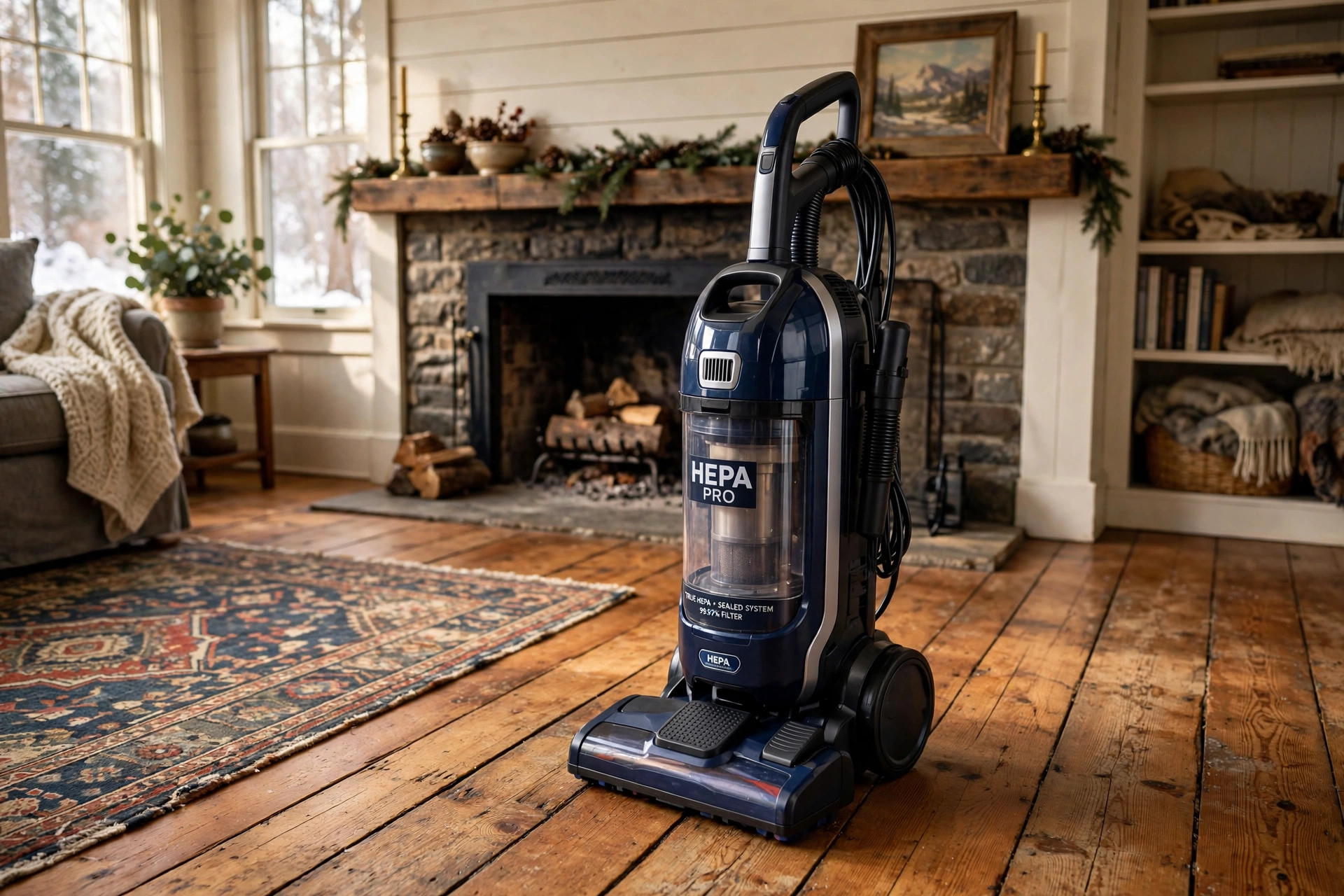

Houses in New England ask a lot of a vacuum cleaner. The floors are old. The winters are long. The air holds dust, pollen, and smoke from the wood stove. For these reasons, powerful hepa vacuum cleaners for new england homes are not a luxury. They are a sensible tool for keeping a home clean and the air in it healthy.
A vacuum with a true HEPA filter traps the fine dust that cheap machines blow right back into the room. When the windows stay shut from November to March, that difference matters a great deal. This guide walks through why these machines suit the region, what to look for, what types exist, what they cost, and how to keep one running for years.
Why It Matters
New England homes present a set of challenges that most other regions do not.
Old Houses and Old Floors
Many homes in Maine, Vermont, New Hampshire, Massachusetts, Connecticut, and Rhode Island were built a century or more ago. They have wide pine floorboards with gaps between them. They have old rugs laid over those boards. Dust settles deep into the gaps and into the rug backing. A weak vacuum skims the surface and leaves the rest behind. A powerful machine with strong suction pulls that deep dust out.
Long Heating Season
The heating season can run from October into April. During those months the windows stay closed. Dust, pet hair, and tiny particles build up in the air with nowhere to go. The United States Environmental Protection Agency notes that indoor air can hold more pollution than outdoor air, and regular deep cleaning is one of the simplest defenses (epa.gov). A HEPA filter on the vacuum means the machine removes these particles instead of pushing them back out.
Fireplaces and Wood Stoves
Many homes burn wood for heat. Wood heat is pleasant, but it leaves fine ash. Ash is a very small particle. Standard bags and filters let it pass through. A sealed HEPA system catches it. Homeowners who sweep ash by hand often find that the air smells cleaner after a full vacuum with a good filter.
Allergy Season
Spring brings tree pollen. Late summer brings ragweed. People who suffer in those months spend most of their time indoors, so the indoor air should be as clean as possible. The Asthma and Allergy Foundation of America advises regular vacuuming with a HEPA-filter machine as part of a dust-control plan. Bedroom carpets, mattresses, and drapes deserve extra passes.
What to Look For: Powerful Hepa Vacuum Cleaners for New England Homes
Not every machine sold as a “HEPA vacuum” is equal. The word appears on many boxes. The features below separate the strong ones from the weak ones.
True Sealed HEPA Filtration
A true HEPA filter traps 99.97 percent of particles as small as 0.3 microns. That is the standard meaning of the term. Look for the words “true HEPA” or “sealed HEPA system.” A sealed system means air cannot leak around the filter. If the seals are poor, dirty air escapes through the cracks and the HEPA label means little. Consumer test labs such as Consumer Reports (consumerreports.org) rate vacuums partly on how well they seal.
Suction Power and Airflow
Power matters for old rugs and wide-board floors. Look for strong, steady airflow rather than raw motor wattage alone. A machine can have a big motor and poor suction if the design is bad. Adjustable suction is useful in old homes: full power for a thick rug, lower power for a thin curtain or a delicate old blanket.
Weight and Ease of Use
Many New England homes have two or three floors and a steep staircase. A heavy upright is a burden on those stairs. Consider the weight before you buy. Stick vacuums and canister models tend to be lighter. A long cord, or a battery that runs for a full hour, saves trips to find a new outlet.
Attachments
Old homes are full of tight spots: radiator covers, window sills, baseboard corners, the gap behind a heavy bookcase. A good machine ships with a crevice tool, an upholstery tool, and a dusting brush. Extra tools for bare floors and for pet hair add value. For tips on keeping baseboards clean, see our guide to powerful baseboard cleaning tools.
Dust Bin or Bag
Bagged machines cost more to run, but the bag keeps dust sealed away when you empty it. That matters for allergy sufferers. Bagless machines cost less over time, but emptying the bin can raise a cloud of dust. If you choose bagless, empty the bin into a bag outside the house.
Types and Options
Three main styles serve New England homes well. Each has a place.
Upright Vacuums
The classic upright is the strongest choice for wall-to-wall carpet and heavy rugs. It stands on its own and usually has the widest cleaning path. The price range is broad, from under one hundred dollars to over five hundred. Uprights are heavy, often fifteen to twenty pounds, so they suit single-floor living or homes with a machine on each floor.
Canister Vacuums
A canister vacuum pulls a small tank behind it on wheels. The hose and wand do the work. These machines shine on mixed floors: bare wood in the hall, tile in the kitchen, a rug in the parlor. They are easier on stairs than uprights because you carry only the wand while the canister rests on a step. Many premium European brands, such as Miele (miele.com), build their reputation on quiet, long-lasting canister models.
Cordless Stick Vacuums
Cordless sticks, popularized by brands like Dyson (dyson.com) and Shark (sharkclean.com), are light and fast. They are ideal for daily touch-ups between deep cleans. Battery run time has improved greatly, but a stick still cannot replace a full-size machine for the weekly deep clean of an old house. Many households keep both: a stick for the daily pass and an upright or canister for the weekend work. For more brand comparisons, Good Housekeeping (goodhousekeeping.com) tests these machines in real homes.
Cost and Price
Prices fall into three clear bands.
Budget, under 150 dollars. These machines often say “HEPA-style” rather than “true HEPA.” The filter is a lesser grade. Suction is modest. They work for small apartments with little carpet. They are a poor match for a dusty old house.
Mid-range, 150 to 400 dollars. This is the sweet spot for most buyers. Machines in this band from established makers like Bissell (bissell.com) offer true sealed HEPA filtration, strong suction, and a decent set of tools. A mid-range upright or canister will handle a typical New England house well.
Premium, 400 to 900 dollars and up. Premium machines add quieter motors, better seals, longer warranties, and finer build quality. They are built to last a decade or more. For a large old home that you plan to keep, the extra cost can pay for itself in years of service.
Running costs add up over time. Budget for replacement filters once or twice a year and bags every few months if your machine takes them. A filter left in place too long clogs and chokes the suction.
Care and Upkeep
A powerful machine stays powerful only with basic care. The good news is that the work takes minutes.
Empty the bin or change the bag often. Do not wait until it is packed full. A full bin cuts suction and strains the motor.
Wash or replace filters on schedule. Many foam pre-filters can be rinsed in water and dried fully before reuse. The HEPA filter itself usually needs replacement, not washing, unless the maker says otherwise. Mark the dates on a calendar.
Clear the brush roll. Long hair and thread wrap around the roller. Cut them free with scissors once a month. A jammed roller burns out the belt or the motor.
Check the hose. A sock or a toy lodged in the hose will kill suction overnight. Detach the hose and look through it when power seems weak.
Store it dry. Basements in New England run damp. Keep the machine in a dry closet rather than on a damp cellar floor. Moisture breeds mold inside a dusty machine. The experts at This Old House (thisoldhouse.com) remind homeowners that damp storage shortens the life of any appliance.
Small habits like these add years to a vacuum. A well-kept machine can serve a household for eight to twelve years.
Safety
Vacuum cleaners are safe when used with common sense, but a few rules deserve respect.
Water and electricity do not mix. Never vacuum standing water with a standard machine unless it is built for wet work. Spills on the floor should be mopped first.
Ash must be cold. If you vacuum near a fireplace or wood stove, make sure the ash is fully cold. Hot ash can melt a plastic bin or start a fire inside the dust cup. Wait a full day after the last fire.
Unplug before clearing a jam. Always pull the plug before you cut hair from the brush roll or pull a blockage from the hose. The switch alone is not enough.
Mind the cord on stairs. Run the cord along the wall and keep your footing clear. Cordless machines remove this risk entirely, which is one reason they are popular in multi-floor homes.
Empty dust outside. Fine dust irritates lungs. Take the bin or the used bag outside before you empty it. People with asthma should let someone else do this chore when possible. Family Handyman (familyhandyman.com) offers practical guidance on dust control during home cleaning.
Frequently Asked Questions
How often should I vacuum in a New England home?
High-traffic areas deserve a pass every day or two in winter. Bedrooms and guest rooms can be done once a week. Homes with pets or wood heat need more frequent cleaning than homes without. The deep clean of rugs and under furniture should happen at least once a month.
Is a HEPA filter really better than a regular filter?
Yes. A regular filter catches larger dirt but lets fine particles pass through and back into the room air. A true HEPA filter catches the fine particles that trigger allergies and asthma. For a house sealed up all winter, the difference is noticeable.
Can one machine handle both bare wood floors and thick rugs?
Yes, if it has adjustable suction and a brush roll you can switch off. Run the brush roll on rugs and switch it off on bare wood so the spinning bristles do not scratch the floor. Many canister models include a dedicated bare-floor head.
Do I need a bagged or a bagless machine?
Bagged machines are cleaner to empty and better for allergy sufferers. Bagless machines cost less to run. If allergies are the main reason you are buying, choose bagged. If cost is the main concern, choose bagless and empty it outdoors.
How do I know when the HEPA filter needs replacing?
Suction drops, the motor sounds strained, or a dusty smell returns to the room. Most makers give a time range, often six to twelve months. If the filter looks gray and clogged, replace it sooner.
Are expensive vacuums worth it for an old house?
Often, yes. Old houses are hard on machines: gritty floors, heavy rugs, long run times. A well-built machine survives that work and keeps its suction for years. A cheap machine may need replacing every two or three years, which costs more in the end. Bob Vila (bobvila.com) regularly reviews which models hold up under heavy use.
A Final Word
A New England home rewards steady, honest housekeeping. The house is old, the winter is long, and the dust will always come back. A powerful HEPA vacuum turns that chore into something manageable and keeps the air your family breathes cleaner through the closed-window months.
Choose a machine with true sealed filtration, enough suction for old rugs, and tools for the tight corners of an old house. Pair it with related habits like quiet hardwood floor buffing for bare floors and dust mite mattress covers for the bedroom. Keep the filters fresh and the brush roll clear. Done right, the machine will outlast the decade and earn its place in the closet by the stairs.
References
Bissell. (n.d.). Carpet cleaners and cleaning solutions. https://www.bissell.com Bob Vila. (n.d.). Home improvement advice. https://www.bobvila.com Consumer Reports. (n.d.). Product reviews and ratings. https://www.consumerreports.org Dyson. (n.d.). Vacuum cleaners and home technology. https://www.dyson.com Family Handyman. (n.d.). DIY home repair and maintenance. https://www.familyhandyman.com Good Housekeeping. (n.d.). Product reviews and home advice. https://www.goodhousekeeping.com Miele. (n.d.). Premium home appliances. https://www.miele.com Shark. (n.d.). Home cleaning appliances. https://www.sharkclean.com This Old House. (n.d.). Home renovation guidance. https://www.thisoldhouse.com U.S. Environmental Protection Agency. (n.d.). Protecting human health and the environment. https://www.epa.gov
Was this guide helpful?

About Sarah Mitchell
The My Garden US editorial team writes practical, in-depth home and garden guides for American homeowners — tested advice, no fluff.
You May Also Like
Best Air Purifiers for Allergies for Humid Climates
February 8, 2026 0 views
How to Buy All Purpose Cleaning Caddies Online in Texas
June 5, 2026 0 views
Top Rated Robot Vacuum Cleaners for Southern States
April 22, 2026 0 views