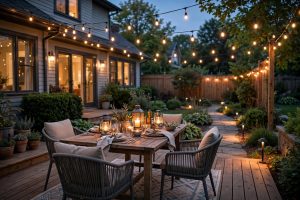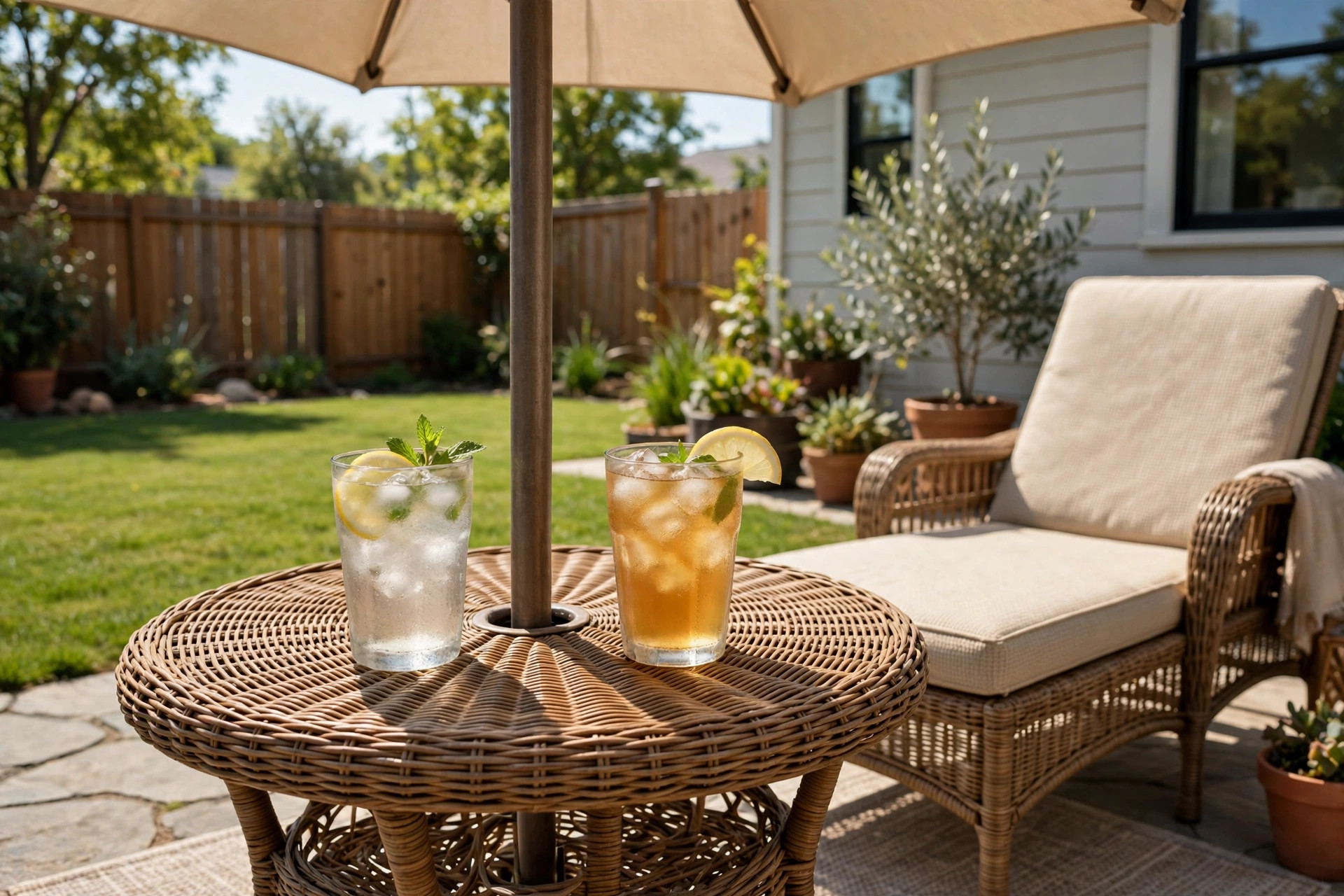

An outdoor side table with umbrella hole is one of the smallest pieces of patio furniture you can buy, and one of the most useful. It is a short table, made to sit beside a chair or a lounge seat. In the middle of its top there is a round hole, usually about two inches wide. The pole of a patio umbrella slides through that hole. The result is a place to rest a drink, a book, or a plate of food that stays in the shade all afternoon.
Many patios are built around a big dining set with its own umbrella hole. But a corner of the yard with two chairs, a poolside lounge spot, or a small balcony needs shade too, and a full dining set would be too large. A simple outdoor side table with umbrella hole fills the gap. It is cheap, it is light, and it works with the umbrella you may already own.
This guide explains why the hole matters, what to look for when you shop, the main types of tables, what they cost, and how to care for them. It also answers the questions buyers ask most often.
Why the Umbrella Hole Matters
On a sunny day, a drink left in direct light gets warm in minutes. A book becomes hard to read. Bare skin burns. Shade solves all three problems, and a patio umbrella is the common way to get shade where no roof exists. The trouble is that the umbrella must stand somewhere steady.
Some umbrellas stand in a heavy ground base. Others hang from a cantilever arm over the seating area. A third group passes through a table, which holds the pole upright and keeps it from tipping in a breeze. An outdoor side table with umbrella hole belongs to this third group, and its weight adds to the stability of the pole.
The hole also keeps the umbrella close to where you sit. When the pole stands in a ground base three feet away, the shade often falls in the wrong place. When the pole passes through the side table next to your chair, the canopy hangs right over you. You can tilt or turn most patio umbrellas, so a small shift puts the shade exactly where you want it.
There is one more benefit. A side table with an umbrella hole gives the umbrella a tidy home. Without the hole, the table top is solid and the pole must stand somewhere else, which means a separate base and more clutter on a small patio. With the hole, one piece of furniture does two jobs. That is why the design shows up so often in lists of outdoor furniture for small balcony settings, where every square foot counts.
What to Look for When You Choose: Outdoor Side Table with Umbrella Hole
A side table looks simple, but a few details decide whether it will serve you well for years or give you trouble in one season.
Height and Top Size
The table should stand about the same height as the arm of your chair, usually between 18 and 24 inches. A table that is much lower than the seat is awkward to use. A table that is much higher gets in the way of your elbows.
The top should be wide enough for what you plan to put on it. A top of 16 to 22 inches across holds a couple of drinks and a small plate. If you want room for a book and a pitcher too, look for tops closer to 24 inches. Measure the space next to your chair before you shop. Small patios and balconies punish guesswork, so take a tape measure outside with you.
The Hole Itself
Most umbrella poles are 1.5 inches in diameter. Some market umbrellas use thicker poles, up to 2 inches. The hole in the table should be a little wider than your pole, often about 2 inches. Too tight, and the pole scrapes or will not pass through. Too loose, and the table wobbles around the pole in wind.
Check whether the hole has a cap or plug. A small rubber or plastic cap lets you cover the hole on days when no umbrella is in place. That keeps rain, leaves, and insects out of the pole sleeve below.
Some tables have a pole sleeve or tube under the hole. The sleeve guides the pole and keeps it straight. It is a good feature. Without it, the pole can rub the edge of the hole and wear the finish over time.
Materials
Outdoor side tables are made from several common materials, and each has strengths and weak points.
Aluminum is light, resists rust, and is easy to carry. It does not handle heavy wind loads as well as heavier metals, so it pairs best with a separate umbrella base or a smaller canopy.
Steel is strong and steady in wind, but ordinary steel rusts. Look for powder-coated steel, which has a baked-on finish that resists chips and moisture. Inspect the coating each year and touch up scratches with matching paint.
Teak and other hardwoods look warm and natural. Teak resists rot and insects, but it turns silver-gray in the sun unless you oil it each year. Cedar and acacia cost less but need the same care.
Wicker, often resin wicker, gives a classic porch look. Real rattan wicker suffers outdoors and belongs under a roof. Resin wicker stands up to sun and rain for many years and needs little care.
Cast stone or concrete tops are very heavy and steady, but they can crack in hard freeze-and-thaw winters if water gets into small pores. Seal them before the first frost.
Weight and Stability
A side table that holds an umbrella must be heavy enough to help hold the pole upright. A good rule is that the table should weigh at least 10 to 15 pounds when made of metal, or more if it is small and light. Very light tables should always be paired with a weighted umbrella base or a ground anchor, especially if you live where gusty winds are common. Reading reviews like the best patio umbrella for wind can help you judge how a canopy behaves in bad weather, and independent tests from Consumer Reports cover many patio products too. A cantilever umbrella base weight guide is useful if you use an offset umbrella instead of a pole-through-table design.
Types of Outdoor Side Tables with Umbrella Holes
Shops sell several shapes and styles. Each suits a different spot.
The round table is the classic. It fits beside a curved lounge chair, looks soft, and has no sharp corners to bump into on a narrow balcony. Round tops from 18 to 22 inches are the most common.
The square table fits neatly in corners and lines up well with modern furniture sets. It offers slightly more surface for the same width as a round top.
The nesting or C-shape table slides partly under a low chair or lounge seat. Some of these include an umbrella hole at the outer edge. They are good for reading nooks.
The planter table has a planter bowl built into the top with the umbrella hole through the middle. Flowers or herbs grow around the pole. It looks charming but needs regular watering, and the soil weight makes it hard to move.
Cost and Price
Prices for an outdoor side table with umbrella hole vary with material and brand, but the range is wide enough to fit most budgets.
Simple resin or plastic tables cost from 25 to 60 dollars. They are light and need no care, but they can fade in strong sun and may blow over in wind unless anchored.
Powder-coated steel and aluminum tables usually cost from 50 to 150 dollars. This is the sweet spot for most buyers. You get decent weight, rust resistance, and many color choices.
Teak and hardwood tables run from 120 to 300 dollars or more. They last a long time with yearly oiling and look better with age, but the up-front cost is high.
Designer or cast-stone tables can cost 200 to 500 dollars. At this price you are paying for looks and heft. Make sure the style matches the rest of your patio before you spend this much.
A separate umbrella base, if you want extra stability, adds 30 to 100 dollars. A good patio umbrella itself costs 80 to 400 dollars depending on size and quality. Budget for the whole setup, not just the table.
Watch for seasonal sales. Patio furniture often goes on clearance in late summer and early fall. Online stores with outdoor departments, such as IKEA and Wayfair, run regular promotions too.
Care and Upkeep
An outdoor side table asks for little care, but a small routine each season keeps it looking good and working well.
Clean the top with mild soap and water a few times each season. A soft brush removes pollen and grime from textured surfaces. Avoid harsh cleaners and bleach, which can dull finishes and harm resin wicker.
For metal tables, check the finish each spring. If you find chips or scratches, sand the spot lightly and apply touch-up paint made for outdoor metal. This stops rust before it starts.
For wood tables, wash the surface and let it dry, then apply teak oil or an outdoor wood sealer once a year. This keeps the color rich and slows the graying caused by sun.
In regions with hard winters, store light tables indoors or under a cover. Freeze and thaw cycles are hard on stone, wood joints, and painted finishes. Foldable tables take up little space in a shed or garage.
If you cover the table, use a breathable furniture cover, not a plastic tarp. Tarps trap moisture and can cause mildew. Leave a small gap at the bottom so air can move.
Safety Notes
Umbrellas catch wind like sails. A side table alone cannot hold a large canopy in a strong gust. Always close the umbrella when storms approach or when you will be away from home. If you live in a windy area, pair the table with a weighted base or anchor the pole to the ground.
Check that the table stands level. A wobbly table can tip when the wind pushes the canopy. Most tables have adjustable feet for uneven patios. Turn them until all feet touch the ground firmly.
Keep the umbrella tilt locked in place. A loose tilt joint lets the canopy swing and can pinch fingers or strike the table edge. Test the crank and tilt before the first use each season.
Never let children climb on the table or hang from the umbrella pole. The table is made to hold drinks, not body weight. Tip-overs are a common cause of patio injuries.
Frequently Asked Questions
What size umbrella fits an outdoor side table with umbrella hole? Most side tables work with umbrellas from 6 to 9 feet across. The key number is the pole diameter, not the canopy size. Measure your pole and compare it with the hole size. A hole of about 2 inches fits most standard poles. For canopies larger than 9 feet, use a dedicated heavy base instead of relying on the table alone.
Can I use the table without an umbrella? Yes. That is one of its best features. Put the cap or plug in the hole and it becomes an ordinary side table. Many owners leave the umbrella out on mild days and drop it in only when the sun is strong.
Will the table blow over in wind? It can, if the table is light and the umbrella is open. Close the umbrella in wind, and consider a weighted base under the table for extra hold. Heavier materials like steel and stone resist tipping better than light aluminum or plastic.
How do I keep the hole from rusting? Keep the hole and sleeve clean and dry. A cap keeps rain out when the umbrella is stored. Once a year, spray a light coat of silicone lubricant inside a metal sleeve. Touch up any paint chips around the hole edge right away, since bare metal rusts fast.
Is a wood or metal table better for a poolside spot? Metal, especially aluminum or powder-coated steel, handles pool splashes and chlorine better than wood. Wood can work poolside if you seal it well and rinse off pool water, but it needs more care. Resin wicker is another good poolside choice.
Where should I place the table for the best shade? Set the table on the sunny side of your chair, between you and the afternoon sun. In most of the United States, the harshest sun comes from the south and west in the afternoon. A table with a tilting umbrella lets you follow the shade as the sun moves.
A Final Word
An outdoor side table with umbrella hole is a small purchase that changes how you use your patio. It puts a cool drink in the shade, gives your umbrella a steady home, and fits in corners where bigger furniture cannot go. Choose the right height, match the hole to your pole, pick a material that suits your climate, and close the umbrella when the wind rises. With that little care, one small table will serve you for many summers.
References
Consumer Reports. (n.d.). Product reviews and ratings. https://www.consumerreports.org IKEA. (n.d.). Outdoor furniture and decor. https://www.ikea.com Wayfair. (n.d.). Outdoor furniture. https://www.wayfair.com
Was this guide helpful?

About Lisa Anderson
The My Garden US editorial team writes practical, in-depth home and garden guides for American homeowners — tested advice, no fluff.
You May Also Like

Patio Furniture for Rooftop Deck Ideas: A Complete Guide
September 29, 2026 0 views
Outdoor Bar Cabinet for Patio Reviews: What to Know Before You Buy
August 5, 2026 0 views
Outdoor Sectional Cover Waterproof Heavy Duty: A Complete Buyer’s Guide
September 29, 2026 0 views