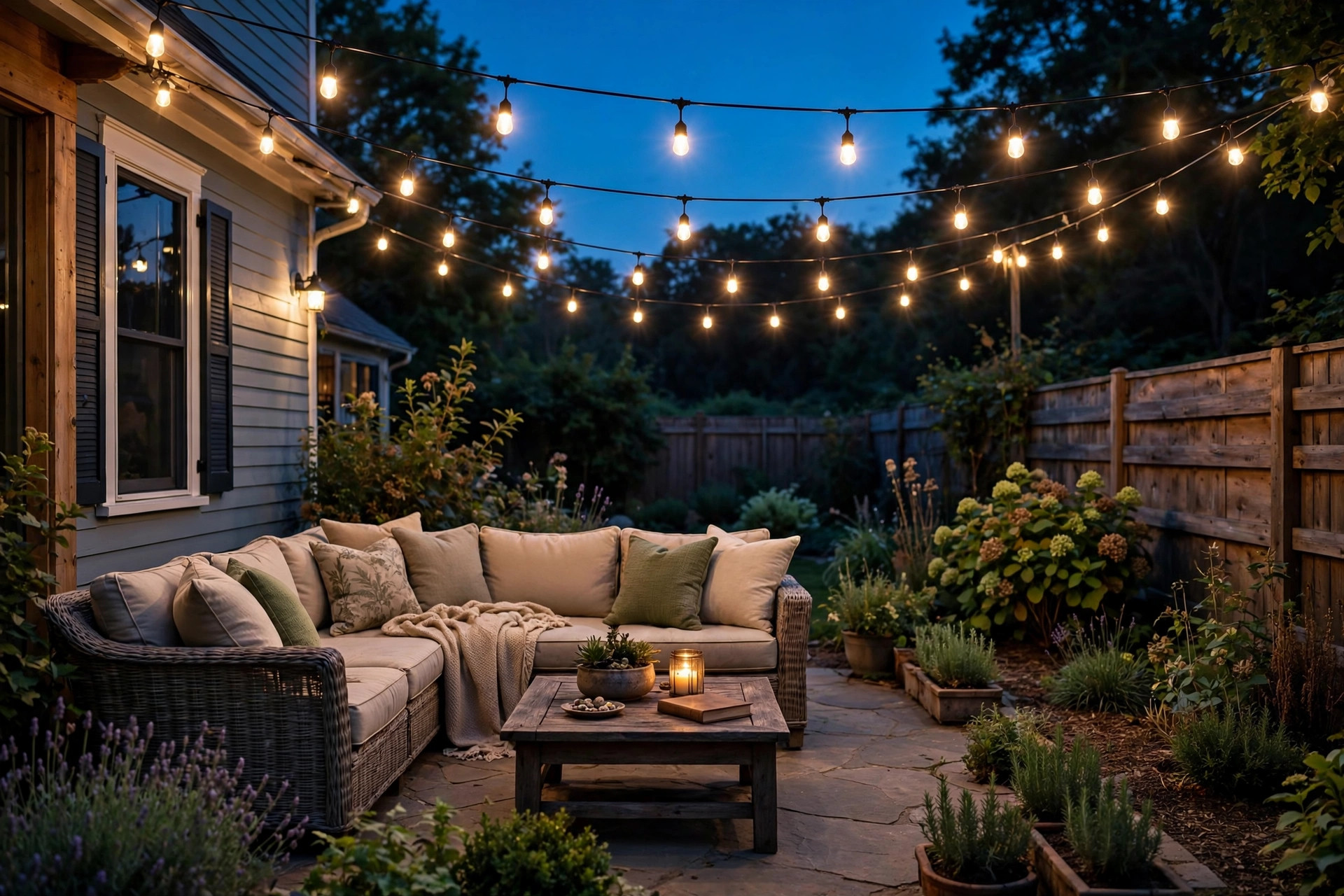
A patio can change after dark. A soft warm light can turn a plain yard into a place where people want to sit and talk. Many home owners now search for the best solar patio lights for ambiance, and the reasons are clear. These lights need no wires. They add nothing to the power bill. The sun charges them by day, and they glow on their own by night.
Solar patio lights have improved a great deal in the last ten years. Early models were dim and often broke after one season. New models shine brighter, run longer, and come in many styles. Some look like old Edison bulbs on a string. Others sit inside paper-style lanterns or line the top of fence posts.
This guide explains how these lights work. It shows what to look for when you buy them. It covers types, cost, care, and safety. It ends with answers to common questions. By the end, you will know how to pick lights that suit your yard and your budget.
Why Ambiance Matters
A patio is more than a slab of stone. It is where families eat on summer nights. It is where friends sit with a drink after work. Light sets the mood of that space. Harsh white light can make a patio feel like a parking lot. A warm glow makes the same space feel calm and inviting.
Ambiance is the feeling a place gives you. With light, you build it on purpose. Low warm light tells guests to relax. Pools of soft light around chairs make talk easy. A dark yard with one bright porch bulb feels cold by contrast.
Solar lights serve this purpose well. They are small and many. You can spread them across a yard without hiring an electrician. You can move them until the look is right. They also turn on and off by themselves, so the mood is set each evening without any effort.
Good light also adds value to the home. Buyers notice a yard that feels finished. Realtors often say outdoor living space sells houses. A well-lit patio looks larger and more cared for in listing photos.
What to Look for When You Choose: Best Solar Patio Lights for Ambiance
Shopping for solar patio lights is easier when you know the key points. Brightness, battery life, and build quality matter most. Style comes next.
Brightness and Color
Brightness is measured in lumens. For ambiance, you want low numbers. Five to fifteen lumens per bulb is often enough for mood light. Fifty lumens or more is for paths and steps, not for mood.
Color matters as much as brightness. Look for “warm white” on the box. That means about 2700 Kelvin. It gives the soft gold glow of old bulbs. Cool white looks blue and harsh. Multicolor modes can be fun for parties, but warm white suits most nights.
Some sets let you switch color or dim the bulbs. These cost more but give you control. A dimmer is useful when you want the lights low during a late talk.
Battery and Run Time
Each light has a small solar panel and a rechargeable battery. The panel charges by day. The battery powers the bulb by night. Most sets run six to eight hours on a full charge.
Check how the set handles cloudy days. Good lights store enough for one dim day. Cheap lights may die by midnight after a gray afternoon. Look for sets that list a run time, not just a charge time.
Batteries wear out over time. Most last one to two years. Some sets let you swap in new rechargeable AA batteries. That feature can double the life of the set. It is worth paying a little more for.
Build Quality
Outdoor lights face rain, wind, and sun. Plastic bodies crack in cold weather. Look for ABS plastic or metal housings. Glass shades look nice but can break in hail.
Water resistance is shown by an IP rating. IP44 handles rain from all sides. IP65 handles heavy rain and dust. Do not trust sets with no rating at all.
The solar panel should sit where the sun hits it. String lights often have a separate panel on a stake. That lets you place the panel in full sun while the lights hang in the shade. All-in-one units must hang in the sun, which limits where they go.
Types of Solar Patio Lights
The best solar patio lights for ambiance come in several forms. Each suits a different part of the yard. Many home owners mix two or three types.
String Lights
String lights are the classic choice. A line of small bulbs hangs over the patio and gives instant charm. They suit dinner parties and quiet nights alike. Warm white solar string lights for a backyard are easy to find in twenty to fifty foot lengths.
Hang them in a zigzag between the house and a tree, or drape them along a fence. Keep them above head height so guests do not bump them. Most sets need four to six hours of direct sun on the panel for a full night of glow.
Edison-style bulbs give a vintage look. Small fairy lights give a softer sparkle. Both work well. Edison bulbs read as warm and retro. Fairy lights read as light and festive.
Path and Post Lights
Path lights line a walk with small pools of light. They guide feet and make the yard feel safe. Post lights sit on top of fence posts or deck posts. Solar fence post lights for a deck are a neat way to frame the edge of a patio without wires.
These lights are brighter than string bulbs. They are built to be seen, not just felt. Place them three to six feet apart along the path. Too many will make the yard look like an airport runway.
Lanterns and Wall Lights
Lanterns sit on tables or hang from hooks. They give a soft local glow where people sit. A lantern on a side table next to chairs is a simple way to anchor a seating area.
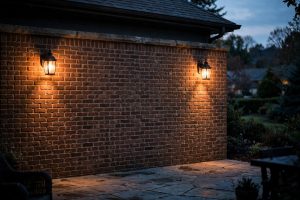
Wall lights mount on the house or a fence. They wash the wall with light and make the space feel larger. Motion-sensing wall lights add security, but they can break the mood when they snap on bright. For pure ambiance, steady low light is better.
Specialty Lights
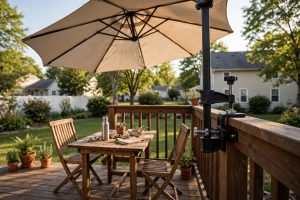
Some yards suit special types. Deck step lights mark stair edges. Umbrella lights clip onto the pole of a patio umbrella and shine down on the table. If you pair lights with a patio umbrella that stands up to wind, an umbrella light turns the table into the heart of the evening.
Fire-effect lights flicker like a flame. They look nice from far away but can read as fake up close. Use them deep in the garden, not on the table where guests sit.
Cost and Price
Solar patio lights cost less than wired lights. A basic string of twenty bulbs sells for ten to twenty dollars. A well-made set with a separate panel and replaceable batteries runs thirty to sixty dollars.
Post lights and lanterns cost five to fifteen dollars each. A set of eight path lights often sells for twenty-five to forty dollars. Premium brands charge more for metal housings and longer run times.
Think in terms of the whole yard. Lighting a small patio with two strings and four lanterns may cost sixty to one hundred dollars. A large yard with paths, posts, and a seating area may run one hundred fifty to three hundred dollars.
The real savings come later. There is no wiring to install. There is no electrician to pay. The running cost is zero. Even a two hundred dollar set pays for itself against a wired system that needs trenching and labor.
Watch for sales at the end of summer. Stores clear outdoor stock in August and September. Online sellers also discount around major holidays. Buying off season can cut the price by a third or more.
Care and Upkeep
Solar lights need little care, but they are not care free. A few small habits will keep them bright for years.
Keep the panels clean. Dust, pollen, and bird droppings block the sun. Wipe each panel with a damp cloth once a month. In dusty areas, check every two weeks.
Trim plants that shade the panels. A panel in full shade charges almost nothing. Watch how shadows move across the yard in summer. Move stake panels as needed.
Bring delicate sets inside for winter in cold states. Batteries lose strength in deep cold. Plastic gets brittle. If you leave lights out, expect a shorter life. Hardier metal sets can stay out, but they still dim in short winter days.
Replace batteries when run time drops. If lights that once ran eight hours now die at midnight, the battery is tired. Swap in fresh rechargeable batteries of the same size. Do not mix old and new batteries in one set.
Check connections after storms. Wind can loosen hanging strings. Water can get into cheap housings. A quick walk around the yard after a storm catches small problems early.
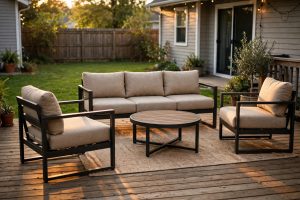
Pair your lights with simple patio care. Clean cushions and swept stone make the light look better. Guides on waterproof throw pillows for your patio can help the seating match the glow. A tidy space needs less light to feel warm.
Safety Notes
Solar lights are low voltage, so they carry little shock risk. Still, a few safety points matter.
Do not use them as the only light on stairs. Steps need brighter, steady light. Mark each step edge with a dedicated step light or keep a porch light on when guests use the stairs.
Keep lights away from open flame. String lights near a grill or fire pit should hang well clear of heat and sparks. If your seating centers on an outdoor coffee table with a built-in fire pit, keep all cords and bulbs at least three feet from the flame.
Check that stakes do not pierce buried lines. Call your local dig-safe number before pushing many stakes deep into the ground. Most string-light stakes are shallow, but it is still wise to check.
Buy sets with proper safety marks. Look for UL or ETL listing on the package. These marks show the set passed basic safety tests. Very cheap no-name sets may skip them.
Store spare batteries safely. Keep them dry and out of reach of children. Recycle old rechargeable batteries at a battery drop-off, not in the trash.
Frequently Asked Questions
Do solar patio lights work on cloudy days? They work, but dimmer and for fewer hours. A good set stores enough for one cloudy day. After two or three gray days in a row, expect a short run time. Place panels where they catch even weak light.
How long do solar patio lights last? The bulbs often last three to five years. The batteries last one to two years but can be replaced. Cheap plastic housings may crack in the second winter. Metal sets last longer.
Can I leave them out in winter? You can, but they will dim. Short days mean less charge. Cold slows the battery. In snow states, many owners store the nicer sets and leave only hardy path lights out.
Why are my solar lights so dim? The most common cause is a dirty panel. Clean it first. The next cause is shade. Move the panel into full sun. The third cause is a tired battery. Replace it with a fresh rechargeable cell.
Do solar lights attract bugs? Warm white light attracts fewer bugs than cool white or bright porch lights. No light is fully bug free. Citronella or a small fan near seating helps more than light color alone.
Are expensive solar lights worth it? Often yes. The extra money buys a better battery, a larger panel, and a tougher housing. A sixty dollar set that lasts four years costs less per year than a fifteen dollar set you replace each spring.
A Final Word
The best solar patio lights for ambiance are the ones that fit your yard, your style, and your budget. Start small. Hang one string over the table. Add a lantern or two where people sit. Live with it for a week. Then add more where the dark spots remain.
Warm light, low brightness, and simple care will carry you far. The sun does the work each day. You get the reward each night: a patio that glows, a yard that welcomes, and evenings that last a little longer.
Independent testers publish outdoor lighting reviews each year, and a look at Consumer Reports can help you compare brands before you buy. Big home retailers also carry wide ranges of solar styles; both IKEA and Wayfair stock many patio-ready options to browse.
References
Consumer Reports. (n.d.). Product ratings and reviews. https://www.consumerreports.org IKEA. (n.d.). Outdoor lighting. https://www.ikea.com Wayfair. (n.d.). Patio lighting and outdoor living. https://www.wayfair.com
Was this guide helpful?

About Emily Rodriguez
The My Garden US editorial team writes practical, in-depth home and garden guides for American homeowners — tested advice, no fluff.