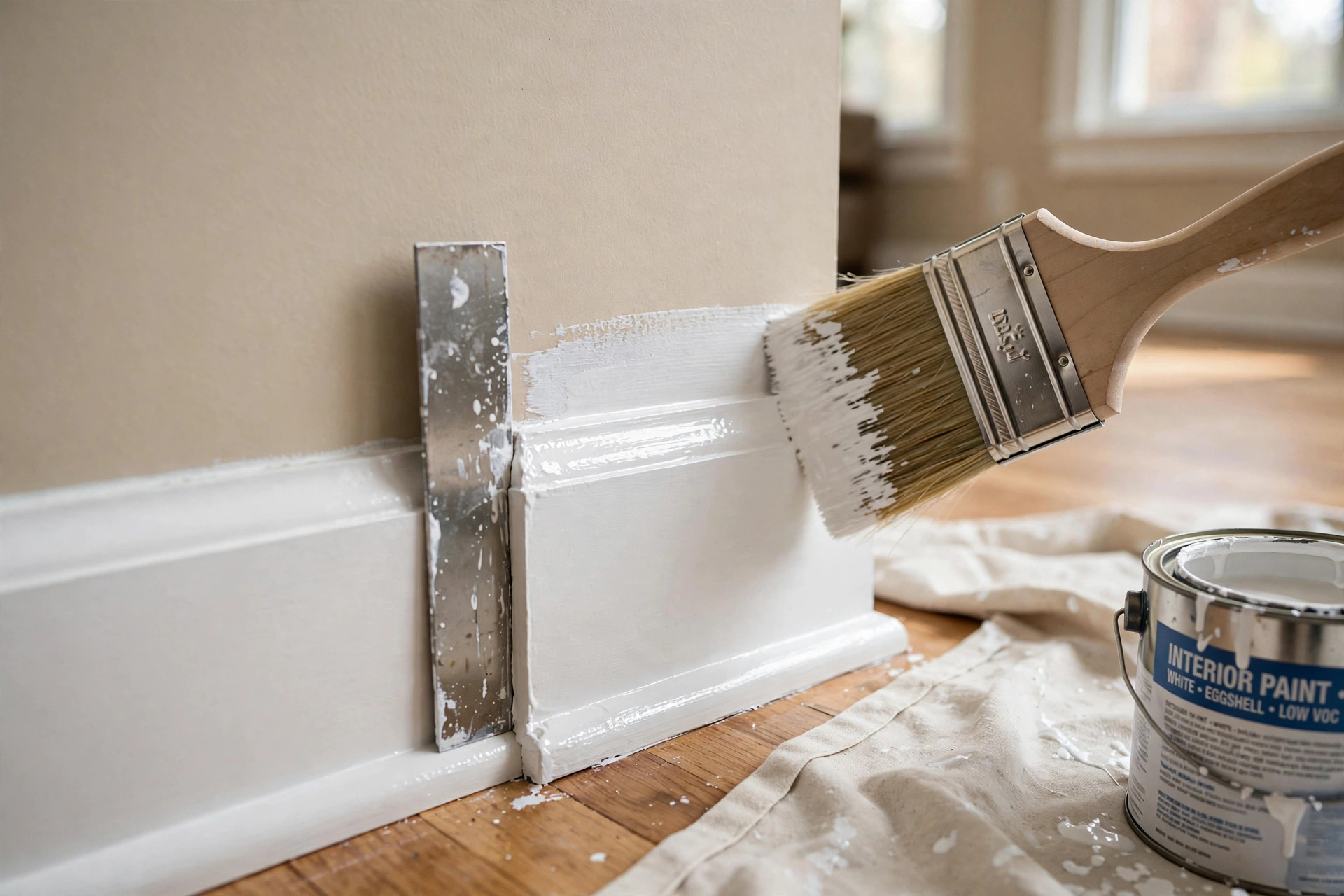
Painting baseboards without tape tips usa is a search that comes from a simple wish. You want a clean edge where the baseboard meets the wall. You do not want to spend an hour laying tape. Many painters, both hired hands and do-it-yourself workers, skip the tape entirely. They use a steady hand, a good brush, and a few plain tricks. This guide shows how they do it.
The baseboard is the trim board at the bottom of a wall. It takes a beating from vacuum cleaners, mops, and shoes. A fresh coat of paint makes a room look new. Taping it can take longer than the paint itself. With the right method, you can paint it freehand and get a line that looks taped.
Why It Matters to Skip the Tape
Tape has its place. But it also has faults. Tape can bleed. Paint seeps under the edge and leaves a ragged line. Tape can pull paint off the wall when you lift it. On a wall with flat paint, that pull can leave bare spots. Tape also costs money. A roll of painter tape is not dear, but on a whole house it adds up.
Speed is the main reason to learn this skill. A pro can cut a room freehand in the time it takes an amateur to tape one wall. Homeowners who learn the freehand method finish rooms faster. They also find the work more pleasant. There is a quiet pleasure in a clean line drawn by hand.
Some painters say freehand work gives a softer, more natural edge than tape. A taped line can look hard and sharp. A freehand line follows the tiny bumps of the wall. It looks like a craftsman did it, because one did.
What to Look For in Your Tools: Painting Baseboards Without Tape Tips Usa
The Angled Brush
The angled sash brush is the heart of freehand baseboard work. A two-inch or two-and-a-half-inch angled brush fits most hands. The slant lets the bristles come to a fine point. That point is what cuts the line. A cheap brush with stiff, uneven bristles will leave streaks. A brush of good make holds paint well and keeps its edge. Sherwin-Williams and Benjamin Moore both sell brushes made for trim work, and either is a sound pick.
The Paint
Trim paint should be a semi-gloss or satin. These finishes wipe clean. They also level well, which means brush marks settle flat. A gallon of quality trim paint costs more than the cheap kind, but it covers in two coats and lasts for years. White is the classic pick for baseboards. It shows dust, but it also brightens a room. Behr offers trim paints in several sheens that suit this job.
The Paint Shield
A paint shield is a thin blade of metal or plastic, about a foot long. You hold it where the baseboard meets the wall. Paint hits the shield instead of the wall. It is the closest thing to training wheels for this craft. Shields cost little and save much cleanup. You can find them at any Home Depot or Lowe’s store.
The Drop Cloth
A canvas drop cloth guards the floor. Plastic sheets slip and tear. Canvas stays put and soaks up drips. Lay it flat against the baseboard. Tuck the edge under the baseboard if you can. This keeps paint off carpet and wood floors.
How to Prepare the Baseboards
Good paint starts with good prep. A baseboard that is dirty will show every flaw. Run a damp rag along the baseboard first. Get the dust and scuffs off. If the old paint is glossy, scuff it lightly with fine sandpaper. This gives the new paint something to hold.
Fill nail holes and dents with wood filler made for trim. A small dab, smoothed with a putty knife, is enough. Let it dry. Sand it flush. A baseboard with clean holes paints much smoother.
If the wall above is already painted, your job is easier. If the wall still needs paint, paint the wall first. Wall paint on the baseboard is simple to cover later. Baseboard paint on a finished wall is the problem we are here to avoid.
The Core Technique: Cutting In Freehand
Cutting in is the act of painting a line freehand. Here is the method, step by step.
Load the brush. Dip only the bottom third of the bristles in paint. Tap the brush against the side of the can. Never wipe it across the rim. Wiping takes off too much paint and bends the bristles.
Start away from the edge. Lay paint on the face of the baseboard first, a few inches below the top edge. This builds a band of wet paint to work with.
Now cut the top line. Turn the brush so the long point faces up. Rest the tips of the bristles lightly at the line where baseboard meets wall. Draw the brush along the edge in a smooth stroke. Use the length of your arm, not your wrist. Long, even strokes make straight lines. Short, choppy strokes make wavy ones.
Keep a light touch. Pressing hard fans the bristles out and pushes paint past the line. Let the paint flow from the brush on its own. If the line starts to wander, stop. Wipe the small mistake at once with a damp rag. A slip fixed in seconds leaves no mark.
Work in three-foot sections. Paint the face of the section, cut the top line, then move on. Keep a wet edge so the next section melts into the last. This is how pros avoid lap marks.
Types of Brushes and When to Use Them
Angled Sash Brush
The standard for trim. Two inches for narrow baseboards, two and a half for wide ones. The angle reaches into the corner where base meets wall.
Flat Brush
Some painters prefer a flat two-inch brush. It holds more paint. It suits long runs of baseboard where speed matters.
Mini Roller
A four-inch foam roller paints the face of a wide baseboard fast. You still need the brush for the top edge. The roller then fills the flat area in seconds.
Touch-Up Brush
A small artist brush, half an inch wide, fixes slips and paints tight spots behind pipes and radiators. It is a quiet helper that earns its place in the kit.
Cost and Price
The savings from skipping tape are plain. A roll of quality painter tape runs about eight to twelve dollars in the United States. A full house might need ten rolls. That is eighty to one hundred twenty dollars saved.
The tools you need instead cost less. A good angled brush runs twelve to twenty dollars. A paint shield is under ten. A canvas drop cloth is twenty to thirty dollars and lasts for years. One gallon of trim paint, about thirty-five to sixty dollars, covers the baseboards of several rooms.
Hired painters charge less when they work fast. A room that takes three hours with tape may take ninety minutes freehand. Some painters pass the saving on. Others charge the same and take more jobs. Either way, the method is kind to the budget.
For related work around the home, readers often look into the best paint for garage walls usa when planning a full paint job room by room.
Care and Upkeep After Painting
Let the paint cure. Paint feels dry in an hour or two. It needs about two weeks to harden fully. During that time, be gentle. Do not scrub the baseboards. Move furniture with care.
Clean painted baseboards with a soft damp cloth. Mild dish soap in water handles most marks. Strong cleaners can dull the sheen. A quick wipe once a month keeps them bright.
Touch-ups are easy with leftover paint. Keep a small jar of the trim paint with its label. Dab a thin coat on scuffs with a touch-up brush. Thin coats blend better than thick ones.
Safety in the Room
Paint work is plain labor, but it has real risks. Ventilate the room. Open windows or run a fan. Modern latex paints are low in fumes, but fresh air is still wise.
Wear knee pads or a pad of foam when working low along the floor. Hours on hard knees add up. Keep a steady stance. Do not reach past your balance. Move the body, not just the arm.
Keep paint off your skin as you can. Wash hands with soap and water. Wear gloves if your skin is sensitive. Store paint out of reach of small children. Clean spills at once so no one slips.
If you are unsure about a product or a step, the guides at The Spruce walk through paint safety in plain terms.
Nine Tips in Plain Order
Here are the tips gathered in one place for quick use.
1. Use an angled sash brush of good make. The tool decides the line. 2. Dip only the lower third of the bristles. Less paint means more control. 3. Start on the face of the baseboard, then cut the top edge second. 4. Hold the brush at a low angle, tips just touching the line. 5. Draw long strokes with the arm. Keep the wrist still. 6. Keep a paint shield in the other hand for corners and tight spots. 7. Wipe slips at once with a damp rag. Speed erases mistakes. 8. Work in three-foot sections with a wet edge. 9. Light the room well. A lamp near the baseboard shows every wobble.
Practice makes this method second nature. A board of scrap trim and an hour of practice will teach your hand the feel. Many painters learn faster than they expect.
FAQ
Can a beginner paint baseboards without tape?
Yes. A beginner can learn this in an afternoon. Start with a paint shield to guard the wall. The shield removes the fear of a slip. As your hand grows steady, you will use the shield less. Take your time on the first room. Speed comes later.
What paint is best for baseboards?
A semi-gloss or satin latex enamel is the common pick. It levels well and wipes clean. White suits most rooms. Match the sheen to the rest of the trim in the house so it looks of a piece. Painters at This Old House often note that enamel finishes give trim a hard, durable shell.
How do I fix a wavy line?
Wait for the paint to dry fully. Then cut the line again with the wall color, using the same freehand method. Or hold a straightedge, such as a metal ruler, along the line and repaint with a small brush. A dry correction is easier than a wet one.
Is freehand faster than tape?
For most people, yes, once learned. Taping a room takes thirty to sixty minutes. Cutting it freehand takes about the same time as the taping alone would have, and the painting goes faster too. On big jobs the time saved is large.
Should I caulk before painting?
Yes, if there is a gap between the baseboard and the wall. A thin bead of paintable caulk, smoothed with a damp finger, closes the gap. Paint over it after it dries. The line then looks crisp and the gap will not show. A guide from Bob Vila covers this in more depth.
Can I paint baseboards the same color as the walls?
You can. Some modern rooms use one color for wall and trim. The look is smooth and calm. Without a color change, the line matters less. But the room can look flat if the sheen is the same too. Many painters use a higher sheen on the trim even in the same color.
A Short Final Word
Painting baseboards without tape is a plain skill with a big payoff. It asks for a good brush, a steady arm, and a little patience. The steps in this guide are the same ones tradesmen use every day. Start with the shield. Trust the long stroke. Fix slips fast. Your rooms will carry clean white lines, and your paint jobs will take less time from the first to the last.
If you enjoy trim work, you may also want to read about wallpaper for powder room ideas usa and the best wood filler for trim reviews usa for your next project. Decor ideas from HGTV can help you plan the look of the finished room.
References
Behr. (n.d.). Paints, primers, and stains. https://www.behr.com Benjamin Moore. (n.d.). Paints and stains. https://www.benjaminmoore.com Bob Vila. (n.d.). Home improvement advice. https://www.bobvila.com HGTV. (n.d.). Home and garden ideas. https://www.hgtv.com Lowe’s. (n.d.). Home improvement products. https://www.lowes.com Sherwin-Williams. (n.d.). Paints and coatings. https://www.sherwin-williams.com The Home Depot. (n.d.). Home improvement products. https://www.homedepot.com The Spruce. (n.d.). Home and garden advice. https://www.thespruce.com This Old House. (n.d.). Home renovation guidance. https://www.thisoldhouse.com
Was this guide helpful?

About Lisa Anderson
The My Garden US editorial team writes practical, in-depth home and garden guides for American homeowners — tested advice, no fluff.