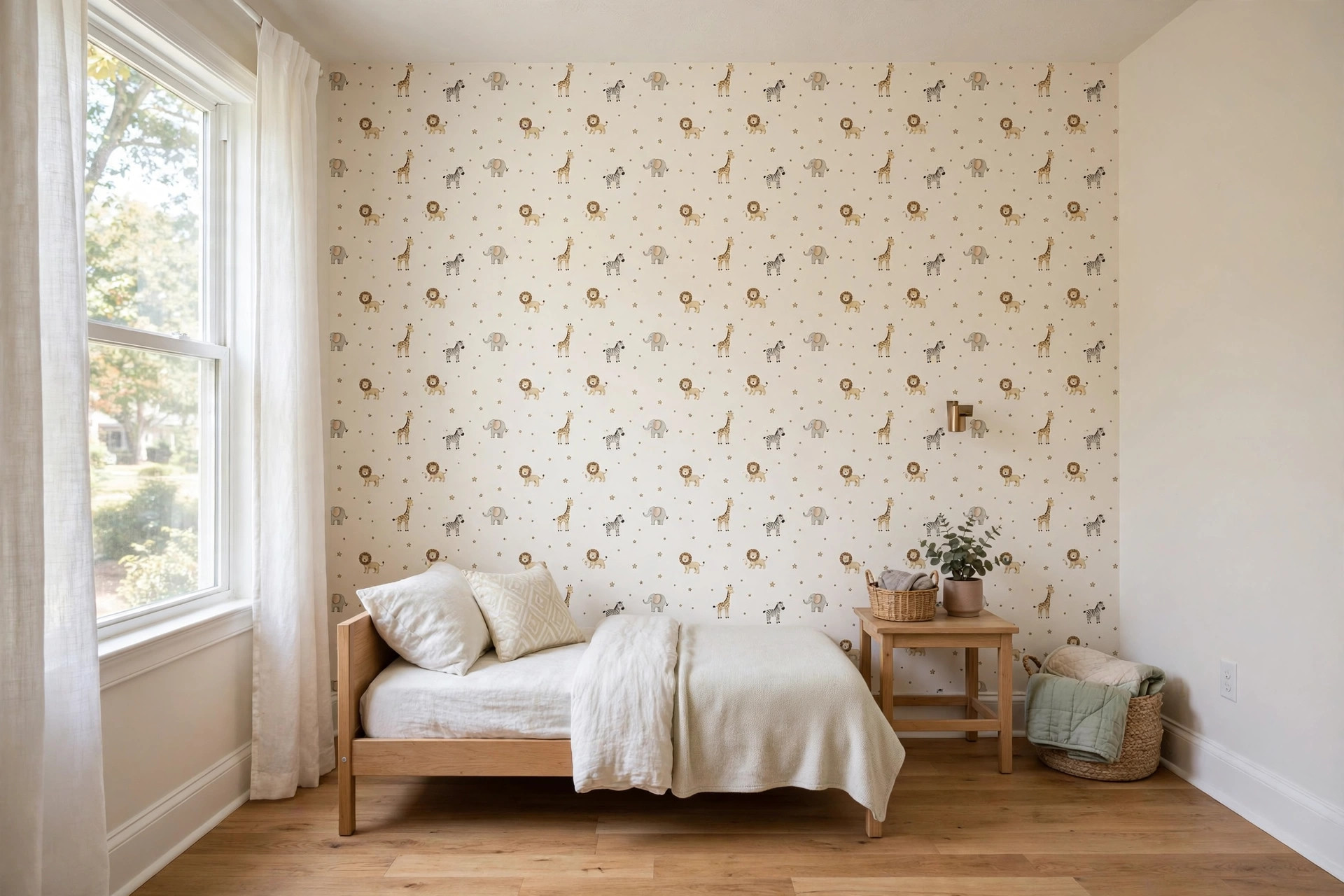

When you look for kids wallpaper peel and stick for sale, you enter a market that did not exist a generation ago. Wallcovering was once a trade. It called for paste, brushes, ladders, and a steady hand. Today a parent can change a child’s room in a single afternoon with a roll, a smoothing tool, and a bit of patience. The paper has a sticky back. You peel the liner and press the sheet to the wall. When the child outgrows dinosaurs or pink castles, you peel it off again. The wall stays clean.
This guide walks through the whole matter. It explains why these products sell well. It shows what to look for before you buy. It lists the main types on the shelves. It gives price ranges you can trust. It covers care, upkeep, and safety. And it answers the questions parents ask most.
Why Parents Choose Peel and Stick
A child’s taste changes fast. A three-year-old wants rockets. A seven-year-old wants soccer. A ten-year-old wants a plain wall and a poster of a band. Regular paint cannot keep up without real work. Each change means sanding, priming, and two coats. Peel and stick wallpaper gives you a way out.
The chief virtue is removal. Most quality products lift off in full sheets. They leave no glue and no torn drywall. This matters for renters. Many lease terms forbid paint but allow temporary wallcovering. A renter who hangs peel and stick paper can take it down on moving day and get the deposit back. For owners, the gain is time. A room refresh becomes a Saturday project, not a week of labor.
The second virtue is forgiveness. If you hang a panel crooked, you lift it and try again. The adhesive stays tacky through several tries. Beginners can do the job. There is no wet paste to drip on the carpet. One adult and a plastic smoother can finish a ten-foot wall in under two hours.
A third point is variety. The catalog for kids wallpaper peel and stick for sale runs from soft watercolor animals to bold geometric shapes. You will find maps, clouds, stars, sports themes, fairy-tale forests, and simple stripes in child-friendly colors. Many lines come in small repeats that suit a child’s room. The choice is far wider than the paint chip rack at the hardware store.
What to Look for Before You Buy: Kids Wallpaper Peel and Stick for Sale
Start with the wall itself. Peel and stick paper likes smooth, clean, dry walls. Flat and eggshell paints give the best grip. Fresh paint needs time. Wait at least three to four weeks after painting before you hang anything. The bond between new paint and drywall is still curing, and the paper can pull the paint off when you remove it later.
Measure twice. Note the width of each roll and the pattern repeat. A repeat is the vertical distance before the design starts over. Large repeats waste more paper because you must match each panel to the last. Order ten to fifteen percent more than your math says.
Read the material. Most products are vinyl or a vinyl-fabric blend. Vinyl wipes clean, which suits a child’s room. Fabric-based sheets feel softer and often reposition better, but they cost more. Check the backing. A grid printed on the liner makes cutting straight lines much easier.
Check the adhesive claim. Words like “removable” and “repositionable” matter. Some papers are sold as permanent and can damage drywall on removal. For a child’s room, removable is the only sensible choice. Read buyer reviews that mention removal. A paper that tears paint off the wall is no bargain at any price.
Think about light. A child’s room often gets strong daylight. Cheaper inks can fade near a sunny window. If the wall faces south or west, look for a note about fade resistance or UV stability. Dark colors fade fastest. Pastel grounds hold up better over the years.
Types and Options on the Market
The market breaks into a few clear groups. Each suits a different room and budget.
Printed vinyl rolls are the workhorse. They come in rolls about twenty inches wide and ten to sixteen feet long. The range of designs is huge. Prices run low to middle. They wipe clean with a damp cloth. Most parents start here, and for good reason.
Fabric peel and stick costs more but hangs easier. The sheet is thicker. Air bubbles press out with a hand. It removes cleanly even after years.
Murals and large panels cover a whole wall with one scene. A forest, a space view, or a world map comes printed across several numbered panels. The effect is strong. Order the mural sized for your wall, and check whether the seller prints to order or sells fixed sizes.
Decals and sticker sets are not full wallpaper. They are individual shapes that stick on painted walls. Stars, dots, animals, and letters fall in this group. They are cheap and simple. A child can help place them. They suit renters who want only an accent.
Chalkboard and whiteboard sheets turn a wall section into a drawing surface. Kids love them. Parents should know that chalk dust settles on everything nearby. Place these panels away from bedding.
When you browse kids wallpaper peel and stick for sale, you will also see “for sale” listings that are really clearance lots. Old patterns sell cheap. There is nothing wrong with a discontinued design if the adhesive is still fresh. Very old stock can lose tack. Buy from sellers with steady turnover.
Cost and Price
Prices in the United States cluster in a clear band. Budget vinyl rolls run about one to three dollars per square foot. Mid-range vinyl and most fabric products run three to six dollars per square foot. Premium fabric and printed-to-order murals run six to twelve dollars per square foot.
A ten-by-eight-foot wall is eighty square feet. At three dollars a foot, the paper costs about two hundred forty dollars. Tools add little: a plastic smoother, a sharp utility knife, and a level.
Watch the true coverage. A roll labeled “covers twenty square feet” may cover less once you match the pattern. Read the fine print. Shipping can add real cost on heavy rolls, so compare the delivered price, not the shelf price. Sales are common around holidays. If you are not in a hurry, wait for a seasonal sale at a big retailer.
Do not forget the primer of caution about paint underneath. If your walls wear cheap flat paint, the paper may bond too well and pull paint on removal. A coat of quality eggshell paint, fully cured, is the safest base. If you want a soft wall color in nearby rooms, ideas such as sage green paint for living room usa show how calm greens work in family spaces. That paint job is part of the true cost of the project, and it is worth doing right.
How to Hang It Well
Good hanging is mostly preparation. Clean the wall with a damp cloth and let it dry. Fill holes and sand them smooth. Wipe away the dust. Mark a plumb line with a level for the first panel. A crooked first panel ruins the whole wall.
Peel back only a foot of liner at the top. Press the top of the panel to the wall along your line. Smooth downward with the tool, working from the center out to the edges. Peel more liner as you go. Do not peel the whole sheet at once. A long loose sheet will fold onto itself, and the fold is hard to undo.
Butt the next panel tight against the first. Do not overlap unless the maker says to. Match the pattern at eye level first, then smooth up and down. Trim at the ceiling and baseboard with a sharp blade and a straightedge. Change the blade often. A dull blade tears the vinyl.
Corners need care. Do not wrap one sheet around an inside corner. Cut the sheet at the corner and start fresh on the next wall with a new plumb line. Walls are rarely square, and a wrapped sheet will drift.
Take your time. Rushing causes bubbles and crooked seams. An hour of patience at the start saves two hours of repair later.
Care and Upkeep
Peel and stick wallpaper in a child’s room takes abuse. Crayons, fingerprints, and the odd splash of juice are normal. Vinyl surfaces clean with a soft cloth and mild soap. Test any cleaner on a hidden spot first. Never soak the paper. Water can work under the edges and loosen the bond.
Check the edges now and then, chiefly near windows and heat vents. Warm air dries adhesive over time. If a corner lifts, press it back with a dry cloth. A small lift that you catch early will re-stick. A large curl that has collected dust may need a dab of wallpaper seam adhesive from the hardware store.
Keep spare paper. A torn panel is easy to replace if you kept a remnant from the same dye lot. Colors shift between print runs, so a new roll bought a year later may not match.
Plan for removal day. Pull slowly at a sharp angle, close to the wall. Warm the paper with a hair dryer on low if it resists. Work panel by panel. Most quality removable papers leave the wall ready for the next design.
Safety for Children’s Rooms
Safety comes first in any child’s room. Choose products labeled low-VOC or free of phthalates and lead. Reputable makers publish this information. If a listing gives no material facts, treat that as a warning and buy elsewhere.
Ventilate the room while you hang the paper. Open a window. The adhesive gives off a mild odor that fades in a day or two. Keep small children out of the room during hanging.
Anchor the room, not just the walls. Bolt bookcases and dressers to the wall. Keep cords from blinds out of reach.
One more caution about fire. Vinyl wallcovering burns like any plastic. Keep it away from space heaters and candles. Battery candles give the same glow with none of the risk.
Where to Shop
You can find kids wallpaper peel and stick for sale in several places. Big home centers carry starter ranges and let you see colors in person. Online marketplaces carry the widest choice, including small studios with original art. Specialty wallpaper shops sell higher-end fabric lines with better removal claims.
When you compare sellers, look past the photo. Read the specifications: width, length, material, adhesive type, and removal promise. Read reviews that mention real rooms, not just the shipping speed.
For broader project planning, general home improvement guidance helps. Sites like This Old House and Bob Vila publish wall-prep and room-makeover guides that apply to any wallpaper job. Design inspiration lives at The Spruce and HGTV. For paint and color questions, the big paint makers are useful: Sherwin-Williams, Benjamin Moore, and Behr. For tools, smoothers, and wall-prep supplies, the large home centers stock everything in one trip: The Home Depot and Lowe’s.
If your project spills into other rooms, related guides can help. A garage workspace gets a lift from the right coating, as explained in advice on best paint for pegboard in garage usa. Outdoor concrete has its own finishes, covered in concrete stain for patio reviews usa.
Frequently Asked Questions
Will peel and stick wallpaper damage the walls? Quality removable products should not damage sound walls. The risk rises with fresh paint, cheap flat paint, or damaged drywall. Let new paint cure for a month. Test a small hidden patch first and leave it a week before you commit to the whole room.
Can I hang it in a bathroom or near a humidifier? Most makers advise against steamy rooms. Moisture weakens the adhesive. A child’s bedroom with a cool-mist humidifier is usually fine if the unit does not blow straight at the wall. Keep paper away from direct steam.
How long does it last? In a child’s bedroom, expect three to seven years. Sun, heat, and rough play shorten the life. Fabric products often outlast cheap vinyl. When edges curl and cleaning no longer helps, it is time to replace.
Can I reposition a panel after it sticks? Yes, within limits. Lift gently and re-place. Most adhesives allow several tries in the first hour. After a day or two the bond sets firmly. Repeated lifting collects dust and weakens the tack, so aim to get it right early.
Does it work on textured walls? Light orange-peel texture is usually fine. Heavy knockdown or popcorn texture will show through and may defeat the adhesive. For rough walls, paint is the better choice, or skim-coat the wall smooth first.
Is it safe for nurseries? Choose products labeled low-VOC and free of harmful chemicals. Ventilate during hanging. Keep the baby out of the room until the odor fades. As with any nursery product, buy from makers who publish safety data.
A Short Final Word
Kids wallpaper peel and stick for sale gives parents a rare thing in home projects: a low-risk change with a big visual payoff. Measure well. Buy from sellers who state their materials plainly. Hang with patience. Keep a remnant for repairs. When your child outgrows the pattern, peel it off and start the next chapter. The wall will be ready.
References
Behr. (n.d.). Paints, primers, and stains. https://www.behr.com Benjamin Moore. (n.d.). Paints and stains. https://www.benjaminmoore.com Bob Vila. (n.d.). Home improvement advice. https://www.bobvila.com HGTV. (n.d.). Home and garden ideas. https://www.hgtv.com Lowe’s. (n.d.). Home improvement products. https://www.lowes.com Sherwin-Williams. (n.d.). Paints and coatings. https://www.sherwin-williams.com The Home Depot. (n.d.). Home improvement products. https://www.homedepot.com The Spruce. (n.d.). Home and garden advice. https://www.thespruce.com This Old House. (n.d.). Home renovation guidance. https://www.thisoldhouse.com
Was this guide helpful?

About Robert Taylor
The My Garden US editorial team writes practical, in-depth home and garden guides for American homeowners — tested advice, no fluff.
You May Also Like

Whitewash Brick Fireplace Cost Near Me
March 12, 2026 0 views
Interior House Painters Near Me Reviews: How to Read Them and Choose Well
August 10, 2026 0 views
Porch and Patio Paint: A Buying Guide for American Homes
June 7, 2026 0 views