Introduction
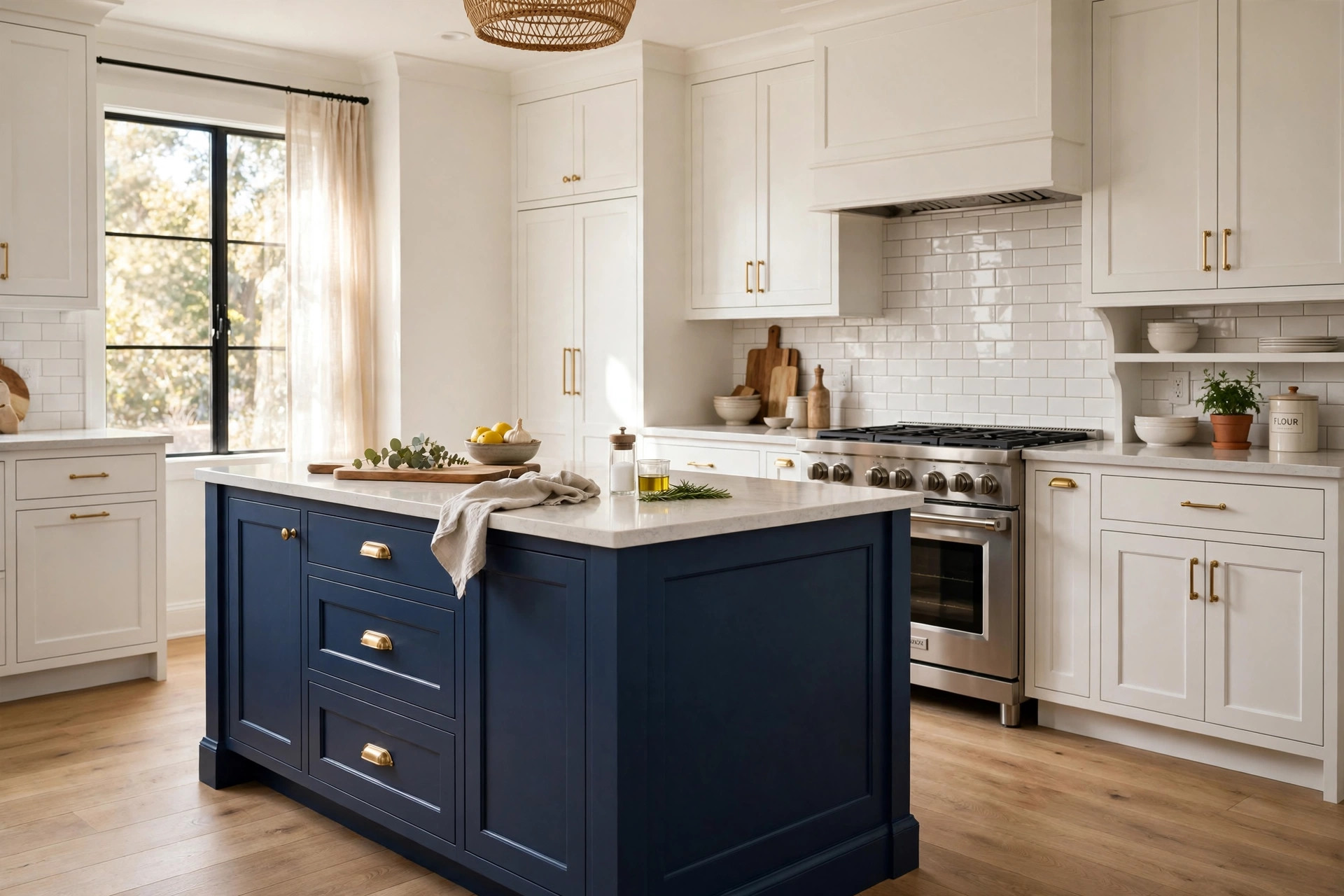
A kitchen island is often the heart of the room. People gather around it for meals, homework, and talk. Many American homeowners now paint this one piece a bold color while they keep the rest of the kitchen light. One of the most loved choices for this look is navy blue paint for kitchen island projects in the USA. It feels rich and classic. It pairs well with white walls, wood floors, and metal hardware. And it costs far less than a full remodel.
This guide walks you through the whole job in plain terms. You will learn why navy works, how to pick the right shade and paint type, what it costs, how to paint it yourself, and how to keep it looking good for years.
Why Navy Blue Works So Well for a Kitchen Island: Navy Blue Paint for Kitchen Island Usa
Navy blue sits between a true color and a neutral. It is bold enough to be a focal point, but calm enough to live with every day. Designers like it for islands because it anchors an open floor plan. In a kitchen that flows into a living room, a dark island tells the eye where the cooking zone starts.
Navy also hides the marks of daily life better than white. Kitchens take a beating. Shoes hit the baseboards. Chair legs bump the sides. A deep blue finish masks small scuffs that would show at once on a light island.
The color works with almost every common finish. Brass pulls and brushed gold knobs look warm and rich against navy. Chrome and stainless steel look clean and modern. Marble, quartz, and butcher block tops all sit well on top of it. That flexibility is one reason the trend has lasted. You can see current island styles and color pairings for ideas on HGTV, which tracks kitchen trends across the country.
How to Choose the Right Navy Paint
Finding Your Shade of Navy
Not all navy blues are the same. Some lean toward black. Some lean toward gray. Some have a hint of teal. The right shade depends on your light and your other finishes.
Dark navies, such as Sherwin-Williams Naval, read as near-black in a dim room and open up under bright sun. Mid-tone navies with a gray cast, like the popular Benjamin Moore Hale Navy, feel softer and suit small kitchens. Brighter navies with more blue can feel playful, but they may clash with warm wood floors.
Buy sample pots. Paint large test boards, not the island itself. Move the boards around the island at morning, noon, and night. Look at each sample next to your countertop and your floor. What looks right under store lights can look wrong in your home. Free online color tools help too, including the paint color tools from Sherwin-Williams and the deep blue color library at Benjamin Moore.
Paint Types That Hold Up on Cabinets
A kitchen island gets hard use. Regular wall paint will chip. You need a paint made for cabinets and trim.
The best choice for most do-it-yourself painters is a water-based acrylic enamel. It flows smooth, dries hard, and cleans up with water. Look for cans labeled cabinet, trim, or enamel. A second strong option is an alkyd enamel. Oil-based and water-based alkyds give a very hard finish, but they cost more and need more care with ventilation.
Avoid flat wall paint and chalk-style finishes for an island unless you plan to seal them with a top coat. They look pretty at first but mark fast in a kitchen.
Picking the Finish
Satin is the safest finish for a kitchen island. It has a soft sheen that wipes clean and hides small flaws. Semi-gloss is tougher and brighter, and many pros prefer it for trim-heavy islands. High gloss is dramatic but shows every dent and brush mark, so it is best left to skilled sprayers.
Popular Navy Blues From Top Brands
Paint companies know this trend well. Each major brand sells several navies that work on islands. You can compare brands at Lowe’s or shop the full lines at Home Depot.
Sherwin-Williams offers Naval, a deep true navy that has topped trend lists for years. Benjamin Moore counters with Hale Navy and Newburyport Blue, both slightly different in mood. Behr’s paint lines include several deep blues that cost less per gallon. Buying from a big-box store often saves money, while paint stores give deeper advice on color matching.
Whatever brand you pick, stay within one paint line for the primer and the top coat. Paints from the same line are made to bond to each other. Mixing a cheap primer with a premium top coat can lead to peeling.
Cost and Price in the USA
Painting an island is one of the cheapest kitchen updates you can make. A typical American kitchen island needs about one gallon of paint and one quart to one gallon of primer, depending on size and color change.
Expect to pay between 30 and 70 dollars per gallon for good cabinet paint from major brands. Primer adds another 20 to 40 dollars. Brushes, rollers, painter’s tape, and sandpaper may add 40 to 80 dollars if you own nothing yet. In total, a do-it-yourself job often lands between 100 and 200 dollars.
Hiring a professional costs more but saves time. A pro may charge 300 to 900 dollars to paint an average island, based on region and prep needed. Prices run higher on the coasts and in large cities. If the rest of your kitchen also needs fresh paint, read our guide to kitchen cabinet refinishing service costs in the USA before you book. For the full cabinetry, our best paint for kitchen cabinets reviews roundup compares the top products side by side.
How to Paint a Kitchen Island: Step by Step
Prep the Surface
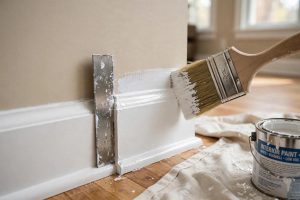
Good paint jobs are made in the prep. Start by clearing the island and removing the hardware. Clean every surface with a degreaser. Kitchens collect a fine film of cooking oil, and paint will not stick to it. A trisodium phosphate substitute or a strong dish soap solution works well.
Lightly sand the whole island with 120-grit sandpaper. You do not need to strip the old finish. You only need to rough it up so the primer can grip. Wipe the dust off with a damp cloth. Fill dents with wood filler, let it dry, and sand it smooth. Tape off the floor, the walls, and the countertop. A neat tape job saves hours of cleanup.
Prime and Paint
Apply one even coat of primer made for cabinets. Let it dry fully, then sand it very lightly with 220-grit paper and wipe the dust. This step sounds fussy, but it is what gives a smooth finish.
Now apply the navy paint. Two thin coats beat one thick coat every time. Thin coats level out and dry hard. Use a high-quality brush for edges and details and a small foam roller for flat panels. Work in long, steady strokes. Let the first coat dry as long as the can directs, then sand lightly and add the second coat. You can find cabinet painting advice from This Old House if you want more detail on technique.
Let It Cure
Paint can feel dry in hours but take days to cure. Keep the island light for at least a week. Avoid banging stools into it. Put the hardware back after the paint is hard to the touch, but wait the full cure time the can states before heavy use.
Care and Upkeep
A painted island needs only simple care. Wipe it with a soft cloth and mild soap. Skip harsh scrubbers, which can dull the finish. Clean spills fast, especially around the trash pull-out and the sink end.
Keep a small jar of leftover paint for touch-ups. Small nicks are normal where chairs rub. Dab a little paint on the spot with a small brush and feather the edges. In most cases the repair will blend in well.
Every few years, check the baseboards and corners for wear. If the finish looks tired, a light sand and a fresh top coat bring it back. You will not need to redo the primer unless the paint is peeling. For general upkeep routines, see the painting guides at The Spruce.
Safety Notes
Paint fumes matter in a kitchen. Choose a low-VOC or zero-VOC paint when you can. Open windows and run a fan while you work. Keep food uncovered away from the painting area, and do not cook while fresh paint is drying nearby. The safer paint guidance from the EPA explains what VOC labels mean and how to ventilate a room.
If your home was built before 1978, the old paint under your island may contain lead. Do not sand it without care. Lead dust is a real health risk, and the EPA has strict rules for renovation work in older homes. When in doubt, hire a certified lead-safe contractor.
Keep children and pets out of the room until the paint is dry. Store paint cans high and sealed.
Frequently Asked Questions
Does navy blue paint make a kitchen look smaller?
Not in most cases. A navy island is a single dark piece in a room that is usually light. Because the eye reads it as one object, it adds depth instead of closing the room in. Dark walls can shrink a room, but one dark island rarely does.
What color walls go with a navy kitchen island?
Warm whites and soft grays are the safest partners. Creamy whites like Swiss Coffee or White Dove soften the navy. Light warm gray keeps the room modern. If you want more color, a muted sage or a pale warm beige also works well.
Should the island match the rest of the cabinets?
It can, but it does not have to. The two-tone look, with white or light cabinets and a dark island, is the most popular version of this style. Matching everything in navy is bolder and suits large kitchens with good light.
How long does cabinet paint last on an island?
A well-prepped island painted with cabinet enamel can look good for seven to ten years. High-traffic edges may need touch-ups sooner. The primer and prep work matter more than the brand of paint for long life.
Can I use regular wall paint on a kitchen island?
You can, but you should not. Wall paint is softer and chips fast under daily bumps. A cabinet or trim enamel costs a little more and lasts far longer. If budget is tight, at least use a top coat over the wall paint, though enamel from the start is the better plan.
Is it cheaper to paint or replace an island?
Painting is far cheaper. A new island can cost thousands of dollars once you add countertops and plumbing. A paint refresh costs a fraction of that and takes a weekend. Painting is the best value when the island’s shape and size still suit your kitchen.
A Final Word
Navy blue paint for kitchen island projects in the USA earns its place. It is affordable, forgiving, and classic. Pick a shade you love in your own light, prep the surface well, and use paint made for cabinets. The result is a kitchen that feels fresh and settled at the same time.
If you plan to hire the work out, check spray painting kitchen cabinet costs near you for price ranges in your area. Browse kitchen style ideas on Better Homes & Gardens for pairing ideas, and read the prep tips on Bob Vila before you open the first can.
References
Benjamin Moore. (n.d.). Paints and stains. https://www.benjaminmoore.com Better Homes & Gardens. (n.d.). Home and garden ideas. https://www.bhg.com Bob Vila. (n.d.). Home improvement advice. https://www.bobvila.com HGTV. (n.d.). Home and garden ideas. https://www.hgtv.com Lowe’s. (n.d.). Home improvement products. https://www.lowes.com Sherwin-Williams. (n.d.). Paints and coatings. https://www.sherwin-williams.com The Home Depot. (n.d.). Home improvement products. https://www.homedepot.com The Spruce. (n.d.). Home and garden advice. https://www.thespruce.com This Old House. (n.d.). Home renovation guidance. https://www.thisoldhouse.com U.S. Environmental Protection Agency. (n.d.). Protecting human health and the environment. https://www.epa.gov
Was this guide helpful?

About Sarah Mitchell
The My Garden US editorial team writes practical, in-depth home and garden guides for American homeowners — tested advice, no fluff.