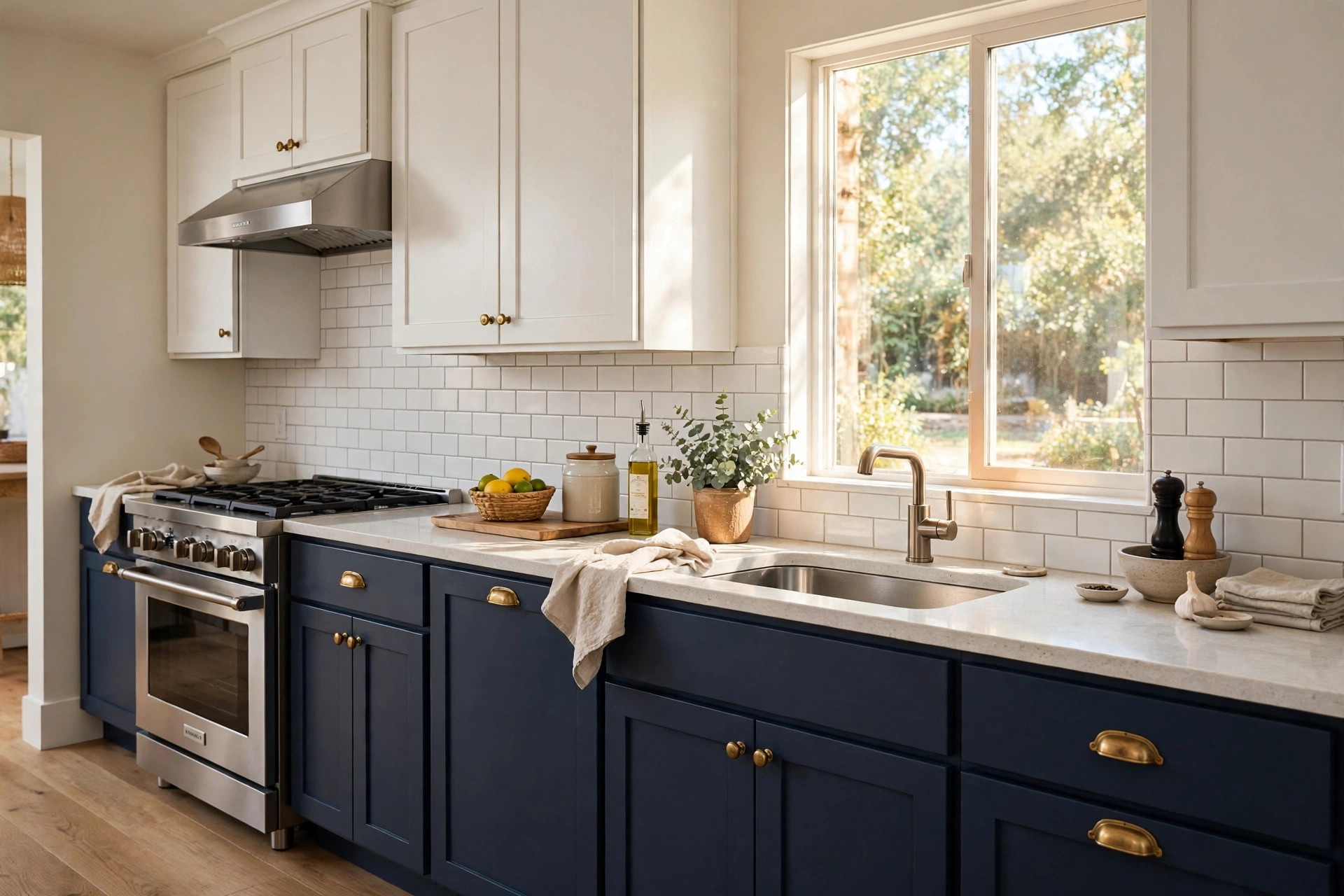

The kitchen is the room where the family gathers each day. Fresh paint on the cabinets can change the whole feel of that room. Two tone kitchen cabinet paint ideas USA homeowners use again and again offer a simple way to add style without a full remodel. The method uses two different colors in one kitchen. Most often the upper cabinets get one color and the lower cabinets get another. The result looks calm, balanced, and put together. This guide explains why the two tone look works, how to choose colors, what the work costs, and how to keep the paint looking fine for years.
Why Two Tone Cabinets Work So Well
One color for every cabinet can look flat. Two colors add depth. The eye moves between the light upper row and the darker lower row, and the room gains a sense of design. Many designers say a two tone scheme makes a small kitchen feel larger, because light uppers open the space while darker lowers ground it. The same trick works in large kitchens, where two tones break up long runs of boxes that might otherwise look dull.
Two tone kitchen cabinets also hide wear. Lower cabinets take the most abuse. Hands touch them, shoes scuff them, and mops bump them. A darker paint color on the lowers shows less dirt and fewer marks. The upper cabinets, which get less handling, can stay light and bright. This mix of beauty and good sense is why the trend has lasted for many years instead of fading away.
There is a money reason too. Painting is far cheaper than replacing cabinets. A full kitchen cabinet replacement can cost many thousands of dollars. A two tone paint job gives much of the same fresh feeling at a small share of that price. Homeowners who plan to sell in a few years often choose two tone paint because buyers respond well to it. A kitchen that looks cared for and current helps a home sell faster.
How to Choose Your Two Colors: Two Tone Kitchen Cabinet Paint Ideas Usa
Picking two colors that work together is the most important step. Take your time with it. Paint is hard to undo once it is on the wood.
Start With Your Kitchen’s Fixed Features
Look at what you cannot change easily. The floor, the countertop, and the backsplash set the rules. If your countertop is warm beige, cool gray cabinets may clash. If your floor is dark wood, very dark lower cabinets may make the room feel heavy. Hold paint samples against these surfaces in your own kitchen, not in the store. Store light is different from home light.
Follow the Light Rule
The most trusted pattern is light on top and dark on the bottom. Light upper cabinets reflect light and lift the room. Dark lower cabinets give weight and hide scuffs. This pattern almost never fails. A reversed scheme, dark on top and light on the bottom, can work in a kitchen with tall ceilings and strong light, but it is harder to get right.
Think in Undertones
Every paint color has an undertone of warm or cool. Whites can lean yellow or lean blue. Grays can lean brown or lean purple. Make sure both of your cabinet colors lean the same way. Two warm colors or two cool colors sit well together. One warm and one cool can fight each other. The paint visualizers from major brands let you test pairs on a photo of your own kitchen before you buy.
Test With Sample Boards
Buy small sample cans and paint large boards. Lean the boards against your cabinets and live with them for a few days. Look at them in morning light, in afternoon light, and under the kitchen lamps at night. A color that looks perfect at noon can look wrong at dinner time. This small test costs little and saves much regret.
Classic Color Pairs That Never Fail
Over the years, certain pairs have proven themselves in American homes. They appear in kitchen design galleries and in homeowner guides with good reason.
Soft White and Navy Blue
This is the most popular pair in the country. Upper cabinets in soft white or off-white, lower cabinets in deep navy. The white keeps the kitchen bright. The navy adds a rich, calm weight. Navy pairs well with brass or gold hardware and with white or light stone countertops.
Warm White and Sage Green
Sage green lowers feel natural and restful. They work well in homes with wood floors and simple decor. Warm white uppers keep the room friendly. This pair suits farmhouse and cottage styles, and it shows dirt less than pure white.
Light Gray and Charcoal
For a modern look, try light gray uppers with charcoal or dark gray lowers. The two grays form a smooth range of tone. This pair fits well in kitchens with stainless steel appliances and dark stone counters.
Cream and Deep Forest Green
Forest green lowers bring a strong, classic feel. They look fine with brass pulls and butcher block counters. Cream uppers soften the scheme and keep it from growing too dark.
White and Matte Black
White uppers with black lowers give a sharp, bold look. It suits modern and industrial kitchens. Black lowers hide scuffs better than any other choice, which is useful in busy family kitchens.
Greige and Soft Blue
Greige, a mix of gray and beige, works as a calm lower cabinet color. Soft blue uppers or lowers add a gentle lift. This pair suits coastal homes and small kitchens that need air.
You can also mix a painted color with natural wood. Some homeowners paint the uppers white and keep the lowers in stained oak or walnut. This is still a two tone scheme, and it adds warmth that paint alone cannot give.
Island Cabinets as an Accent
A simpler path to the two tone look is to paint only the island. Keep all the wall cabinets one color, often white or cream, and paint the island a bold tone. Deep blue, dark green, or even brick red islands are common. The island becomes the center of the room. This method uses less paint and less labor, so it costs less. It is a fine choice if you are unsure about painting all the lower cabinets.
The Right Paint for Kitchen Cabinets
Kitchen cabinets take hard daily use. Grease, steam, and cleaning products attack the finish. Ordinary wall paint will not hold up. You need a paint made for cabinets or trim.
Paint Types
Acrylic enamel and alkyd enamel are the two common choices. Acrylic enamel dries fast and cleans up with water. Alkyd enamel levels out to a very smooth finish and stands up well to wear, though it dries slower and has more odor. Many paint makers now offer cabinet-specific formulas that combine the best of both. Satin or semi-gloss sheen is best for cabinets. Flat paint shows marks and is hard to clean.
Primer
Do not skip primer. A bonding primer helps paint grip old finishes and stops stains from bleeding through. If your cabinets were stained dark before, a stain-blocking primer is needed. One or two coats of primer make the top color truer and longer lasting.
Tools and Method
Remove the doors and drawers before painting. Label each one so it returns to the right spot. Clean every surface with a degreaser, because kitchen grease stops paint from sticking. Sand lightly to give the primer something to hold. Use a high quality brush for edges and a foam roller for flat panels. Two thin coats beat one thick coat. Thick paint runs and sags. Let each coat dry fully before the next. Detailed step by step methods can guide a first time painter through the whole job.
Cost and Price in the USA
The cost of a two tone cabinet paint job depends on kitchen size and on whether you do the work yourself.
Do It Yourself
A do it yourself job for an average kitchen costs between 200 and 600 dollars. This covers primer, paint, sandpaper, brushes, rollers, and cleaning supplies. The main cost is your time. Expect a full week of evenings and weekends for doors, drawers, and boxes.
Hiring a Professional
A professional painter charges between 3,000 and 8,000 dollars for a full kitchen of cabinets. Larger kitchens and high end finishes cost more. Two tone work may add a small extra charge because the painter must mask between the two colors with care. Get at least three written quotes. Ask each painter what paint brand they use and how many coats they apply.
Hardware and Extras
New pulls and knobs cost 2 to 10 dollars each. A kitchen with thirty doors and drawers may need 60 to 300 dollars of new hardware. New hardware makes painted cabinets look far better, so plan for it in the budget. Soft close hinges are another small upgrade worth the price.
Care and Upkeep
Painted cabinets need gentle care to stay fresh. Clean them with a soft cloth and warm soapy water. Avoid harsh cleaners and scouring pads, which dull the finish. Wipe up grease splatters soon, before they set. Steam from a kettle or a dishwasher can soften paint over time, so run the range hood fan while cooking.
Touch up chips as soon as you see them. Keep a small jar of each cabinet color for this purpose. A tiny brush and a steady hand make small chips disappear. With fair care, a good cabinet paint job lasts eight to twelve years before it needs a refresh.
Safety Notes
Cabinet painting involves chemicals that need respect. Work in a well ventilated room. Open windows and use a fan. Wear a respirator mask rated for paint fumes, not just a dust mask. Keep children and pets out of the work area until the paint has cured.
Older homes may have lead paint under the old finish. If your home was built before 1978, test for lead before sanding. The Consumer Product Safety Commission offers guidance on lead paint safety. If lead is present, hire a certified professional. Sanding lead paint without proper control is dangerous.
Frequently Asked Questions
Should the upper or lower cabinets be darker?
In most kitchens the uppers should be lighter and the lowers darker. This pattern opens the room and hides wear where it happens most. A dark upper row can work in a kitchen with tall ceilings and strong daylight, but it is the harder choice.
Can I paint only the island two tone?
Yes. Painting just the island a bold color while the rest stays one color is one of the easiest ways to get the two tone look. It costs less and takes less time, and it still gives the kitchen a clear focal point.
How long does a cabinet paint job last?
A well done job with proper cleaning, priming, and cabinet grade paint lasts eight to twelve years. Lower cabinets near the stove and sink may need touch ups sooner. Keep leftover paint for repairs.
Is it cheaper to paint cabinets or replace them?
Painting is far cheaper. A do it yourself paint job costs a few hundred dollars, and even a professional job costs far less than new cabinets, which can run 10,000 dollars or more for a full kitchen. Paint is the best value for a fresh look.
What sheen should I use on cabinets?
Satin or semi-gloss. These sheens resist stains and wipe clean. Flat or matte paint marks easily and is hard to wash. High gloss is very durable but shows every flaw in the wood, so most homeowners prefer satin.
Can two tone cabinets work in a small kitchen?
Yes, they work well. Light upper cabinets make a small kitchen feel taller and more open. Keep the lower color from going too dark in a very small room, and make sure there is good light over the counters.
A Short Final Word
Two tone kitchen cabinet paint ideas USA families choose year after year succeed because they are simple, honest, and lasting. Pick colors that suit your floors and counters. Use the right primer and paint. Take care with the prep work, because prep decides the final quality. The result is a kitchen that feels fresh and personal without the cost of a full remodel.
For more wall and surface ideas around the home, you may enjoy reading about /nursery-wallpaper-ideas-for-baby-girls/, /acoustic-wall-panels-for-home-theater-usa/, and /magnetic-paint-for-home-office-walls-usa/. Good sources for color and product research include Benjamin Moore, Home Depot, Lowe’s, and The Spruce.
References
Behr. (n.d.). Paints, primers, and stains. https://www.behr.com Benjamin Moore. (n.d.). Paints and stains. https://www.benjaminmoore.com Bob Vila. (n.d.). Home improvement advice. https://www.bobvila.com HGTV. (n.d.). Home and garden ideas. https://www.hgtv.com Lowe’s. (n.d.). Home improvement products. https://www.lowes.com Sherwin-Williams. (n.d.). Paints and coatings. https://www.sherwin-williams.com The Home Depot. (n.d.). Home improvement products. https://www.homedepot.com The Spruce. (n.d.). Home and garden advice. https://www.thespruce.com This Old House. (n.d.). Home renovation guidance. https://www.thisoldhouse.com U.S. Consumer Product Safety Commission. (n.d.). Product safety information. https://www.cpsc.gov
Was this guide helpful?

About Lisa Anderson
The My Garden US editorial team writes practical, in-depth home and garden guides for American homeowners — tested advice, no fluff.
You May Also Like

Modern Farmhouse Paint Colors Exterior USA
August 2, 2026 0 views
Best Projector Screen Paint Reviews USA
July 25, 2026 0 views
Best Paint for High Humidity Bathrooms USA: A Plain Guide to Lasting Walls
August 10, 2026 0 views