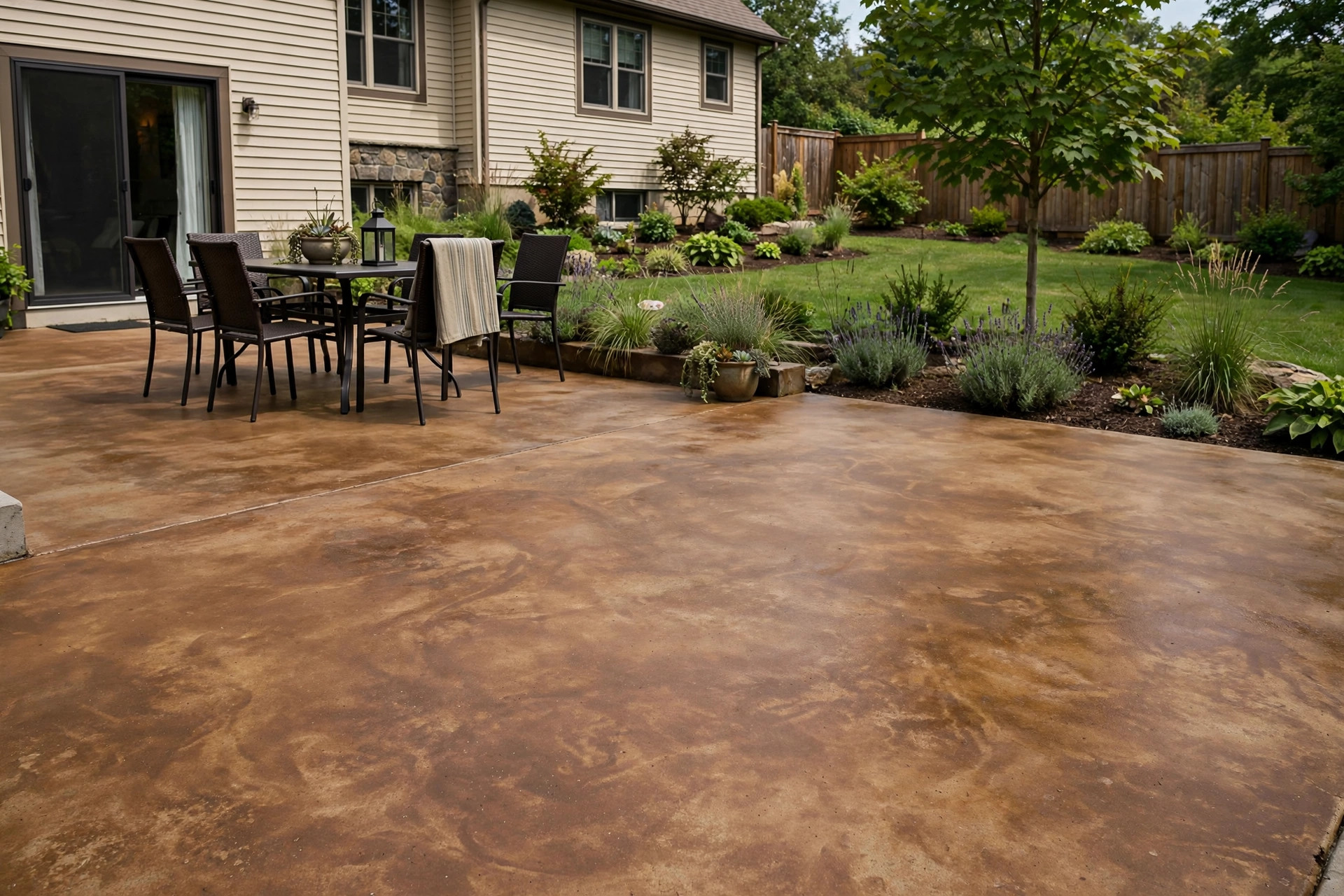

A gray patio does its job, but it rarely inspires anyone. For many homeowners across the country, the answer has been a can of concrete stain. The search for concrete stain for patio reviews usa brings up dozens of products, and the range of opinion can be wide. Some people report patios that still look new after six summers. Others report color that peeled before the first winter ended. This guide gathers what reviewers, testers, and long-time users tend to agree on, so you can choose with more confidence and fewer surprises.
Why Staining a Patio Matters
Concrete is strong, but plain concrete is porous. Water, oil, and sun work their way in. Stain does more than add color. A good stain enters the surface and becomes part of it. The result resists fading and wears in a way that paint cannot match. That is why reviews of the best concrete stain for outdoor patio projects so often stress one point: preparation matters more than brand.
A stain lets the texture of the concrete show through. Unlike paint, it does not form a thick film on top. The variegated look is part of the appeal. Reviewers often say it gives an ordinary slab the feel of natural stone. It is also kind to budgets. A few gallons and a weekend of work can change a patio far more than new furniture can.
What to Look for When You Choose: Concrete Stain for Patio Reviews Usa
Color Range and Finish
Manufacturers sell earth tones most often: browns, tans, grays, and warm ambers. Some lines add blues, reds, and greens. In concrete stain for patio reviews usa roundups, colors described as “sedona,” “walnut,” and “slate” come up often. Remember that the final color depends on your concrete. Old, dirty slabs stain darker and less evenly than clean new ones. Most brands sell small sample sizes. Testers at Consumer Reports and the editors at Bob Vila both advise trying a test patch in an out-of-the-way corner before you buy gallons.
Coverage and Number of Coats
Labels state coverage per gallon, often 200 to 400 square feet for a single coat. Reviewers caution that porous or weathered concrete drinks stain. Plan for two coats, and buy about twenty percent more than the math suggests. Two thin coats beat one heavy coat every time. Running short mid-job forces a store trip that breaks your wet edge and can leave visible lines, so err on the side of an extra gallon.
Slip Resistance
Texture affects safety as much as looks. A smooth stain-and-sealer finish can get slick in rain. Look for products that accept a grit additive in the topcoat. Reviewers in wet regions call this a small cost that pays off every storm.
Cure Time and Weather Windows
Stains need dry days and mild temperatures. Most labels ask for air between 50 and 90 degrees with no rain for at least 24 hours after the last coat. A sealer usually follows, and it has its own cure rules. Users who rushed the schedule are the ones who leave one-star reviews.
Types of Patio Concrete Stain
Acid-Based Stains
Acid stains use a mild acid reaction with the minerals in the concrete. The reaction creates permanent, mottled color. Reviews praise the depth. No two applications look quite the same, which is either the charm or the risk. The color will not peel because it is part of the slab itself. The downsides are real: strong fumes, the need for protective gear, and a neutralizing rinse after application. Neutralized residue must be rinsed and collected, not left to run into a storm drain.
Water-Based Stains
Water-based acrylic stains are the friendliest option. They clean up with soap and water and come in a wider palette of colors. They sit closer to the surface than acid stains, so a quality sealer is important for outdoor use. Many reviewers like them for do-it-yourself work on patios with light foot traffic.
Penetrating Solvent Stains
These use solvents to carry pigment deeper into the slab. Reviewers say they give strong color with fewer coats. They dry fast, which helps in warm climates. Ventilation matters, and gloves are a must. Check local rules on solvent products before you buy.
For a patio, the acid stain vs water-based concrete stain debate comes down to look and labor. Acid gives natural, varied tones with more work. Water-based gives predictable color with an easier day. Both can look fine for years if the slab is cleaned well first.
What Reviews Say About Top Brands
Shoppers reading concrete stain for patio reviews usa will meet the same names again and again. Retail pages at Home Depot and Lowe’s carry hundreds of user reviews for patio stain products, and patterns repeat across them.
Behr’s concrete and masonry line earns high marks for coverage and ease of use. Reviewers like the color charts, which they find close to the real result. Behr offers samples in many colors, and users who tested first report fewer regrets. The main complaint is that worn areas may need a fresh coat sooner than the label promises.
Valspar gets frequent mention for value. Homeowners on a budget report good color for the price. Valspar stains are easy to find in stores, which helps when you run short on a Sunday. Some reviewers note thinner coverage on very rough concrete.
Sherwin-Williams draws praise from those who hired contractors. Pros often buy commercial lines through dealers. Sherwin-Williams products cost more, but reviews describe them as forgiving on difficult slabs. The advice most often repeated is to talk to the store staff, who know which product suits local weather.
Specialty brands also appear. Online guides at The Spruce and HGTV list products with strong ratings for specific needs, such as extra slip resistance or UV stability. Project walkthroughs at This Old House and step-by-step articles at Family Handyman show the full process from cleaning to sealing, which many reviewers call the best way to avoid beginner mistakes.
Cost and Price
A gallon of quality patio stain runs from about thirty to seventy dollars in most states. Sealer adds another thirty to sixty dollars per gallon. A 400-square-foot patio usually needs two to three gallons of stain plus one to two gallons of sealer. Cleaning supplies, brushes, rollers, and protective gear add perhaps forty dollars more. Most do-it-yourself jobs land between 150 and 400 dollars in materials.
Hiring a contractor changes the picture. Expect two to five dollars per square foot for labor and materials, depending on the region and the condition of the slab. Crack repair and heavy cleaning add cost. Get two or three written estimates. Ask each contractor what stain they use and why. If you are pricing bigger masonry jobs, our guide to stucco painting cost per square foot usa shows how per-foot pricing works on other exterior surfaces.
How to Prepare and Apply
Clean the Concrete Thoroughly
Every reliable review starts here. Sweep the slab. Scrub with a degreaser or a concrete cleaner. Pressure washing helps, but let the surface dry fully before you start. Oil spots, leaf stains, and old sealer block new stain. If a previous coating is still on the slab, it must be stripped. A stain cannot soak into concrete that is sealed shut.
Repair Cracks and Joints
Fill small cracks with a concrete patch. Let repairs cure per the label. Stain will darken fresh patch material more than the old concrete, so expect some variation. Many reviewers accept this as part of the hand-worked look. For larger masonry painting ideas, see our piece on painting concrete retaining wall ideas usa.
Apply in Sections
Work in manageable areas. Keep a wet edge so lap marks do not form. For acid stains, wear gloves, goggles, and a respirator. Apply with a plastic pump sprayer, since metal parts can react with the acid. For water-based stains, a roller or sprayer both work. Two thin coats, with drying time between, give the most even color.
Seal and Protect
Sealer is not optional outdoors. It locks in color and guards against water and UV light. Reviews are clear: patios that were sealed last longer and hold color better. A slip-resistant additive in the sealer is wise for patios near pools or steps. Plan to reseal every two to four years, depending on sun and traffic.
Care and Upkeep
Stained patios ask little of you. Sweep regularly. Hose off dirt. Wash once a year with a mild concrete cleaner, not a harsh degreaser, which can dull the sealer. Avoid metal scrapers and deicing salts with harsh chemicals. Touch-up is simple: clean the worn spot, apply a little stain, and reseal the area. Reviewers who stayed on this schedule report patios that still look good after five or more years.
Safety
Acid stains are the ones that need real care. Read the label before you open the can. Wear chemical-resistant gloves, eye protection, and a respirator. Keep children and pets off the slab until it is sealed and dry. Rinse water from acid staining should be neutralized and handled per the label, never poured straight into a storm drain. Solvent stains need open air and no open flames nearby. Water-based stains are the gentlest of the group, but gloves and ventilation are still smart.
FAQ
How long does patio concrete stain last? With a good sealer and basic care, reviewers report five to eight years before the color needs refreshing. Heavy sun and rain shorten that span. A fresh coat of sealer every few years extends it.
Can I stain a patio that was already painted? Not directly. Paint blocks the stain from entering the concrete. You must strip or grind the paint off first. Many reviewers say removal is the hardest part of such a project.
Do I need to etch the concrete before staining? Slick, power-troweled slabs often need etching so the stain can bond. Most patios are broom-finished and need only a deep cleaning. Test by sprinkling water on the surface. If it beads up, the concrete needs more preparation.
What are the most popular patio concrete stain colors? Reviewers in the usa favor warm browns, tans, terracotta, and gray tones. These patio concrete stain colors hide dirt well and suit most house colors. Darker colors show less wear in high-traffic lanes.
Can stain hide cracks and stains on old concrete? Stain adds color but does not fill cracks. It can mask minor discoloration with darker tones. Deep oil stains may still show. A test patch on the worst area tells you what to expect.
Is stained concrete slippery when wet? It can be, especially with a glossy sealer. Reviews recommend a matte or satin sealer and a grit additive for patios that get wet often.
A Short Final Word
The thread through nearly all concrete stain for patio reviews usa is simple: the stain gets the credit, but the preparation does the work. Clean the slab well, repair what is broken, test your color, apply thin coats, and seal it. Do that, and an ordinary patio can look like stonework for years. If your project stretches to the garage floor too, compare notes with our look at polyaspartic garage floor coating cost usa before you decide. And for staining work on wood instead of concrete, our overview of log cabin staining cost near me covers what pros charge for that very different job.
References
Behr. (n.d.). Paints, primers, and stains. https://www.behr.com Bob Vila. (n.d.). Home improvement advice. https://www.bobvila.com Consumer Reports. (n.d.). Product reviews and ratings. https://www.consumerreports.org Family Handyman. (n.d.). DIY home repair and maintenance. https://www.familyhandyman.com HGTV. (n.d.). Home and garden ideas. https://www.hgtv.com Lowe’s. (n.d.). Home improvement products. https://www.lowes.com Sherwin-Williams. (n.d.). Paints and coatings. https://www.sherwin-williams.com The Home Depot. (n.d.). Home improvement products. https://www.homedepot.com The Spruce. (n.d.). Home and garden advice. https://www.thespruce.com This Old House. (n.d.). Home renovation guidance. https://www.thisoldhouse.com Valspar. (n.d.). Paints and coatings. https://www.valspar.com
Was this guide helpful?

About Emily Rodriguez
The My Garden US editorial team writes practical, in-depth home and garden guides for American homeowners — tested advice, no fluff.
You May Also Like

Board and Batten Installation Cost USA: What Homeowners Should Expect to Pay
September 16, 2026 0 views
The Best Paint for Chain Link Fence USA Homeowners Trust
July 26, 2026 0 views
Best Paint for Baby Room Walls USA: A Plain Guide for Parents
January 12, 2026 0 views