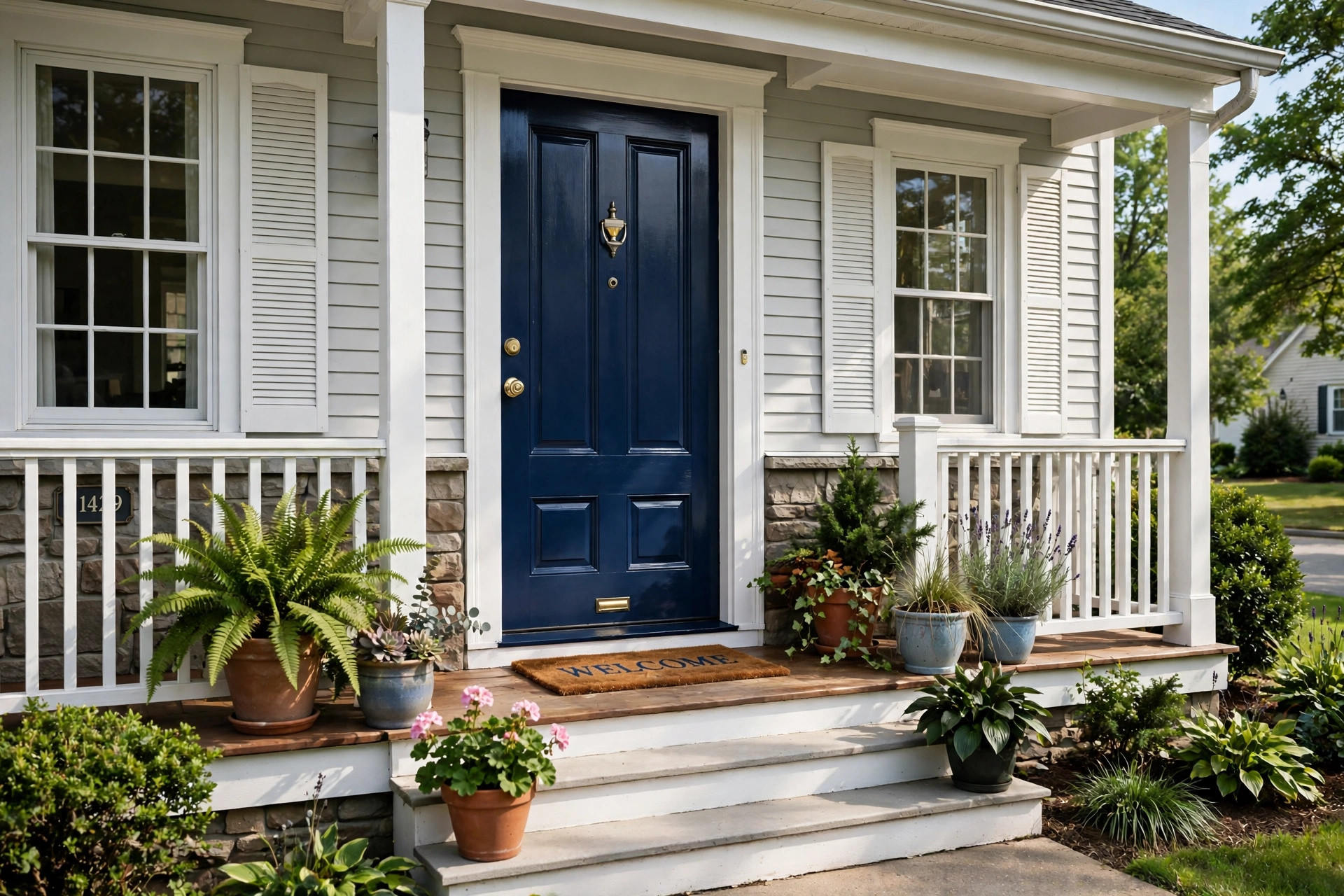

The front door is the first thing a guest sees. It is also the first thing a buyer sees. Reviews of the best paint for front door USA reviews searchers look for all say the same thing. The right paint keeps a door bright for years. The wrong paint peels in one season. This guide walks through what matters when you buy front door paint in the United States. It covers finishes, colors, price, prep, and care. Read it once before you visit the store. You will save time and money.
Why the Front Door Paint Matters So Much
A front door takes more abuse than almost any other part of a house. Sun hits it all day on south and west sides. Rain soaks it in storms. Cold snaps make wood shrink. Summer heat makes it swell. A cheap interior paint will fail fast under these conditions. An exterior paint made for doors and trim will not.
A good front door paint does three jobs at once. It seals the door against water. It resists the sun so the color stays true. It gives a smooth finish that wipes clean. Many American reviews rate durability as the top factor. Color comes second. Price comes third.
The front door also sets the tone for the whole house. Real estate agents in the United States have long said a fresh front door lifts curb appeal. A bold red door draws the eye. A deep black door looks serious. A clean white door looks neat. Paint is the cheapest way to change the mood of an entry.
What to Look for in Front Door Paint: Best Paint for Front Door Usa Reviews
Not every can labeled exterior will work well on a door. Doors swing, slam, and get touched a hundred times a day. The paint must be hard once it dries. Here are the main things reviewers in the United States watch for.
Acrylic Latex or Alkyd
Most door paints sold today are 100 percent acrylic latex. They dry fast. They clean up with water. They stay flexible as the door moves with heat and cold. Older oil or alkyd paints dry to a harder shell. They also take longer to dry and need mineral spirits for cleanup. For most homes, a high-quality acrylic latex is the best pick. It holds up well and is easy to use.
Sheen Level
Sheen is how shiny the paint looks when it dries. Front doors look best in semi-gloss or high gloss. Flat and eggshell finishes do not hold up on doors. Semi-gloss wipes clean and shows off door panels nicely. High gloss looks bold and rich, but it shows every dent and brush mark. Many reviews of the best front door paint recommend semi-gloss for wood doors and high gloss for steel doors.
Fade Resistance
Dark colors fade fastest. Red, navy, and black doors bleach in strong sun. Look for paint with strong ultraviolet protection. Premium lines from the big American paint makers list fade resistance on the label. If your door faces south or west, this factor matters most.
Mildew and Moisture Protection
Doors near porches and overhangs stay damp after rain. A paint with mildewcide helps in humid states like Florida, Texas, and the Gulf Coast. Water resistance matters for wood doors most of all. Water gets under weak paint and rots the wood from the inside.
Types of Front Door Paint
Reviews across the United States sort front door paints into a few groups. Each group has a strength. Knowing the groups helps you compare labels in the store.
Exterior door and trim paint. This is the most common group. It is made for doors, trim, and shutters. It sticks well to wood, fiberglass, and metal. One gallon covers two doors with two coats, since doors are small.
Exterior enamel. Enamel paints dry to a very hard finish. They resist scratches and fingerprints. They work well on doors that children and pets bump into. Alkyd enamels are the hardest, but acrylic enamels are easier to apply.
All-in-one paint and primer. Some products claim the door needs no primer. This works on doors that are already painted and in good shape. Bare wood still needs a separate primer for best results. Do not skip primer on bare wood, no matter what the label says.
Spray paint for doors. A few reviewers like spray paint for metal doors with smooth surfaces. It gives an even coat fast. It is harder to control near glass panes and hardware. Masking takes time. Most buyers do better with a brush or a small roller.
Best Colors for American Front Doors
Color is personal, but some facts hold across reviews. Dark colors absorb heat. On a steel door in Arizona or Texas, black paint can get hot enough to warp the surface. If you live in a hot state, pick a medium tone or make sure the paint is rated for high heat.
Classic choices that keep selling well in the United States include:
– Classic red. Warm and welcoming. Works on brick, stone, and siding. – Navy blue. Calm and sharp. Looks good with white trim. – Black. Bold and modern. Needs strong fade protection. – Forest green. Quiet and natural. Suits older homes. – Charcoal gray. A softer choice than pure black. – Teal or turquoise. Fun and coastal. Common in the South and beach towns.
Light colors show dirt faster but hide dents. Dark colors hide dirt but show scratches. Neutral doors match the trim and let the house color speak. Bright doors make the entry the star. There is no wrong answer as long as the paint holds up.
Cost and Price
Paint for a front door is one of the cheapest home projects. A gallon of premium exterior door paint costs between 40 and 75 dollars in most American stores. You will not use a full gallon. Most doors need one quart to one pint for two coats. Quarts cost between 15 and 30 dollars.
Here is a realistic budget for a do-it-yourself job:
– One quart of quality paint: 15 to 30 dollars. – One quart of primer, if needed: 12 to 20 dollars. – Sandpaper, tape, and a good brush: 20 to 35 dollars. – Drop cloth and painter’s tape: 10 dollars.
The total runs 50 to 95 dollars for most doors. Hiring a painter costs more. A professional front door paint job in the United States runs 200 to 500 dollars, based on prep work and local labor rates. Read a detailed guide on exterior painting prices before you call for quotes.
Buy the best paint you can afford. A 25-dollar quart of premium paint beats a 12-dollar quart every time. The expensive can covers better, lasts longer, and needs fewer coats. It often costs less per year of life.
How to Prep a Front Door
Good prep is half the job. Paint fails most often because the door was not ready. Plan a full morning for prep and painting.
1. Take the door off the hinges or leave it in place and tape around it. Removing it is best for a smooth finish. 2. Clean the door. Wash with soap and water. Let it dry. 3. Sand it. Use 120-grit paper to rough up old paint. Sand bare spots smooth. 4. Fix damage. Fill dents and holes with exterior wood filler. Let it dry and sand flat. 5. Prime. Put one coat of exterior primer on bare wood or bare metal spots. 6. Paint. Apply two thin coats of door paint. Let the first coat dry fully. 7. Remove tape while the final coat is still slightly wet for clean lines.
Do not paint in direct sun. The paint dries too fast and leaves brush marks. Do not paint when rain is due within a few hours. Work in shade and mild weather for the best result.
Care and Upkeep
A well-painted door needs little care. Wash it once or twice a year with mild soap and water. Wipe off fingerprints and dust. Check the bottom edge each spring. The bottom is where water sits and paint fails first.
Touch up scratches soon. A small bottle of the same paint saves a full repaint later. Keep the leftover paint in a cool, dry place. Label the can with the door location and the date.
Most quality front door paint lasts five to ten years. Sun-facing doors need repainting sooner. Doors under a deep porch last longer. When the color looks dull or the finish feels chalky, it is time to repaint.
Safety Notes
Paint safety is simple but important. Work with the garage door open or the windows open if you paint inside. Wear a mask when sanding old paint. Homes built before 1978 may have lead paint. Test before you sand. If lead is present, call a professional who knows the rules.
Keep paint away from children and pets. Store cans sealed and out of reach. Clean brushes with water for latex paint. Read the label for cleanup steps for alkyd paint.
Hardware safety matters too. Take off the knob and lockset before painting. Paint on hardware looks bad and can gum up the lock. Tape around hinges if you leave the door hung.
Frequently Asked Questions
What is the best paint for a front door in the USA?
Reviews most often name 100 percent acrylic latex exterior paint in semi-gloss. It holds up to weather, cleans up with water, and keeps color well. Top American brands include Behr, Sherwin-Williams, and Benjamin Moore. Pick one rated for doors and trim.
Should I use primer on a front door?
Yes if the door is bare wood, bare metal, or has peeling paint. A separate exterior primer gives the topcoat something to hold. On a door that is already painted and sound, a paint-and-primer product can work. One coat of real primer still gives the best bond.
What sheen is best for a front door?
Semi-gloss is the most popular choice. It looks rich, wipes clean, and hides small flaws. High gloss is bolder but shows every brush mark. Avoid flat and eggshell. They do not stand up to daily use on a door.
How many coats of paint does a front door need?
Two coats over primer is the standard. Thin coats dry better than one thick coat. Some dark colors need three coats for full coverage. Let each coat dry per the label before you add the next.
Can I paint a front door without removing it?
Yes. Tape the frame, the hardware, and the glass panes. Slide a drop cloth under the door. Painting a hung door works fine. Taking the door off gives a smoother finish and no risk of it sticking to the frame.
What is the best front door color for resale value?
Real estate guides in the United States often point to classic red, black, and navy. These colors photograph well and suit many styles. In the end, a neat door in any color beats a shabby door. Keep it simple if you plan to sell soon.
A Short Final Word
The best front door paint is the one that matches your door, your climate, and your taste. Buy quality acrylic latex in semi-gloss. Prep the door well. Apply two thin coats. Keep up with small touch-ups. Do that, and your entry will look sharp for many years.
If you are planning more paint projects, these guides may help: our porch and patio paint buying guide, tips for kitchen cabinet paint, and ideas for accent walls.
For more background, see The Home Depot, Lowe’s, and This Old House. Buying guides are also published by Bob Vila and The Spruce.
References
Behr. (n.d.). Paints, primers, and stains. https://www.behr.com Benjamin Moore. (n.d.). Paints and stains. https://www.benjaminmoore.com Bob Vila. (n.d.). Home improvement advice. https://www.bobvila.com Lowe’s. (n.d.). Home improvement products. https://www.lowes.com Sherwin-Williams. (n.d.). Paints and coatings. https://www.sherwin-williams.com The Home Depot. (n.d.). Home improvement products. https://www.homedepot.com The Spruce. (n.d.). Home and garden advice. https://www.thespruce.com This Old House. (n.d.). Home renovation guidance. https://www.thisoldhouse.com
Was this guide helpful?

About Michael Thompson
The My Garden US editorial team writes practical, in-depth home and garden guides for American homeowners — tested advice, no fluff.
You May Also Like
Refinishing Outdoor Teak Furniture Cost USA
May 15, 2026 0 views
Board and Batten Installation Cost USA: What Homeowners Should Expect to Pay
September 16, 2026 0 views
Waterproofing Paint for Retaining Walls: A Guide for American Homeowners
March 14, 2026 0 views