
Introduction
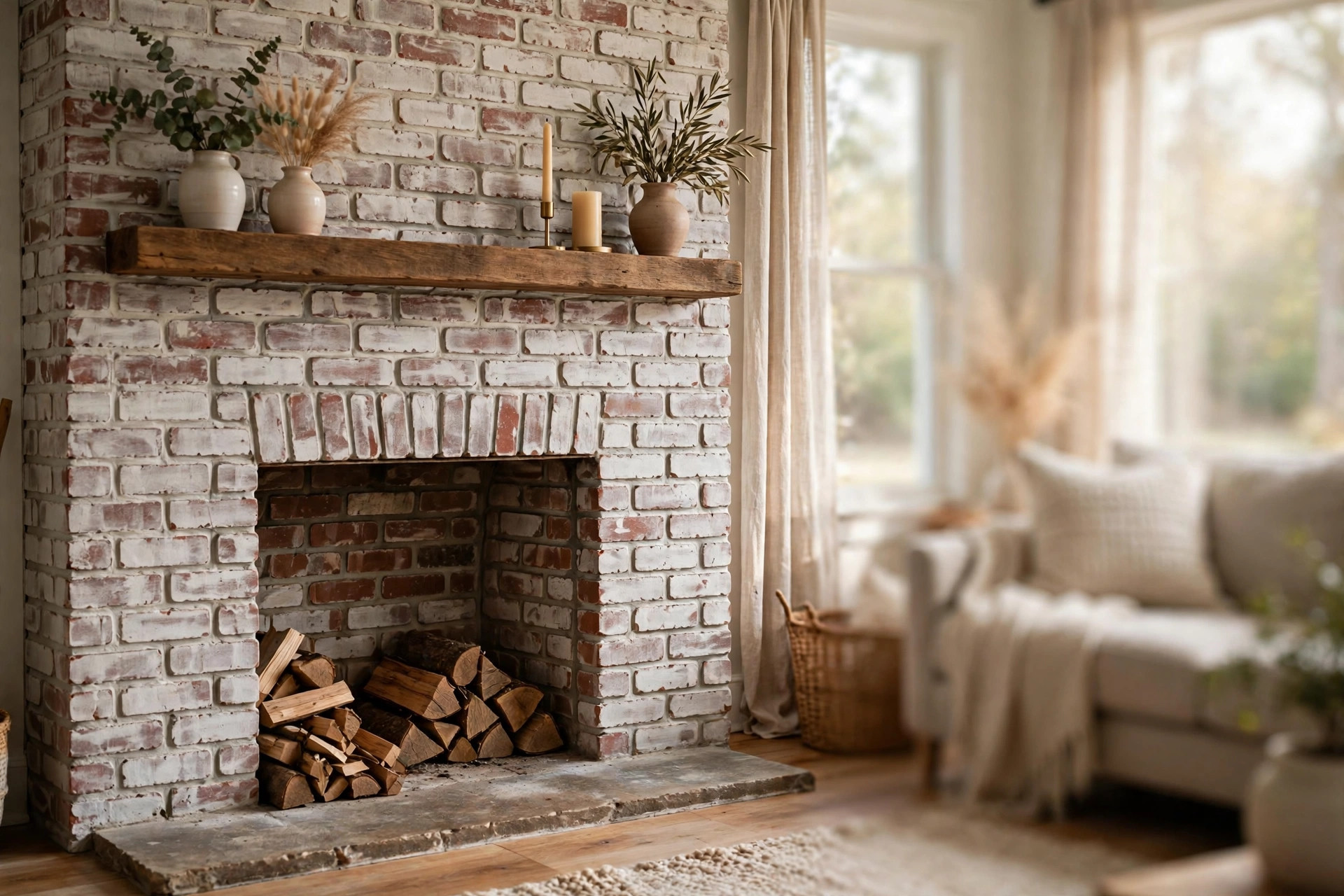
A brick fireplace can anchor a living room. But dark red brick can also make the room feel heavy. Whitewash is a simple fix. It softens the color of the brick while letting the texture show through. If you are searching for whitewash brick fireplace cost near me, you want to know two things. What should the job cost? And who should do it? This guide answers both. It covers local price ranges, what drives the cost, how to hire a painter, and how to do the job yourself. It also covers the choices you will face along the way.
Why Whitewashing Matters: Whitewash Brick Fireplace Cost near Me
A Fresh Look Without New Brick
Many homes built between the 1950s and the 1990s have brick fireplaces in bold red or brown tones. The brick is solid. It works fine. But the color can clash with modern decor. Tearing the brick out and starting over costs thousands of dollars. Whitewash changes the color for a small fraction of that price. It gives the room a lighter, cleaner feel. The brick still looks like brick. The texture stays. Only the tone shifts toward soft white and gray.
Value and Curb Appeal
A fireplace is often the focal point of a living room. When buyers walk into a home, they notice it right away. A dated fireplace can drag down the feel of the whole space. A whitewashed fireplace looks fresh and cared for. Real estate agents often say that updated fireplaces help homes show better. The job costs far less than a kitchen or bathroom update. For sellers, it is one of the cheapest ways to make a room feel new.
Whitewash vs. Full Paint
Some homeowners paint their brick solid white. That works, but it hides the brick completely. Whitewash is thinner. It lets some of the brick color show through. The result looks softer and more natural. Whitewash is also easier to change later. Full paint builds up a thick film that is hard to remove. A wash can often be sanded or touched up with less trouble. If you want the brick to still read as brick, whitewash is the better choice.
What to Look For and How to Choose
Finding a Painter Near You
The phrase “near me” in your search is the key step. Whitewash costs change by region. A painter in a big city may charge twice what one charges in a small town. Start by asking friends and neighbors for names. Look for painters who show brick or masonry work in their photos. General house painters can do the job, but those with masonry experience tend to get a better finish. Call three firms at least. Ask each one to see the fireplace in person before they quote a price.
What a Good Quote Includes
A fair quote should list the full scope of the work. It should cover cleaning the brick, taping off the mantel and floor, mixing the wash, applying it, and cleaning up. Ask if the price includes a clear sealant coat. Ask how many coats are planned. Some fireplaces need two passes to look even. Also ask about the paint they will use. Standard interior latex mixed with water is common for whitewash. Some painters use limewash products made for masonry. Get the quote in writing.
DIY or Hire a Pro
Many homeowners do this job themselves. It is a weekend project. The skills needed are basic. You mix paint with water, brush it on, and wipe some off. The hard part is getting an even look. Brick is porous and rough. The wash soaks in fast. A pro has done it before and can work quickly. A first-timer may end up with patchy spots and need a second try. If your fireplace is large or hard to reach, hire help. If it is a small standard fireplace and you are patient, try it yourself.
Types and Options
Classic Whitewash
The classic method mixes white latex paint with water. A common mix is one part paint to one part water. Some people go thinner, down to one part paint and three parts water. You brush the mix onto the brick and let it sit for a short time. Then you wipe some away with a rag. The brick shows through where you wipe more. The mortar lines stay light. This method is cheap and forgiving. You can learn how to mix it right at Behr or any paint counter.
Limewash
Limewash is an old finish made from crushed limestone. It has been used on brick for centuries. It gives a chalky, cloudy look that many people love. It soaks into brick and bonds with it. Limewash costs more than latex whitewash. A bag of limewash powder runs about thirty to sixty dollars. You may also need a special sealer. If you want to buy limewash paint, check local paint stores first, since not every store stocks it.
German Schmear
German schmear is a different look. It uses mortar, not paint. You smear wet mortar over the brick and wipe it back so the brick shows in patches. The effect is old and rustic. It costs more than whitewash because it uses more material and takes more skill. A pro German schmear on a fireplace often runs between seven hundred and fifteen hundred dollars. It is a good pick if you want a European cottage feel.
Solid Paint
Solid paint covers the brick fully. It uses more paint than a wash. The cost runs a bit higher. A painted fireplace looks crisp but loses the brick texture under a thick coat. Some people prime with masonry primer first, which adds to the bill. If you ever want bare brick again, paint is the hardest option to undo.
Cost and Price
The National Picture
Across the United States, a pro whitewash on a standard brick fireplace usually costs between two hundred fifty and seven hundred fifty dollars. A small fireplace in a low-cost area may come in under three hundred. A tall fireplace that reaches to the ceiling can push past eight hundred. Most homeowners report paying around four to five hundred dollars for a clean, well-done job.
What Drives the Price Up or Down
Size is the biggest factor. A small firebox surround takes two to three hours. A floor-to-ceiling wall of brick can take a full day. Condition matters too. Dirty brick must be cleaned first. Soot stains may need a special primer. Cracked mortar may need repair before the wash goes on. Access matters as well. If the fireplace is in a tight corner or behind heavy furniture, the painter charges more for the hassle.
DIY Costs
Doing it yourself costs very little. You need white latex paint, water, brushes, rags, tape, and drop cloths. A gallon of decent white paint costs thirty to forty dollars. Brushes and tape add another twenty. Most DIY jobs total under one hundred dollars. You can find white paint options at big home centers, and our guide to the best white paint for interior walls that USA homeowners use can help you pick a shade.
Extra Charges to Watch For
Some painters charge extra for soot cleaning. Some charge extra for sealing the finished wash with a clear coat. A sealer adds fifty to one hundred dollars in material and labor but makes the surface easier to dust. Travel fees are common in rural areas. If a painter drives far to reach you, expect a small trip charge. Ask about all of this before you agree to the job.
How to Get the Best Local Price
Call at least three painters. Get each quote in writing. Compare what each one includes, not just the total. The cheapest quote is not always the best. A very low bid may mean thin paint, no prep, and no cleanup. Ask when they can start. Painters are often slow in late winter and early spring. You may get a better price in the off season. If you already had your exterior brick painted, ask that same company about the fireplace. Repeat customers often get a discount.
Care and Upkeep
Cleaning a Whitewashed Fireplace
Whitewash is easy to live with. Dust it with a soft brush or a vacuum with a brush attachment once a month. Do not scrub it hard. The wash is thin and can wear off in spots if you rub too much. For small marks, dab with a damp cloth. Avoid strong cleaners. They can pull the color uneven.
Touch-Ups
Over time, small chips may show. This is normal around the firebox where heat and use wear the surface. Keep a small jar of your wash mix in the garage. Dab it on with a small brush and wipe it back to blend. Touch-ups take ten minutes and keep the fireplace looking fresh. If you used limewash, check whether your sealer needs a fresh coat each year or two.
Sealing for Long Life
A clear matte sealer adds a layer of protection. It keeps dust from settling deep into the brick. It also makes soot easier to wipe off. Water-based polyurethane sealers made for masonry work well. Apply one or two thin coats after the wash is fully dry. Let it cure for at least a day before you build a fire.
Safety
Fire Safety First
Let the wash and any sealer dry fully before you use the fireplace. Paint fumes near an open flame are a risk. Wait at least three days after painting before lighting a fire. Check that your damper works and the flue is clear. A working chimney matters more than any finish. The U.S. Consumer Product Safety Commission offers plain guidance on home fire safety worth reading.
Work Area Safety
If you do the job yourself, work in a ventilated room. Open windows and run a fan. Wear a dust mask when you clean old brick. Old soot and dust can irritate your lungs. If your home was built before 1978, be careful. Old paint on the mantel or trim may contain lead. Do not sand it without testing. A lead test kit costs a few dollars at the hardware store. The EPA explains lead-safe work practices in simple terms.
Ladder and Drop Cloth Care
Tall fireplaces need a step ladder or scaffold. Make sure the ladder sits on a flat, dry floor. Have someone hold it steady while you work. Lay drop cloths over the hearth and floor. Whitewash drips are hard to get out of carpet. Tape off the mantel, the firebox opening, and any nearby trim before you start.
Frequently Asked Questions
How long does it take to whitewash a brick fireplace?
A pro usually finishes a standard fireplace in three to five hours. That includes prep and cleanup. A DIY job often takes a full weekend. You need time to clean the brick, let it dry, apply the wash, and let it cure. Do not rush the drying time between steps.
Will whitewash hold up to heat?
Yes. Whitewash on the outside of the firebox holds up well to normal heat. The wash does not sit inside the firebox where flames touch it. Use paint rated for interior use. Let it cure fully before your first fire. Heat will not peel a well-cured wash.
Can I whitewash over painted brick?
You can. Clean the old paint first. If it is glossy, sand it lightly so the wash can grip. If the old paint is peeling, scrape the loose parts off. A primer made for masonry helps the wash stick. The final look will be smoother than wash over bare brick.
How do I pick the right white?
Not all whites look the same. Bright white can look harsh next to warm brick tones. Warm whites with a hint of cream often look better. Cool whites with a gray cast suit modern rooms. Buy small sample pots and brush them on a hidden corner of the brick. Live with the samples for a day before you decide.
Is whitewash permanent?
It is close to permanent on bare brick. The wash soaks into the pores and is hard to remove fully. You can paint over it later if you change your mind. Sanding can lighten it but rarely returns the brick to its raw state. Be sure you like the look before you commit.
Should I seal the whitewash?
Sealing is a good idea in most cases. A clear sealer protects the wash from dust, soot, and small scuffs. It adds a bit to the cost but saves work later. Use a matte sealer made for masonry. Shiny sealers can look cheap on brick.
A Short Final Word
Whitewashing a brick fireplace is one of the best value updates in a home. The cost is low. The change is big. Whether you hire a local painter or do it yourself, the steps are the same. Clean the brick. Mix the wash. Brush it on. Wipe it back. Step back and look. If you are still searching for whitewash brick fireplace cost near me, take the next step today. Call three local painters and get written quotes. You may be surprised how little it costs to make your fireplace look new. For more ideas on fresh wall finishes, see guides from This Old House, Bob Vila, The Spruce, and HGTV. A Lowes or Home Depot paint counter can also mix your wash to the right shade.
References
Behr. (n.d.). Paints, primers, and stains. https://www.behr.com Benjamin Moore. (n.d.). Paints and stains. https://www.benjaminmoore.com Bob Vila. (n.d.). Home improvement advice. https://www.bobvila.com HGTV. (n.d.). Home and garden ideas. https://www.hgtv.com Lowe’s. (n.d.). Home improvement products. https://www.lowes.com The Spruce. (n.d.). Home and garden advice. https://www.thespruce.com This Old House. (n.d.). Home renovation guidance. https://www.thisoldhouse.com U.S. Consumer Product Safety Commission. (n.d.). Product safety information. https://www.cpsc.gov U.S. Environmental Protection Agency. (n.d.). Protecting human health and the environment. https://www.epa.gov
Was this guide helpful?

About Robert Taylor
The My Garden US editorial team writes practical, in-depth home and garden guides for American homeowners — tested advice, no fluff.
You May Also Like
Best Exterior Wood Stain for Decks USA: A Plain Guide to Protecting Your Deck
June 21, 2026 0 views
Shiplap Wall Installation Cost Per Square Foot: A Complete Guide
June 20, 2026 0 views
The Best Paint for Cinder Block Exterior Walls in the USA
January 2, 2026 0 views