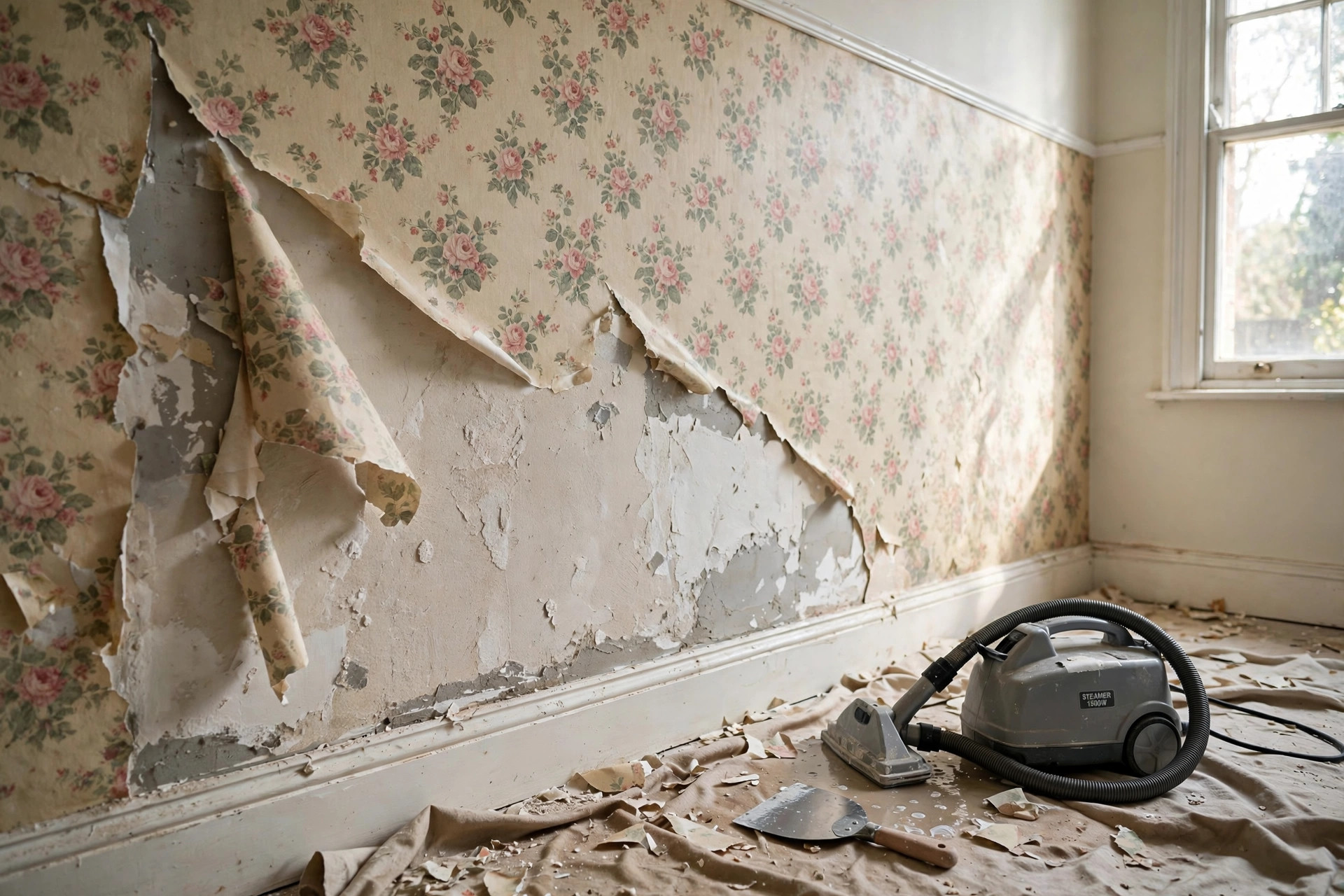

A wallpaper removal service price comparison usa search often begins with a single wall. An old pattern sits in a guest room, or a border from another decade lines the kitchen. The paper looks tired. The homeowner wants it gone. Then the questions start. What does a pro charge to take it down. How do prices differ from one region to another. A careful comparison saves money and avoids surprise fees.
This guide walks through the full picture. It covers average prices, the way pros build their quotes, what raises or lowers the cost, and how to compare bids side by side. It also looks at the choice between doing the job by hand or hiring a crew. By the end, any homeowner in the United States should feel ready to read a quote with a clear eye.
Why Compare Prices Before You Book
Wallpaper removal is a labor job. The tools are simple: steamers, scrapers, sponges, and drop cloths. The skill is in patience and care. Because the work is mostly labor, prices swing more than many homeowners expect. One company may quote a flat day rate. Another charges by the square foot. A third folds the job into a full repaint contract.
A wallpaper removal service price comparison usa review shows how wide the range can be. A small powder room may cost a few hundred dollars. A whole house with layered paper can run into the thousands. Without a side-by-side look at bids, it is hard to know which number is fair. Taking an hour to gather two or three written quotes is the best way to guard the budget.
How Pros Price the Job: Wallpaper Removal Service Price Comparison Usa
Most wallpaper removal services use one of three pricing models.
Per square foot. This is the most common method. The pro measures the wall area covered with paper and multiplies by a rate. Rates often land between two and four dollars per square foot for standard paper. Grasscloth, foil, and layered paper push the rate higher.
Per room. Some companies quote a flat price per room based on size. A standard bedroom often falls between 300 and 800 dollars. Bathrooms and small rooms cost less, while large rooms with high ceilings cost more.
Hourly. A few firms charge by the hour, usually between 40 and 80 dollars per worker per hour. This model suits small jobs and partial removals, such as one accent wall.
The quote should state which model the company uses. It should also spell out what the price covers. Does it include wall repair after the paper comes off. Does it include skim coating, sanding, and primer. These extras change the true cost of the job, so a bid that looks high may be the fair one once the scope is matched.
Average Cost Across the USA
National averages give a starting point, but they are only a guide. For a wallpaper removal service price comparison usa buyers can expect the following rough ranges.
– Small room (one or two walls): 200 to 500 dollars. – Standard bedroom: 400 to 900 dollars. – Large living room or dining room: 800 to 1,500 dollars. – Whole house: 2,000 to 5,000 dollars or more.
These figures cover labor and basic wall cleanup. They do not cover fresh paint or new wall covering. They also do not cover heavy wall repair. Regions with a higher cost of living, such as the Northeast and the West Coast, tend to sit at the top of each range. The South and the Midwest often run lower.
Travel fees may apply in rural areas. A company that must drive an hour to reach the home will add a trip charge. It is worth asking about this before the crew arrives.
What Makes the Price Rise or Fall
Several factors move a bid up or down. Knowing them helps a homeowner read a quote with care.
Type of paper. Peel-and-stick paper comes off fast and cheap. Traditional pasted paper takes more time. Vinyl-coated paper needs scoring and steaming. Older grasscloth and fabric wallpapers are the slowest to remove. If you are thinking of replacing old paper with something new, reviews of peel and stick wallpaper for bedrooms can help you see why many homeowners now prefer paper that comes down easily.
Layers of paper. Many older homes carry two, three, or even four layers. Each layer must be wetted, softened, and scraped in turn. The pro will often quote a higher rate once the layers are found.
Wall condition under the paper. Paper sometimes hides cracked plaster, water stains, or patched drywall. When the paper comes off, these problems show. Repair work adds to the bill. A good quote includes a line for minor repairs and a note on how major damage is priced.
Ceiling height and room size. Walls above eight feet need ladders or scaffolds. Large open walls take more time than small cut-up rooms with many doors and windows. The amount of wall area drives the final number.
Accessibility. Furniture must move. Heavy bookcases and built-ins slow the crew. Some firms charge a furniture-handling fee. Homeowners can save money by clearing the room before the appointment.
Wall Prep After Removal
Removing the paper is only half the job. Walls must be ready for paint or new paper. The steps matter, and they add cost.
First, the crew washes the walls to remove paste residue. Old paste left behind can bleed through new paint. Next, they fill gouges and dents with spackle. Deep scars get a skim coat of joint compound. Then comes sanding and a coat of primer.
Primer is not optional. Bare drywall and joint compound drink paint unevenly. A primer coat gives the new finish a smooth base. Homeowners comparing paint brands often read product pages from makers such as Behr and Sherwin-Williams to pick a primer that suits their walls.
Some bids bundle prep work into the removal price. Others list it as a separate line. When comparing, make sure each bid covers the same scope. A low bid that skips prep will cost more in the end, because the painter must do the prep anyway.
DIY Versus Hiring a Pro
Many homeowners ask whether they can do the job themselves. For a small room with one layer of modern paper, DIY is fair. A scoring tool, a pump sprayer, and a wide scraper will do the work. Weekend time and patience are the real tools.
DIY runs into trouble with old paper, many layers, and delicate walls. Plaster walls can crack under hard scraping. Paper over unprimed drywall can tear the drywall face paper off with it. Repairing that damage costs more than the removal would have cost in the first place.
DIY guides from sources like This Old House and Bob Vila walk through the basic steps and show which tools to buy. For larger or older homes, most guides suggest calling a pro. The rule of thumb is simple: if the job needs a steamer and more than one day, a crew is the safer choice.
How to Get Quotes You Can Compare
Fair comparison needs matching information. Give every company the same facts: room sizes, ceiling height, paper type if known, and whether you want wall prep included.
Ask for the quote in writing. A spoken number over the phone is not a bid. Ask what the price includes and what would add extra cost. Ask how the company handles surprise layers. Ask for a rough start date and how long the job will take.
Get at least three written quotes. Throw out any bid that is far below the others. A very low bid often hides a narrow scope or a crew with little experience. Check reviews and ask for photos of past work. Advice on vetting home service pros appears on sites like The Spruce and HGTV, which publish plain checklists for hiring painters and paperhangers.
Red Flags in a Bid
A wallpaper removal service price comparison usa search turns up many firms, and a few warning signs are worth knowing.
Watch for quotes given without seeing the walls. A company that will not visit the home cannot know about layers, paper type, or wall damage. Watch for bids that skip the prep question. If the bid never mentions washing, patching, or priming, the crew may leave the walls raw.
Watch for cash-only deals and missing paperwork. A real business carries insurance and writes contracts. Ask for proof of insurance before the crew starts. Damage to floors and trim during a removal job is rare, but insurance protects both sides.
Finally, watch for pressure to sign on the spot. A fair company leaves the written quote with you and lets you decide.
Cost by Paper Type
It helps to see how the paper itself changes the number. These are rough national ranges per square foot, labor included.
– Peel-and-stick: 1 to 2 dollars. It lifts off in sheets and leaves little residue. – Standard pasted paper: 2 to 3.50 dollars. Needs water, time, and scraping. – Vinyl and washable paper: 3 to 5 dollars. The top layer must be scored or peeled before the backing softens. – Grasscloth and natural fiber: 4 to 7 dollars. Slow work, and the wall often needs skim coating after. – Painted-over paper: 4 to 8 dollars. The hardest case. The paint seals the paper and blocks water.
Homes with grasscloth sometimes bring in a specialist rather than a general painter. If you have grasscloth elsewhere in the home, guides to grasscloth wallpaper installation can show what the pros face when they take it down.
What About Lead Paint
Homes built before 1978 may have lead paint under or near the wallpaper. This is a separate safety issue. Federal rules require special handling when lead paint is disturbed. A removal crew that is not certified for lead work should not touch it.
If the home is old, ask the contractor about lead-safe practices. A lead inspection adds cost but protects the household. Cost guides for lead paint removal explain how that work is priced. Product research on major retailer sites such as Lowe’s and Home Depot also shows which tools and supplies meet lead-safety standards.
Timing and Scheduling
Most crews can remove the paper from a standard room in one to two days. Prep and priming may add another day. A full house can take a week or more.
Season matters. Painting and paper contractors run busiest in spring and early summer. Prices edge up during peak season. Late fall and winter often bring lower rates and faster scheduling. If the job can wait, off-season booking is an easy way to save.
Ask each bidder how the job fits their schedule. A crew that rushes between jobs may cut corners. A crew with a clear calendar will give the walls the time they need.
After the Paper Is Gone
Once the walls are bare and primed, the homeowner faces a happy choice: paint or new paper. Paint is the cheaper path. A fresh coat transforms the room for a few hundred dollars in materials and labor.
New paper offers pattern and texture. Modern papers are easier to hang and easier to remove later. Many homeowners choose peel-and-stick for this reason. Whatever the choice, the wall prep done during the removal job pays off. Smooth, sealed walls take paint and paper far better than raw drywall.
FAQ
How much does wallpaper removal cost per square foot? Most pros charge between 2 and 4 dollars per square foot for standard paper. Vinyl, grasscloth, and layered paper raise the rate. The quote should include basic wall cleanup and minor patching.
Can I remove the wallpaper myself? Yes, for small rooms with modern paper. You need a scoring tool, a sprayer, scrapers, and time. For old homes, many layers, or delicate plaster walls, hiring a crew is safer and often cheaper than fixing DIY damage.
How long does removal take? A single bedroom usually takes one to two days. Prep and priming can add a day. Whole-house jobs may take a week or more, depending on the paper type and the number of layers.
Will the walls be damaged? Some patching is normal. Scrapers leave small marks, and old paper can pull paint or drywall face paper with it. A good crew fills and sands these spots, then primes the wall before any new finish goes on.
Does the quote include painting after removal? Usually not. Removal and painting are separate jobs with separate prices. Some companies offer both as a package. Ask for the combined price and the standalone removal price so you can compare.
Is winter a good time to hire? Yes. Contractors are less busy in late fall and winter. You may get a lower rate and an earlier start date than in the spring rush.
A Short Final Word
A wallpaper removal service price comparison usa search pays off with a little care. Gather three written quotes. Match the scope on each one. Ask about layers, paper type, wall prep, and surprise costs. Read reviews and check insurance. Pick the company that answers plainly and stands behind its work, not just the lowest number. The paper comes down once. The walls stay for years. It is worth paying a fair price for a job done right.
References
Behr. (n.d.). Paints, primers, and stains. https://www.behr.com Bob Vila. (n.d.). Home improvement advice. https://www.bobvila.com HGTV. (n.d.). Home and garden ideas. https://www.hgtv.com Lowe’s. (n.d.). Home improvement products. https://www.lowes.com Sherwin-Williams. (n.d.). Paints and coatings. https://www.sherwin-williams.com The Home Depot. (n.d.). Home improvement products. https://www.homedepot.com The Spruce. (n.d.). Home and garden advice. https://www.thespruce.com This Old House. (n.d.). Home renovation guidance. https://www.thisoldhouse.com
Was this guide helpful?

About James Carter
The My Garden US editorial team writes practical, in-depth home and garden guides for American homeowners — tested advice, no fluff.
You May Also Like

Best Paint for Closet Doors USA Reviews: What Homeowners Say Works
September 14, 2026 0 views
Chalk Paint for Outdoor Furniture Reviews: What Buyers Really Say
April 14, 2026 0 views
Tropical Wallpaper for Sunroom Reviews USA: A Simple Guide
May 2, 2026 0 views