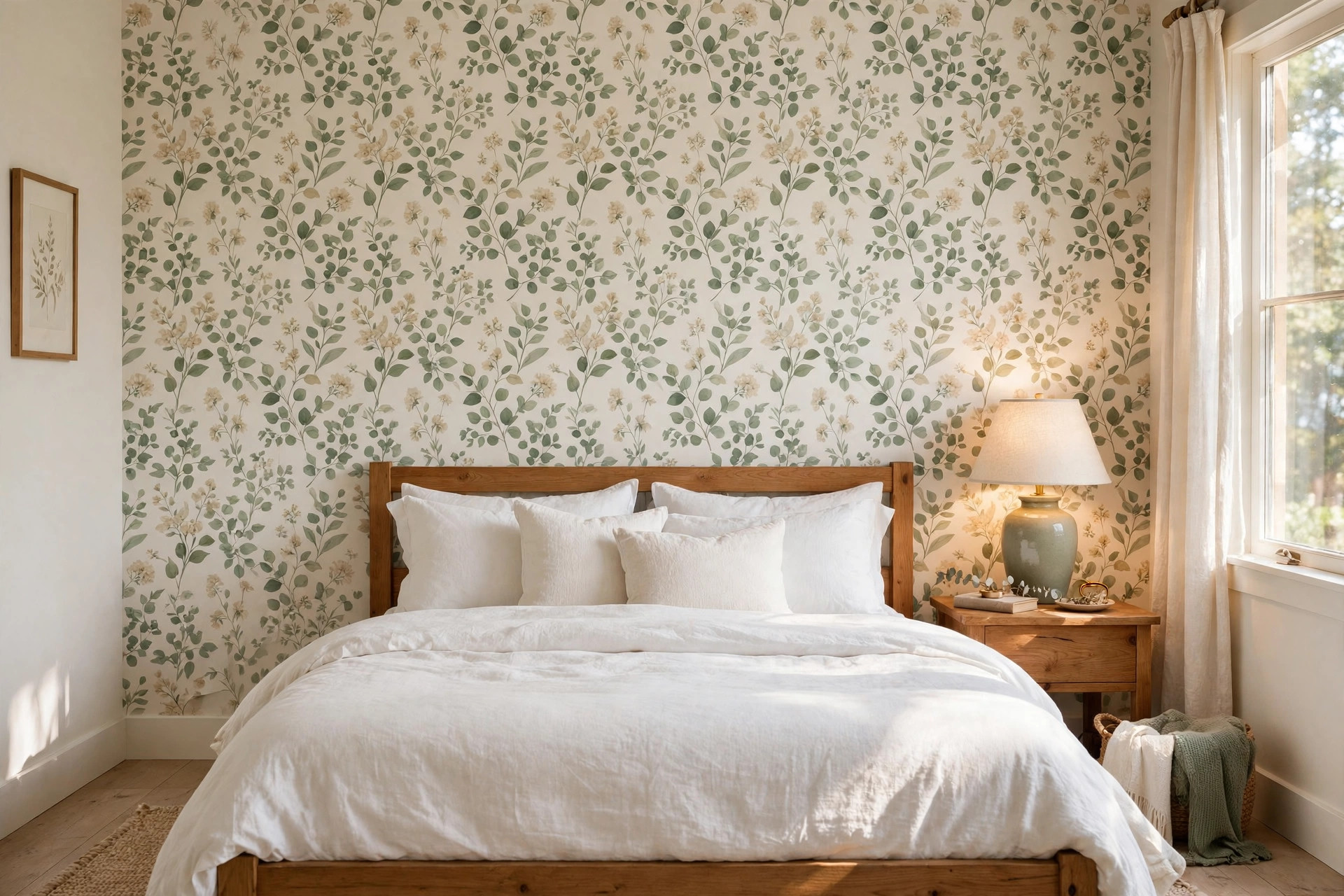

The latest peel and stick wallpaper for bedrooms reviews tell a clear story. Renters love it. Homeowners love it. Busy parents love it. This self-adhesive wall covering has changed the way people decorate bedrooms. It goes up in hours. It comes down without damage. It costs far less than a professional paint job. But is it right for your walls? This guide brings together what reviewers say, what experts advise, and what you should check before you buy.
Why Peel and Stick Wallpaper Matters for Bedrooms
A bedroom should feel calm and personal. Paint can do that. So can peel and stick wallpaper, often faster and with less mess. Reviewers say the biggest advantage is freedom. You can try a bold pattern behind the bed. If you do not like it, you pull it down. The wall beneath stays clean.
Renters gain the most. Most lease agreements forbid paint. Peel and stick wallpaper is the workaround that landlords accept. When the lease ends, the wallpaper peels off and the deposit stays safe. Many reviews mention this as the main reason for buying.
Homeowners gain speed. A painted accent wall needs tape, drop cloths, primer, two coats, and a full day of drying. A peel and stick accent wall needs a clean wall, a sharp knife, and a few hours. For a weekend project, few options beat it.
What Peel and Stick Wallpaper Reviews Reveal: Peel and Stick Wallpaper for Bedrooms Reviews
Reading through peel and stick wallpaper for bedrooms reviews shows patterns. Happy buyers mention the same things again and again. Unhappy buyers also repeat the same complaints. Both sides teach useful lessons.
What buyers praise
– Easy installation. Most reviewers finish a bedroom accent wall in two to four hours. No water tray. No paste bucket. No sticky fingers. – Real forgiveness. If a panel goes up crooked, you peel it back and try again. This feature gets mentioned in nearly every positive review. – Rental safety. Many reviews report zero wall damage after removal. Clean drywall, clean paint, full deposit returned. – Wide design choice. Floral prints, faux shiplap, grasscloth looks, bold geometrics. The range now rivals traditional wallpaper books. – Fair prices. Most rolls cost between 30 and 60 dollars. A full accent wall often costs under 150 dollars in material.
What buyers complain about
– Weak adhesion on textured walls. Orange-peel and knockdown textures fight the adhesive. Edges curl. Seams lift. Reviewers warn that flat, smooth walls give the best results. – Visible seams. With light colors and bold prints, seam lines can show. Careful matching during installation matters. – Small rooms can feel busy. Large prints can overwhelm a small bedroom. Reviewers suggest testing a sample first. – Heat and steam issues. Bathrooms get most of the complaints, but bedrooms near poorly ventilated areas can see edges lift in summer heat. – Cheap brands peel too soon. The lowest-priced rolls get the worst long-term reviews. Buyers who pay a little more report better results after two years.
How to Choose Peel and Stick Wallpaper for a Bedroom
Start with the wall itself. Run your hand across it. If it feels like an orange skin, that is textured drywall. Peel and stick products grip best on smooth surfaces. Light texture can still work, but heavy texture will cause problems. If your walls are textured, consider a wallpaper removal service price comparison usa before old paper comes off, or test one sample panel before buying a full order.
Next, measure carefully. Measure the height and width of each wall section. Divide by the roll width, usually about 20.5 inches. Buy 10 percent more than the math says. Pattern matching eats material. Reviews agree that running short mid-project is the most common regret.
Think about light. North-facing bedrooms get cool, flat light. Warm patterns and cream backgrounds look richer there. South-facing rooms get strong sun. Dark colors can fade over time in direct sun, so check whether the product mentions fade resistance.
Consider the mood. Soft florals and linen textures calm a room. Bold geometrics wake it up. Many reviewers pick one accent wall behind the bed and leave the rest painted. This keeps cost down and avoids a busy look.
Material and thickness
Not all peel and stick wallpaper feels the same. Thicker vinyl products hide minor wall flaws and resist tearing. Thinner fabric-based products feel more premium but tear more easily during installation. Reviews favor medium-weight vinyl for bedrooms because it balances price, durability, and ease of hanging.
Adhesive quality
The adhesive is the whole product. Good adhesive sticks firmly but releases cleanly. Poor adhesive either falls off in six months or rips paint off on removal. Established brands get better adhesive reviews. This is one place where the brand name on the box matters.
Pattern repeat and matching
Every roll has a pattern repeat, often listed on the label. Small repeats waste less material. Large repeats need careful matching at every seam. Beginners should start with small repeats or random textures that need no matching at all.
Types and Options for Bedroom Walls
The market now offers more styles than most buyers expect. Here are the main types found in current reviews.
Faux texture looks. Faux shiplap, faux brick, faux grasscloth, and faux linen give texture without real material. These rank high in reviews because they look expensive and install fast. Homeowners who want a grasscloth wallpaper installation near me often choose the peel and stick version first to test the look.
Botanical and floral prints. Large-scale florals remain the top seller for bedrooms. Reviews say they photograph well and create a calm, garden-like mood. Small-scale ditsy florals suit cottage styles.
Geometric and modern patterns. Hexagons, arches, and mid-century shapes appeal to younger buyers. These patterns demand careful alignment, so reviewers recommend them for confident beginners, not first-timers.
Murals. Oversized scenic panels turn one wall into a landscape. They cost more but make the strongest statement. Reviews say murals work best on the largest, emptiest wall in the room.
Solid textures. Subtle linen or grasscloth textures in neutral tones. These please buyers who want depth without pattern. They also hide seam lines better than printed designs.
Cost and Price: What Reviews Say You Will Pay
Price is a strong point in nearly every review. A standard roll, about 20.5 inches wide by 16.5 feet long, costs between 30 and 60 dollars. Premium designer rolls run 70 to 100 dollars.
A single accent wall in an average bedroom, about 10 feet wide and 8 feet high, needs roughly three to four rolls. Total material cost lands between 90 and 240 dollars. Compare that with hiring painters, which can cost 300 to 800 dollars for the same wall, and the savings are clear.
Tools add little. You need a utility knife, a smoothing tool, a tape measure, and a level. Many kits include the smoothing tool. Budget 20 dollars if you own nothing.
Some buyers compare the project with painting. If you want accent wall painting ideas for living rooms or bedrooms, paint costs less in material but takes more time and skill. Peel and stick costs more in material but takes less time and almost no skill.
Watch for hidden costs. Sample swatches often cost 3 to 5 dollars each, though many brands credit the cost toward a full order. Shipping can be slow for made-to-order prints. Order two weeks before your planned install date.
Installation Tips from Experienced Reviewers
Reviews offer hard-won advice. The most useful tips appear below.
1. Clean the wall first. Wipe with a damp cloth and let it dry fully. Dust kills adhesion. 2. Start plumb, not at the corner. Corners are rarely straight. Use a level to draw a true vertical line, and start there. 3. Work top to bottom. Peel a few inches of backing, stick the top, then smooth downward while peeling more backing. 4. Smooth as you go. Use the smoothing tool from the center outward. This pushes out air bubbles before they set. 5. Trim with a sharp blade. Change the blade often. A dull blade tears the paper at edges and outlets. 6. Order samples first. Stick a sample on the wall for a week. Check it in morning and evening light. Check that it removes cleanly.
Experts at home improvement sites echo this advice. Guides from This Old House and The Spruce stress wall preparation as the step most beginners skip. Retailers like Home Depot and Lowe’s carry starter kits that bundle the basic tools.
Care and Upkeep
Peel and stick wallpaper asks little of its owner. Dust it with a dry cloth or a soft brush. For vinyl products, a damp sponge handles most marks. Avoid harsh cleaners. They can dull the finish or weaken the adhesive.
Check edges once a season. Press down any lifting corner with a clean finger. In dry winter air, a few edges may curl. A hair dryer on low heat, held a few inches away, often reactivates the adhesive enough to press the edge flat again.
Longevity depends on the brand and the wall. Good reviews report three to five years of solid wear in bedrooms. When the design feels dated, removal takes an hour. Pull slowly at a low angle. Any leftover residue wipes off with warm water.
Safety Notes
Choose products labeled low-VOC or phthalate-free, especially for children’s bedrooms. Many brands now print this on the package. Shoppers can compare paint and wallcovering safety notes from Sherwin-Williams and BEHR to understand what low-VOC means in practice.
Ventilate during installation. The adhesive smell is mild but real. Open a window for a few hours.
Keep leftover rolls away from heat sources. Vinyl products can warp if stored near a furnace or in a hot garage.
If anyone in the home has dust or chemical sensitivities, air out new rolls for a day before hanging. Design ideas and room inspiration from HGTV often note that testing materials in the actual room prevents surprises.
Frequently Asked Questions
Will peel and stick wallpaper damage my bedroom walls? On clean, primed drywall or painted walls in good condition, most quality brands remove without damage. Reviews agree on this. Old, flaking paint or unprimed drywall can lose surface material on removal. Test a hidden spot first.
How long does it last in a bedroom? Reviewers report two to five years. Bedrooms are kind to it. No steam, no grease, little touching. Sun-facing walls may fade sooner.
Can I put it over existing wallpaper? Most experts say no. The old paper can bubble under the new one, and removal later becomes a double problem. Strip old paper first for best results.
Does it work on textured walls? Light texture can work. Heavy orange-peel or knockdown texture causes curling and lifting. Reviews are consistent on this point. Smooth the wall or choose another finish.
Can I reposition it during installation? Yes. That is its main advantage over pasted wallpaper. Peel it back and re-stick. Most brands allow several repositionings before the adhesive weakens. Advice columns at Bob Vila confirm that gentle repositioning does not harm the product.
Is it cheaper than painting? Material costs run higher than a gallon of paint. Total project cost runs lower than hiring a painter. For do-it-yourselfers, paint is cheaper. For everyone else, peel and stick often wins on price and always wins on time.
A Short Final Word
The peel and stick wallpaper for bedrooms reviews point to one conclusion. This product does what it promises. It decorates fast. It removes clean. It costs little. It fails mainly when buyers skip the basics: dirty walls, heavy texture, no samples, cheap brands. Follow the steps in this guide and the odds favor a bedroom wall you will enjoy for years. Designers at Benjamin Moore remind readers that color choice shapes mood as much as pattern does, so pick a design you will still like in the morning light. When the time comes for a change, the wall will be ready for the next idea.
References
Behr. (n.d.). Paints, primers, and stains. https://www.behr.com Benjamin Moore. (n.d.). Paints and stains. https://www.benjaminmoore.com Bob Vila. (n.d.). Home improvement advice. https://www.bobvila.com HGTV. (n.d.). Home and garden ideas. https://www.hgtv.com Lowe’s. (n.d.). Home improvement products. https://www.lowes.com Sherwin-Williams. (n.d.). Paints and coatings. https://www.sherwin-williams.com The Home Depot. (n.d.). Home improvement products. https://www.homedepot.com The Spruce. (n.d.). Home and garden advice. https://www.thespruce.com This Old House. (n.d.). Home renovation guidance. https://www.thisoldhouse.com
Was this guide helpful?

About Emily Rodriguez
The My Garden US editorial team writes practical, in-depth home and garden guides for American homeowners — tested advice, no fluff.
You May Also Like
Stucco Painting Cost Per Square Foot USA: A Complete Price Guide
February 1, 2026 0 views
Best Exterior Paint for Stucco Homes USA
May 8, 2026 0 views
Painting Thermofoil Cabinets Pros and Cons: A Plain Guide for Homeowners
August 16, 2026 0 views