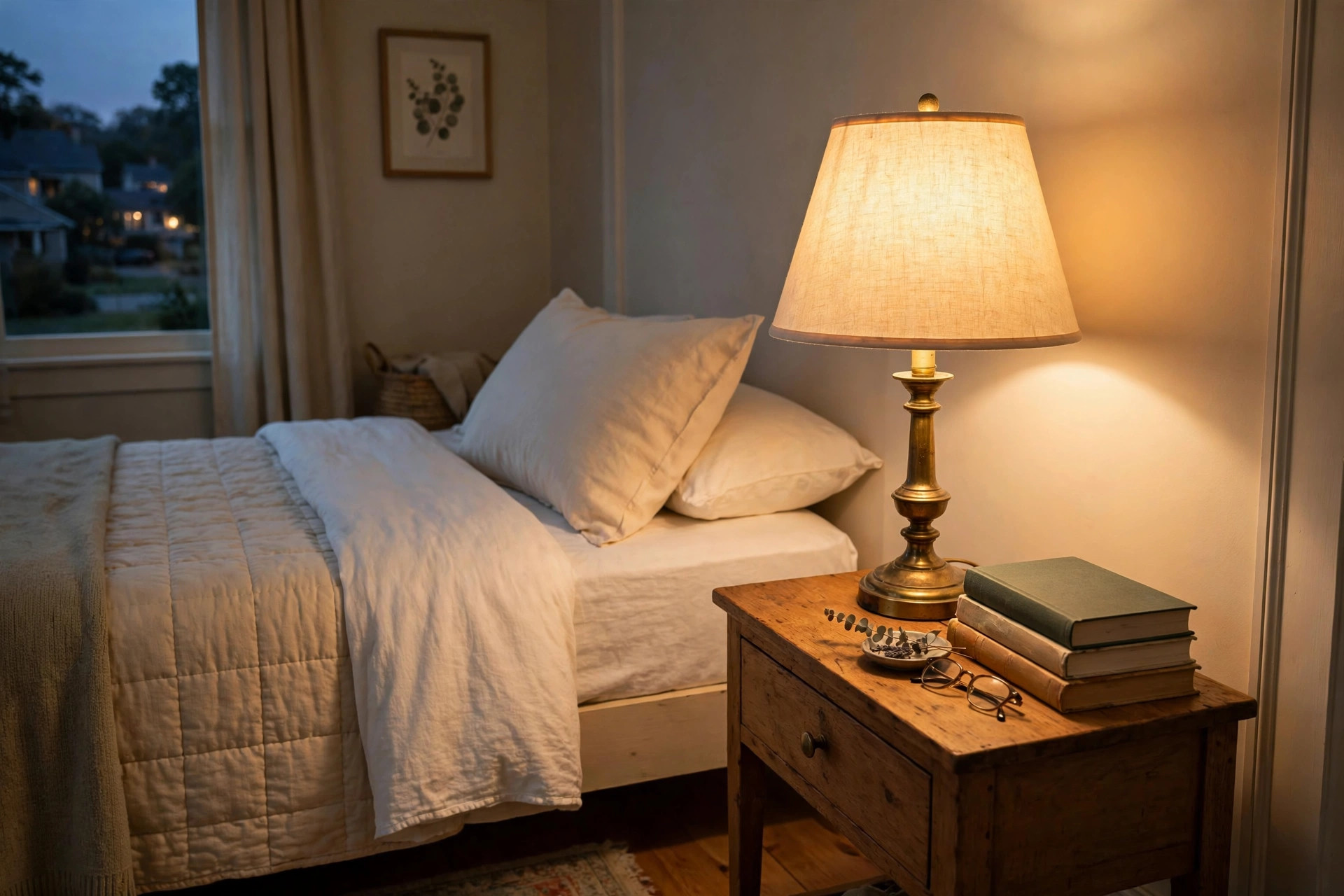

This bedroom table lamps American homes guide was written for anyone who wants better light beside the bed. A bedroom table lamp does more work than most people think. It lights the page for a reader. It softens the room for a couple. It guides a tired person to the door at night. Yet most buyers pick a lamp in five minutes and live with the choice for years. This guide slows the process down. It covers why bedroom lamps matter, how to pick the right size and shade, which types suit American homes, what they cost, how to care for them, and how to keep them safe. Read it once, and you will shop with a clear head.
Why Bedroom Table Lamps Matter
The bedroom is the one room where light shapes how we feel. Bright kitchen light is fine for cooking. A home office needs clear task light. But a bedroom asks for warmth and calm. The right lamp turns a plain room into a place of rest.
Most American bedrooms rely on one ceiling light. It throws harsh light from above and leaves dark corners. A table lamp fixes that. It brings light down to eye level, where it belongs. Two lamps on two nightstands give the room balance. One lamp on a single table still adds a warm pool of light that a ceiling fixture cannot make.
Light also affects sleep. Bright, cool light in the evening tells the brain to stay alert. Warm, low light tells the brain to wind down. A bedroom table lamp with the right bulb can help the whole household rest better. Parents read to children under it, and readers finish one more chapter by it. The lamp earns its place every night.
How to Choose the Right Bedroom Table Lamp: Bedroom Table Lamps American Homes Guide
Choosing a lamp is simple when you take it step by step. Measure first. Then match the shade. Then pick the bulb. A lamp that fits the room will look right and work right.
Measure the Nightstand and the Bed
Size is where most people go wrong. A lamp that is too tall towers over the bed. A lamp that is too small looks lost on a wide table. There is a plain rule to follow. When you sit up in bed, the bottom of the shade should sit at about your eye level. That puts the light where you read and keeps the bare bulb out of your sight line.
A common bedside lamp stands 24 to 30 inches tall, measured from the table top to the top of the shade. Nightstands in American homes are usually 24 to 28 inches tall. So the shade top often ends up 50 to 58 inches from the floor. That is a good range for most beds.
The lamp base should take up no more than one-third of the nightstand top. You still need room for a glass of water, a book, and an alarm clock. If the table is narrow, choose a slim base or a lamp with a small footprint. Small bedroom table lamps with warm light suit tight nightstands in guest rooms and small apartments. If the table is wide, a fuller lamp with a broader shade will fill the space.
Match the Shade to the Room
The shade decides how the light spreads. A wide drum shade throws light up and down and suits rooms with high ceilings. A tapered empire shade sends light downward, which is kind to readers. An opaque shade gives soft, indirect light. A white or cream shade gives the brightest, warmest glow.
Shade material matters too. Linen and cotton shades soften light and suit most styles, while silk shades look formal and cost more. For a bedroom, a fabric shade in a light color is the safe choice. It glows softly and hides the bulb.
Make sure the shade is the right size for the base. A shade that is too small makes a tall base look top-heavy. A shade that is too wide can bump the wall. The shade diameter should be a little smaller than the lamp height. A 28-inch lamp pairs well with a shade 14 to 16 inches across.
Pick the Right Bulb and Brightness
The bulb does the real work. For a bedroom, choose warm white light, marked 2700K on the box. That color looks like old-style incandescent light and feels restful. Cool white at 4000K or daylight at 5000K feels too sharp for a bedroom and can fight sleep.
Brightness is measured in lumens. For bedside lamps for reading in bed, 400 to 800 lumens is the right range. A lamp meant only for soft mood light can run 200 to 400 lumens. Many buyers now use LED bulbs, which use far less power than old bulbs. A 9-watt LED gives about as much light as a 60-watt incandescent. Energy efficient bedroom lamps like these cost little to run and stay cool to the touch. Look for bulbs with an Energy Star label to be sure the bulb meets federal standards for quality and efficiency.
A three-way lamp adds real comfort. Low for late night, medium for talk, high for reading. If the lamp has no three-way socket, a plug-in dimmer cord is a cheap fix. Smart bulbs are another option. Wi-Fi smart bulbs let you dim the lamp from the bed and change the color from warm to cool with a phone or a voice command.
Types of Bedroom Table Lamps
Bedroom table lamps come in many shapes. Each type suits a different room and a different habit. The list below covers the main kinds found in American homes today.
Traditional table lamps have a classic base and a fabric shade. They suit colonial, farmhouse, and traditional bedrooms. Brass, wood, and ceramic bases are common.
Modern and mid-century lamps use clean lines and simple shapes. Think slim metal stems, globe shades, and bold colors. They suit apartments and newer homes. Many buyers find wide choices at Lumens, which focuses on modern lighting design.
Rustic and farmhouse lamps use wood, rope, and distressed metal. They pair well with shiplap walls and quilts. These lamps bring warmth to country-style bedrooms.
Ginger jar and ceramic lamps are the decorators favorite. The base is a rounded ceramic jar, often in blue and white or solid colors.
Swing-arm and pharmacy lamps have an arm that moves. The head tilts to aim light at a book. They are the best choice for serious readers who share a bed, since the light stays on one side.
Touch lamps turn on and off with a tap on the base. They are easy to use in the dark. Many have three brightness levels built in.
Lamps with USB ports charge a phone overnight. The port sits in the base of the lamp. This type cuts cord clutter on the nightstand. It is a smart pick for small bedrooms where outlets are few.
For readers who want more on lighting styles, The Spruce keeps updated guides on bedroom lighting ideas and trends.
Cost and Price
Bedroom table lamps span a wide price range. Knowing the range helps you set a budget before you shop.
Budget lamps cost 20 to 40 dollars each. Big-box stores like The Home Depot carry many models in this range. They work well and look decent, though the materials are simple.
Mid-range lamps cost 50 to 120 dollars each. This is the sweet spot for most buyers. You get better shades, sturdier bases, and nicer finishes. Online shops like Wayfair and Lamps Plus offer hundreds of styles in this band. Consumer Reports tests lamps and lighting products and can help you judge quality before you buy.
Designer lamps cost 150 dollars and up, sometimes far up. Brands and lighting studios charge more for unique designs and fine materials.
Bulbs are a separate cost. A good LED bulb costs 5 to 12 dollars and lasts for years. Old-style incandescent bulbs cost less up front but burn out fast and use more power. The U.S. Department of Energy notes that lighting is a real share of home energy use, so efficient bulbs pay for themselves.
If you are furnishing a whole house, watch for sales. Lamps go on sale in January and July, when stores clear home goods. Buying a matching pair often costs less per lamp than buying two singles.
Care and Upkeep
A bedroom lamp needs little care, but a little care keeps it safe and bright for years.
Dust the shade often. A dusty shade blocks light and can look dull. Use a soft cloth or a lint roller on fabric shades. Never use water on a fabric shade, since it can stain. Glass and metal shades can be wiped with a damp cloth and dried at once.
Check the cord once a year. Look for cracks, fraying, or loose plugs. A damaged cord is a fire risk. If the cord is worn, stop using the lamp until the cord is replaced. An electrician can rewire a lamp, or you can buy a rewiring kit at a hardware store.
Keep the bulb wattage within the limit printed on the socket. The limit is there to stop the socket from overheating. With LED bulbs this is rarely a problem, since LEDs run cool and use little power.
Tighten the harp and finial now and then. The harp is the wire frame that holds the shade. The finial is the small cap on top. Both can loosen over time. A wobbly shade is annoying and can tilt into the bulb.
If a lamp has a touch control or USB port, keep liquids away from the base. A spilled glass of water can ruin the electronics inside.
Safety
Lamps are safe when used with care. Most lamp problems come from small mistakes that are easy to avoid.
Never drape clothes or towels over a lamp shade. Fabric near a hot bulb can scorch or catch fire.
Keep lamps stable. A lamp on the edge of a nightstand can fall, and a fallen lamp with a lit bulb is a hazard. Push the base back from the edge. In homes with small children, choose a heavy base that resists tipping.
Unplug the lamp before you change a bulb or clean the socket. Let a hot bulb cool before you touch it. Grip the bulb by its base, not the glass, so oils from your fingers do not shorten its life.
Check for recalls. The U.S. Consumer Product Safety Commission lists lamp recalls on its site. If you buy a used or vintage lamp, inspect the wiring before you plug it in. Old cloth-covered cords should be replaced.
Use a nightlight path for late-night trips. A small plug-in nightlight in the hall is safer than fumbling for the bedside lamp in the dark. Many buyers pair bedside lamps with sensor porch lights outside, so the path from the door to the bedroom is lit at night.
Frequently Asked Questions
How tall should a bedroom table lamp be? Most bedside lamps stand 24 to 30 inches from the table top to the top of the shade. Sit up in bed and check that the bottom of the shade is near your eye level. That keeps the bulb out of your eyes and puts light on your book.
What kind of bulb is best for a bedroom table lamp? A warm white LED bulb at 2700K is the best all-round choice. It gives restful light, uses little power, and lasts for years. Choose 400 to 800 lumens for reading, or 200 to 400 lumens for soft mood light.
Should both bedside lamps match? Matching lamps give a calm, balanced look. But mixed lamps can work if they share a color, a material, or a shade style.
Can I put a smart bulb in any table lamp? Yes, in most cases. A smart bulb screws into a standard socket like a normal bulb. Keep the lamp switch on and control the bulb with a phone or voice assistant. Some older touch lamps may not work well with smart bulbs, so test one before you buy a full set.
Are expensive bedroom lamps worth it? They can be, for looks and build quality. But light quality comes from the bulb and the shade, not the price tag. A 60-dollar lamp with a good shade and a warm LED bulb gives light as fine as a 200-dollar lamp. Spend more when the lamp is a key piece of the room design. Budget-friendly options from IKEA prove that good style does not need a big price.
How do I light a bedroom with no overhead light? Many older American homes and apartments have bedrooms with no ceiling fixture. Use two table lamps, one on each side of the bed, plus a floor lamp in a dark corner. That gives even, layered light. LED recessed lights are a bigger project but give the most even light of all, if you plan a remodel.
A Final Word
A bedroom table lamp is a small thing that changes a room. It gives light for reading, warmth for rest, and safety for dark nights. Measure the table, match the shade, pick a warm bulb, and mind the cord. Do those four things and the lamp will serve the household for years. This bedroom table lamps American homes guide ends where good shopping begins: in the store, tape measure in hand, knowing what to look for.
References
Consumer Reports. (n.d.). Product reviews and ratings. https://www.consumerreports.org ENERGY STAR. (n.d.). Energy efficient products. https://www.energystar.gov IKEA. (n.d.). Home furnishings. https://www.ikea.com Lamps Plus. (n.d.). Lighting and home decor. https://www.lampsplus.com Lumens. (n.d.). Lighting and ceiling fans. https://www.lumens.com Philips. (n.d.). Lighting products. https://www.philips.com The Home Depot. (n.d.). Home improvement products. https://www.homedepot.com The Spruce. (n.d.). Home and garden advice. https://www.thespruce.com U.S. Consumer Product Safety Commission. (n.d.). Product safety information. https://www.cpsc.gov U.S. Department of Energy. (n.d.). Energy efficiency and renewable energy. https://www.energy.gov Wayfair. (n.d.). Furniture and home goods. https://www.wayfair.com
Was this guide helpful?

About Lisa Anderson
The My Garden US editorial team writes practical, in-depth home and garden guides for American homeowners — tested advice, no fluff.
You May Also Like
Reading Floor Lamps Buying Guide USA: How to Pick the Right Light
May 17, 2026 0 views
Indoor Wall Sconces: Where to Buy in the USA
June 21, 2026 0 views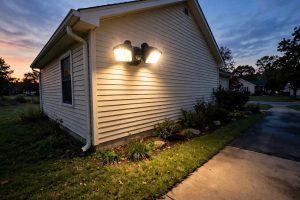
Motion Flood Lights Buying Guide USA: A Plain Handbook for Homeowners
January 25, 2026 0 views