
Introduction
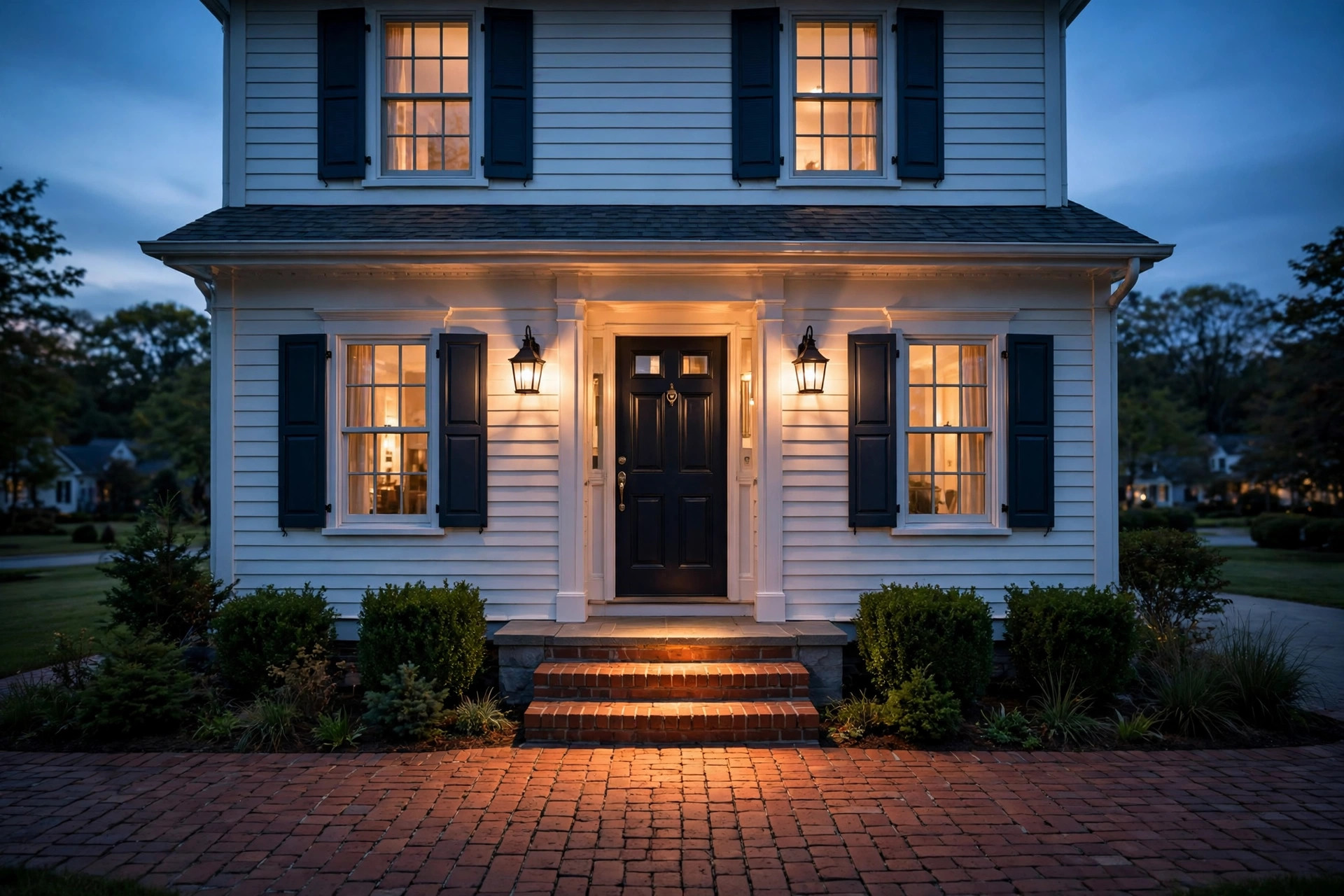
This outdoor wall lanterns American homes guide is written for home owners who want clear and honest advice. A wall lantern is a light fixture that mounts on an outside wall. It usually has a glass cover and a metal frame. You see them beside front doors, garage doors, and along porches. They have lit American homes for more than a hundred years.
Lanterns do more than look fine. They light the path to your door. They make guests feel welcome. They also make your home safer at night.
In this guide you will learn the common styles and sizes. You will learn how to choose the right lantern for each spot. You will also learn about cost, care, and safe wiring.
Why Outdoor Wall Lanterns Matter: Outdoor Wall Lanterns American Homes Guide
A home needs light outside for three plain reasons. The first is safety. Steps, walkways, and door locks are hard to see in the dark. A lantern beside the door throws light where you need it. You are less likely to trip or fumble with keys.
The second reason is security. Homes with dark corners are easy targets. A bright porch tells a stranger that someone lives here and cares. Many home owners pair lanterns with motion flood lights for full cover.
The third reason is beauty. A lantern gives a house a face at night. Warm glass in a dark frame looks calm and strong. Two well placed lanterns can lift the look of a whole home. A pair of good sensor porch lights can do the same job with modern control.
The Main Styles of Outdoor Wall Lanterns
Lanterns come in several styles. The right style should match your home. A modern house needs clean lines. An old colonial home needs a classic shape.
Colonial lanterns. These look like the lamps of early America. They have a square or tapered frame and clear glass. Many hang from a small bracket. They suit brick and wood homes in the Northeast and the South.
Craftsman lanterns. These are common on bungalows. They have a square body with a wide top and art glass panels. The lines are straight and honest.
Carriage lanterns. These recall horse and carriage days. They are often larger, with a rounded top and a bottom finial. They look grand beside a wide front door or on a long garage wall.
Modern lanterns. These have slim frames and frosted glass. The metal is often black, bronze, or brushed steel. They fit new homes and clean designs.
Mediterranean lanterns. These have curved frames and seeded glass. They fit stucco homes in Florida, Arizona, and California. The glass often has small bubbles that catch the light.
Take your time with style. A lantern that clashes with the house will look wrong for years. Match the trim color and the door hardware.
How to Choose the Right Size and Finish
Size is where most home owners make errors. A lantern that is too small looks lost. One that is too large looks odd. There is a simple rule. Measure the height of your door. The lantern should be about one third the height of the door. A standard door is eighty inches tall. That calls for a lantern around twenty four to twenty seven inches tall.
If you hang two lanterns beside a door, you can go a little smaller. Each one can be one fourth the door height. For garage doors, match the pair to the width of the bay.
Finish matters too. Black fits almost any home. Bronze looks warm against brick. Nickel and steel suit modern homes. The finish should stand up to rain and sun. Powder coated metal lasts longer than plain paint.
Glass type changes the light. Clear glass gives the most light. Seeded glass gives a soft old look. Frosted glass cuts glare. Choose clear glass for dark corners. Choose frosted glass near windows where glare bothers the eye.
Types of Bulbs and Light Sources
The bulb you choose decides the color and the cost of light. There are three main kinds used in wall lanterns today.
LED bulbs. These are the best choice for most homes. They use little power and last for years. They come in warm white, which looks like old incandescent light. A lantern with an LED bulb can run all night for a few dollars a year. The U.S. Department of Energy reports that LEDs use far less energy than old bulbs. Their site at Energy.gov explains the savings in plain terms.
CFL bulbs. These spiral bulbs were once popular. But they are slow to warm up in cold weather. Many stores no longer carry them.
Incandescent bulbs. These give a warm and friendly glow. But they burn out fast and waste most of their power as heat. They are hard to find now.
Color temperature matters. Look for bulbs marked 2700K or 3000K. These give a warm white light. Bulbs marked 5000K give a cold blue light. Cold light suits a factory, not a home porch. Warm light makes a home feel welcome.
Brightness is measured in lumens. A porch lantern does well with 400 to 800 lumens. A garage lantern may need 800 to 1200 lumens. Too much light blinds guests and wastes power.
Where to Place Wall Lanterns
Place lanterns where light serves a purpose. The front door is the first spot. Mount one lantern on each side of the door at eye level. The center of the lantern should sit about sixty six inches from the ground. This puts light where you need it and keeps it out of the eyes.
The garage door is the second spot. Mount one lantern beside each bay. On a two car garage, one lantern in the middle may serve both bays if the light spreads wide.
Back doors and side doors need light too. One lantern beside each door is enough. It helps you find the lock and see who is there.
Porches and patios can use lanterns on columns or posts. Space them eight to ten feet apart. The light should overlap a little so no dark gaps remain. For low decks, deck cap lights can work with wall lanterns to give a full layer of light.
Cost and Price Guide
Lanterns range widely in price. A basic lantern from a home center costs fifteen to forty dollars. It will work fine for a few years. The finish may fade in harsh sun.
A mid range lantern costs forty to one hundred and twenty dollars. The metal is heavier. The finish lasts longer. Most home owners buy in this range. You get a good balance of looks and life.
A high end lantern costs one hundred and twenty to four hundred dollars or more. These come from lighting shops and design brands. They use solid brass or copper. They can last decades with care. A site like Lumens shows what premium outdoor fixtures look like, while Lamps Plus carries options across every price band.
If a wire box already exists on the wall, you can change the fixture yourself. A new circuit needs an electrician. A simple swap job by a pro may cost one hundred and fifty to three hundred dollars.
Bulbs add little cost. An LED bulb costs five to twelve dollars. It may last ten years or more.
Installation and Wiring Basics
Many home owners can swap an old lantern for a new one. First, turn off the power at the breaker. Test the wires with a tester to be sure. Remove the old fixture. Connect the new wires with wire nuts: black to black, white to white, ground to the ground screw. Mount the new base to the box. Add the bulb and the glass. Turn the power back on.
If you must run new wires, call a licensed electrician. Outdoor wiring must be sealed against water. A junction box must be rated for wet places. The fixture itself must carry a UL wet location rating. Never skip this. A fixture made for indoors will fail and may start a fire.
Check local code before you work. Some towns require a permit for new circuits. Most allow a simple swap without a permit. The Home Depot site at Home Depot offers basic wiring guides, and Lowes carries wet rated boxes and sealant.
Dusk to dawn lanterns have a small sensor that turns the light on at night. They need no switch. Motion lanterns turn on when they sense movement. Both save power. Both add safety.
Care and Upkeep
Outdoor lanterns face sun, rain, and dust. A little care each year keeps them working and looking fine.
Clean the glass twice a year. Use mild soap and warm water. Rinse well and dry with a soft cloth. Dirty glass cuts the light by a large amount. Clear out bugs and webs each spring.
Check the finish once a year. Touch up chips with paint made for metal. This stops rust from spreading. Brass and copper lanterns develop a natural dark skin with age. Some owners like this aged look. Others polish them each year.
Tighten screws each year. Wind and heat loosen them. Check the seal where the fixture meets the wall. A bead of clear caulk keeps water out. Replace any cracked glass at once. Trim plants away from the lantern so damp air can move and light is not blocked.
Sensor and smart features. Many lanterns now take smart bulbs. You can dim them from your phone and set them to turn on at sunset. Simple timers do the same job at lower cost. Set them for dusk to midnight to save power, or all night for full security. Solar lanterns need no wires at all. They charge by day and glow by night. They work best in sunny yards. In shade or in far northern winters, a wired lantern is the better choice. The Spruce at The Spruce often reviews these products in plain words. Philips at Philips shows what is new in outdoor smart light.
Common Mistakes to Avoid
First, do not buy a lantern that is too small. Measure your door first. Small fixtures are the most common error.
Second, do not mix styles on one house. Use the same family of lanterns at the front, back, and garage. A matching set looks planned. A mixed set looks careless.
Third, do not aim bright bare bulbs at the street. They blind drivers and annoy neighbors. Use frosted glass or aim the light down. Dark sky friendly fixtures point light down and cut glare.
Fourth, do not forget the bulb color. One warm lantern and one cold lantern on the same house will look wrong. Buy all bulbs at the same color temperature.
Fifth, do not mount lanterns too high. Light that sits far above eye level throws harsh shadows. Sixty six inches is the right height for most doors.
Sixth, do not skip the wet rating. A dry rated fixture will fail outside. Read the box before you buy.
Energy Use and Efficiency Tips
Outdoor lights run for hours each night. Small savings add up. The ENERGY STAR program at Energy Star lists outdoor fixtures that meet strict tests. Use LED bulbs. They draw a tenth of the power of old bulbs. Use a timer or sensor so the lantern runs only when needed. Use the lowest brightness that does the job. A soft glow is enough for most doors. Bob Vila at Bob Vila and HGTV at HGTV both publish yearly guides on efficient outdoor lighting.
Safety Notes
Electricity and water are a bad mix. Always turn off the breaker before you touch a fixture. Use a voltage tester to be sure. If wires look burnt or brittle, stop and call an electrician.
Ladders cause many home injuries. Use a firm ladder on flat ground. Have someone hold it.
Motion sensor lights help safety, but they do not replace locks and alarms. Our guide on motion flood lights covers larger yard lighting.
Teach children not to touch hot bulbs. LED bulbs run cool and are safer near little hands.
Frequently Asked Questions
How tall should an outdoor wall lantern be? A good rule is one third the height of the door. For an eighty inch door, choose a lantern about twenty four to twenty seven inches tall.
How high should I mount a lantern beside a door? Place the center of the lantern about sixty six inches from the ground. This is eye level for most adults.
Can I use any bulb in an outdoor lantern? Check the fixture first. Most lanterns take a standard screw base bulb. Make sure the bulb is rated for outdoor or damp use. LED bulbs are the best choice for life and cost.
Do outdoor lanterns need to be on a GFCI circuit? Local codes vary. Many towns now require ground fault protection for outdoor fixtures. Ask your local building office.
How do I stop my lantern from rusting? Buy a fixture with a powder coat or a solid brass body. Keep the seal tight against the wall. Touch up chips each year. Trim plants away so damp air can move.
Are solar wall lanterns worth it? They are worth it in sunny spots with no wires nearby. But they give less light than wired lanterns. In shade or in northern winters, a wired lantern is the better choice.
A Final Word
Outdoor wall lanterns are a small part of a home. But they serve it well each night. They light your step. They greet your guests. They guard your door. Choose a size that fits the door. Choose a style that fits the house. Use warm LED light and a timer or sensor. Keep the glass clean and the finish sound. Your home will look better and feel safer for years to come.
References
Bob Vila. (n.d.). Home improvement advice. https://www.bobvila.com ENERGY STAR. (n.d.). Energy efficient products. https://www.energystar.gov HGTV. (n.d.). Home and garden ideas. https://www.hgtv.com Lamps Plus. (n.d.). Lighting and home decor. https://www.lampsplus.com Lowe’s. (n.d.). Home improvement products. https://www.lowes.com Lumens. (n.d.). Lighting and ceiling fans. https://www.lumens.com Philips. (n.d.). Lighting products. https://www.philips.com The Home Depot. (n.d.). Home improvement products. https://www.homedepot.com The Spruce. (n.d.). Home and garden advice. https://www.thespruce.com U.S. Department of Energy. (n.d.). Energy efficiency and renewable energy. https://www.energy.gov
Was this guide helpful?

About Michael Thompson
The My Garden US editorial team writes practical, in-depth home and garden guides for American homeowners — tested advice, no fluff.
You May Also Like
Vanity Light Bars California Homes USA: A Practical Buying Guide
April 8, 2026 0 views
Outdoor Wall Lanterns Deals Near Me: How to Find the Best Prices
September 28, 2026 0 views
Indoor Grow Lights Texas Homes: A Simple Guide
February 5, 2026 0 views