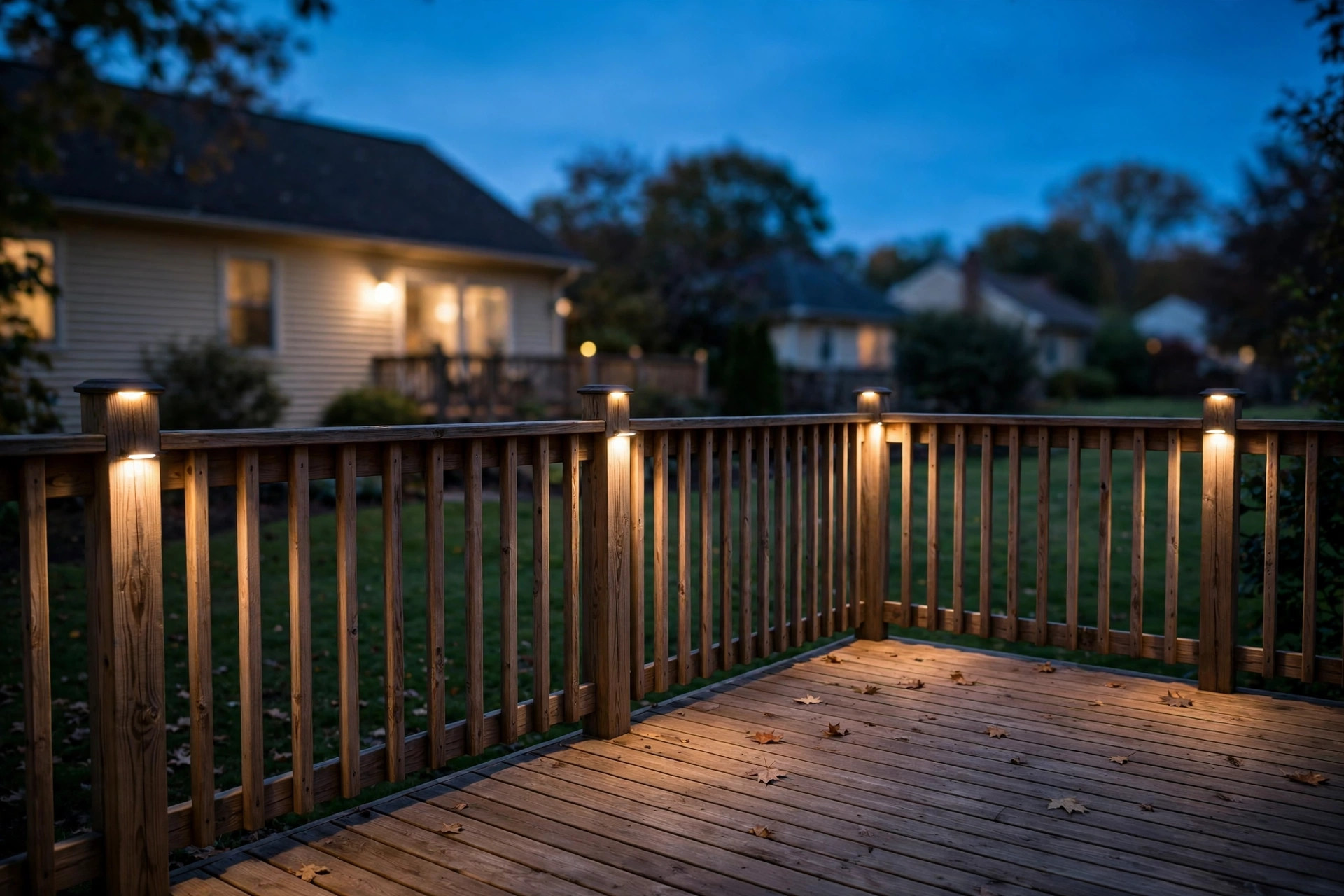
When a homeowner searches for deck cap lights deals near me, the wish is simple. Light the deck rail. Keep the steps safe after dark. Spend a fair price. Deck cap lights sit on top of the wooden posts around a deck. They cast a soft ring of light downward along the rail and the deck floor. They make an evening meal outside more pleasant. This guide explains what to look for, how much to pay, where to shop, and how to keep the lights working for years.
Why Deck Cap Lights Matter
A dark deck is a hazard. Guests cannot see the edge of a step. A child may trip on a toy left near the rail. An older relative may misjudge the last tread on the stairs. A few small lights change all of this. Cap lights mark the posts like quiet sentries. Their glow outlines the deck border. The eye follows the line of posts and sees where the deck ends and the yard begins.
Light also extends the use of the deck. Without light, the deck goes dark and unused after supper. With light, the family stays out for cards, talk, or a late drink. The deck becomes another room of the house during warm months. Real estate agents often point out lit decks as a selling feature.
There is a mood reason too. Soft deck light feels calm. It is gentler than a bright flood lamp. Moths and bugs bother people less around warm, low lights. Neighbors are not blinded. The yard keeps a settled look after dark instead of a harsh glare.
What to Look For When You Buy: Deck Cap Lights Deals near Me
A cap light has a simple job. Still, some points deserve attention before money is spent.
Size of the post. Deck posts are usually four by four inches or six by six inches in nominal size. The true size is smaller, about three and a half inches or five and a half inches square. Measure the actual post tops. Buy caps that match. A loose cap will rattle in wind and may blow off. A cap made for a four by four post will not sit right on a six by six post.
Power source. Three choices exist. Solar cap lights carry a small panel on top and charge by day. They cost nothing to run and need no wires. Low voltage cap lights wire into a twelve volt transformer plugged into an outdoor outlet. They give steady light all night and brighter output. Battery cap lights use replaceable cells and suit renters or small decks. Each type has a place. Solar suits a homeowner who wants no wiring. Low voltage suits a homeowner who wants reliable light on cloudy weeks.
Light color and brightness. Most cap lights use warm white LEDs, near 2700 to 3000 kelvin. Warm white looks like old lamplight and suits wood decks. Brightness is given in lumens. Ten to forty lumens per cap is normal. A deck of twelve posts at twenty lumens each gives plenty of glow for walking and dining. Buyers who want a reading corner may add one brighter patio string light set or a solar path light along the steps instead of pushing every cap brighter.
Material and build. The cap should be weatherproof. Look for sealed LED housings and stainless screws. Plastic caps cost less and suit mild climates. Metal caps, often aluminum or copper-toned, last longer and look finer. In coastal towns, salt air eats cheap metal fast. There, solid plastic or powder-coated aluminum is the wiser buy.
Fit style. Some caps drop over the post like a hat. Some screw down. Some snap into a flat mount glued to the post top. Drop-over caps are easy to fit and easy to remove for cleaning. Screw-down caps hold better in storms. Pick the style that matches the wind where the house stands.
Types of Deck Cap Lights
Solar cap lights. The most common type sold in home centers. A small solar panel sits on the cap top. By day it charges an internal battery. At dusk a sensor switches the LED on. No wiring and no running cost. Output is modest, and several cloudy days in a row will shorten the night run time. Quality varies a great deal, so read reviews before buying a whole set. Shoppers comparing solar choices may also look at a deck cap lights buying guide for brand notes.
Low voltage wired cap lights. These connect to a transformer that plugs into a standard outdoor outlet. The twelve volt line runs under the rail or along the joists to each post. Light is steady every night, brighter than solar, and the bulbs last many years. Install takes more work and a bit of wire. The transformer and wire add cost. For large decks or decks used every night, wired lights repay the effort.
Battery cap lights. A middle choice. They fit like solar caps but hold replaceable AA or AAA cells. They give brighter light than cheap solar and need no wiring. The trade is battery cost and the chore of changing cells. Rechargeable cells cut the cost but must be charged indoors.
Color changing caps. Some caps offer white, amber, or color modes by remote. They suit parties and holidays. Buy them only if the color feature will truly be used.
Cost and Price: What Deals Really Look Like
Prices move with season and store. A rough guide for the United States helps the buyer judge a deal.
– Basic solar cap lights: about four to ten dollars per light in packs of four, six, or eight. – Mid range solar caps with better batteries: about ten to twenty dollars per light. – Low voltage wired caps: about fifteen to forty dollars per light, plus a transformer and wire kit at about fifty to one hundred twenty dollars. – Premium metal caps: up to fifty dollars per light.
A deal is real when the price sits clearly below the everyday shelf price of the same item. Stores run sales around spring opening season, summer holidays, and end of season clearance in late fall. End of season clearance often gives the deepest cuts, sometimes half off, because stores clear shelf space for winter goods. Online sellers run their own sales, and local lighting shops may match prices on request.
When hunting for deck cap lights for sale, check the per-light price, not just the pack price. A pack of eight at sixty dollars is seven fifty per light. A pack of six at fifty dollars is eight thirty-three per light. Also check what is in the box. Some packs include mounting screws and some do not. A cheap pack that needs extra hardware is not as cheap as it looks.
Buyers should also weigh the long cost. A twelve dollar solar cap that dies after one season costs more than a twenty five dollar cap that lasts five years. Reviews that mention second and third year performance are worth more than reviews written a week after install.
Where to Find Deck Cap Lights Deals Near Me
The search phrase deck cap lights deals near me usually means the buyer wants to shop close to home, today, and at a fair price. Several local options exist.
Home centers carry wide ranges. National chains such as Home Depot and Lowe’s stock solar and low voltage cap lights in store, and their websites show local stock and sale prices. A quick check of the store site before driving over saves a wasted trip. Local hardware stores often carry fewer models but give better advice, and some will order a specific brand.
Lighting specialty shops, such as Lamps Plus showrooms and Lumens, focus on fixtures and carry higher grade lines that big box stores skip. Their sale shelves can hold real finds.
Online marketplaces widen the choice but remove the chance to hold the product. Read the return policy before ordering. A seller that charges return shipping on a sixty dollar pack is no bargain.
Seasonal timing matters. Shopping in late summer or early fall, when stores clear outdoor goods, often beats spring prices by a third or more. Signing up for a store flyer or email list is a small chore that pays when a coupon lands before a planned purchase.
For those comparing energy use and long run cost, ENERGY STAR keeps plain guidance on efficient lighting, and the U.S. Department of Energy publishes tips on outdoor lighting that waste less power. Brand makers such as Philips also describe LED life ratings that help judge whether a deal light will last.
Care and Upkeep
Deck cap lights ask little, but small care keeps them bright for years.
Solar caps need clean panels. Dust, pollen, and bird droppings block the sun. Wipe the panel with a damp cloth every month or two in the growing season. Trim back any plant that shades the post tops.
Batteries in solar caps wear out, usually after one to three years. Many caps accept standard rechargeable AA cells. Replacing them is cheap and takes minutes. When a whole set dims at once, dead batteries are the likely cause, not dead LEDs.
Wired systems need an annual check. Walk the line after winter. Look for chewed wire, loose connectors, and caps shifted by frost. Tighten screws. Clean the lens covers so light is not trapped behind grime.
Wood decks move with weather. Posts swell and shrink. Check that drop-over caps still sit snug each spring. A cap that rocks in wind will wear its mount and let rain in.
Winter care depends on climate. In harsh freeze zones, some owners remove solar caps and store them in a garage to spare the batteries. Wired lights can stay in place. If caps stay out, brush snow off the panels so the first sunny days of spring charge them well.
The Spruce carries seasonal maintenance checklists for outdoor fixtures that suit a homeowner’s routine.
Safety
Low voltage deck lighting is safe by design, but a few rules keep it so.
Use only fixtures rated for outdoor use. Indoor lights on a deck invite shock and fire. Check the listing mark on the box. The U.S. Consumer Product Safety Commission publishes guidance on outdoor electrical products that is a sound reference.
For wired systems, the transformer must plug into a ground fault protected outdoor outlet. Keep wire splices in rated connectors above soil and mulch. Do not run low voltage wire where a mower or trimmer can cut it. Under the rail or along a joist is the safe path.
Solar lights carry little risk, but cheap units with poor seals can trap water and corrode. Corroded battery contacts can leak. Replace swollen or leaking cells at once and keep spares out of reach of small children.
Do not overload a transformer. Add up the wattage of all lights on the run and keep it under the transformer’s rating with room to spare. A transformer run near its limit runs hot and shortens its own life.
Keep light levels modest near bedrooms. Bright deck light spilling through windows disturbs sleep. Warm, low caps aimed downward give safe footing without glare.
FAQ
How many deck cap lights do I need? Count the posts. Most decks need one cap per post, plus one or two extra at the top and bottom of stairs. A small ten by twelve foot deck with eight posts needs about eight to ten lights.
Are solar deck cap lights bright enough? For marking posts and lighting the deck floor softly, yes. Good solar caps give enough glow to walk safely and dine by. They will not light a book for reading. For task light, add a brighter fixture or a wired system.
Can I install deck cap lights myself? Solar and battery caps need no skill beyond a ladder and a screwdriver. Most homeowners fit a full set in an afternoon. Low voltage wired systems are also a common do it yourself job, since twelve volt work needs no electrician in most places. Still, check local rules before cutting into house wiring for the outlet.
Do deck cap lights work in winter? Solar caps work in winter but run shorter nights after short, cloudy days. Snow on the panel stops charging until cleared. Wired lights work the same all year. In deep freeze zones, some owners store solar caps indoors for the coldest months.
What is the difference between deck cap lights and deck post lights? The terms overlap. Cap lights usually mean the flat cap that sits on the post top and shines down. Post lights can also mean taller lantern style fixtures that sit on the post. Both mark the rail line. Cap lights suit a low, modern look. Lantern posts suit a classic look.
How long do deck cap lights last? LEDs often last five to ten years. Solar batteries need replacement every one to three years. Metal housings outlast plastic in sun and salt air. A well kept wired set can serve a decade or more.
A Final Word
The search for deck cap lights deals near me ends well when the buyer knows the post size, picks the right power type, and shops with the seasons. A fair deal is not only the lowest price. It is a light that fits the post, survives the weather, and still glows on the third summer evening as warmly as the first. Measure first, read reviews, buy a set that covers every post, and enjoy the deck long after sunset.
References
ENERGY STAR. (n.d.). Energy efficient products. https://www.energystar.gov Lamps Plus. (n.d.). Lighting and home decor. https://www.lampsplus.com Lowe’s. (n.d.). Home improvement products. https://www.lowes.com Lumens. (n.d.). Lighting and ceiling fans. https://www.lumens.com Philips. (n.d.). Lighting products. https://www.philips.com The Home Depot. (n.d.). Home improvement products. https://www.homedepot.com The Spruce. (n.d.). Home and garden advice. https://www.thespruce.com U.S. Department of Energy. (n.d.). Energy efficiency and renewable energy. https://www.energy.gov
Was this guide helpful?

About Sarah Mitchell
The My Garden US editorial team writes practical, in-depth home and garden guides for American homeowners — tested advice, no fluff.