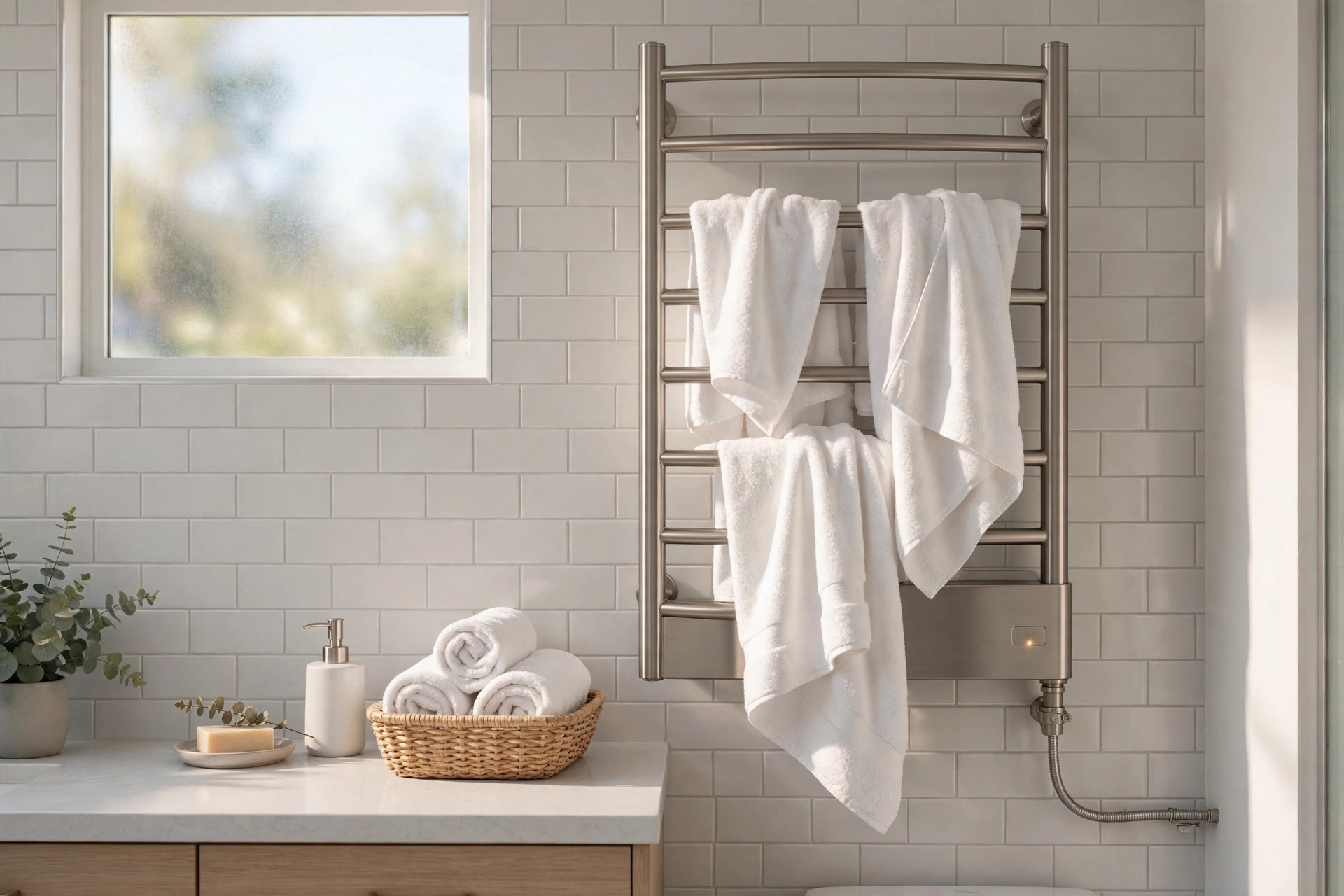
A warm towel on a cool morning is a small luxury. Many homeowners in California now add bathroom towel warmers to get that hotel feeling every day. A towel warmer is a heated rack that warms towels before a bath and dries them after. This guide to bathroom towel warmers california homes usa explains what these units do, the main types, what they cost, and how to keep them safe. You will learn which style fits your bathroom, how much power a unit uses, and what to ask an electrician before you buy.
Why Towel Warmers Matter in California Homes
California weather is mild in many areas, but mornings can still feel cold. Coastal fog, desert nights, and mountain winters all make bathrooms chilly at dawn. A towel warmer takes the edge off that chill. You step out of the shower and wrap yourself in warm, dry fabric instead of a cold, damp towel.
Warmers also fight moisture. Bathrooms hold steam after every shower. A damp towel hung on a plain hook can stay wet for hours. That wet fabric can smell musty and grow mildew. A heated rack dries the towel between uses, which keeps the bathroom fresher. Homeowners who add a towel warmer often pair it with other comfort upgrades, such as heated floor kits, to make the whole room feel warm.
There is also a design benefit. Towel warmers come in polished chrome, brushed nickel, matte black, and oil-rubbed bronze. The right finish can match your faucets and shower trim. Design sites such as HGTV often show heated racks in remodeled baths because buyers see them as a mark of quality.
For older California houses with poor ventilation, a warmer helps the room feel cleaner. It will not fix a broken fan, but it cuts the dampness that a wet towel adds to the air.
How a Towel Warmer Works: Bathroom Towel Warmers California Homes Usa
A towel warmer is simpler than it looks. Most models are metal rails or rungs heated from the inside. You drape one or two towels over the bars. The bars warm the fabric to a pleasant heat, usually between 100 and 150 degrees Fahrenheit at the surface. The heat then slowly dries the towel after your shower.
Electric models use a heating element inside the tubes. Some use a dry element, like the wires in a toaster oven. Others use a liquid-filled design, where the element warms a small amount of oil or water sealed inside the unit. The liquid holds heat longer after the power turns off, so the towel stays warm for a while. A switch, timer, or wall control turns the unit on and off.
Hydronic models connect to the home hot water system. Hot water flows through the rails and heats them. These units work well in homes with a boiler or a hot water loop, though they need plumbing work to install.
Most California homes use electric models because they are easy to add during a remodel. A plug-in unit needs only a nearby outlet. A hardwired unit needs a dedicated circuit run by a licensed electrician.
Types of Bathroom Towel Warmers
You will find three main types in American stores. Each suits a different bathroom and budget.
Electric Plug-In Models
A plug-in towel warmer hangs on the wall and plugs into a standard outlet. Installation takes minutes. You mount the brackets, hang the unit, and plug it in. These models are the best choice for renters and for anyone who wants to test the idea without calling an electrician.
Plug-in units usually have an on-off switch on the side. Some add a timer so the rack warms the towel before your morning shower and shuts off by itself. Prices are low, and many models sell at big retailers such as Home Depot and Lowe’s.
Hardwired Electric Models
A hardwired unit connects directly to the home wiring, with no visible cord. An electrician runs a line to a junction box behind the rack. The result looks clean and built in. Many homeowners choose this type during a full remodel when the walls are already open.
Hardwired models often include better controls. You may get a programmable timer, a thermostat, or a wall switch outside the bathroom. These features let you heat the towel for an hour each morning without wasting power all day. Fixture makers such as Kohler and Moen list hardwired warmers alongside their faucets and shower lines so finishes can match across the room.
Hydronic Models
A hydronic towel warmer ties into the hot water system. Hot water from the boiler or water heater flows through the rails. The rack stays warm whenever the system runs. There is no electric bill for the unit itself.
These models suit homes with existing hydronic heat, which is common in older houses in Northern California. They are rare in new tract homes with forced-air furnaces. Installation needs a plumber, not an electrician. The cost is the highest of the three types, so most buyers choose hydronic only when the plumbing is already in place or when a major repipe is under way.
What to Look for Before You Buy
A towel warmer is a long-term fixture. Take time to match the unit to your bathroom.
Size and Heat Output
Measure the wall where the rack will hang. A standard bath towel needs a unit at least 20 inches wide. For two towels, look for a model 24 to 32 inches wide and at least 30 inches tall. Small powder rooms can use a compact single-bar warmer or a bucket-style warmer that sits on the counter.
Heat output is rated in watts for electric models. Most fall between 50 and 150 watts. A higher wattage warms faster and dries thicker towels better. If you use heavy cotton towels, choose the higher end of the range. Bars that reach 120 to 140 degrees feel warm without risk of burns from a quick touch.
Material and Finish
Most warmers are made of stainless steel, brass, or aluminum. Stainless steel resists rust in a steamy bathroom and needs little care. Brass models cost more but hold heat well and take rich finishes. Aluminum is light and heats fast, but it can dent more easily.
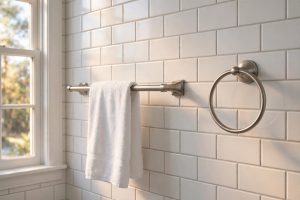
Pick a finish that matches the room. Chrome is classic and easy to clean. Brushed nickel hides water spots. Matte black suits modern baths. Oil-rubbed bronze fits traditional styles. Makers such as Delta Faucet and American Standard offer bath hardware in these same finishes, so you can coordinate the warmer with the rest of the room. The Bob Vila site advises buyers to bring a finish sample when shopping so the match is exact.
Timer and Controls
A timer is the most useful feature on a towel warmer. It lets the rack run for one or two hours and then shut off. This saves power and means you never leave the unit on all day by mistake.
Look for an indicator light so you can see at a glance whether the unit is on. A few models add a thermostat that holds the bars at a set temperature. If the warmer will sit in a guest bath, a wall switch outside the door is a smart choice.
Cost and Price Guide
Prices vary with size, finish, and type. The numbers below are typical for the United States in recent years.
Unit Price
A basic plug-in towel warmer costs between 80 and 200 dollars. Mid-range models with timers and nicer finishes run 200 to 500 dollars. Large hardwired designer units can cost 500 to 1,200 dollars or more. Hydronic models start near 400 dollars for simple designs and rise past 1,000 dollars for large brass units.
Sales at big retailers can cut these prices by a fifth or more. Watch for holiday sales in spring, when stores push bath remodel goods. Guides on The Spruce and This Old House help you compare models and see which ones hold up over time.
Installation Cost
A plug-in unit needs no professional help if you can hang a shelf. You only need a drill, a level, and wall anchors. A hardwired unit needs an electrician. Running a new circuit and mounting the rack usually costs 200 to 500 dollars, depending on how far the wire must travel and on local labor rates in California cities.
A hydronic unit needs a plumber. The cost depends on how close the hot water lines are. Tying into a nearby line may cost 300 to 600 dollars. Get two or three quotes before you agree to the work.
Running Cost
Electric towel warmers use little power. A 100-watt unit running two hours a day uses about 0.2 kilowatt-hours daily. At California electricity rates, that is only a few dollars per month. Using a timer keeps the cost low. Hydronic models add no electric cost at all, though they draw a small amount of heat from the water system.
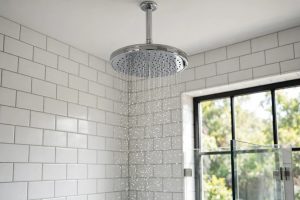
Pairing a warmer with other efficiency upgrades helps the budget. A new rain shower head that uses less water can offset the small added power use of the rack.
Care and Upkeep
A towel warmer needs little care. Wipe the bars with a soft cloth and mild soap every week or two. This removes soap film and hard-water spots before they build up. Dry the bars after wiping so spots do not form.
Avoid harsh cleaners. Bleach and strong acids can pit chrome and dull brushed finishes. Use a cleaner made for the finish you own. Stainless steel polish works well on polished models. For brushed nickel, plain dish soap and water are enough.
Check the mounting brackets once a year. Grab the unit gently and feel for movement. Tighten any loose screws. For hardwired models, look at the switch or timer for signs of heat damage, such as a dark mark or a loose feel. If you see damage, turn off the breaker and call an electrician.
Liquid-filled electric models are sealed for life. You never need to add fluid. If a sealed unit stops heating, do not try to open it. Contact the maker or replace the unit.
Safety Tips
A towel warmer is a safe appliance when it is installed and used with care.
Keep the unit away from direct water spray. Mount it on a wall beside the shower or tub, not inside the wet zone. Building codes require electric bathroom fixtures to sit a safe distance from tubs and showers. Your electrician will know the local rule.
Use a ground-fault protected circuit. Bathrooms in California must have GFCI protection on outlets and many hardwired fixtures. A GFCI outlet or breaker shuts off power in a fraction of a second if it senses a fault. This is the single most important safety step.
Do not drape plastic, nylon, or delicate fabrics on a hot rack. Stick to cotton, linen, and cotton blends. Never cover the unit with a thick blanket or pile towels so high that air cannot move. The bars need air flow to work well and stay at a safe temperature.
Teach children not to hang on the rack. The bars are warm and the brackets are not built to hold a child weight. Unplug portable bucket warmers when they are not in use, and never run any electric warmer with a damaged cord.
Frequently Asked Questions
Do bathroom towel warmers use a lot of electricity? No. Most use 50 to 150 watts, about the same as one old-style light bulb. With a timer set for an hour or two a day, the added cost is only a few dollars per month, even at California rates.
Can a towel warmer heat the whole bathroom? Not really. A towel warmer heats towels and dries the air a little, but it is not a room heater. It will take the chill off a small area near the rack. For full-room warmth, add a proper bath heater or heated floor mats.
Is a towel warmer worth it in warm parts of California? Many owners in Southern California say yes. Even where winters are mild, mornings can feel cool, and damp towels still need drying. The main benefit in warm areas is faster drying and less mildew.
Can I install a towel warmer myself? A plug-in model is a simple do-it-yourself job. You mount brackets and plug it in. A hardwired model needs a licensed electrician in California. A hydronic model needs a plumber. Do not open walls or touch wiring unless you are qualified.
How long does a towel warmer last? A good electric unit lasts 10 to 15 years with basic care. Stainless steel models last longest in steamy baths. Hydronic models can last even longer because they have no electric parts to wear out. Keep the finish clean and the brackets tight, and the unit will serve for many years.
Will a towel warmer raise my home value? It can help a bathroom feel more upscale, which buyers notice. It will not add as much value as a new vanity or tile, but it is a low-cost touch that makes a remodeled bath stand out. Pair it with matching fixtures, such as a new tub from a freestanding soaking tubs line, for the best effect.
A Short Final Word
Your California bathroom will feel a touch more like a spa, every single morning.
References
American Standard. (n.d.). Bathroom and kitchen products. https://www.americanstandard.com Bob Vila. (n.d.). Home improvement advice. https://www.bobvila.com Delta Faucet. (n.d.). Kitchen and bathroom faucets. https://www.deltafaucet.com HGTV. (n.d.). Home and garden ideas. https://www.hgtv.com Kohler. (n.d.). Bathroom and kitchen fixtures. https://www.kohler.com Lowe’s. (n.d.). Home improvement products. https://www.lowes.com Moen. (n.d.). Faucets and plumbing fixtures. https://www.moen.com The Home Depot. (n.d.). Home improvement products. https://www.homedepot.com The Spruce. (n.d.). Home and garden advice. https://www.thespruce.com This Old House. (n.d.). Home renovation guidance. https://www.thisoldhouse.com
Was this guide helpful?

About Sarah Mitchell
The My Garden US editorial team writes practical, in-depth home and garden guides for American homeowners — tested advice, no fluff.