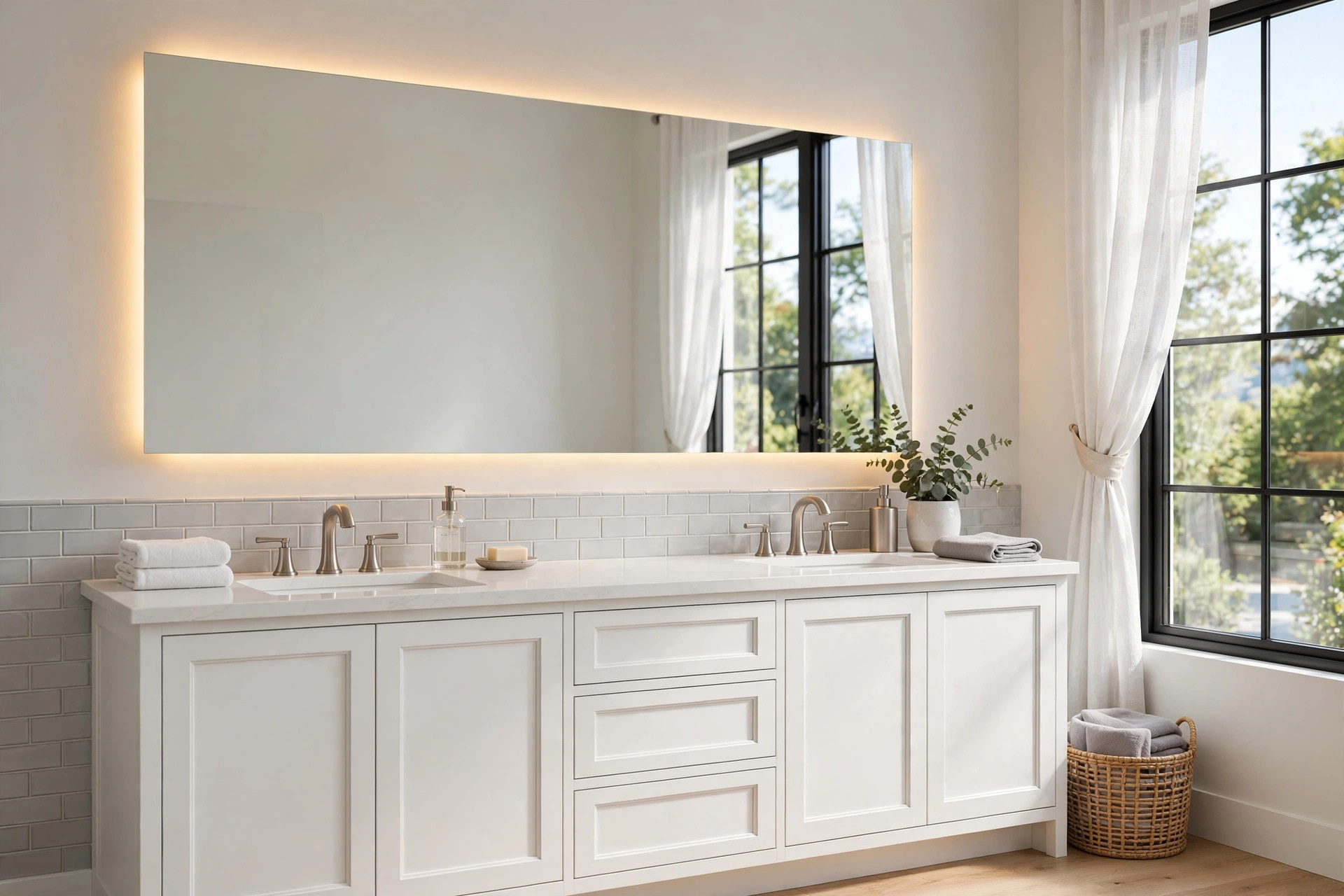

Shoppers across the country now search for led bathroom mirrors for sale usa when they remodel a bath. The idea is simple. A mirror with built-in LED lights gives clear light right where you need it. You see your face with no shadows. You shave, put on makeup, or check your teeth with ease. This guide explains what to know before you buy.
Why an LED Mirror Matters
A good mirror is more than glass on a wall. It sets the tone of the room. LED bathroom mirrors add light and style at the same time. They cut the need for extra lamps. They give a soft glow at night and bright light in the morning.
Many homes in the United States have old bath lighting. A single bulb over the door is not enough. Wall sconces can cast shadows across the face. An LED mirror puts light around or behind the glass. The result is even and true to color. Skin looks natural. Details are easy to see.
Energy use is another reason. LEDs draw little power and last for years. A backlit bathroom mirror may run for 30,000 hours or more. That means less waste and lower cost over time. For a full remodel, pairing the mirror with new bathroom vanity light bars can give the bath a balanced plan of light.
Home value matters too. Buyers like modern baths. A lighted mirror reads as an upgrade. It can make a small bath feel larger and brighter. Sellers often add one before a showing.
What to Look for When You Shop: Led Bathroom Mirrors for Sale Usa
Shopping for LED bathroom mirrors takes some care. Here are the points that count most.
Light Color and Brightness
LED mirrors list color temperature in Kelvin. Warm white sits near 2700K. Neutral white sits near 4000K. Cool daylight sits near 5000K. Most people pick 4000K for a bath. It feels like soft daylight. Many models let you change the color with a tap. That feature is handy. Warm light suits evening. Bright light suits morning tasks.
Brightness is measured in lumens. A small mirror may give 1,000 to 2,000 lumens. That is plenty for a powder room. A large mirror over a double vanity may give 3,000 lumens or more. Look for a dimmer switch. It lets you set the mood.
Size and Shape
Measure the vanity before you shop. The mirror should be a few inches narrower than the vanity top. A 24-inch mirror suits a 30-inch vanity. A 36-inch mirror suits a 48-inch vanity. Over a double vanity, use two mirrors or one wide unit.
Shapes include round, oval, square, and arched. Round mirrors soften a boxy room. Square mirrors match modern tile. Arched mirrors add a classic touch. Keep the shape in step with the room.
Mounting and Power
Most LED mirrors hardwire into the wall. An electrician connects them to a switch or a circuit. Some plug into an outlet. Plug-in models are easy for rentals. Hardwired models look cleaner with no cord.
Check if the model has a touch switch on the glass. Many do. Some use motion sensors. Think about where the switch sits. It should be easy to reach but out of the splash zone.
Defogging and Extras
A defogger pad warms the glass after a hot shower. It stops fog from forming. This feature is common on mid-range models. Anti-fog bathroom mirrors save you from wiping the glass each morning.
Extra features may include a magnifying spot, a clock, or Bluetooth sound. Some mirrors have a night light mode. Decide which extras you will use. Each one adds to the price.
Types of LED Bathroom Mirrors
Backlit Mirrors
Backlit models glow from behind the glass. Light spills onto the wall around the edge. This style gives a soft halo effect. It suits modern and calm baths. The light is gentle and does not glare.
Front Lit Mirrors
Front lit models have LED strips on the face of the mirror. Light shines straight at the user. This is the best choice for makeup and shaving. The light is strong and direct. Some people find it too bright without a dimmer.
Edge Lit Mirrors
Edge lit models hide LEDs in the frame. Light runs along the border. This style looks sleek and thin. It works well in small baths. The glow is even but softer than front lit models.
Medicine Cabinet Mirrors
Some lighted mirrors open to reveal storage. These combine a mirror, lights, and a cabinet. They suit baths with little counter space. For more on storage options, see our guide to mirrored medicine cabinets.
Round and Specialty Mirrors
Round LED mirrors hang like art. Oval and pill shapes are also popular. Some have magnifying panels. Specialty shapes cost more. They can turn a plain wall into a feature.
Smart Mirrors
Smart mirrors add digital tools to the glass. Some show the time or the weather. Some play music through built-in speakers. A few link to home systems and voice control. These cost more than basic models. They suit tech-minded owners. Before you buy, ask if the smart parts can update. Old tech in a mirror is hard to replace.
How to Read the Spec Sheet
Spec sheets can be dense. A few terms matter most. CRI means color rendering index. It tells how true colors look. A CRI above 90 is good. Skin and makeup look right. Wattage tells power draw. Lumens tell brightness. Do not mix the two. A low wattage can still give high lumens. That is the point of LEDs.
IP rating tells water safety. IP44 handles splashes. IP65 handles jets of water. A bath mirror needs at least IP44. Check the glass thickness too. Thick glass holds its shape and gives a true image. Thin glass can warp at the edges. Look for copper-free glass. It resists the black spots that age cheap mirrors.
Cost and Price in the USA
Prices for LED bathroom mirrors in the United States vary widely. A basic backlit mirror may cost 80 to 150 dollars. Mid-range models with defoggers and dimmers run 200 to 500 dollars. Large or designer models can pass 800 dollars. Retailers such as Home Depot and Lowe’s carry many brands and price points.
What drives the price? Size is first. A 60-inch mirror costs far more than a 24-inch one. Features are second. Defoggers, color changing, and smart controls add cost. Brand name is third. Big bath brands charge a premium.
Installation adds to the total. A plug-in mirror needs no wiring. A hardwired mirror may need an electrician. That can add 100 to 250 dollars. Plan the budget with install in mind. It helps to compare options on Consumer Reports-style buying guides and on sites like Bob Vila and The Spruce, which review bath fixtures in depth.
A note on value. A cheap mirror may dim or flicker in a year. Read reviews. Look for a warranty of at least two years. Good brands such as Kohler, Moen, Delta Faucet, and American Standard stand behind their bath products.
Where to Buy
You can buy LED bathroom mirrors at home stores, bath showrooms, and online. Big box stores let you see the mirror in person. You can test the touch switch and the light color. Showrooms offer design help. Online shops offer wide choice and lower prices.
When you buy online, check the return policy. A mirror is fragile. Make sure the seller packs it well. Read the shipping terms. Large mirrors may need freight delivery. Measure your doorways. A 60-inch mirror will not fit through a narrow hall.
Watch for sales. Holiday weekends often bring bath deals. End-of-year clearance can cut prices. Some makers offer trade discounts through design sites like HGTV partners and This Old House recommended retailers.
Installation Guide
Before You Start
Turn off the power at the breaker. This is not a step to skip. Check the wall for studs and pipes. A large mirror is heavy. It must anchor into studs or use strong wall anchors.
Hanging the Mirror
Most mirrors come with a mounting bracket. Hold the bracket level on the wall. Mark the holes. Drill and set the anchors. Hang the mirror and check that it is level. Tighten all screws.
Wiring the Light
For hardwired models, connect the wires as the manual shows. Black to black. White to white. Green to ground. Use wire nuts. If you are not sure, hire an electrician. Bath wiring must meet code. It must be safe near water.
Final Checks
Turn the power back on. Test the light. Test the defogger. Test the touch switch. Look at the glass from all angles. Make sure the seal is tight to the wall. Keep the manual for future care.
Care and Upkeep
LED mirrors need little care. Wipe the glass with a soft cloth and glass cleaner. Do not spray cleaner right on the glass. Spray the cloth instead. This keeps liquid out of the LED strip.
Do not use rough pads. They scratch the glass and the coating. Wipe the frame with a damp cloth. Dry it after. Check the touch sensor now and then. Water spots can make it slow.
The LEDs themselves need no bulb changes. They are built to last. If the light flickers, check the wiring first. Then call the maker. Do not open the unit. Opening it voids the warranty.
Hard water spots are a common issue. They leave white marks on the glass. Wipe the glass dry after use in hard water areas. A mix of white vinegar and water cuts the spots. Rinse with a damp cloth and dry. Keep the back of the mirror dry too. Moisture behind the glass can harm the coating over time. In damp baths, run the exhaust fan during and after showers.
Safety Tips
Bathrooms are wet rooms. Safety comes first. Buy a mirror rated for damp use. Look for an IP44 rating or better. This means it resists splashes.
Place the mirror away from direct spray. It can hang over the sink but not inside the shower. Keep outlets away from water. Ground fault outlets add safety.
Do not let water sit on the touch switch. Dry it after use. Keep cords off the floor. If the mirror plugs in, run the cord down behind the vanity. Pairing the mirror with the right vanity matters too. Our guide to bathroom sink vanities covers sizes and styles that fit lighted mirrors well.
Frequently Asked Questions
How long do LED bathroom mirrors last? Most LED mirrors last 30,000 to 50,000 hours. That is many years of daily use. The LEDs are sealed in. You do not change bulbs.
Are LED mirrors hard to install? Plug-in models are easy. Hardwired models take more skill. Many owners hire an electrician. The job takes about an hour.
Do LED mirrors use a lot of power? No. LEDs draw very little power. A typical mirror uses 15 to 40 watts. That is less than an old bath lamp.
Can I put an LED mirror in a small bathroom? Yes. Small baths gain the most. The light makes the room feel larger. Pick a mirror that fits the vanity width.
What color light is best for a bathroom mirror? Neutral white near 4000K suits most tasks. Warm white near 2700K feels cozy at night. A color changing model gives both.
Do I need a defogger? It helps if the bath gets steamy. A defogger keeps the glass clear after a shower. It adds to the price but saves daily wiping.
A Final Word
An LED bathroom mirror is a small change with a big effect. It lights the face with no shadows. It cuts energy use. It lifts the look of the whole room. Measure your space. Pick the light color you like. Check the warranty. Buy from a seller you trust. With a little care, your new mirror will serve you well for years.
References
American Standard. (n.d.). Bathroom and kitchen products. https://www.americanstandard.com Bob Vila. (n.d.). Home improvement advice. https://www.bobvila.com Consumer Reports. (n.d.). Product reviews and ratings. https://www.consumerreports.org Delta Faucet. (n.d.). Kitchen and bathroom faucets. https://www.deltafaucet.com HGTV. (n.d.). Home and garden ideas. https://www.hgtv.com Kohler. (n.d.). Bathroom and kitchen fixtures. https://www.kohler.com Lowe’s. (n.d.). Home improvement products. https://www.lowes.com Moen. (n.d.). Faucets and plumbing fixtures. https://www.moen.com The Home Depot. (n.d.). Home improvement products. https://www.homedepot.com The Spruce. (n.d.). Home and garden advice. https://www.thespruce.com This Old House. (n.d.). Home renovation guidance. https://www.thisoldhouse.com
Was this guide helpful?

About Sarah Mitchell
The My Garden US editorial team writes practical, in-depth home and garden guides for American homeowners — tested advice, no fluff.
You May Also Like

Bathroom Linen Cabinets for Sale USA: A Simple Guide to Choosing the Right One
January 11, 2026 0 views
Walk in Shower Kits Reviews Buying Guide USA
January 13, 2026 0 views
Freestanding Soaking Tubs for California Homes: A Complete Buyer’s Guide
September 14, 2026 0 views