For many years the sound of a gas engine meant yard work. That is changing. The best battery powered lawn tools combo now lets a homeowner mow, trim, and blow without gas cans or pull cords. These kits bundle several tools that share one battery system. One charge can cover a whole yard. The tools start with a push of a button. They run with little noise. They need almost no upkeep.
This guide explains what a combo kit is, why it matters, and how to choose one. It covers the types of kits on the market, the prices you can expect, and the care each tool needs. It also answers common questions. By the end you should know which kit fits your yard and your budget.
Why a Combo Kit Matters
Buying lawn tools one by one is common. It is also costly. Each tool comes with its own battery and charger. You end up with a shelf of batteries that do not fit each other. A best battery powered lawn tools combo solves this problem. The kit gives you two, three, or more tools that use the same battery pack. You buy the batteries once. Every tool in the kit runs on them.
The savings are real. A single large battery can cost over one hundred dollars. A charger can cost fifty or more. In a combo kit, those costs are shared across every tool. You also save space. One charger sits on the shelf instead of three.
There is another gain. All the tools in a kit come from one brand. They are made to work together. The batteries click in the same way each time. The brand also honors one warranty for the whole set. If something fails, you make one call.
For small and mid-size yards, these kits have become the clear choice. Gas tools still have a place on very large lots. But for most city and suburban homes, a battery combo is enough. It is clean, quiet, and simple to use.
What to Look For When You Choose: Best Battery Powered Lawn Tools Combo
Not every kit is worth your money. The best battery powered lawn tools combo for one yard may not fit another. The points below will help you judge any kit on the shelf.
The Battery Platform
The battery platform is the heart of the kit. Every tool must fit the same batteries. Before you buy, check the battery line. Is it a full line with many tools? Can you buy extra batteries and chargers later? A strong platform lets you add tools in later years, like a hedge trimmer or a chain saw, without buying new batteries.
Also look at battery size. It is measured in amp-hours, shown as Ah. A 2.5 Ah battery is light and fine for short jobs. A 5.0 Ah battery runs longer but weighs more. The best kits give you at least two batteries so one can charge while the other works.
The Voltage
Battery tools come in many voltages. You will see 18 volt, 20 volt, 40 volt, 56 volt, and 80 volt lines. In general, higher voltage means more power. A 40 volt or higher line is a good match for a mower. A 20 volt line may be fine for a trimmer and blower in a small yard, but it can struggle with thick grass.
Match the voltage to your yard. For lots under a quarter acre, a mid-voltage kit works well. For half acre lots, look for higher voltage and larger batteries.
The Tools in the Box
Check exactly which tools are in the kit. Most combos include a mower, a string trimmer, and a blower. Some add a hedge trimmer. Some add a pole saw. Make sure the tools match the work you do. If your yard has few hedges, you may not need a hedge trimmer. If leaves fill your yard each fall, a strong blower is worth more to you.
Read the fine print. Some kits list the tools but include only one battery. A kit with two batteries and a fast charger is worth the extra cost. It lets you work without long waits.
The Warranty
A good warranty shows the maker trusts the product. Look for three years or more on the tools. Batteries often have a shorter warranty, sometimes two or three years. Keep your receipt. Register the kit with the maker if it asks you to. This can make a claim much easier later.
Types of Combo Kits
Combo kits come in three main sizes. Each suits a different yard and a different budget.
Two-Tool Starter Combos
The smallest kits pair a string trimmer with a blower. These are made for small yards or for homes where a lawn service does the mowing. The price is low. The weight is low. They are easy to store in a closet or a small shed.
A starter combo works best when you only need to edge a lawn and clear a walk. It will not mow. If you plan to add a mower later, buy a starter kit from a brand that also sells a mower on the same battery line.
Three- and Four-Tool Mid-Size Combos
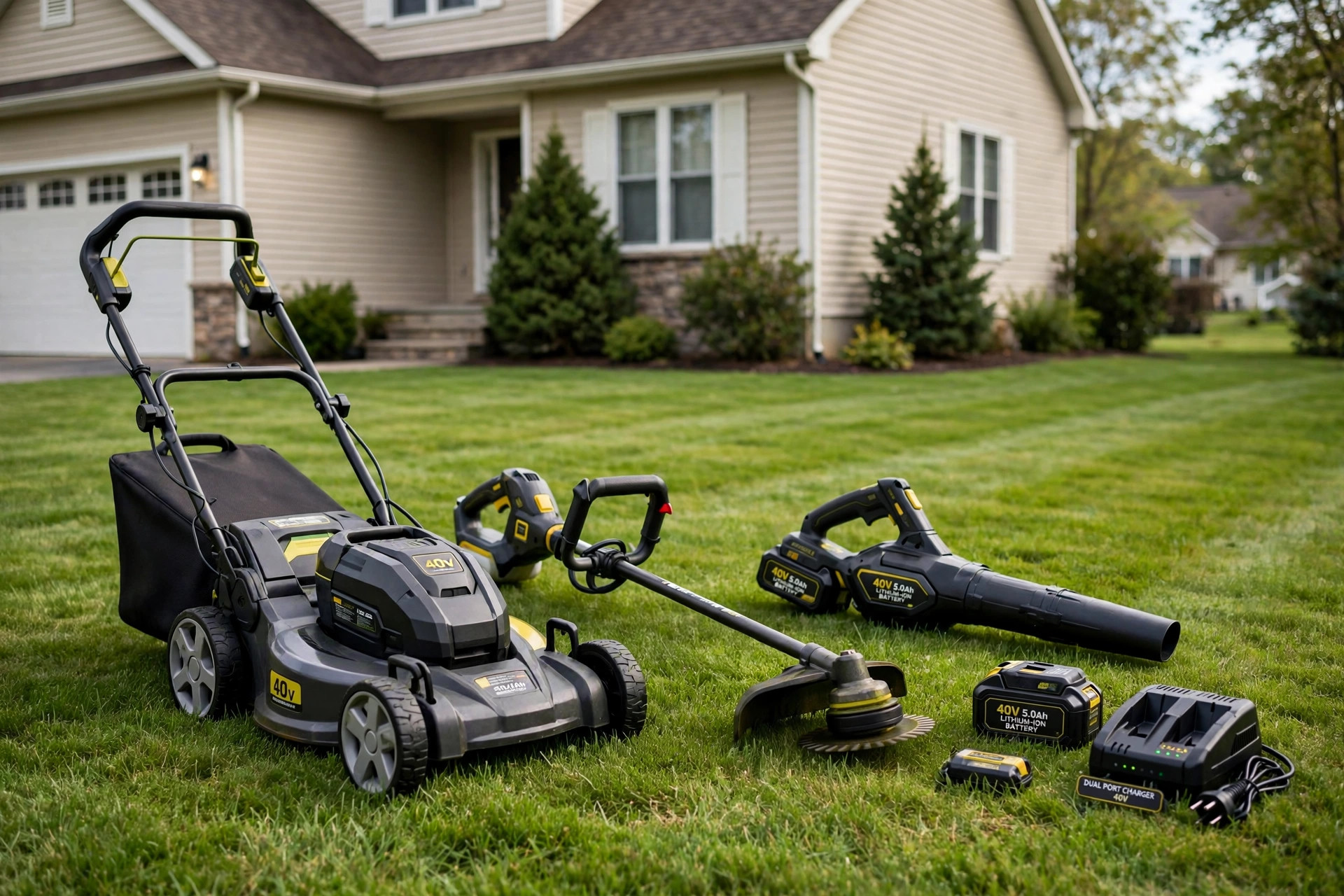
This is the most popular size. A mid-size kit usually holds a mower, a string trimmer, and a blower. Some add a hedge trimmer. This is the set most suburban homes need. It covers the three main jobs: mow, trim, blow.
The best battery powered lawn tools combo in this size often includes two batteries of different sizes. The large battery goes in the mower. The small battery goes in the trimmer or blower. These kits cost more than starter sets, but they replace a full shed of gas tools.
Full System Kits
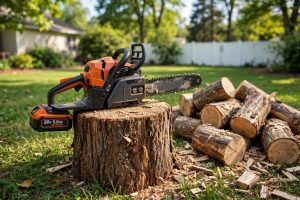
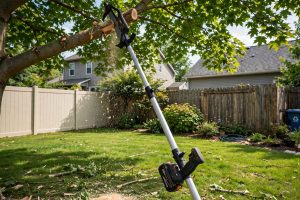
The largest kits include five or more tools. You may find a mower, trimmer, blower, hedge trimmer, pole saw, and even a small chain saw. These kits are made for larger lots and for owners who do all their own yard work. The price is high, but the value per tool is strong.
A full system kit makes sense if you plan to use every tool. If two or three tools will sit unused, you pay for tools you do not need. In that case a mid-size kit is the wiser buy.
Cost and Price
Prices for combo kits vary widely. A two-tool starter set may cost between one hundred fifty and three hundred dollars. A mid-size three-tool kit with a mower often costs between three hundred fifty and six hundred dollars. A full system kit with five or more tools can cost eight hundred dollars or more.
Watch for sales. Spring is the peak season, and prices are often highest then. Late summer and fall sales can cut the price by twenty percent or more. Holiday weekends also bring strong deals.
Think about the full cost, not just the sticker price. Battery tools need no gas and no oil. They need no spark plugs and no air filters. Over five years, a battery kit can save several hundred dollars in fuel and service compared to gas tools. This saving can make a costly kit the cheaper choice in the long run.
Extra batteries are the main added cost. If your yard needs more run time than two batteries give, budget for one more pack. Buy the maker’s own battery. Off-brand packs can void the warranty and may not be safe.
Care and Upkeep
Battery tools need less care than gas tools, but they still need some. Good care will add years to the life of the kit.
Keep the tools clean. After each use, brush grass and leaves off the mower deck and the trimmer head. A clean tool runs cooler and lasts longer. Check the mower blade once or twice a season. A dull blade tears grass instead of cutting it. Many owners sharpen the blade each spring. You can learn how to change and sharpen mower blades with a simple guide if you have never done it.
Store batteries with care. Keep them in a cool, dry place. Do not leave them in a hot garage all summer or a freezing shed all winter. Most makers say to store batteries at about half charge if they will sit for months. Do not store a battery on the charger for weeks at a time.
Charge with the right charger. Use only the charger that came with the kit or one sold by the same brand. Let hot batteries cool before you charge them. Do not charge a battery that is cracked or swollen. A damaged battery should be taken to a recycling center, not thrown in the trash.
For the trimmer, keep spare line on hand. A top rated string trimmer for thick weeds can cut heavy growth, but only if the line is fresh. For the blower, check the air intake for clogs. Small steps like these keep the whole kit running well.
Safety
Battery tools are safer than gas tools in many ways, but they still deserve respect. Read the manual before the first use. Every tool has its own safe way to start, carry, and store.
Wear eye protection when you trim or blow. Small stones and sticks can fly. Wear closed shoes when you mow. Keep children and pets away from the work area. Remove the battery before you clear a jam or change a part. A tool with no battery in it cannot start by accident.
Store batteries away from metal objects like nails and screws. A short across the battery contacts can cause heat or fire. Keep batteries dry. Never cut open a battery pack. If a battery gets very hot, smells odd, or changes shape, stop using it and follow the maker’s guide for safe disposal.
FAQ
How long do the batteries last?
Most batteries give twenty to sixty minutes of run time, based on the tool and the job. A mower uses power fast and may run thirty to forty-five minutes on a large battery. A trimmer can run longer. Two batteries are enough for most yards under half an acre. For larger yards, a robot lawn mower for half acre yards may be worth a look as a helper.
Can battery tools match gas tools?
For most home jobs, yes. Modern battery mowers cut well and handle normal grass with ease. Battery blowers clear walks and drives. Battery trimmers edge lawns cleanly. Gas still leads for very thick brush and for all-day commercial work. For a normal home yard, a battery kit is enough.
How many years will a combo kit last?
With fair care, the tools can last five to ten years. Batteries fade with time. Most hold a good charge for three to five years, then hold less. When run time drops, you can buy new batteries for the same platform and keep using the tools.
Is it cheaper to buy the tools one by one?
Almost never. A kit costs less than the same tools bought alone. The shared batteries and one charger save real money. Buy the kit first. Add single tools later only if the kit line offers them.
Should I rent big tools instead of buying?
For jobs you do once a year, renting can be smart. Check lawn dethatcher rental prices near me before you buy a dethatcher you will use once. For weekly jobs like mowing and trimming, owning a combo kit is the better deal.
Do battery tools need winter care?
Yes. Clean each tool before storage. Store batteries indoors at room temperature with a partial charge. Keep the mower in a dry place. In spring, charge the batteries fully, check the blade, and you are ready to work.
A Short Final Word
The best battery powered lawn tools combo is the one that fits your yard, your work, and your budget. Pick a strong battery platform. Make sure the tools match your jobs. Buy from a maker with a good warranty, such as Toro, John Deere, or Briggs & Stratton, and check Consumer Reports for product-review ratings before you buy. Care for the batteries, and the kit will serve you for years. Your yard will look neat, your shed will stay clean, and the loud pull cord will be a thing of the past.
References
Briggs & Stratton. (n.d.). Battery-powered lawn and garden tools. https://www.briggsandstratton.com Consumer Reports. (n.d.). Lawn and garden tool reviews. https://www.consumerreports.org Deere. (n.d.). Residential lawn and garden equipment. https://www.deere.com Toro. (n.d.). Lawn care equipment and battery tools. https://www.toro.com
Was this guide helpful?

About Jennifer Lee
The My Garden US editorial team writes practical, in-depth home and garden guides for American homeowners — tested advice, no fluff.