
Introduction
A gas kitchen range has long been the heart of the American kitchen. Cooks like the open flame because it heats fast and cools fast. Families like it because it can bake bread on Sunday and boil water for pasta on Friday. This gas kitchen ranges american homes guide will help you pick one with care.
A gas range is one unit. It has a cooktop on top and an oven below. The cooktop uses gas burners. The oven also uses gas in most models. Some models are dual fuel, which means a gas cooktop and an electric oven. Homeowners who read our gas kitchen ranges buying guide usa often start with this same question: what size and type fits my kitchen.
Gas ranges come in many widths. The most common width is 30 inches. Some kitchens use 24 inch models for small spaces. Large kitchens may use 36, 48, or even 60 inch pro style ranges. The right size depends on your kitchen, your family, and how you cook. Read the rest of this guide before you buy.
Why a Gas Range Matters: Gas Kitchen Ranges American Homes Guide
The range is the hardest working tool in the kitchen. It gets used every day. It shapes how meals taste and how the kitchen feels. A good range makes cooking easier. A poor range makes cooking a chore.
Gas gives instant heat. You turn the knob and the flame is there. When you turn the knob down, the heat drops at once. Electric burners take time to cool. Many cooks say gas gives them more control over the flame. That control helps with dishes like sauces and stir fries.
Gas ovens also have a moist heat. Some bakers prefer electric ovens for even browning. That is why dual fuel models exist. They give the best of both worlds. A buyer who studies our dual fuel ranges buying guide usa will see how these models compare to full gas models.
Gas lines are common in many American homes. Older homes often have them already. New homes may not. Before you fall in love with a gas range, find out if your home has a gas hookup. If it does not, the cost to add one can be high. A licensed plumber or gas fitter should do that work.
How to Choose a Gas Kitchen Range
Measure Your Space
Start with a tape measure. Measure the width of the opening. Measure the depth from the wall to the front of the cabinets. Measure the height from the floor to the top of the counter. Write the numbers down.
Most American kitchens have a 30 inch opening. The standard cutout is about 30 inches wide and 25 to 26 inches deep. Pro style ranges are deeper. They stick out past the cabinets a bit. That look is fine if you plan for it.
Leave a small gap on each side for air flow. Check the install guide for exact clearances. Do not guess. A tight fit can trap heat and wear out the finish.
Check Your Fuel Source
Gas ranges need natural gas or propane. Natural gas comes from a city gas line. Propane comes from a tank on your property. Many rural homes use propane. Most ranges can use either fuel. They need a kit to switch from one to the other.
The kit usually ships with the range. A licensed tech should do the switch. The flame must be set right for the fuel. A wrong setting is not safe. Ask the dealer if the range is set for natural gas or propane when it leaves the store.
Count the Burners
Four burners is the standard. Most families cook fine with four. Five or six burners help when you cook big meals. Some ranges have an oval burner for griddles and long pans.
Look at the heat levels. A high power burner boils water fast. It may put out 15,000 to 20,000 BTUs. A low simmer burner keeps soups warm without scorching. Good ranges have both kinds.
Think About the Oven
Gas ovens heat with a burner at the bottom. Some have a fan that moves the air. That fan is called convection. It helps food cook more even. If you bake a lot, convection is a nice feature.
Check the oven size. A 30 inch range usually has 5 cubic feet or so of oven space. That fits a big turkey or two trays of cookies. Pro style ranges can have two ovens. Double ovens let you bake and roast at different temps.
Grates and Cleaning
Most gas ranges have cast iron grates. They are heavy and last long. They hold pots steady. Some lift off for easy wash. Sealed burners sit on a flat surface. They keep spills from dripping down inside. Open burners look classic but are harder to clean.
Self clean ovens use high heat to burn off grime. Steam clean uses water and lower heat. Both save you from harsh sprays. Check the manual for what the maker allows.
Types of Gas Kitchen Ranges
Slide In Ranges
Slide in ranges sit between cabinets. Their controls are on the front or on the cooktop. The back has no raised panel. They look built in. They cost more than freestanding models. The gap between the range and the counter can collect crumbs. Many models have a flange that covers the gap.
Freestanding Ranges
Freestanding ranges have a backguard. The controls sit on the back panel. They can stand alone or sit between cabinets. They cost less than slide in models. They fit most kitchens. This is the most common type in American homes.
Pro Style Ranges
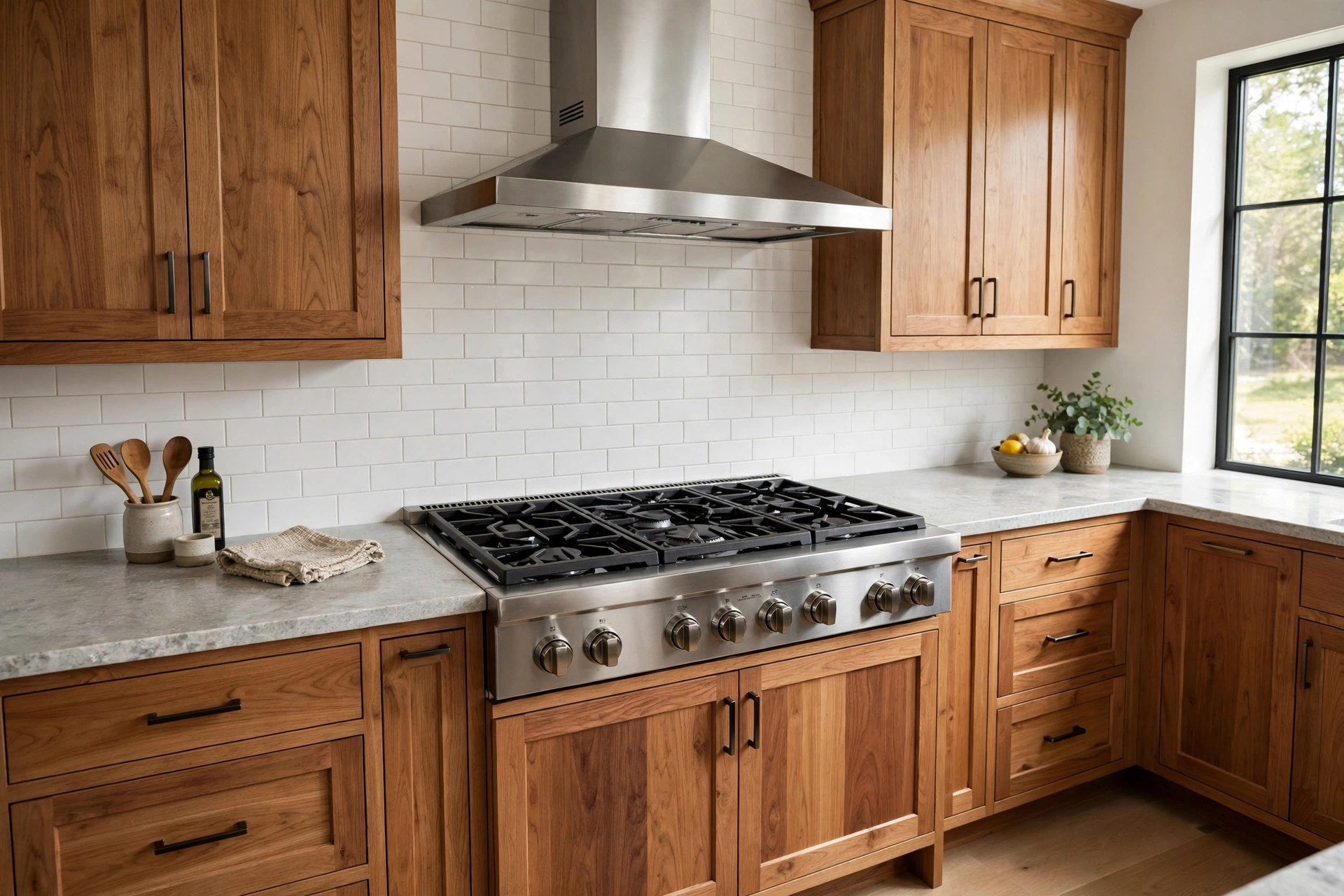
Pro style ranges look like restaurant equipment. They are wide, heavy, and strong. Burners put out high heat. Ovens are roomy. They cost two to five times more than standard models. They may need a bigger gas line. They often need a strong range hood too.
Dual Fuel Ranges
Dual fuel ranges mix gas and electric. The cooktop uses gas. The oven uses electric. This suits cooks who want flame control on top and steady dry heat below. They need both a gas line and a 240 volt outlet. They cost more than full gas models.
Size and Layout Options
Width is the first choice. Here are the common widths in American homes.
– 24 inches: made for small kitchens, galley kitchens, and guest suites. – 30 inches: the standard. Fits most homes. Many models to pick from. – 36 inches: a step up. Often has five or six burners and a roomy oven. – 48 inches: a pro look. Often has two ovens and lots of burners. – 60 inches: the largest home size. Rare. Needs a big kitchen.
Depth matters too. Standard depth lines up with the counters. Pro depth sticks out a bit. Check your door swing. The oven door must open all the way without hitting an island or a wall.
Height is usually 36 inches to match the counter. Most ranges have legs that adjust up or down. Use them to level the range. A level range cooks more even.
Cost and Price Guide
Prices run wide. Here is what you can expect to pay in the United States.
– Budget freestanding: 600 to 1,200 dollars. Four burners, basic oven, simple grates. – Mid range slide in: 1,200 to 2,500 dollars. Sealed burners, convection oven, better finish. – High end slide in: 2,500 to 4,500 dollars. Strong burners, nice grates, smart features. – Pro style 36 inch: 4,000 to 10,000 dollars. Heavy build, high BTU burners, large oven. – Pro style 48 to 60 inch: 8,000 to 20,000 dollars. Double ovens, griddle, many burners.
Install costs add more. A basic swap may cost 150 to 400 dollars for delivery and hookup. A new gas line can cost 500 to 2,000 dollars or more. A strong vent hood can cost 500 to 3,000 dollars. Plan for these costs in your budget.
Gas use is cheap in most states. A gas range costs less to run than an electric one in many parts of the country. Check your local rates. Over ten years the savings can be real.
Ventilation Matters
A gas range makes heat, steam, grease, and gas fumes. A good hood takes them out of the kitchen. The hood should be at least as wide as the range. For pro style ranges, the hood should be a bit wider.
Hoods are rated in CFM. That means cubic feet per minute. A standard 30 inch range does well with 300 to 400 CFM. A pro style range may need 600 to 1,200 CFM. Check local code. Some towns limit hood power unless you add makeup air.
Vent to the outside when you can. Ductless hoods filter the air and send it back. They help with grease but not with fumes. A vented hood is best for gas cooking. Our stainless range hoods buying guide usa explains hood types in more detail.
Keep the hood clean. Grease builds up in the filter. A dirty filter works poorly and can catch fire. Most mesh filters go in the dishwasher. Baffle filters wipe clean with soap and water.
Care and Upkeep
Daily care keeps a gas range safe and pretty. Wipe spills after the cooktop cools. Use warm soapy water and a soft cloth. Do not use harsh pads on stainless steel. They leave scratches.
Lift the grates once a week. Wash them in hot soapy water. Dry them well before you put them back. Wet grates can rust. Some grates go in the dishwasher. Check the manual first.
Clean the oven on a schedule. Self clean cycles work well. Take the racks out first. Wipe the loose crumbs. Open a window when you run the cycle. The oven gets very hot and may smell.
Watch the flame. It should be blue with a small yellow tip. A yellow or orange flame means poor air mix or dirty burners. Clean the burner caps and ports. If the flame stays wrong, call a tech.
Check the igniters. Gas ranges click to light the flame. If a burner keeps clicking or will not light, clean around the igniter. Food and water can block the spark. If it still fails, the igniter may need a new part.
Safety First
Gas is safe when the gear is sound. Respect it. Keep these rules in mind.
– Install with a licensed pro. Gas lines and fittings are not a do it yourself job. – Use a carbon monoxide detector in or near the kitchen. Test it each month. – Never use the oven to heat the home. That makes carbon monoxide. – Keep kids and pets back from the hot cooktop. Turn pot handles in. – Do not store paper or cloth near the burners. – If you smell gas, do not light anything. Leave the home and call the gas company from outside. – Learn where the gas shut off valve is. Show your family too.
Anti tip brackets stop the range from tipping if a child climbs the open door. Most new ranges ship with one. Make sure it is installed. It is a small part that does a big job.
Let your range cool before you clean deep. Cast iron grates hold heat for a long time. Use care when you lift them.
Helpful Resources
Makers publish guides that help you compare models. GE Appliances lists gas ranges with specs and manuals. Whirlpool shows range sizes and finishes. Bosch offers European style gas models for American homes.
Government sites cover energy use and rules. ENERGY STAR explains home energy savings. The energy facts on gas and electric cooking help you plan long term costs.
Independent reviews help you shop. Consumer Reports tests ranges for cooking power and ease of use. This Old House covers install tips for kitchens. Bob Vila writes about home projects step by step.
Home idea sites show real kitchens. The Spruce has range care and style guides. Retail sites let you compare prices side by side. Lowe’s and Home Depot both list hundreds of gas ranges with buyer reviews.
FAQ
What size gas range fits most American kitchens? A 30 inch freestanding or slide in range fits most American kitchens. It lines up with standard cabinets and gives four or five burners. Measure your opening before you shop.
Do gas ranges need electricity too? Yes, most need a standard 120 volt plug. The plug powers the igniters, the clock, and the oven light. Dual fuel models need a 240 volt outlet for the electric oven plus the gas line.
Can I use a gas range on propane? Many models can run on propane with a kit. The kit is often in the box. A licensed tech should make the change and set the flame right. Never guess at gas fittings.
How long does a gas range last? A good gas range lasts 15 to 20 years with care. Heavy use shortens the life a bit. Clean it on schedule and fix small faults early to get the full life.
Is a gas range cheaper to run than electric? In many parts of the United States, yes. Gas often costs less per unit of heat than electric power. Your bill depends on local rates and how much you cook.
Do I need a range hood with a gas range? A hood is strongly advised. It clears heat, grease, steam, and fumes. Local code may call for one. For best results, vent the hood to the outside.
Final Word
A gas kitchen range is a strong pick for an American home. It heats fast, cooks with control, and suits daily family life. Measure your space, check your fuel, and pick the type that fits your style. Plan for a good hood and safe install. Do that, and your range will serve you well for years.
References
Bob Vila. (n.d.). Home improvement advice. https://www.bobvila.com Bosch. (n.d.). Home appliances. https://www.bosch-home.com Consumer Reports. (n.d.). Product reviews and ratings. https://www.consumerreports.org ENERGY STAR. (n.d.). Energy efficient products. https://www.energystar.gov GE Appliances. (n.d.). Kitchen and home appliances. https://www.geappliances.com Lowe’s. (n.d.). Home improvement products. https://www.lowes.com The Home Depot. (n.d.). Home improvement products. https://www.homedepot.com The Spruce. (n.d.). Home and garden advice. https://www.thespruce.com This Old House. (n.d.). Home renovation guidance. https://www.thisoldhouse.com Whirlpool. (n.d.). Home appliances. https://www.whirlpool.com
Was this guide helpful?

About Emily Rodriguez
The My Garden US editorial team writes practical, in-depth home and garden guides for American homeowners — tested advice, no fluff.
You May Also Like

Kitchen Pantry Cabinets Texas Homes USA: A Practical Guide
January 10, 2026 0 views
Under Sink Filters Reviews Buying Guide USA
January 12, 2026 0 views
Stainless Range Hoods Deals Near Me: How to Save and Choose Well
July 29, 2026 0 views