
Every home in Florida needs a clean and fast way to deal with food waste. A garbage disposal is a small machine that sits under the kitchen sink. It grinds food scraps into tiny bits so water can wash them away. This guide to garbage disposal installation florida homes usa will show you how the work is done, what it costs, and what to watch for in the heat and damp of the state.
Many Florida kitchens have no disposal at all. Some older homes were built before the units were common. Some have units that are old and worn out. In a warm climate, food waste left in the trash can spoil fast. A disposal helps keep the kitchen clean and free of odor. The rest of this guide walks through each step in plain words.
Why It Matters in Florida
Florida is hot and damp for most of the year. Food scraps break down fast in this kind of air. A bag of peels and bones left in the bin for one day can smell. It can also draw bugs. Florida homes deal with ants, roaches, and flies. A disposal cuts the time that food waste sits in the house.
A disposal also helps the drain. When people wash food down the sink without a grinder, the scraps pile up in the pipes. A disposal grinds the scraps fine enough that they flow out with the wash water.
There is one more point. Many Florida cities and towns have rules about what can go into the sewer. Septic tanks are also common in parts of the state. Not every septic tank works well with a disposal. You must know your local rules before you start. A local plumber can tell you what your city or county allows.
How a Disposal Works: Garbage Disposal Installation Florida Homes Usa
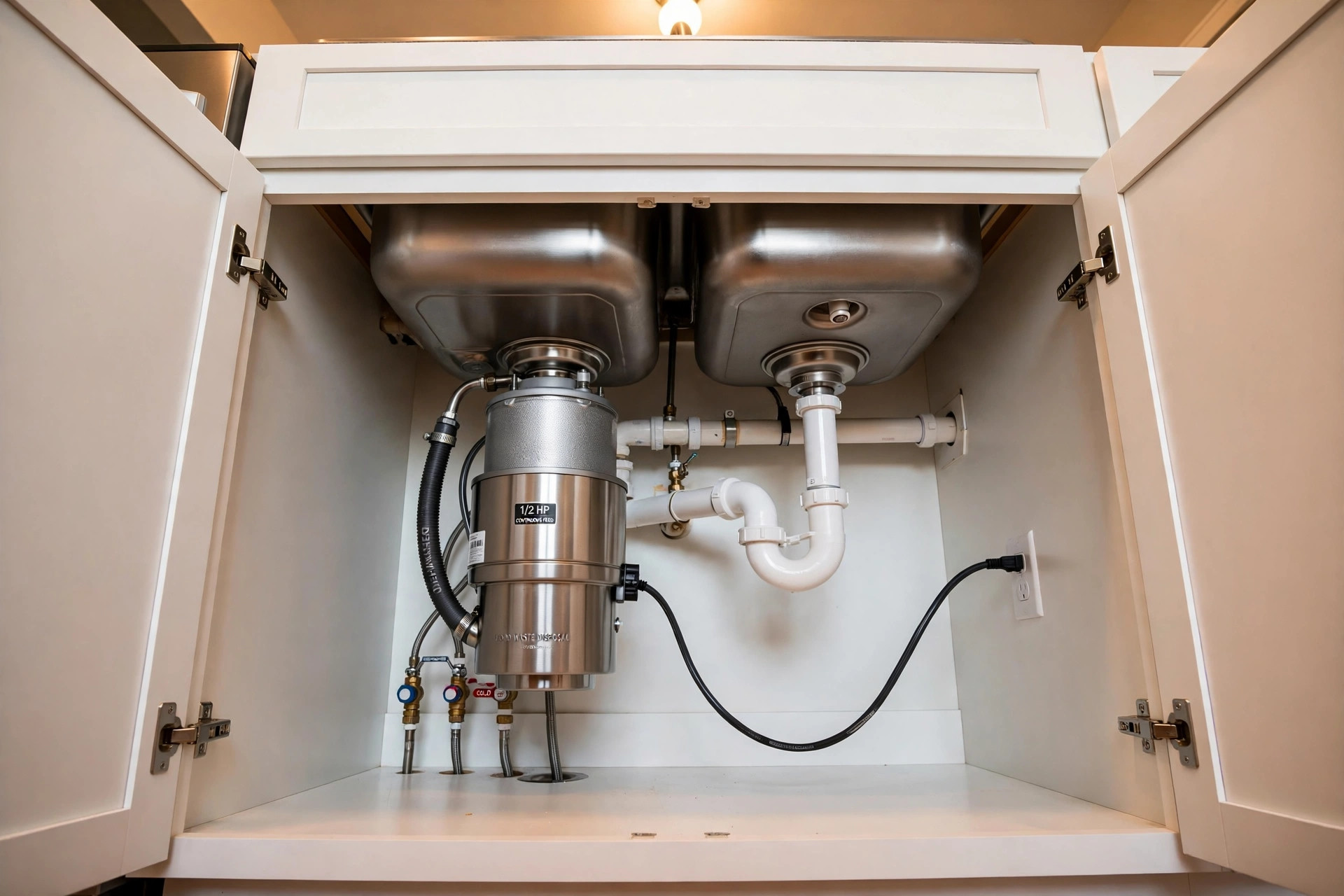
A garbage disposal is a small metal can that mounts to the bottom of the sink drain. Inside the can there is a flat plate called the flywheel. On the plate sit small lugs. These lugs swing as the plate turns. They do not cut food the way a blade does. They smash and grind the scraps against a rough ring on the side of the can.
When the unit runs, water flows in from the faucet. The ground food and water drain out through a side pipe. The side pipe joins the drain line under the sink. Some units have a port that feeds into the dishwasher.
The power comes from a cord or a wired line under the sink. Most homes have a switch on the wall near the sink. A batch-feed unit runs only when you push the stopper down. That style is common in homes with small children.
Choosing the Right Unit for a Florida Home
Not all disposals are the same. The right pick depends on your home, your family, and your plumbing.
Horsepower
Horsepower is the power of the motor. Small units have one third of a horsepower. They can grind soft scraps like cooked vegetables. They wear out fast if you push them hard. A one half horsepower unit fits most Florida families. It grinds peels, small bones, and leftovers. A three quarter horsepower unit suits large homes or people who cook a lot. One horsepower and above is for heavy use. Higher power also means less jamming and less noise.
Feed Type
A continuous-feed unit runs when you flip the switch. You add scraps while it runs. A batch-feed unit holds a load and runs when you lock the stopper in place. Continuous feed is more common and easier to use. Batch feed costs more but adds safety. Homes with young children may want batch feed.
Grind Stages
Basic units have one grind stage. Better units have two or three stages. Each stage grinds the waste finer. Multi-stage units clog less. They are also quieter. In a Florida condo or townhouse, a quiet unit keeps the peace with neighbors.
Stainless Steel Parts
Heat and damp can rust cheap parts. Look for stainless steel grind parts. They last longer in a moist cabinet. A good unit should last eight to fifteen years.
Septic Safe Models
If your Florida home uses a septic tank, check the tank first. Some tanks are too small for the extra load. Some makers sell “septic assist” units. These add enzymes that help break down waste. But no unit works well if the tank is weak. Ask a septic service before you buy. Reviews at Consumer Reports compare how different models handle heavy loads.
What the Installation Costs
The cost of garbage disposal installation in a Florida home has three parts: the unit, the parts, and the labor.
A basic disposal costs 80 to 150 dollars. A mid-range unit with three quarter horsepower and stainless steel parts costs 150 to 300 dollars. A top unit with quiet insulation and three grind stages can cost 300 to 500 dollars.
Small parts add 20 to 60 dollars. These include the flange, the mounting ring, putty, and the drain pipes. If the sink needs a new flange, the part costs little but adds time.
Labor in Florida runs 150 to 400 dollars for a straight swap. If the plumber must add an outlet, the cost rises. A new outlet and switch can add 100 to 250 dollars. Older homes may need a permit. Permits in Florida cities run 25 to 100 dollars.
All told, most Florida owners pay 250 to 700 dollars for a full job. A hard job with new wiring can pass 800 dollars. Get two or three quotes. Shoppers can compare unit prices at Lowe’s before they call for quotes.
The Installation Steps
A trained plumber can do the work in one to three hours. The steps are the same in almost every Florida home.
Step 1: Shut Off Power and Water
The plumber turns off the power at the breaker box. This keeps the work safe. The water supply under the sink is shut off too. A bucket goes under the pipes to catch drips.
Step 2: Remove the Old Unit or Prep the Sink
If an old disposal is in place, the plumber twists it off the mounting ring. If no disposal was there before, the old strainer is removed from the sink drain hole.
Step 3: Fit the Mounting Ring and Flange
The flange sits in the drain hole from above. Plumber’s putty seals it. The mounting ring locks under the sink. This ring must be tight. A loose ring will leak later.
Step 4: Hang the New Disposal
The disposal is lifted and twisted onto the ring. It clicks into place. This is the heaviest part of the job. The plumber then turns the unit so the drain ports point the right way.
Step 5: Connect the Drain Pipes
If the drain fits, the trap is reconnected. Tips from This Old House show how the pipes should line up with no stress on the joints.
Step 6: Connect the Power
Some units plug into an outlet under the sink. Others are wired direct. If the wiring is direct, the plumber joins the wires in the base of the unit. The air switch or wall switch is tested.
Step 7: Test for Leaks
The water is turned back on. The plumber fills the sink and lets it drain. The unit is run with cold water. Every joint is checked for drips. The owner should watch the first run and listen for odd sounds.
Homeowners with strong DIY skills can do this work. But Florida homes often have old pipes, tight cabinets, and tricky wiring. A mistake can flood a cabinet. If you are not sure, hire a pro. Articles on Bob Vila list the tools a DIY job needs.
Florida Codes and Rules
Florida has a state plumbing code. Cities and counties can add their own rules. Most places allow a disposal in a home on city sewer. Some condo boards do not allow them. The boards fear clogs in shared pipes. Check your HOA rules before you buy.
Septic systems need more care. A disposal adds solid waste to the tank. The tank may need to be pumped more often. Call your county health office first.
Permits are common for new installs. A swap of like for like may not need one. A brand new unit with new wiring often does. The plumber can pull the permit. Do not skip this step. Work done without a permit can cause trouble when you sell the home.
GFCI protection is smart near water. Many Florida kitchens now have a GFCI outlet under the sink. This shuts off power if water touches the wires. If your home lacks one, ask the electrician to add it.
Care and Upkeep in Hot Weather
A disposal in Florida needs a little care. The heat makes waste spoil fast. Grease goes soft in the heat and coats the pipes. A few habits keep the unit in good shape.
Run cold water before, during, and after each use. Let the water run for fifteen seconds after the grind ends. This washes the ground waste down the line.
Feed scraps a little at a time. Do not jam a full plate of waste into the unit at once. Cut large items into small bits. Do not put grease, oil, or fat down the drain. Pour old grease into a can and throw it in the trash.
Clean the unit once a week. Freeze vinegar in an ice cube tray. Run the cubes through the unit with cold water. The ice scrubs the plate. The vinegar cuts the smell. Citrus peels also freshen the unit. The Whirlpool care guides suggest this kind of routine cleaning.
Watch for these warning signs. The unit hums but does not spin. This often means a jam. Press the reset button on the bottom of the unit. Never put your hand in the drain.
Leaks under the sink mean a loose joint or a worn seal. A foul smell that will not wash out may mean buildup on the splash guard. Scrub the rubber guard with a brush and dish soap.
If the unit is more than ten years old and breaks often, replace it. A new unit runs quieter and grinds better. When you shop, look at energy use. Labels on ENERGY STAR list which models use power wisely.
Safety Tips
A disposal is safe when used with care. It is not a trash can. Keep these rules in mind.
– Always run cold water when the unit runs. – Keep hands out of the drain, even when the unit is off. – Turn the unit off before you clear a jam, and use tongs or the jam tool. – Do not put glass, metal, plastic, or paper in the unit. – Do not put bones larger than small chicken bones in most units. – Keep the switch where small children cannot reach it. A batch-feed unit adds safety for families. – If the unit smells of burning, turn it off and call a pro.
The GE Appliances safety pages remind owners to keep the area under the sink dry. Water and power must never mix.
Types and Options at a Glance
| Type | Best For | Rough Price | |—|—|—| | 1/3 HP continuous feed | Small homes, light use | 80-150 dollars | | 1/2 HP continuous feed | Most Florida families | 120-220 dollars | | 3/4 HP continuous feed | Heavy cooks, large homes | 180-350 dollars | | 1 HP continuous feed | Very heavy use | 300-500 dollars | | Batch feed | Homes with small children | 200-450 dollars | | Septic assist | Homes on septic tanks | 200-400 dollars |
A quiet unit costs more. Insulation wraps the can and cuts noise. For more on noise ratings, see The Spruce.
Pairing With the Rest of the Kitchen
A disposal is one part of a working kitchen. It sits next to the sink, the faucet, and the dishwasher. If you are planning a larger kitchen project, it helps to think about how all the parts work together.
For example, the sink itself matters. An undermount sink gives more room under the counter for the unit. If you want to learn about sink styles, read our guide on under sink filters. A good faucet also helps. A pull-down faucet with strong flow washes scraps into the drain fast. Our notes on pot filler faucets cover tap choices for busy cooks.
The floor under your feet matters too. Water-resistant floors hold up better in a Florida kitchen. Our article on vinyl plank flooring looks at tough floor picks for damp rooms.
Frequently Asked Questions
How long does garbage disposal installation take in a Florida home? A straight swap takes one to two hours. A new install with added wiring takes two to four hours.
Do I need a permit for a garbage disposal in Florida? It depends on the city and the job. A simple swap often needs no permit. New wiring or a first-time install often does.
Can I install a disposal if my home has a septic tank? Sometimes. The tank must be big enough for the extra waste. Some counties in Florida have rules about this. Have a septic pro check your tank before you install.
What should I never put in a garbage disposal? Grease, oil, and fat are the worst. Also avoid coffee grounds in large amounts, pasta, rice, potato peels, and fibrous foods like celery and corn husks. These clog pipes.
Why does my disposal smell bad in the summer? Heat speeds up rot. Small bits of food stick inside the unit. Clean it weekly with ice cubes and vinegar.
Is a garbage disposal safe with kids in the house? Yes, with care. A batch-feed unit is the safest choice. It runs only when the stopper is locked in place.
A Short Final Word
A garbage disposal is a small change that makes a big difference in a Florida kitchen. It cuts odor, keeps bugs away, and protects your drains. Pick a unit with enough power and stainless steel parts. Check your local codes and your septic tank first. Hire a good plumber if the job is beyond your skill. With a little care, the unit will serve your home for many years.
References
Bob Vila. (n.d.). Home improvement advice. https://www.bobvila.com Consumer Reports. (n.d.). Product reviews and ratings. https://www.consumerreports.org ENERGY STAR. (n.d.). Energy efficient products. https://www.energystar.gov GE Appliances. (n.d.). Kitchen and home appliances. https://www.geappliances.com Lowe’s. (n.d.). Home improvement products. https://www.lowes.com The Spruce. (n.d.). Home and garden advice. https://www.thespruce.com This Old House. (n.d.). Home renovation guidance. https://www.thisoldhouse.com Whirlpool. (n.d.). Home appliances. https://www.whirlpool.com
Was this guide helpful?

About Sarah Mitchell
The My Garden US editorial team writes practical, in-depth home and garden guides for American homeowners — tested advice, no fluff.
You May Also Like
Double Wall Ovens Reviews and Buying Guide USA
March 16, 2026 0 views
A Plain Guide to Under Sink Filters for Sale USA
June 28, 2026 0 views
Stainless Range Hoods for Sale USA: A Plain Buyer’s Guide
July 1, 2026 0 views