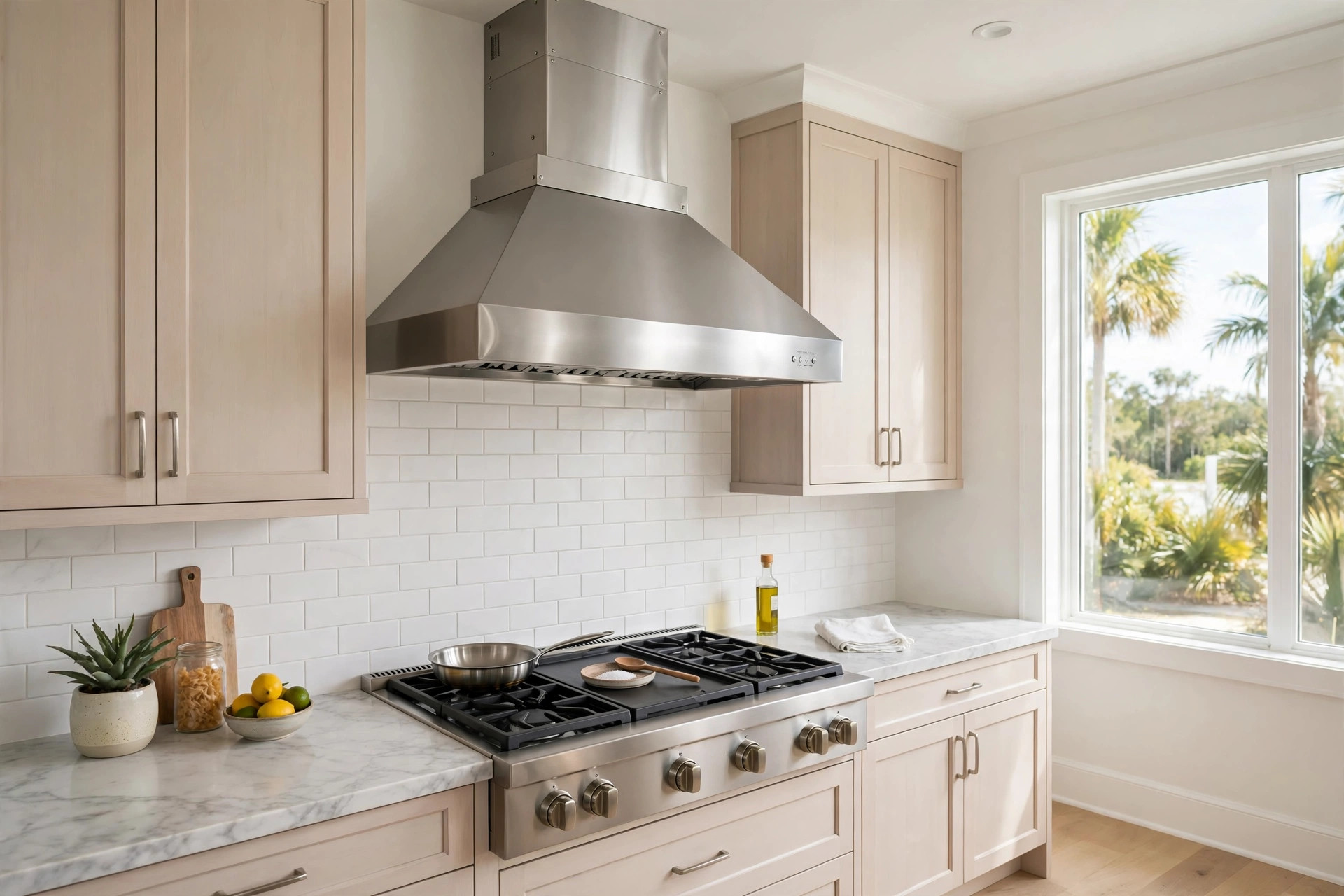

Many people who shop for stainless range hoods florida homes usa want the same thing. They want a kitchen that stays clean. They want a home that does not smell of last night’s fish fry. They want a cooker hood that works hard in Florida heat and humidity.
Florida kitchens have their own problems. The air is wet most of the year. Many homes have open floor plans. A smell that starts at the stove can reach the living room in seconds. Coastal homes face salt air that can mark cheap metal. A good stainless range hood answers all of these problems at once.
This guide explains what a range hood does. It shows the types you can buy. It lists what to check before you spend money. It gives price ranges. It covers cleaning and care. It also answers the questions Florida homeowners ask most.
Why a Range Hood Matters in a Florida Home
Cooking makes smoke, grease, heat, and steam. In a dry state, an open window may carry some of it away. In Florida, the outside air is already heavy with moisture. An open window often makes the problem worse.
A range hood pulls the dirty air up and pushes it out. A ducted hood sends it outside through a vent. A ductless hood filters it and sends clean air back. Either way, less grease lands on your cabinets. Your walls stay cleaner. Your smoke alarm stays quiet.
Grease is a quiet enemy. It sticks to cabinets near the stove. It yellows white paint. It feeds mold when it mixes with Florida humidity. A strong hood cuts grease before it can spread. That is why builders in Florida put range hoods in almost every new home now.
There is also a health side. Gas stoves give off nitrogen dioxide and small particles. Frying gives off fine oil mist. These things irritate eyes, noses, and lungs. The U.S. Department of Energy notes that proper kitchen ventilation lowers indoor air pollution. A good hood is not a luxury. It is part of a healthy home.
Open floor plans make hoods more important. Many Florida homes join the kitchen, dining room, and family room in one space. Without a hood, cooking smells move freely. With a strong hood, you can fry fish at six and still enjoy the room at eight.
How to Choose the Right Hood: Stainless Range Hoods Florida Homes Usa
Measure Your Cooktop
The hood should cover the whole cooktop. A 30-inch stove needs at least a 30-inch hood. Many experts suggest going 3 inches wider on each side for island hoods. A hood that is too small lets steam escape at the edges.
Measure the space between the cooktop and the bottom of the hood. For gas ranges, most makers call for 24 to 30 inches of space. For electric ranges, 20 to 24 inches is common. Too low is a fire risk. Too high lets the hood catch less.
Pick the Right CFM
CFM means cubic feet per minute. It tells how much air the hood moves. A higher number means more power.
A simple rule works well. Take the width of your cooktop in inches. Multiply by 100 for an electric range or 150 for a gas range. A 30-inch electric range needs about 300 CFM. A 36-inch gas range needs about 540 CFM.
Florida cooks often fry and grill. High-heat cooking needs more power. If you sear meat or stir-fry often, buy one step stronger than the rule says. A hood that runs at low speed most days, and high speed when needed, is the ideal setup.
Ducted or Ductless
A ducted hood vents air outside through a metal duct. It is the best choice when you can install it. It removes smoke, heat, and moisture for good. In humid Florida, getting moisture out of the house matters a lot.
A ductless hood filters air through charcoal filters and returns it to the room. It catches grease and some smells. It does not remove heat or moisture. Choose ductless only when venting outside is not possible, such as in some condos.
Check the Noise Level
Hood noise is measured in sones. One sone is about the sound of a quiet refrigerator. A hood at two to three sones is fine for daily cooking. Above five sones, it is loud enough to drown out talk.
Large, powerful hoods can be loud. Look for a model with several speed settings. You will use the low speeds most days. Strong range hood reviews at Consumer Reports often list sone ratings side by side, which makes comparison easy.
Types of Stainless Range Hoods
Under-Cabinet Hoods
These mount under a kitchen cabinet above the stove. They are the most common type. They cost less. They fit well in homes with standard cabinet lines. Many Florida condos use this type because the cabinet above the range is already there.
Wall-Mount Chimney Hoods
These attach to the wall and rise to the ceiling like a chimney. They look clean and modern. They suit kitchens where the range sits against a wall with no cabinet above. They come in many widths and in pro-style designs.
Island Hoods
These hang over a cooktop on a kitchen island. They need a ceiling vent and often cost more to install. They work best in big open kitchens. Because smoke can drift from all sides, island hoods usually need more CFM than wall models.
Insert Liners
An insert fits inside a custom wood hood or a cabinet box. The liner holds the fan and filters. The outside can match your cabinets. This type is popular in high-end Florida remodels where the homeowner wants a furniture look.
Downdraft Hoods
These sit behind the cooktop and pull air down instead of up. They are rare now. They save sight lines on an island. They work less well than overhead hoods because heat and smoke rise.
If you are still comparing basic models, our stainless range hoods buying guide covers the main features in more detail.
Cost and Price Ranges
Prices vary by type, size, and power. Here are rough ranges seen in U.S. stores in 2026.
– Basic under-cabinet stainless hood, 30 inch: 150 to 400 dollars. – Mid-range wall-mount chimney hood: 400 to 900 dollars. – Pro-style 36-inch hood with 600 CFM or more: 900 to 2,000 dollars. – Island hoods: 600 to 2,500 dollars. – Custom insert liners: 500 to 1,500 dollars, not counting the wood surround.
Installation adds cost. A simple swap of an old under-cabinet hood may cost 150 to 300 dollars. A new duct run through the roof or wall can cost 500 to 1,500 dollars. In Florida, many installers charge more for roof work in summer heat.
Ductless hoods cost less to install. There is no duct to run. You will spend more over time on charcoal filters. Most filters cost 15 to 40 dollars and need a change every three to six months.
High-end models from makers like GE Appliances and Bosch often sit in the upper price range. Whirlpool offers solid mid-range choices. Large stores like Lowe’s carry models at every price point.
Think about the total cost, not just the sticker price. A cheap weak hood that leaves grease on your cabinets is no bargain. A good hood protects paint, cabinets, and even the life of your range.
Care and Upkeep
Stainless steel is easy to care for, but Florida air asks for a little extra work. Salt in coastal air can spot the metal. Humidity can leave water marks.
Wipe the outside of the hood once a week with a soft cloth and warm soapy water. Dry it right away. Wipe with the grain of the metal, not against it. This keeps the finish smooth and free of streaks.
Clean the grease filters once a month. Most metal mesh filters can go in the dishwasher. If you cook a lot, clean them every two weeks. A clogged filter makes the fan work harder and catch less.
Charcoal filters in ductless hoods cannot be washed. Replace them on schedule. Mark the date on your calendar. A dead filter does almost nothing.
Check the light bulbs now and then. Most hoods use LED or halogen lamps. Replace a burnt bulb soon. Good light over the stove makes cooking safer and easier.
Once a year, look at the duct if you can reach it. Check for dents, loose joints, or grease buildup. A damaged duct cuts airflow. Guides from This Old House and Bob Vila show how to inspect and seal duct joints with foil tape.
Safety Notes for Florida Kitchens
Never place the hood lower than the maker allows. The heat from a gas burner can melt filters or start a grease fire if the hood sits too close. Keep the manual. Follow the clearance numbers printed in it.
Clean grease filters on time. Grease in a filter can catch fire if flames reach it. A gas burner left on high under a dirty hood is the classic cause of hood fires.
Make sure the damper works. The damper is the flap that opens when the fan runs and closes when it stops. If it sticks open, hot humid air and insects can come in from outside. If it sticks shut, the hood cannot vent.
In hurricane season, check the outside vent cap. High winds can damage it. A broken cap lets rain into the duct. Replace a bent or missing cap before the next storm.
Florida building codes may require a range hood that vents outside in new construction. Check with your county before a remodel. The Energy Star program also lists efficient ventilation fans that meet strict power and noise standards.
Frequently Asked Questions
How many CFM do I need for a gas range in Florida?
Use 150 CFM per inch of cooktop width as a starting point. A 30-inch gas range needs about 450 CFM. A 36-inch range needs about 540 CFM. If you fry often or cook with high heat, choose a stronger model. More power also helps in open floor plans common in Florida homes.
Are ductless range hoods good enough?
Ductless hoods help with grease and light smells. They do not remove heat or moisture. In Florida’s humid climate, a ducted hood is much better. Choose ductless only when venting outside is not possible.
Will salt air damage a stainless range hood?
Salt air can spot and stain low-grade stainless steel. Look for 304-grade stainless steel, which resists corrosion better. Wipe the hood down often if you live near the coast. Rinse off salt film with clean water and dry the surface.
What width should my range hood be?
Match the width of your cooktop at minimum. For a 30-inch range, buy a 30-inch hood or wider. For island cooktops, go 3 inches wider on each side if you can. A wider hood catches more of the rising steam.
How often should I clean the filters?
Clean metal mesh filters once a month. If you cook daily with oil, clean them every two weeks. Replace charcoal filters in ductless hoods every three to six months. Clogged filters cut airflow and raise fire risk.
Can I install a range hood myself?
A simple under-cabinet swap is a fair do-it-yourself job if the duct is already in place. Running a new duct through the wall or roof is harder. Most homeowners hire a pro for that. Bad ductwork wastes the power of a good hood. If you are planning a full kitchen refresh, see our quartz countertop installation guide and our double wall oven buying guide for the other big pieces.
Final Word
A stainless range hood is one of the hardest-working items in a Florida kitchen. It fights grease, smoke, heat, and humidity every time you cook. Pick the right size and power. Vent it outside when you can. Clean the filters on time. Do these simple things and your hood will keep your home cleaner and healthier for many years.
References
Bob Vila. (n.d.). Home improvement advice. https://www.bobvila.com Bosch. (n.d.). Home appliances. https://www.bosch-home.com Consumer Reports. (n.d.). Product reviews and ratings. https://www.consumerreports.org ENERGY STAR. (n.d.). Energy efficient products. https://www.energystar.gov GE Appliances. (n.d.). Kitchen and home appliances. https://www.geappliances.com Lowe’s. (n.d.). Home improvement products. https://www.lowes.com This Old House. (n.d.). Home renovation guidance. https://www.thisoldhouse.com U.S. Department of Energy. (n.d.). Energy efficiency and renewable energy. https://www.energy.gov Whirlpool. (n.d.). Home appliances. https://www.whirlpool.com
Was this guide helpful?

About Lisa Anderson
The My Garden US editorial team writes practical, in-depth home and garden guides for American homeowners — tested advice, no fluff.
You May Also Like

Double Wall Ovens Texas Homes USA: What to Know Before You Buy
July 6, 2026 0 views
Where to Buy Pot Filler Faucets in the USA
September 3, 2026 0 views
Under Counter Wine Fridges: An American Homes Guide
May 16, 2026 0 views