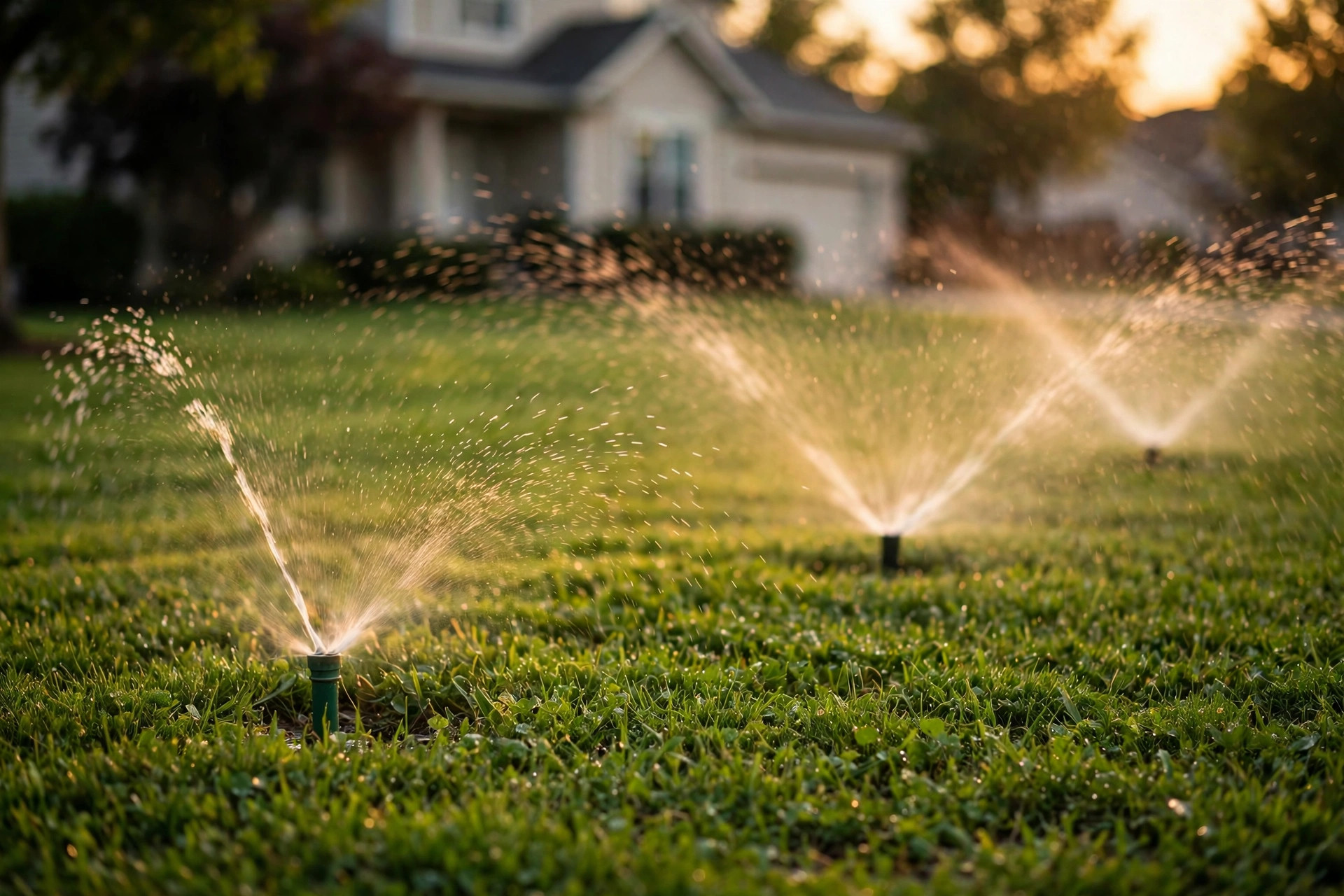

A green lawn does not happen by chance. It needs water at the right time and in the right amount. Many home owners pay a lawn service to do this work. Learning how to install pop up sprinklers yourself is easier than most think. With a weekend, a shovel, and basic tools, you can build a system that waters your yard on its own. This guide walks you through each step in plain words. No trade skills are needed.
Why It Matters
Grass needs about one inch of water each week from the sky or from your hose. Hand watering takes time and leaves dry spots. A pop up sprinkler system fixes this. The heads sit flush with the ground. When the water turns on, they rise and spray. When it turns off, they drop back down. Your mower passes right over them.
A good system saves water. It puts water only where the grass grows. With a little planning, each head covers its own zone. You waste less. You also save time. A timer runs the system at dawn while you sleep. Your lawn drinks before the sun gets hot.
A neat yard raises the look of the whole home. It tells guests that the house is cared for. A sprinkler system is part of that curb appeal.
What You Need Before You Start: How to Install Pop Up Sprinklers Yourself
Gather your parts before you dig. A trip back to the store in the middle of the job wastes hours. Below are the tools and parts most do it yourself jobs need.
Tools
* A flat blade shovel for cutting sod * A trenching shovel or spade for narrow trenches * A wheelbarrow for soil and sod * PVC pipe cutters or a hacksaw * A tape measure, at least 25 feet long * A level * A small hand tamper to pack soil back down * A pipe wrench and an adjustable wrench * Teflon tape for threaded joints * A rake and a broom for clean up
Cordless tools can speed the work. A cordless drill can drive screws for the timer box. Ryobi and Greenworks both make homeowner grade cordless tools for light work. Echo makes gas powered gear for larger yards.
Parts
* Pop up sprinkler heads, in the sizes your plan calls for * PVC pipe, usually three quarter inch or one inch * PVC elbows, tees, and couplings * Riser fittings to connect heads to the pipe * A zone control valve for each zone * A valve box to protect the valves * A timer, also called a controller * Low voltage wire to connect the timer to the valves * An anti siphon valve or a backflow preventer, as your local code asks * Pipe primer and PVC glue * Gravel for drainage under each head * Sprinkler flags or stakes to mark head spots
Plan Your Layout
Good plans make easy installs. Take a sheet of graph paper and draw your yard. Mark the house, the driveway, the walks, the trees, and the beds. Measure the yard and write the feet on your drawing.
Decide where the water comes from. Most homes tap the outdoor spigot or the main water line. LawnStarter offers guides and local help if you want a second set of eyes on your plan before you dig.
Split your yard into zones. Each zone is a group of heads that run at the same time. One zone should use no more water than your supply can give. Check your water pressure with a gauge from the store. Most heads need 30 to 50 pounds of pressure to spray well.
Mark each head on your drawing. Pop up heads spray in a circle, a half circle, or a quarter circle. Place heads so their spray reaches the next head. This is called head to head coverage. It keeps the lawn even. Avoid spraying the house, the fence, or the walk. Water on concrete is wasted water.
Write the pipe runs on your drawing. Keep pipes in straight lines between heads and bends few. Every bend cuts a little pressure. Put valves in one or two valve boxes near the water source. That keeps the wiring short.
Step by Step: How to Install Pop Up Sprinklers Yourself
Mark the Yard
Transfer your drawing to the real lawn. Push one flag into the ground where each head will go. Lay a garden hose where each pipe run will go. Walk the yard and look for problems. A head too close to a tree root will be hard to dig. Move it a foot now. It is easy to move a flag. It is hard to move a pipe.
Call Before You Dig
This step is not a choice. In most states, you must call 811 before you dig. They mark gas, power, and phone lines for free. Wait for the marks before your shovel hits the soil.
Dig the Trenches
Cut the sod first. Slice the grass in strips about eight inches wide and roll them up. You will lay them back later. Dig trenches six to twelve inches deep so the head tops sit level with the soil. Pile the loose soil on a tarp so the lawn stays clean.
Lay the Pipe
Start at the valve box. Lay pipe along each run and cut it to length. Dry fit the elbows and tees first, then glue. Brush primer and glue on the pipe end and the fitting. Push and twist a quarter turn. Hold for thirty seconds. Do not rush the glue. It sets fast in heat.
Set the Heads
Dig a small pocket at each flag and put two inches of gravel in the bottom for drainage. Screw the head onto its riser and set the head top level with the soil. A head set too high gets clipped by the mower. A head set too low gets buried by grass. Backfill around the head and pack it firm.
Connect the Valves and Timer
Mount the timer on a garage or house wall near a power outlet. Run the low voltage wire from the timer to each valve. Follow the wire color code in the timer manual. Connect the water supply to the valve manifold and add the backflow preventer your code requires. This part keeps lawn water from flowing back into your drinking water.
Flush, Test, and Adjust
Before you bury the pipes, flush them. Open each valve by hand and let water run through the open pipe ends for a minute. This blows out dirt and glue bits. Then attach the heads and turn the water on. Walk each zone and watch the spray. Set each head arc with a small screwdriver and aim spray away from walks and walls. Check for leaks at every joint. Fix leaks now while the trench is open.
Backfill and Restore
Shut the water off and fill the trenches with the piled soil. Pack it in layers and lay the sod strips back over the trench. Water the sod well. It will root in a week or two. Set the timer for twenty minutes per zone, three times a week, before sunrise. Adjust with the seasons.
Types of Pop Up Sprinklers
Not all heads are the same. Pick the head that fits each spot in your yard.
Fixed spray heads. These spray a set pattern, full circle, half circle, or quarter circle. They cover small areas, up to about fifteen feet. They are the most common head for home lawns. They are cheap and easy to adjust.
Rotor heads. These turn in a slow circle and throw water farther, up to fifty feet. They suit large open lawns. Do not mix rotors and sprays in one zone. Their water rates differ.
Gear driven heads. These are a type of rotor with sealed gears. They last long and run quiet. They cost more up front. Many home owners pick them for the front yard where looks matter.
Drip lines for beds. Pop up heads are for grass. Flower beds and shrubs do better with drip lines, which give water at the soil and keep leaves dry. That cuts disease. If your plan includes beds, add a drip zone with its own valve.
If you want brand names to compare, Toro and John Deere both sell full lines of residential heads, valves, and timers. Consumer Reports tests outdoor watering gear and can help you weigh cost against build quality.
Cost and Price
Doing it yourself cuts the bill by more than half. A pro install for a quarter acre lawn often runs 2,500 to 5,000 dollars. A do it yourself job with the same coverage often costs 500 to 1,200 dollars in parts. The timer is the priciest single part at 80 to 250 dollars. Heads cost 5 to 20 dollars each. Buy a few extra fittings.
Your time is the other cost. Plan one full weekend for a small yard. A big yard with four or more zones may take two weekends. Digging is the slow part. Clay soil digs hard. Sandy soil digs fast. Ask a friend to help with the trenches. The work goes twice as fast with two shovels.
You may ask whether a pro quote is worth getting first. It can be. An affordable lawn sprinkler installation cost estimate gives you a number to beat. Most of the time, the do it yourself route wins on price.
Water is a running cost. Water early in the morning to cut loss to wind and sun. Many towns limit watering days in summer, so check your local rules. A rain sensor on the timer stops watering after rain. It costs about 30 dollars and pays for itself fast.
Care and Upkeep
A sprinkler system needs a little care each year. The work is light. Put it on your calendar.
Spring start up. Open the main valve slowly. Walk each zone. Look for heads that do not pop up. Clean dirt from the filter screens. Trim grass around each head. Reset the timer for the season.
Summer checks. Once a month, run each zone and watch. Look for tilted heads and dry brown spots. A brown spot may mean a clogged nozzle. Unscrew the nozzle and rinse it.
Fall shut down. In cold states, blow the water out before the first freeze. Rent a small air compressor and blow each zone until only mist comes out. This keeps pipes from cracking. Briggs and Stratton makes small engines and compressors that many home owners use for this job.
Feeding the lawn. Water alone does not make a great lawn. Grass also needs food. If you grow St. Augustine grass in Texas, read a guide on the best fertilizer for st augustine grass texas and time your feeding with the seasons. Scotts publishes simple feeding schedules by grass type and region. Thick grass crowds out weeds, which cuts your need for chemicals.
Weed timing. Weeds steal water from grass. A pre emergent weed killer stops weed seeds before they sprout, but timing matters. A pre emergent weed killer application timing guide can help you hit the right week in spring. The Spruce also keeps plain guides on lawn weed control for beginners.
Safety
Digging and water lines bring real risks. Take them as a must, not a choice.
* Call 811 or your local marking service before you dig. Wait for the marks. * Wear gloves when cutting pipe and handling glue. PVC primer and glue give off fumes. Work in open air. * Wear eye protection when cutting pipe and when flushing lines. Water under pressure can throw grit. * Shut the main water off before you cut into any supply line. Keep a bucket and towels near. * Keep power tools away from water. If you use a cordless drill near wet soil, keep the battery dry. * Install the backflow preventer your code requires. It guards your drinking water. * Do not let children play near open trenches. Cover the work area at day end.
FAQ
How deep should the trenches be?
Six to twelve inches is the norm. The pipe must sit low enough that the head top is level with the soil. In cold states, go deeper if you can. Deeper pipe freezes less.
Can I install sprinklers without cutting into my main water line?
Yes. Many home owners tap the outdoor spigot with a backflow preventer on that tap. Flow from a spigot is lower, so plan more zones with fewer heads each. It still works well for small yards.
How many heads can one zone run?
It depends on your water flow and pressure. Time how long the spigot takes to fill a five gallon bucket. That gives gallons per minute. Add up the gallons per minute of the heads in the zone and keep the total under eighty percent of your supply. That margin keeps spray strong.
Do pop up sprinklers work on slopes?
Yes, with care. Put heads with check valves on slopes. A check valve keeps water in the pipe when the zone shuts off, which stops low heads from draining and puddling. Space heads a little closer on slopes and run shorter cycles.
How long do pop up sprinkler heads last?
Ten to fifteen years is common for good heads. Sun, soil, and mowers wear them down. Replace heads one at a time as they fail. Keep a spare head and nozzle in the garage. A swap takes ten minutes.
A Short Final Word
You now know how to install pop up sprinklers yourself from plan to first watering. The job asks for a weekend and basic tools. It pays back every week in saved time and a greener lawn. Draw the plan, mark the yard, dig with care, and test before you bury.
References
Greenworks. (n.d.). Outdoor power equipment. https://www.greenworkstools.com Echo. (n.d.). Outdoor power equipment. https://www.echo-usa.com Briggs & Stratton. (n.d.). Engines and power products. https://www.briggsandstratton.com LawnStarter. (n.d.). Lawn care services and guides. https://www.lawnstarter.com John Deere. (n.d.). Lawn care and turf equipment. https://www.deere.com Scotts. (n.d.). Lawn care products. https://www.scotts.com Consumer Reports. (n.d.). Product testing and ratings. https://www.consumerreports.org The Spruce. (n.d.). Home and garden guides. https://www.thespruce.com Ryobi. (n.d.). Power tools. https://www.ryobitools.com
Was this guide helpful?

About Jennifer Lee
The My Garden US editorial team writes practical, in-depth home and garden guides for American homeowners — tested advice, no fluff.
You May Also Like
How to Lay Sod in Summer Heat
September 11, 2026 0 views
Native Plant Landscaping Ideas for Front Yards
September 25, 2026 0 views
The Best Push Mower for Thick Grass: How to Choose One That Cuts Clean
May 5, 2026 0 views