
This vinyl plank flooring reviews buying guide for the USA gives you the plain facts you need before you spend money. Vinyl plank flooring is now one of the most popular floors in American homes. It looks like real wood. It costs less than real wood. It stands up to water, pets, and heavy foot traffic. But not every product is equal. Some planks are thick and quiet underfoot. Others are thin and loud. Some hold up for twenty years. Others curl and fade within five. This guide walks you through the types, the prices, the care rules, and the safety facts. It also pulls together what independent reviews say, so you can shop with confidence.
Why Vinyl Plank Flooring Matters
Flooring is one of the biggest choices in any home project. You walk on it every day. It sets the tone for the whole room. In the 1980s and 1990s, real hardwood ruled. Today, many families choose luxury vinyl plank instead. The reason is simple. It gives the warm look of wood at a fraction of the price.
Independent reviewers at Consumer Reports test vinyl floors for scratch resistance, wear, and color hold. Their results show a wide gap between top brands and budget lines. Reading vinyl plank flooring reviews before you buy helps you spot that gap. A floor is hard to replace once it is down. A bad choice means years of regret.
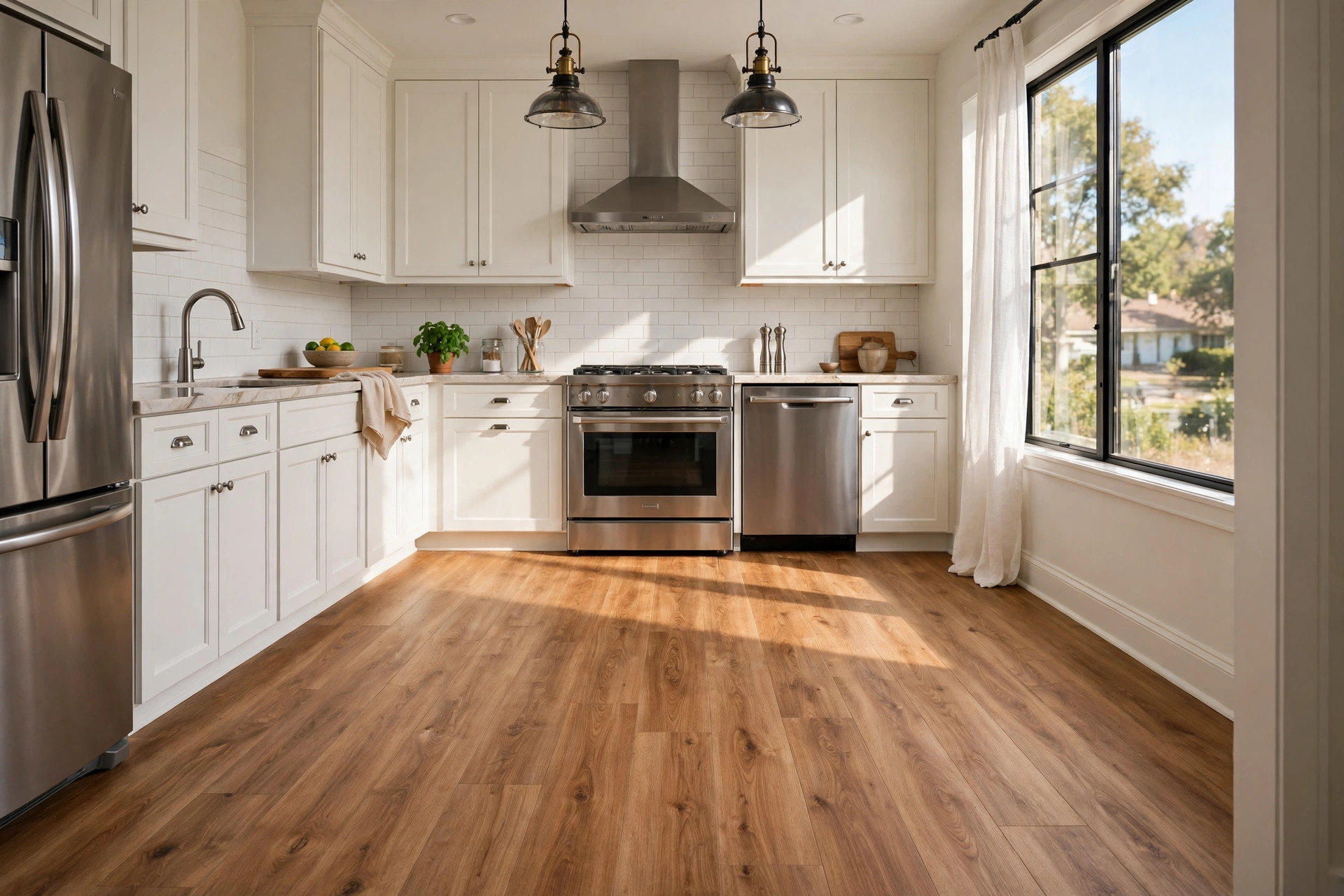
Vinyl plank also fits modern life. Kitchens are busy places. Water spills. Dogs scratch. Kids drop things. A good vinyl plank floor shrugs off most of this. That is why it has become the standard choice in many American kitchen remodels. Homeowners planning a full update often pick the floor first, then match cabinets and lights to it. Simple choices like shaker cabinet doors for California homes or kitchen island hanging lights come later in the plan.
What to Look For When You Shop: Vinyl Plank Flooring Reviews Buying Guide Usa
Walk into any flooring aisle and you will face dozens of boxes. The labels look alike. The prices do not. Here is how to read the fine print like a pro.
The Wear Layer
The wear layer is the clear top coat that protects the printed wood design. It is measured in mils, which are thousandths of an inch. This number matters more than almost anything else.
A 6-mil wear layer suits a low-traffic bedroom. A 12-mil layer works for a normal living room. A 20-mil layer or higher handles kitchens, hallways, and homes with dogs. Reviewers at This Old House note that a thick wear layer is the single best sign of a long life. Do not buy a floor for a busy kitchen with less than 12 mil.
Thickness and Feel
Total plank thickness runs from about 4 mm to 8 mm. Thicker planks feel more solid. They also bridge small bumps in the subfloor better. Thin planks cost less but can telegraph flaws under them. If your subfloor is rough, pay for thicker planks or pay for better prep. There is no free ride.
Water Resistance
Most vinyl plank floors are sold as waterproof. The boards themselves resist water. The weak point is the seams. Click-lock seams can let water through if a puddle sits for hours. Wipe up spills fast. In bathrooms, seal the edges with silicone. Guides at Bob Vila explain that “waterproof” never means “flood-proof.” Treat the floor with respect and it will last.
Print Quality and Emboss
Look past the spec sheet and judge with your eyes. Good vinyl plank uses a high-resolution photo of real wood, then adds an embossed grain that follows the print. Cheap lines use a blurry print with a random texture. Stand the sample upright in your own room. Step back ten feet. The best products read as wood. Also count how many different plank patterns come in one box. A box with only four or five patterns repeats fast in a big room. Ten or more patterns look natural.
The Underlayment
Some planks come with a thin pad already attached. Others need a separate underlayment roll. A good pad cuts noise and softens the step. It also fixes small dips in the floor. Check the maker’s rules. Some brands void the warranty if you add a pad that is too thick.
Types and Options
Vinyl plank flooring comes in three main styles. Each fits a different job.
Rigid Core: SPC and WPC
Rigid core is the modern standard. SPC stands for stone plastic composite. It has a hard, dense core that resists dents. WPC stands for wood plastic composite. It has a softer core that feels warmer and quieter. SPC wins in sun rooms and heavy-use halls. WPC wins in living rooms where comfort matters. Most vinyl plank flooring reviews in the USA rank rigid core lines above old flexible vinyl.
Glue-Down Planks
Glue-down planks stick straight to the subfloor. They are thin and tough. They work well over concrete slabs. The catch is the install. You need a clean, level slab and the right glue. Once down, they stay down. Shops and offices use glue-down planks for this reason. For homes, they suit basements and laundry rooms.
Click-Lock Planks
Click-lock planks snap together like a puzzle. No glue. No nails. They float over the subfloor. This is the most popular style for do-it-yourself owners. A living room can be done in a weekend. The floor can also be taken up and moved later. Big-box stores such as The Home Depot and Lowe’s carry wide lines of click-lock planks, which makes price shopping easy.
Cost and Price
Vinyl plank flooring is cheap compared to wood. It is not all the same price. Plan your budget with real numbers.
Budget planks run about two to four dollars per square foot for the material. Mid-range lines run four to six dollars. Premium brands with 20-mil wear layers run six to ten dollars. Add the install if you are not doing it yourself. Pro install runs two to four dollars per square foot in most US markets.
Do not forget the extras. You will need trim, transitions, and possibly underlayment. A moisture barrier may be required over concrete. Old flooring may need removal. A full room project often costs 20 percent more than the sticker price of the boxes alone. Smart shoppers get three written quotes. They also ask each quote to list the exact product name and wear layer so they can compare fairly.
Watch for sales. Flooring goes on sale around holidays and during store clearance events. Buying a whole house lot at once can bring a bulk discount. But never buy without a sample. Take the sample home. Lay it on the floor. Look at it in morning light and in lamp light. Colors shift a lot between the store and your room.
Care and Upkeep
Vinyl plank floors are easy to live with. A little routine care keeps them looking new for years.
Sweep or vacuum often. Grit is the enemy. Sand and dirt grind into the wear layer like sandpaper. Use a vacuum without a spinning beater bar, or set the bar off. Damp mop with a cleaner made for vinyl floors. The Spruce and other care guides warn against harsh cleaners. Skip steam mops. Skip bleach. Skip wax-based products that leave a dull film.
Protect the floor from furniture. Stick felt pads under chair and table legs. Use mats at doors to catch grit. Lift heavy items instead of dragging them. Keep pet nails trimmed. These small habits add years to the floor.
Sun is a slow killer. Strong direct sun can fade some floors over time. Close blinds during the harshest hours. If you have radiant heat under the floor, follow the maker’s temperature limits. Most makers cap floor heat around 80 degrees. Never stack rugs over a heated vinyl floor. The heat builds up and can mark the planks. For general tips on cutting home energy waste, the federal site ENERGY STAR keeps plain advice on efficient homes.
Safety
Vinyl flooring is safe for normal home use when you follow basic rules. Look for products tested to low emissions standards. Labels like FloorScore show the product passed indoor air tests. This matters most in bedrooms and nurseries.
Grip matters too. Some smooth planks get slick when wet. If you are flooring a bathroom or a kitchen, pick a line with a textured surface. Mats near sinks and tubs add safety.
During install, vent the room. New flooring can smell for a day or two. Open windows and run a fan. Keep small children and pets out of the work area until the smell fades. If you hire a crew, ask what glue and trim products they use. You have a right to know what goes into your home.
Frequently Asked Questions
How long does vinyl plank flooring last? A quality floor with a 20-mil wear layer lasts 15 to 25 years in a normal home. Budget lines with thin wear layers last 5 to 10 years. Care and traffic decide where you land in that range.
Can I install vinyl plank flooring myself? Yes, if you choose click-lock planks. The job needs basic tools and a patient hand. Glue-down and large tile-style jobs are harder. Many owners do a bedroom or living room on their own and hire out the rest.
Is vinyl plank flooring truly waterproof? The planks resist water, but the seams can leak if water sits long. Wipe up spills soon. It handles kitchens and baths well, but it is not a substitute for proper waterproofing in a shower.
Does vinyl plank flooring add home value? It helps. Buyers like a clean, modern floor. It will not add value the way real hardwood does, but a good vinyl floor looks far better than worn carpet or sheet vinyl. For a rental or a starter home, it is a smart spend.
Will my floor look fake? Cheap lines can look flat and plastic. Better lines use deep embossing and varied plank prints. Buy from a brand with strong vinyl plank flooring reviews in the USA, and look at full-size samples, not small chips. The best products fool most eyes.
How do I match the floor to my kitchen remodel? Pick the floor early in the plan. Then choose cabinets, counters, and fixtures around it. Many owners shop appliances at makers like GE Appliances, Whirlpool, or Bosch while planning, and they time the floor install before the big appliances arrive. Small details such as pot filler faucet options for Texas homes also get easier to judge once the floor tone is set.
Final Word
This vinyl plank flooring reviews buying guide for the USA comes down to a few rules. Read real reviews. Buy the thickest wear layer your budget allows. Take samples home. Plan for the true total cost. Care for the floor with gentle cleaning. Do these things and your vinyl plank floor will serve you well for many years.
References
Bob Vila. (n.d.). Home improvement advice. https://www.bobvila.com Bosch. (n.d.). Home appliances. https://www.bosch-home.com Consumer Reports. (n.d.). Product reviews and ratings. https://www.consumerreports.org ENERGY STAR. (n.d.). Energy efficient products. https://www.energystar.gov GE Appliances. (n.d.). Kitchen and home appliances. https://www.geappliances.com Lowe’s. (n.d.). Home improvement products. https://www.lowes.com The Home Depot. (n.d.). Home improvement products. https://www.homedepot.com This Old House. (n.d.). Home renovation guidance. https://www.thisoldhouse.com Whirlpool. (n.d.). Home appliances. https://www.whirlpool.com
Was this guide helpful?

About Emily Rodriguez
The My Garden US editorial team writes practical, in-depth home and garden guides for American homeowners — tested advice, no fluff.
You May Also Like

Kitchen Island Seating USA Online Deals: A Plain Guide to Buying Chairs and Stools Online
August 21, 2026 0 views
Microwave Drawer Units: A Guide for American Homes
January 1, 2026 0 views
Under Sink Filters Deals Near Me: A Plain Guide to Buying Well
June 12, 2026 0 views