
Introduction
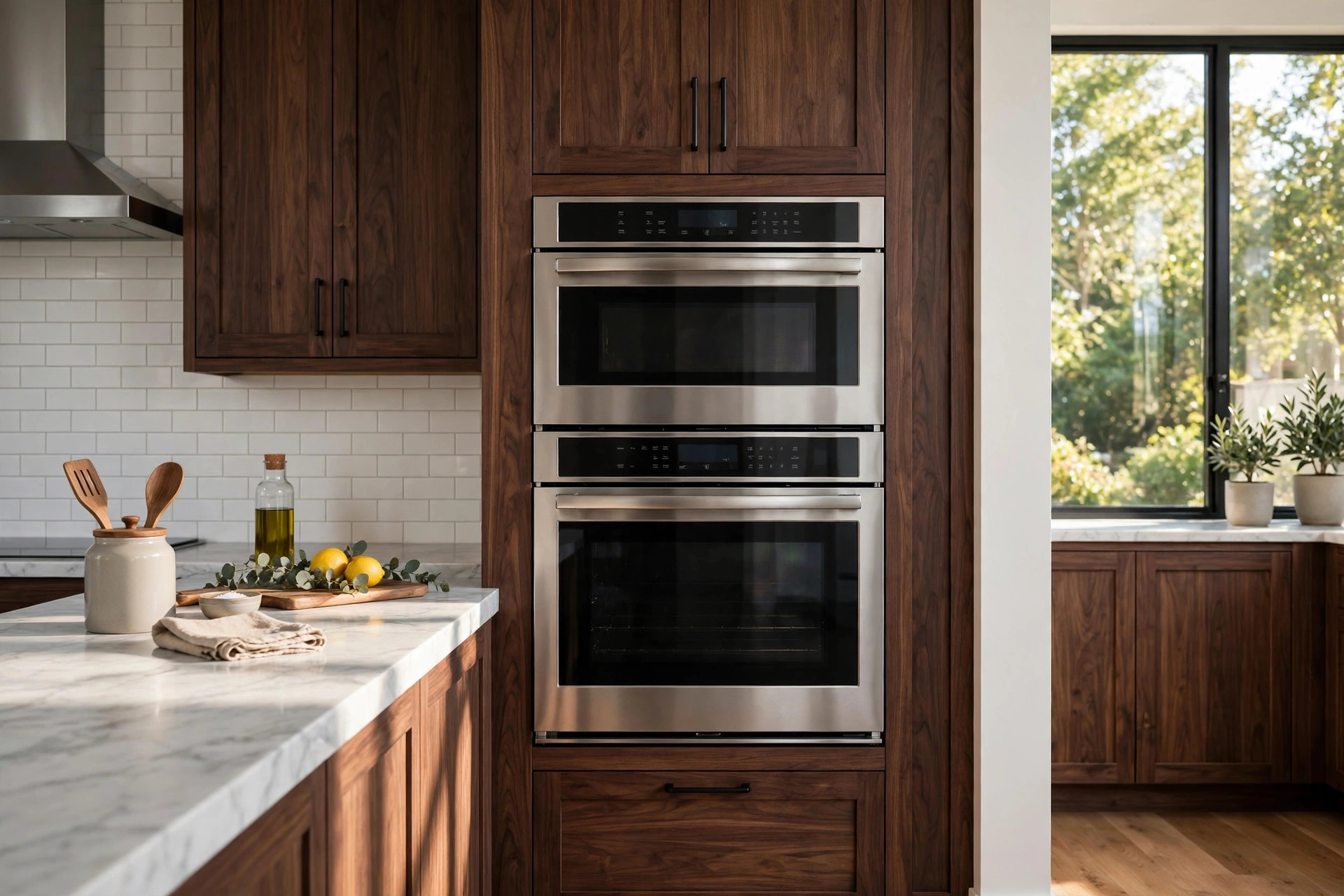
A double wall oven gives a kitchen real cooking power. This double wall ovens buying guide usa explains what to know before you shop. Two ovens sit one above the other in a tall cabinet. Each oven works on its own. You can roast a turkey in one cavity and bake rolls in the other at the same time. That is the main reason American families choose them. Holiday meals become easier. Large dinners become calmer. The cook does less waiting and less rushing. Before you spend the money, learn the sizes, the fuel types, the cleaning options, and the price ranges. This guide walks through each point in plain words.
Why a Double Wall Oven Matters: Double Wall Ovens Buying Guide Usa
A double wall oven adds space and comfort to the kitchen. A single range gives you one oven. A double wall oven gives you two. Both cavities heat on their own. You set different temperatures in each one. This helps during big meals. A roast needs 325 degrees. A pie needs 400 degrees. With one oven you must wait. With two ovens you work at the same time. This saves time on busy days.
The ovens sit at eye level in the wall. You do not bend low to lift heavy pans. Your back stays straighter. Hot dishes come out at chest height. Many home cooks like this best. It feels safer with heavy roasters.
A wall oven also frees the cooktop area. The cooktop can sit on its own. You can place it on an island. You can place it under a window. This opens the kitchen design. Many remodelers plan the wall oven into a tall cabinet near the range. It looks clean and built in. Sites such as The Spruce show how these layouts work in real kitchens.
Energy use is worth a thought. Heating one small cavity costs less than heating a big one. For a small dish you use only one oven. For a big meal you use both. This control can cut waste. Check the ENERGY STAR guide for efficient appliance habits.
What to Look for When You Shop
Shopping for a double wall oven takes a bit of planning. Measure first. Read the labels second. Ask questions third.
Oven Size and Fit
Most double wall ovens in the United States are 24, 27, or 30 inches wide. The 30 inch size is the most common. It fits standard American cabinet openings. Measure the width of your opening. Measure the height too. Measure the depth from front to back. Write each number down. Bring the numbers to the store.
Each cavity is smaller than a full range oven. A 30 inch double wall oven still holds a large turkey. A 24 inch model is tighter. Large sheet pans may not fit in it. Think about the pans you use most. Check that they fit.
The cabinet must hold the weight. Double wall ovens are heavy. A strong cabinet frame is needed. A professional should check the support. The Home Depot and Lowe’s both offer measuring and installation help.
Cooking Modes
Look at the cooking modes. Basic ovens bake, broil, and roast. Better ovens add convection. A convection fan moves hot air around the food. This cooks food faster and browns it more evenly. Some ovens offer true convection with a third heating element. This is useful for baking three racks of cookies at once.
Some models add a steam mode. Steam keeps bread crusts crisp and meats moist. Some add an air fry mode. This crisps food with less oil. Some add a proof mode for rising bread dough. Do not pay for modes you will never use. Write down how you cook. Match the modes to your habits.
Self Cleaning
Self cleaning is a popular feature. There are two main types. Pyrolytic cleaning heats the oven very hot. Food residue burns to ash. You wipe the ash out when the oven cools. This works well but uses much energy. The oven door locks during the cycle.
Steam cleaning uses water and lower heat. It loosens light soils. You wipe them out after the cycle. It is gentler and faster. It does not handle heavy grease as well. Many ovens now offer both options. Retailers like Whirlpool and GE Appliances list the cleaning type in the feature list.
Types of Double Wall Ovens
Double wall ovens come in a few main types. Each type suits a different kitchen.
Electric double wall ovens are the most common in American homes. They heat with electric elements. They bake evenly. They are easy to install where a 240 volt circuit exists. Most models sold today are electric.
Gas double wall ovens exist but are rare. They need a gas line at the wall oven location. They heat fast and work well for roasting. Few brands make them now.
Combination double wall ovens pair one standard oven with one microwave or speed oven. The upper cavity works as a microwave. The lower cavity works as a full oven. This saves space in smaller kitchens. It costs more than a standard pair.
Smart double wall ovens connect to home wifi. You can preheat from your phone. You can check the temperature from another room. Some send alerts when food is done. Smart features add cost. They do not change how the food cooks. Reviews from groups like Consumer Reports test how well these features work.
Finish options matter too. Stainless steel is the most popular. It matches most appliances. Black stainless hides fingerprints better. White and black finishes cost less. Some brands offer custom panel ready models. These take a wood panel that matches your cabinets.
Cost and Price Ranges
Prices vary widely. A basic 24 inch electric double wall oven starts around eight hundred dollars. A standard 30 inch model from a major brand runs from one thousand five hundred to three thousand dollars. High end models with steam, convection, and smart controls run from three thousand to five thousand dollars or more.
Installation adds to the cost. A straight swap in an existing opening may cost two hundred to five hundred dollars. A new cabinet cut or new wiring costs more. Running a new 240 volt circuit can add several hundred dollars. Always get a written quote before work begins.
Delivery and haul away fees add up. Ask about them up front. Many stores bundle delivery with installation. Holiday sale events often cut prices. Plan your purchase around a sale if you can wait. The Bosch site and brand pages list current model prices for reference.
Do not forget the long term cost. Electric ovens add to the power bill. Efficient use helps. Preheat only when needed. Cook two dishes at once when you can. Keep the door closed while cooking. Each door opening drops the temperature and wastes heat.
Care and Upkeep
A double wall oven lasts a long time with simple care. Most last fifteen to twenty years. Wipe spills after the oven cools. Do this before they bake on hard. A damp cloth works for light spills. A mild oven cleaner works for tougher spots. Never use harsh scouring pads on a self cleaning coating. They can damage the surface.
Clean the door glass with care. Use a soft cloth and mild cleaner. Food drips can bake onto the glass over time. Wipe them off soon after cooking.
Check the door seal now and then. The seal is the rubber gasket around the door frame. It keeps heat inside. If it is cracked or loose, heat escapes. Food cooks slower. Energy is wasted. A worn seal can be replaced. A service technician can do the job.
Run the self clean cycle before heavy buildup forms. Do not run it right before a big event. If a part fails during the cycle, you need time for repair. Clean the racks by hand. Take them out before a pyrolytic cycle. The high heat can dull their finish. Soak greasy racks in hot water with dish soap for an hour. Then scrub them with a soft brush.
Watch the oven light bulb. It may burn out over the years. The manual shows how to replace it. Use only the bulb type the maker lists. A wrong bulb can melt or fail.
Keep the user manual in a safe place. It lists error codes and simple fixes. It also gives the model number. You will need that number when you order parts.
Safety
Ovens are safe when used with care. Keep children away from a hot oven door. The glass gets hot during cooking. Teach children that the kitchen has hot zones.
Never store items inside the oven. People forget. Then they preheat. Plastic or paper can catch fire. Keep the oven empty when it is off.
Use oven mitts every time. Double wall ovens sit high. You lift hot pans at chest level. A good grip matters. Wear mitts that cover your wrists.
Vent the kitchen during self cleaning. The pyrolytic cycle can make smoke and odors. Open a window. Turn on the range hood fan. Leave pets out of the kitchen during the cycle. Birds are very sensitive to fumes.
Install a smoke detector near the kitchen. Test it each month. Keep a small fire extinguisher nearby. Know how to use it before you need it.
Frequently Asked Questions
Can I replace a single wall oven with a double wall oven?
Sometimes. The cabinet opening must be tall enough. A double wall oven needs about fifty inches of height. A single oven needs about twenty eight. The cabinet may need to be rebuilt. An electrician may need to check the circuit. A professional should look at your cabinet first.
Do double wall ovens need special wiring?
Yes. Most electric double wall ovens need a 240 volt circuit. They draw thirty to fifty amps. The circuit must match the oven rating. A licensed electrician should do the wiring. Never guess at electrical work.
Are double wall ovens worth the money?
They are worth it for cooks who bake and roast often. They are worth it for large families. They are worth it for holiday hosts. They are less useful for people who rarely use the oven. Be honest about your habits before you buy.
How long does installation take?
A straight replacement takes two to four hours. A job with new wiring or cabinet work takes a full day or more. Schedule the work ahead of time. Plan meals that do not need the oven.
Can I install a double wall oven myself?
Basic hookup is possible for skilled do it yourselfers. Even so, the ovens are very heavy. You need two strong people. The electrical connection should be done by a licensed electrician. Most stores offer professional installation. It is worth the cost.
Final Word
A double wall oven is a serious kitchen upgrade. It gives you room to cook more food at once. It puts the ovens at a comfortable height. It can make big meals calmer. Measure your space. Pick the features you will use. Compare prices during sales. Plan for professional installation. With the right choice, your new ovens will serve your kitchen for many years.
For more ideas as you plan your kitchen, see our guides to garbage disposal installation for Florida homes, undermount stainless sinks for California homes, and kitchen backsplash tiles. Extra planning help appears in guides from This Old House, which covers oven projects in older American homes.
References
Bosch. (n.d.). Home appliances. https://www.bosch-home.com Consumer Reports. (n.d.). Product reviews and ratings. https://www.consumerreports.org ENERGY STAR. (n.d.). Energy efficient products. https://www.energystar.gov GE Appliances. (n.d.). Kitchen and home appliances. https://www.geappliances.com Lowe’s. (n.d.). Home improvement products. https://www.lowes.com The Home Depot. (n.d.). Home improvement products. https://www.homedepot.com The Spruce. (n.d.). Home and garden advice. https://www.thespruce.com This Old House. (n.d.). Home renovation guidance. https://www.thisoldhouse.com Whirlpool. (n.d.). Home appliances. https://www.whirlpool.com
Was this guide helpful?

About Lisa Anderson
The My Garden US editorial team writes practical, in-depth home and garden guides for American homeowners — tested advice, no fluff.
You May Also Like
Kitchen Pantry Cabinets Deals Near Me: How to Find Real Savings Close to Home
January 14, 2026 0 views
Vinyl Plank Flooring Deals Near Me: A Plain Guide to Low Prices
March 21, 2026 0 views
Kitchen Backsplash Tiles Texas Homes USA: A Complete Guide
July 20, 2026 0 views