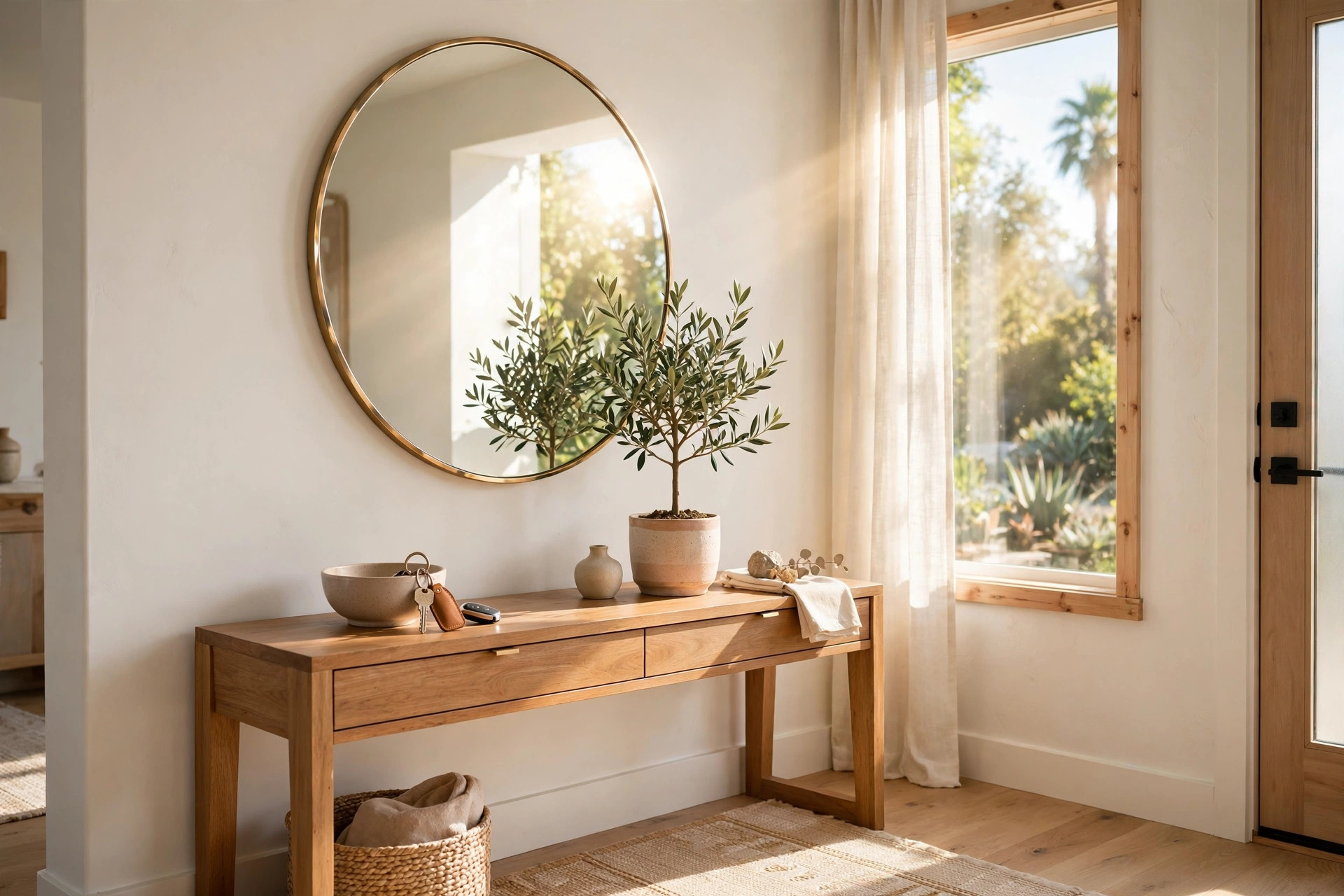

The front door is the first place guests see. A mirror placed near it can change the whole feel of the space. Many buyers now search for entryway decorative mirrors california homes usa because they want pieces that fit the light, the space, and the style of homes on the West Coast. A good mirror can make a small hall look wider. It can bounce daylight deeper into the house. It can also give you one last look before you step out.
California homes have their own needs. Sunlight is strong for most of the year. Walls are often light in color. Entryways can be small, open to the living room, or grand and two stories high. The right mirror has to match the scale of the room and the strength of the light. This guide walks through styles, sizes, prices, and care. It also covers safety, which matters more than most buyers expect.
Why an Entryway Mirror Matters
An entryway is a working space. Coats come off here. Keys land here. Shoes pile up here. It is also the first room a visitor meets. A decorative mirror serves both roles. It is useful, and it is pleasant to look at.
Light is the main reason. Most entryways have one small window, or none at all. A mirror hung across from a window can double the light that reaches the hall. In California, where the sun is bright even in winter, this trick works very well. Designers have used it for decades. The mirror takes the daylight and sends it further into the home.
Space is the second reason. Many California houses, from city apartments in San Francisco to bungalows in Los Angeles, have narrow halls. A mirror fools the eye. It makes the wall look like it goes further. The hall feels less tight. This matters when a small entry opens straight into the main living area.
A mirror is also practical. You check your face and your clothes before you leave. A full-length piece by the door does this job well. A smaller round mirror above a console table gives you a spot to check your hair while you grab your keys.
Finally, a mirror is a style anchor. The frame sets the tone of the home. A dark wood frame feels warm and classic. A thin brass frame feels light and modern. The mirror becomes the first design statement of the house.
What to Look For When You Choose: Entryway Decorative Mirrors California Homes Usa
Start with size. Measure the wall. The mirror should cover about two thirds to three quarters of the width of the furniture under it. A console table that is 48 inches wide pairs well with a mirror 32 to 36 inches wide. If the mirror hangs alone, it should not be wider than the wall can carry. Too big, and the room feels crowded. Too small, and the piece looks lost.
Height matters as well. In a standard hall, hang the center of the mirror at eye level, about 57 to 60 inches from the floor. If the mirror hangs above a table, leave 6 to 10 inches between the top of the table and the bottom of the frame. This gap keeps the two pieces linked without touching.
Think about shape. Round mirrors soften a room with many straight lines. Rectangular mirrors suit tall, narrow walls. Arched mirrors are popular in California homes right now. They echo the arched windows and doorways of Spanish style houses. Oval mirrors work in classic and vintage rooms.
Check the frame material. Wood frames suit warm interiors. Metal frames suit modern ones. Brass and gold tones have been popular for years and fit the bright California palette. Black frames give a sharp contrast on white walls. Frameless mirrors with beveled edges look clean and quiet.
Look at the glass quality. Cheap mirrors can warp. A warped mirror makes the room look odd. Look for glass with a clear, true reflection. Stand in front of it at the store and move side to side. The image should not bend or ripple. Beveled edges add a finished look and catch the light in a nice way.
Weight is a practical point. Large mirrors are heavy. Check the weight before you buy. Make sure your wall can hold it. Drywall alone will not carry a heavy mirror. You will need wall anchors or a stud. Many stores like IKEA and Wayfair list the weight in the product details.
For more buying advice on entryway pieces, see our guide to entryway decorative mirrors buying guide usa and entryway storage benches buying guide usa. A bench under the mirror makes the entry both pretty and useful.
Types and Options
Round Mirrors
Round mirrors are the most popular choice for entryways. They come in sizes from 24 inches to 48 inches. A 30-inch round mirror suits most halls. The frame can be wood, metal, or rattan. Rattan and wicker frames fit the coastal California look. Thin metal frames in brass or black fit modern homes. Round mirrors pair well with a console table or a small bench.
Arched Mirrors
Arched mirrors have a flat bottom and a curved top. They suit Spanish, Mediterranean, and farmhouse style homes, all common in California. A full-length arched mirror, about 65 inches tall, can stand on the floor and lean against the wall. Leaned mirrors need a secure anchor at the top. They should never stand loose in a house with children or pets.
Rectangular and Square Mirrors
Rectangular mirrors fill tall walls. A mirror 24 inches wide and 36 inches tall fits a narrow hall. Wide rectangles, 40 inches or more, suit walls above long console tables. Square mirrors work in pairs. Two square mirrors side by side make a strong, balanced look. Beveled edges suit this shape.
Sunburst and Decorative Shapes
Sunburst mirrors have rays around a round center. They are bold. One sunburst piece can be the main art of the entry. They suit mid-century and eclectic homes. Other shapes include ovals, hexagons, and free-form organic shapes. These work best in modern and artistic interiors. Keep the rest of the wall plain so the shape can stand out.
Full-Length Mirrors
Full-length mirrors run 48 inches tall or more. They are useful by the door. You see your whole outfit before you leave. A leaning full-length mirror needs at least 4 inches of wall clearance at the top and a wall anchor. Wall-mounted full-length mirrors sit 6 inches or more off the floor in a busy entry, so shoes and bags do not hit the glass.
Mirror Sets
Sets of small mirrors, often sold in threes or fours, let you build a custom layout. This is a good choice for renters. Small pieces are light and easy to hang with simple hooks. They also fit odd wall shapes. Keep the spacing even, about 2 to 3 inches apart, for a clean look.
Cost and Price
Prices for entryway decorative mirrors vary widely. A small round mirror from a big-box store can cost 30 to 60 dollars. Mid-range mirrors, 30 to 40 inches with solid wood or metal frames, run 80 to 250 dollars. Large statement mirrors and designer brands cost 300 to 900 dollars or more.
Frame material drives the price. Real wood costs more than engineered wood. Brass and bronze finishes cost more than painted metal. Hand-finished frames cost more than machine-made ones. Glass quality also matters. Thicker glass with a true reflection costs more than thin glass.
Size is the other driver. A 24-inch mirror may cost half of a 40-inch version of the same design. Shipping adds to the cost for large pieces. Many online stores, such as Crate & Barrel and Article, offer free shipping above a certain order value. Check this before you buy.
Sales are common. Furniture stores run sales around holidays. You can often find 20 to 30 percent off during spring and fall sale events. Floor models and open-box items cost less. Check the glass for chips and the frame for dents before you take a floor model home.
Set a budget before you shop. Decide what size you need. Then look at three or four options in your range. Do not stretch the budget for a mirror when a cheaper one fits the wall just as well. The frame style matters more than the brand name.
Care and Upkeep
Mirrors are easy to care for, but they need the right touch. Clean the glass with a soft microfiber cloth. Spray the cleaner on the cloth, not on the mirror. Liquid that runs down into the frame can damage the backing. A mix of water and a small drop of dish soap works for most glass. Dry the glass right away to avoid spots.
In coastal California, salt in the air can leave a film on glass. Wipe the mirror more often if you live near the ocean. Use plain water first. Harsh chemicals can eat the silver backing over time. Never use abrasive pads. They scratch the glass and the frame.
Dust the frame with a dry cloth. Wood frames can take a light polish once or twice a year. Brass frames may tarnish. A soft cloth and a mild brass cleaner bring back the shine. Test the cleaner on a hidden spot first.
Check the hanging hardware once a year. Wires stretch. Hooks loosen. This is very important in California. Earthquakes can shake a mirror off a weak hook. Use two hooks or a cleat for heavy mirrors. Keep the mirror away from the direct path of a door swing.
Keep the mirror out of strong direct sun if you can. Long hours of harsh sun can fade some frame finishes. A mirror that faces a window is fine, but a frame in full afternoon sun may need more care. Sheer curtains cut the glare and protect the finish.
Safety
Safety is often missed when people buy mirrors. A mirror is glass. In a busy entry, glass can break. Choose the right glass and the right mount.
Tempered glass is the safest choice. It breaks into small dull pieces instead of sharp shards. Not all decorative mirrors use tempered glass. Check the product details. If the store does not say, ask. For homes with children, pets, or heavy foot traffic, tempered glass is worth the extra cost.
Mounting must be secure. A mirror over a doorway or a bench can fall on a person. Use wall anchors rated for twice the mirror weight. Find a stud for mirrors over 25 pounds. In California, earthquake safety matters. Use museum putty or safety straps on leaned mirrors. Secure the top of a leaning mirror to the wall with an L bracket.
Place the mirror where it will not take a hit. Do not hang it where a door swings into it. Keep it clear of the path where bags and sports gear get tossed. In a narrow hall, a flush-mounted mirror is safer than a thick-framed one that sticks out.
If the mirror cracks, replace it. A cracked mirror can fail without warning. Small chips at the edge can grow. Do not try to repair cracked glass. Take it down and buy a new piece.
FAQ
What size mirror works best in a small entryway?
A round mirror 28 to 32 inches across suits most small entryways. It should be about two thirds the width of the table or bench under it. Hang the center at eye level, about 57 to 60 inches from the floor.
Where should I hang a mirror in the entryway?
Hang it across from a window or a light source when you can. This doubles the light. Above a console table is the classic spot. Near the door, a full-length mirror is useful for last checks. Keep it clear of door swings.
Are arched mirrors a good fit for California homes?
Yes. Arched mirrors suit the Spanish and Mediterranean styles common in California. They also fit modern farmhouse looks. A 60-inch arched mirror leaning against the wall makes a strong statement. Anchor it to the wall for safety.
How much should I spend on an entryway mirror?
Most buyers spend 80 to 250 dollars for a good mid-range mirror. Small mirrors start near 30 dollars. Large designer pieces run 300 dollars and up. Set your budget by size first, then pick the frame style you like.
How do I clean a decorative mirror without damage?
Use a soft microfiber cloth. Spray cleaner on the cloth, not the glass. Wipe gently and dry at once. Keep liquid out of the frame edges. Dust wood frames with a dry cloth. Avoid harsh chemicals and abrasive pads.
Is it safe to lean a mirror against the wall?
It can be, if you anchor it. Use an L bracket or a safety strap at the top. Museum putty at the base stops sliding. Never leave a leaning mirror loose in a home with kids or pets. In earthquake country, anchoring is a must.
A Final Word
The right entryway mirror does three jobs at once. It brings in light. It opens up the space. It sets the style of the home. Take your time with the choice. Measure the wall. Think about the light. Pick a frame that fits the rest of your house. Hang it well, keep it clean, and anchor it for safety.
California homes have great natural light. A mirror helps you use all of it. Whether you choose a simple round piece or a tall arched statement, the entry will feel brighter and more welcoming. For more ideas on shapes and finishes, browse the mirror collections at CB2, West Elm, and Houzz. Design guides at The Spruce, Apartment Therapy, and HGTV show how real homes style their entryways.
References
Apartment Therapy. (n.d.). Home design ideas and inspiration. https://www.apartmenttherapy.com Article. (n.d.). Modern furniture. https://www.article.com CB2. (n.d.). Modern furniture and decor. https://www.cb2.com Crate and Barrel. (n.d.). Furniture and home decor. https://www.crateandbarrel.com HGTV. (n.d.). Home and garden ideas. https://www.hgtv.com Houzz. (n.d.). Home design and remodeling. https://www.houzz.com IKEA. (n.d.). Home furnishings. https://www.ikea.com The Spruce. (n.d.). Home and garden advice. https://www.thespruce.com Wayfair. (n.d.). Furniture and home goods. https://www.wayfair.com West Elm. (n.d.). Modern furniture and home decor. https://www.westelm.com
Was this guide helpful?

About Michael Thompson
The My Garden US editorial team writes practical, in-depth home and garden guides for American homeowners — tested advice, no fluff.
You May Also Like

Dining Room Sets for Sale in the USA: How to Buy the Right One
February 1, 2026 0 views
Couch Throw Pillows for Florida Homes USA: How to Choose the Right Ones
July 1, 2026 0 views
Dining Room Sets Buying Guide USA: How to Choose the Right Table and Chairs
September 20, 2026 0 views