
Introduction
Many homeowners type the phrase affordable mulch installation service near me into a search box each spring. They want their yard to look neat without paying a high price. They also want the work done well. This guide explains what a mulch service does, what it should cost, and how to pick a good crew. It also covers the types of mulch, the steps of a proper job, and simple ways to keep the beds in shape after the truck leaves.
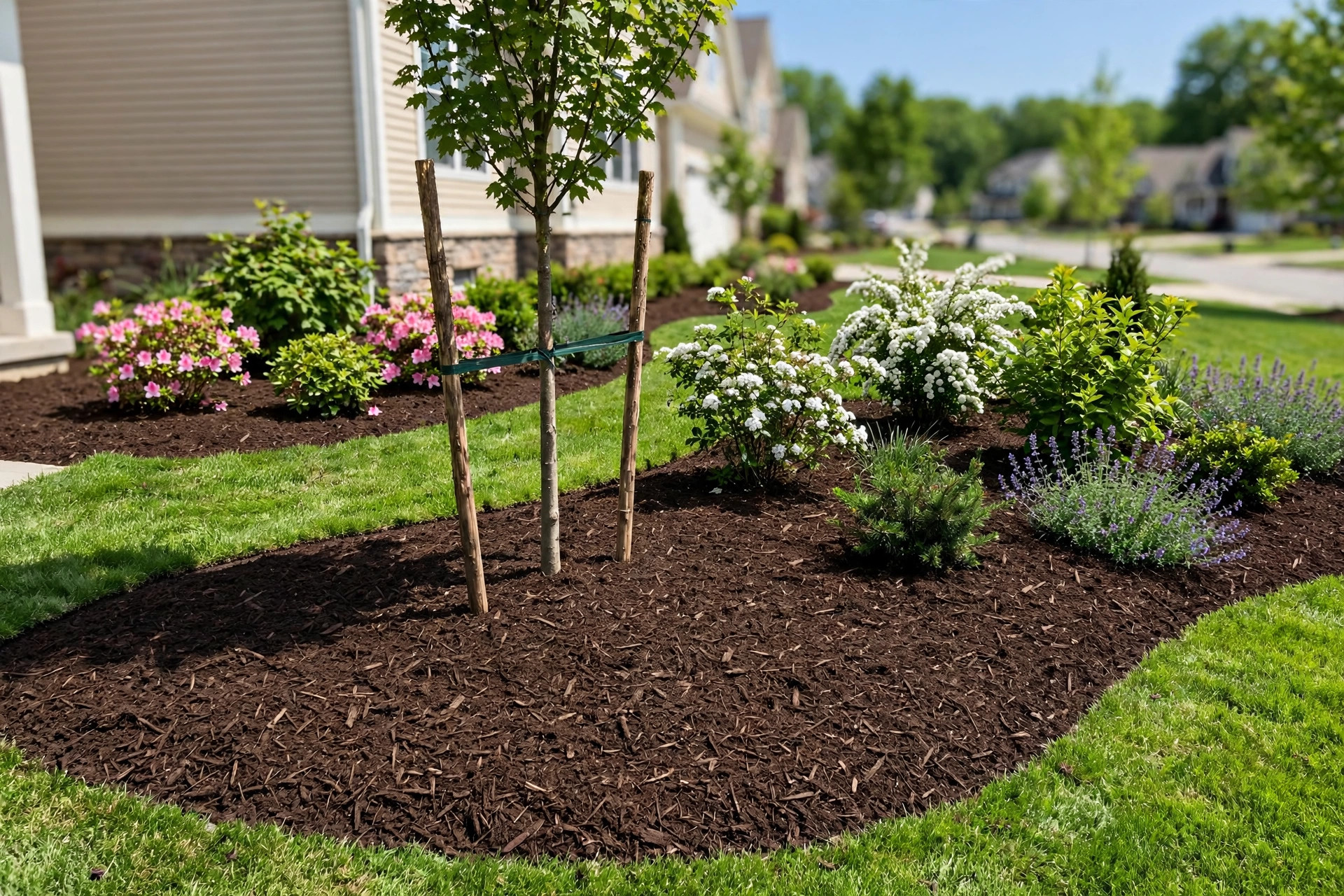
Mulch is a layer of material spread over the soil around plants, trees, and in garden beds. It keeps water in the ground. It blocks weeds. It keeps roots cool in summer and warm in winter. It also makes a yard look finished. Most American homes look better with fresh mulch. A good affordable mulch installation service near me will do the work in one visit and leave the beds clean and even.
Why Mulch Matters: Affordable Mulch Installation Service near Me
Mulch does more for a yard than most people think. It is not just decoration. It helps plants grow and cuts down on work later.
First, mulch saves water. A two to three inch layer of mulch slows the loss of water from the soil. The sun cannot dry the ground as fast. Plants keep more water near their roots. This means less watering for you.
Second, mulch stops weeds. Weed seeds need light to grow. A thick layer of mulch blocks that light. Fewer weeds mean less pulling and less weed killer. Over a season, a mulched bed needs far less care than bare soil.
Third, mulch feeds the soil. Bark and wood mulch break down slowly over the year. As they break down, they add organic matter to the soil.
Fourth, mulch guards roots. It keeps soil cool in July and warm in January. Big swings in temperature can hurt young plants. Mulch acts like a blanket. It also cuts soil splash on leaves during heavy rain, which can spread plant disease.
Finally, mulch makes the whole property look cared for. Clean beds with dark, fresh mulch raise curb appeal.
For a full picture of bed care through the year, read our guide on pre emergent weed killer application timing guide.
What to Look For When You Choose
Not every crew is equal. A low price means nothing if the work is poor. Here are the points to check before you hire.
Local reputation
Ask neighbors who they used. Look for reviews that mention the crew by name. A service that has worked in your town for years will know the local soil and the right mulch for your area. Local crews also depend on repeat business, so they tend to do the job right.
Clear written quote
A good company puts the price in writing before it starts. The quote should list the type of mulch, the number of cubic yards, the depth of the layer, and what bed preparation is included. If a price is given only by voice, ask for it on paper or by email.
Bed preparation included
Mulch laid over old weeds will not last long. A proper job starts with edging the beds, pulling the weeds, and clearing old leaves. Some crews also put down a weed barrier. Ask what the crew will do before the mulch goes in. The cheapest bid often skips this step, and you pay for it later.
Proof of insurance
Any crew that works on your land should carry liability insurance. Ask to see it. A real company will show it without trouble.
Right equipment
Mulch comes in bulk or in bags. Bulk mulch delivered by truck is cheaper for large jobs. A crew with a blower truck can lay mulch fast and even. For small beds, bagged mulch is fine. Ask how the mulch will arrive and how it will be spread.
No “mulch volcanoes”
Piling mulch high against a tree trunk is a common error. It traps water against the bark and can kill the tree. A trained crew knows to keep mulch away from trunks and stems, leaving a small gap of bare soil. If a company builds mulch volcanoes in its advertising photos, do not hire it.
Types of Mulch
The mulch you pick affects the price and the look. Here are the main kinds used by an affordable mulch installation service near me.
Shredded bark mulch
This is the most common choice. It is made from shredded tree bark, often pine or hardwood. It holds together well on slopes. It breaks down in one to two years and must be topped up each spring. It comes in brown, black, and red dyed versions. Black dyed mulch gives the sharpest contrast with green plants, but the dye can fade in strong sun.
Wood chips
Wood chips are larger pieces of ground wood. They last longer than shredded bark, often two to three years. They look natural and rustic. They are a good pick for play areas and paths. Like all wood mulch, they should not touch the stems of plants.
Pine straw
Pine straw is common in the South. It is made of long pine needles. It is light, easy to spread, and low in cost. It gives beds a soft, natural look. It must be refreshed once or twice a year. It is acidic, which suits azaleas, camellias, and gardenias.
Leaf mulch
Some services grind fallen leaves into fine mulch. This is cheap and good for the soil. It may not look as neat as bark. It works well in woodland beds and behind shrubs.
Stone and gravel mulch
Stone does not break down, so it never needs replacement. It is more costly up front and can hold heat in summer. It is a good choice for dry areas and around foundations. Remember that stone is hard to remove if you change your mind.
Rubber mulch
Made from ground tires, rubber mulch lasts for years and does not fade. It is often used in play areas because it is soft. It does not feed the soil.
Ask your crew which type suits your beds and your budget. A honest company will tell you when a cheap option fits your needs.
Cost and Price
Mulch jobs are priced by the cubic yard. One cubic yard covers about one hundred square feet at a three inch depth. Most small homes need two to four yards. A full front yard may need eight to twelve yards.
Installed price usually runs from twenty five to sixty five dollars per cubic yard, with labor and bed preparation included. Dyed and premium mulches cost more. Plain hardwood bark is the most affordable. When you search for an affordable mulch installation service near me, expect most crews to charge a minimum visit fee, often one hundred fifty to three hundred dollars for very small jobs.
Get three written quotes. Be sure each quote covers the same work so you can compare. A low bid that skips weeding and edging is not truly low. Ask about delivery fees, extra yard charges, and whether old mulch will be hauled away.
Watch for these common extras:
– Bed edging and weed removal: often included, but ask – Delivery fee for bulk mulch: sometimes free over a set amount – Old mulch removal: can add cost if the old layer is deep – Trimming shrubs before mulching: usually priced separately
A fair company will explain each line of the bill. If a quote is far below the others, ask why.
Pair fresh mulch with steady watering for best results. Our article on smart sprinkler controller for usa homes shows how to water beds without waste.
The Job, Step by Step
A careful crew follows the same basic steps on every job. Knowing them helps you judge the work.
Step one: walk the property
The crew leader should walk the beds with you. Point out plants you want saved and weeds you want gone. Agree on bed edges and mulch depth.
Step two: clean and edge
The crew clears leaves, sticks, and trash. Then it cuts a clean edge along each bed with a flat spade or edger. A sharp edge keeps the mulch in place and gives the bed a neat line.
Step three: weed
All weeds are pulled or cut. Some crews apply a pre emergent product to slow new weeds. If you want a chemical free yard, say so before the work begins.
Step four: check soil depth
If old mulch is more than four inches deep, some should be removed. Too much mulch can keep water from reaching the roots. The final layer, old plus new, should sit at two to three inches.
Step five: spread
Mulch is dumped in piles and raked or blown into place. The crew works it around plants by hand, keeping stems and trunks clear. Large jobs go faster with a blower truck, which can lay a yard evenly in minutes.
Step six: rake and tidy
The crew rakes the surface level, checks the depth, and sweeps mulch off the driveway, walks, and lawn. A good crew leaves the property cleaner than it found it.
Step seven: water
A light watering settles the mulch. This also shows any thin spots that need more material.
In fall, you can plan the whole lawn refresh at once. See our overseeding lawn in fall step by step guide to time seeding and mulching together.
Care and Upkeep
Mulch is low care, but not no care. A few simple habits keep the beds looking good all year.
Fluff the mulch in spring with a hard rake. This breaks up any crust and lets water in. Add a thin top layer, about one inch, to cover faded spots. Do not keep piling on new mulch each year without checking the total depth. More than four inches can cause harm.
Pull weeds while they are small. It is easier to pull one weed than twenty. Water the beds deeply once a week in dry spells rather than a little each day. Deep watering grows strong roots.
Keep mulch three to six inches away from tree trunks and the base of shrubs. This small gap prevents rot and keeps insects from hiding against the bark.
In the fall, do not bury the beds under whole leaves. Run a mower over fallen leaves to chop them, or rake them off the mulch. A thick mat of wet leaves can smother the beds.
Check the beds after heavy rain. Mulch can wash out of low spots. Rake it back into place and add more where the soil shows.
Safety
Mulch work is simple, but safety still matters. Crews should wear gloves, eye protection, and dust masks when spreading dry mulch. Bulk mulch piles can hide heat in the center; large piles have been known to smolder, so do not store bulk mulch against a wood fence or a house.
For general product safety guidance, the U.S. Consumer Product Safety Commission offers free safety alerts for home and yard products.
Tools and Equipment Worth Knowing
You do not need to own the tools to judge a crew, but knowing the basics helps you ask smart questions. Professional crews often use edgers, hard rakes, mulch forks, and wheelbarrows. Large services run blower trucks that feed bulk mulch through a hose. These trucks lay mulch fast and even, and they are gentler on plants than shoveling.
Homeowners who want to keep beds tidy between visits can manage with a good rake, a flat spade, and a pair of thick gloves. If you are thinking about powered yard tools for the rest of your lawn work, you can compare options at Toro, John Deere, and Briggs and Stratton.
Frequently Asked Questions
How much mulch do I need?
Measure the beds in square feet. One cubic yard covers about one hundred square feet at a three inch depth. A typical front yard needs three to six yards. A crew can measure for you during the quote visit.
When is the best time to install mulch?
Spring is the best time. The soil has warmed up and weeds are just starting. Fall is the second best time, since mulch guards roots through winter. Avoid laying mulch on frozen ground.
Will mulch attract termites?
Wood mulch near a wood house can give termites a path, but it does not draw them from far away. Keep mulch at least six inches below the siding and away from the foundation wall. Stone mulch is a safer pick right against the house.
How often should mulch be replaced?
Shredded bark lasts one to two years. Wood chips last two to three years. Pine straw needs topping up once or twice a year. Stone and rubber last for many years. Most homes add a fresh inch each spring.
Can I mulch over old mulch?
Yes, if the old layer is thin. Check the total depth after the new layer. Two to three inches total is the target. If the old mulch is matted or more than four inches deep, remove some first.
Is dyed mulch safe for pets?
Most dyed mulch uses iron oxide or carbon based color, which is low in harm once cured. Still, dogs that chew mulch can get sick from any kind. Keep pets off the beds until the mulch has been watered and settled.
A Short Final Word
Finding an affordable mulch installation service near me takes a little work, but it pays off. A crew that edges, weeds, and spreads a level two to three inch layer will give you beds that stay neat for a full season. Get three written quotes. Check the prep work each one includes. Pick the crew with the clearest quote and the best local record, not just the lowest price. Your yard will look cared for, your plants will grow strong, and your Saturdays will be free for better things.
References
U.S. Consumer Product Safety Commission. (n.d.). Home and yard product safety. https://www.cpsc.gov
Toro. (n.d.). Lawn care equipment. https://www.toro.com
Deere & Company. (n.d.). John Deere lawn and garden. https://www.deere.com
Briggs & Stratton. (n.d.). Outdoor power equipment. https://www.briggsandstratton.com
Was this guide helpful?

About James Carter
The My Garden US editorial team writes practical, in-depth home and garden guides for American homeowners — tested advice, no fluff.
You May Also Like
Best Moss Killer for Shaded Lawns: What Works and How to Use It
March 26, 2026 0 views
How to Level Bumpy Lawn With Topsoil: A Plain Guide for Homeowners
September 9, 2026 0 views
The Best Backpack Sprayer for Weed Killer: A Plain Guide
May 13, 2026 0 views