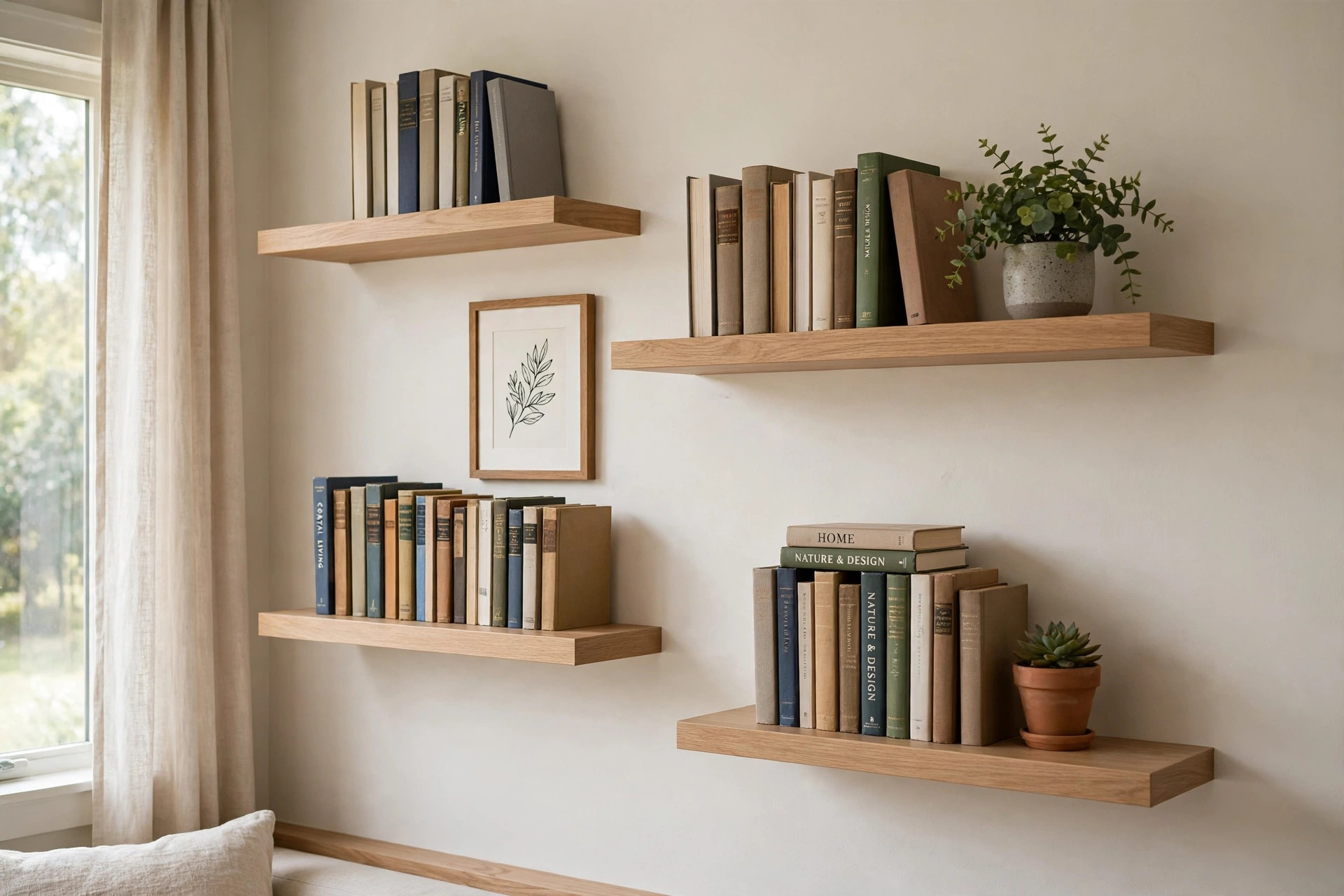

Books deserve a good home. Many American households keep walls bare because they fear shelves will look heavy or cluttered. This modern wall bookshelves buying guide usa shows that wall-mounted shelving can save floor space, display books with style, and suit almost any room in the house. Modern designs favor clean lines, open shapes, and light finishes. They fit both small apartments and large family homes.
This guide explains why wall bookshelves matter, what to look for when you shop, the main types on the market, and what they cost. It also covers care, safety, and answers to common questions. Read it through, and you will know what to buy and how to hang it well.
Why Wall Bookshelves Matter
A wall bookshelf turns an empty wall into useful storage. Books take up space, and a bookcase on the floor eats valuable square footage. Wall shelves lift the collection off the floor. The room feels larger and stays easier to clean.
Shelves also serve as decoration. A row of books with a small plant or a framed print becomes a focal point. Modern styles keep the look light. Thin boards, metal brackets, and open backs give an airy feel that older closed bookcases lack.
Renters benefit too. Many modern wall bookshelves use a few anchors or cleats and leave only small holes to patch. They suit living rooms, bedrooms, hallways, and even kitchens where cookbooks pile up. For readers who collect steadily, wall shelves grow with the collection: add another board when the old ones fill.
What to Look for When You Shop: Modern Wall Bookshelves Buying Guide Usa
Buying wall shelving calls for care. A few checks will help you avoid weak shelves and poor fits.
Size and Weight Capacity
Measure your wall before you shop. Note the width, the ceiling height, and the location of studs. Modern wall bookshelves come in single boards, sets of two or three, and full wall systems. Decide how many books you own and how many you plan to add.
Weight matters most. Books are heavy. A foot of paperback books can weigh twenty pounds or more. Look for a stated load rating per shelf, and choose hardware rated for real book weight, not just display items. Solid brackets and thick boards carry more than thin floating shelves with hidden mounts.
Material and Finish
Common materials include solid wood, engineered wood, metal, and glass. Solid wood costs more but lasts for decades and holds heavy loads. Engineered wood with a veneer or laminate finish costs less and resists warping. Metal frames with wood boards give an industrial modern look and carry great weight.
Finishes should match your room. Light oak, white, and natural maple suit bright spaces. Walnut and black suit rooms with darker tones. Sealed finishes wipe clean and resist dust.
Mounting Method
Three mounting methods dominate the market. Floating shelves hide brackets inside the board or use concealed metal rods. They look sleek but hold less weight. Bracket shelves use visible brackets that reach under the board. They hold the most weight and suit large collections. Rail or track systems mount a metal track to the wall, and shelves hook onto it. These systems adjust in height and grow over time.
Whatever you choose, mount into wall studs when possible. Drywall anchors of good quality work for lighter loads. Brick and concrete need masonry anchors. For inspiration on arranging shelves with the rest of your room, see our living room wall art buying guide.
Style and Shape
Modern designs come in many shapes. Straight boards suit a tidy row of books. Asymmetric and zigzag shelves add visual interest. Box shelves with cubes hold books and small objects. L-shaped corner shelves use dead space well. Pick a shape that fits your wall and your taste.
Types of Modern Wall Bookshelves
The market offers several clear types. Knowing each type helps you pick the right one.
Floating Shelves
Floating shelves are single boards with hidden mounts. They give a clean, minimal look. They suit small collections, paperbacks, and display items. Most hold twenty to forty pounds per shelf when mounted well. They are not the best choice for large hardcover collections. Retailers like IKEA and Crate & Barrel carry many floating designs in current styles.
Bracket Shelves
Bracket shelves rest on visible metal or wood brackets. They hold the most weight, often fifty pounds or more per shelf. The brackets become part of the design. Black metal brackets with light wood boards give a classic modern look. Brass or gold brackets suit warmer rooms. Shoppers often browse Wayfair and Article for wide bracket-shelf selections.
Cube and Box Shelves
Cube shelves form squares or rectangles on the wall. Each cube holds a small stack of books or a plant. They look neat and modern. They work well above desks and beside beds. Many sets link together, so you can build a pattern. Stores such as West Elm and CB2 offer cube systems in modern finishes.
Rail and Track Systems
Rail systems use a vertical metal track fixed to the wall. Brackets slide into the track at any height. You can move shelves as your needs change. These systems suit growing libraries and home offices. They also work in children’s rooms, where shelf height must rise as the child grows. Design sites like Houzz show many real installations of track shelving.
Corner Shelves
Corner shelves turn an unused corner into storage. L-shaped boards wrap around two walls. They suit small rooms where every inch counts. They hold fewer books than straight runs, but they use space no other shelf can reach. Tips on pairing shelves with other wall decor appear in our entryway decorative mirrors guide.
Cost and Price in the USA
Prices vary by size, material, and brand. A single floating shelf in engineered wood may cost twenty to fifty dollars. A set of three matching shelves may cost sixty to one hundred fifty dollars. Solid wood boards with quality brackets often run eighty to two hundred dollars per shelf.
Cube sets range from seventy to three hundred dollars depending on size and finish. Rail systems cost more: a starter kit with two rails and four shelves may run one hundred fifty to four hundred dollars. Custom built-in wall shelving made by a carpenter can run one thousand dollars or more for a full wall.
Installation adds cost if you hire help. A handyman may charge fifty to one hundred fifty dollars to mount several shelves, depending on your area and the wall type. Many buyers install shelves themselves with a drill, a level, and a stud finder. A stud finder costs little and saves much trouble, since it tells you exactly where solid wood sits behind the drywall. A long level keeps boards straight, which matters more on wide shelves where a small tilt shows clearly. Buying during sales at major retailers can cut the price by a quarter or more. Review sites such as The Spruce and Apartment Therapy publish current buying advice and price comparisons.
Care and Upkeep
Wall bookshelves need little care, but regular attention keeps them sound.
Dust the boards every two or three weeks with a soft cloth or a feather duster. Books trap dust along their tops, so slide them forward now and then and wipe the shelf beneath. For wood finishes, use a damp cloth followed by a dry one. Avoid soaking the boards. For metal brackets, a dry cloth is enough.
Check the mounting hardware once a year. Tighten screws that have worked loose. Look for sag in long boards, which signals overloading. Move heavy books toward the bracket ends or studs where support is strongest. Keep paper books away from damp walls and direct sun, which can warp boards and fade covers.
Rotate displays with the seasons if you like. A small change keeps the room fresh. Heavy items belong on the lowest shelves. Light decor can sit higher. If you pair shelves with low storage furniture, our living room TV stands buying guide offers matching ideas.
Safety
Safety comes first with wall-mounted storage. A shelf full of books is heavy, and a falling shelf can cause serious injury.
Always mount into studs for heavy loads. Use a stud finder and mark each stud clearly. When studs do not line up with your plan, use high-quality toggle bolts rated for the load. Follow the shelf maker’s instructions for anchors and screws. Do not guess.
Keep heavy shelves away from beds and cribs where people sleep. In homes with small children, anchor tall shelving systems to the wall and place the heaviest books at the bottom. Seismic areas call for extra care: use straps or rails that stop books from sliding off during a shake. TV and shelter advice from HGTV also stresses keeping heavy wall items clear of walkways.
Check weight limits and respect them. If a shelf sags or pulls from the wall, unload it at once and remount with stronger hardware. When in doubt, hire a professional to mount large systems.
Frequently Asked Questions
How much weight can a modern wall bookshelf hold?
It depends on the shelf and the mounting. Light floating shelves hold twenty to forty pounds. Bracket shelves often hold fifty pounds or more per board. Rail systems spread weight across several points and can hold large collections. Always check the stated rating and mount into studs for the heaviest loads.
Can renters install wall bookshelves?
Yes, in most cases. Many shelves need only a few screws and leave small holes that spackle can fill. Check your lease first. Some landlords allow mounting with the promise of repair. Lightweight floating shelves with good drywall anchors suit renters well.
What is the best material for a wall bookshelf?
Solid wood is strongest and lasts longest. Engineered wood costs less and works well for moderate loads. Metal frames with wood boards combine strength and modern style. Glass suits display but holds little weight. Match the material to your load and your budget.
How far apart should wall shelves be?
For most books, ten to twelve inches between shelves works well. Tall art books need fourteen to sixteen inches. Measure your tallest books before you mount. Adjustable rail systems let you set spacing exactly where you need it.
How do I arrange books on open wall shelves?
Group books by size or color for a calm look. Leave some empty space so the shelves breathe. Mix in a plant, a clock, or a framed print between book groups. Avoid lining every inch edge to edge, which looks crowded. Step back and view the whole wall as you arrange.
Do wall bookshelves damage walls?
Any mount makes holes, but small screw holes are easy to repair with spackle and paint. Toggle bolts make larger holes. Using studs keeps holes small and holds best. Plan your layout on paper first so you drill once.
A Final Word
Modern wall bookshelves blend storage with style. They free floor space, show off a collection, and suit rooms of every size. This modern wall bookshelves buying guide usa has covered the key points: measure your wall, respect weight limits, choose materials that match your load, mount with care, and keep safety first.
Take your time when you shop. Compare a few designs, read the load ratings, and picture the shelves on your own wall. A well-chosen set of wall bookshelves will serve you for many years and make your home feel both smart and welcoming.
References
Apartment Therapy. (n.d.). Home design ideas and inspiration. https://www.apartmenttherapy.com Article. (n.d.). Modern furniture. https://www.article.com CB2. (n.d.). Modern furniture and decor. https://www.cb2.com Crate and Barrel. (n.d.). Furniture and home decor. https://www.crateandbarrel.com HGTV. (n.d.). Home and garden ideas. https://www.hgtv.com Houzz. (n.d.). Home design and remodeling. https://www.houzz.com IKEA. (n.d.). Home furnishings. https://www.ikea.com The Spruce. (n.d.). Home and garden advice. https://www.thespruce.com Wayfair. (n.d.). Furniture and home goods. https://www.wayfair.com West Elm. (n.d.). Modern furniture and home decor. https://www.westelm.com
Was this guide helpful?

About Michael Thompson
The My Garden US editorial team writes practical, in-depth home and garden guides for American homeowners — tested advice, no fluff.
You May Also Like

Mid Century Chairs in California Homes
June 26, 2026 0 views
Living Room Ottomans for Texas Homes USA: A Plain Guide to Choosing Well
April 10, 2026 0 views
Sofa Console Tables Buying Guide USA: How to Choose
January 17, 2026 0 views