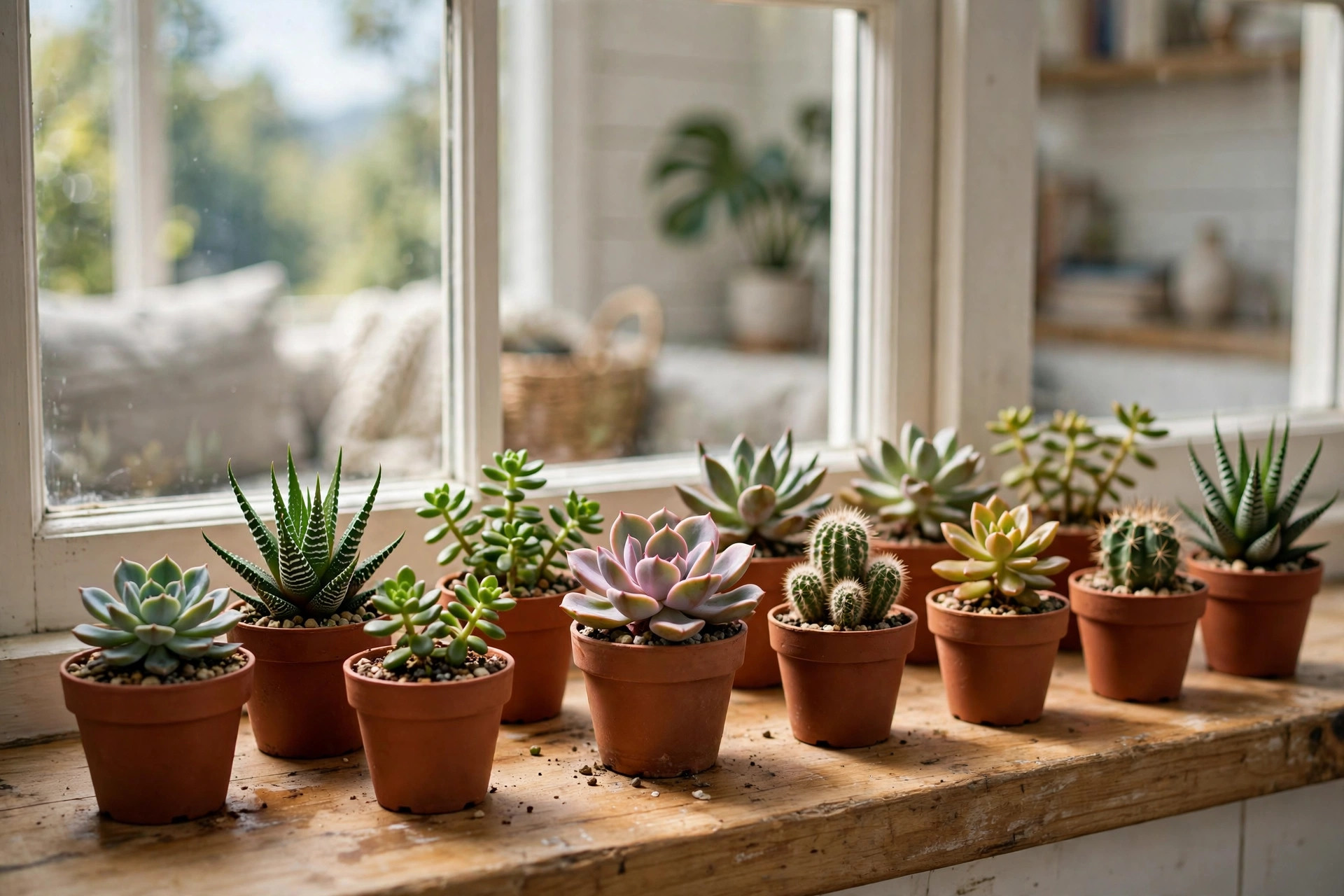

This succulent variety packs american homes guide begins with a simple idea. One small box of mixed succulents can fill a home with living color. It asks for little water. It asks for little time. It rewards the owner with shapes that look like sculpture. Many American homes now keep these plants on sills, desks, and shelves. This guide explains what variety packs are, how to pick a good one, what they cost, and how to keep them alive through the seasons.
Why Succulent Variety Packs Matter in American Homes
A succulent stores water in its leaves or stems. That one trait shapes everything else about its care. The plant can wait days between waterings. It can live in a small pot. It can grow on a windowsill that gets only morning sun. For a busy household, these traits matter a great deal.
Variety packs group many kinds into one purchase. A buyer receives ten or twenty small plants in one box. Some are rosettes. Some are tall and bead-like. Some carry fine stripes or blushes of red. The mix lets a new grower learn what each kind likes. It also lets a family decorate several rooms at once for the price of one order.
American homes differ by climate. A house in Arizona faces dry heat and long sun. A house in Maine faces short winter days and cold glass. Variety packs suit both because they give the grower choices. The owner can place sun-hungry kinds near the brightest window and shade-tolerant kinds a step farther back. Over time, the owner learns which genera fit the home best. That lesson would cost far more if each plant were bought alone.
There is also a simple joy in variety. A single cactus can look fine. A tray of mixed succulents looks like a small garden. Guests notice it. Children like to name the shapes. The pack turns plant care into a shared habit rather than a chore.
What to Look for When You Buy: Succulent Variety Packs American Homes Guide
Plant Health
Buy packs where the plants look firm and full. Leaves should feel solid, not soft or see-through. The center of each rosette should be closed and green. Some brown tips are normal on shipped plants. Whole brown plants are not.
Check the roots if you can. A small plug of soil should hold together. Roots may be white or tan. Black or mushy roots are a bad sign. Many good sellers, such as the nurseries listed in the Proven Winners plant library, publish growing notes that help buyers judge quality.
Pack Size and Mix
Packs run from four plants to fifty. A beginner should start with eight to twelve. That number fills a small shelf. It also keeps the first learning curve easy. Look for packs that name the genera inside. A pack that lists echeveria, haworthia, sedum, and crassula tells you more than a pack that says only “assorted succulents.”
Some packs include cuttings instead of rooted plants. Cuttings cost less. They need two to three weeks to root. Rooted plugs cost more but settle faster. A first-time buyer should choose rooted plants.
Soil and Pots
Many packs arrive bare-root or in thin nursery pots. The soil in those pots is often peat-heavy. It holds water too long for succulents. Plan to repot within a week of arrival. Use a gritty mix of potting soil, coarse sand or perlite, and a little gravel. Half soil and half mineral matter works for most kinds.
Pots must have drainage holes. Terracotta is a safe choice because it breathes. Small plastic nursery pots work too if the owner is careful with water. Glass bowls with no holes are poor homes for succulents, though they look pretty in photos. Good garden suppliers such as Burpee, a seed and plant supplier, carry pots and mixes made for these plants.
Light Claims on the Box
Some boxes promise “low light” plants. Treat such claims with care. Very few succulents thrive in dim rooms. Most want four to six hours of bright light each day. A south or west window suits them in winter. In summer, an east window may be kinder because it avoids the harsh afternoon sun. If natural light is weak, a simple full-spectrum lamp set twelve inches above the plants will do.
Common Types Found in Mixed Packs
Most packs draw from a small set of hardy genera. Knowing them helps the owner give each plant what it wants.
Echeveria
Echeveria forms clean rosettes in blue, pink, and gray tones. It wants the brightest spot you have. Water it only when the soil is fully dry. Old lower leaves dry up and can be pulled away. Many rosette collections begin here, and the range of forms is broad enough that a grower can build a whole shelf from this genus alone. If you enjoy bold indoor foliage in other forms too, our snake plant guide for American homes covers another low-water favorite.
Haworthia
Haworthia stays small and tolerates less light than echeveria. Its thick leaves carry white stripes or bumps. It suits desks and north-facing sills. Water it less often than you think. It rots quickly in wet soil.
Sedum and Crassula
Sedums range from trailing beads to tight mats. Crassula includes the classic jade plant. Both root fast from cuttings. Both handle a missed watering without complaint. They are good first plants for children learning the habit.
Cacti and Aloe Relatives
Some packs add small cacti or gasteria. Cacti want strong sun and almost no water in winter. Gasteria likes shade and regular small drinks. Keep cacti where pets and small children cannot reach their spines.
Plant reference pages such as the ones at Monrovia and Park Seed describe these genera in more depth. The indoor plant care guides at The Spruce also walk through each genus step by step.
Cost and Price
Variety packs are among the cheapest ways to start a collection. A pack of ten small plants often sells for twelve to twenty dollars. A pack of twenty runs from twenty to thirty-five dollars. Cuttings cost less per plant than rooted plugs. Rare colors and larger sizes push the price up.
Shipping adds to the cost. Many sellers ship in padded boxes with heat packs in winter. That care is worth paying for. A frozen plant is a dead plant.
Repotting costs a little more. A bag of succulent mix, a bag of perlite, and a set of terracotta pots may add fifteen to twenty-five dollars to the first order. Those supplies last for many repottings. After the first round, each new pack costs only the price of the plants.
Compare that to buying single plants at a garden center. A single named echeveria often sells for six to eight dollars. Ten singles would cost sixty to eighty dollars. The variety pack is the clear bargain for a new grower. For homes in warm states, specialty sets such as succulent packs suited to California homes may offer mixes matched to local light.
Care and Upkeep
Water
Water deeply, then wait. That rule covers most succulent care. Pour water until it runs from the drainage hole. Then let the soil dry all the way through before watering again. In a bright summer room, that may take five to seven days. In winter, it may take two to three weeks. A wooden skewer pushed into the soil tells the truth. If it comes out damp, wait.
Light
Give the plants as much bright light as the house allows. Rotate the pots a quarter turn each week so they grow straight. Watch for stretching. A rosette that grows tall with wide gaps between leaves is asking for more light. Move it closer to the window or add a lamp.
Soil and Repotting
Repot when roots fill the pot or when the soil stays wet too long. Move up one pot size only. A small plant in a large pot sits in wet soil and rots. Shake old peat mix from the roots before repotting. Let the plant sit dry for two or three days after repotting, then water.
Feeding
Succulents need little food. A weak cactus fertilizer, mixed at half the label rate, once or twice a year in spring is enough. Too much fertilizer makes soft, weak growth that marks easily.
Seasonal Rhythm
Many succulents rest in winter. They grow slowly and drink little. Keep them cool if you can, near a bright window in a room that runs around sixty degrees. In spring they wake up. That is the time to repot and, if wanted, to take cuttings. Summer heat above ninety degrees can stress them. Move sensitive kinds away from the hottest glass in a heat wave. The planting calendars from the Almanac help match care tasks to the local season, and plant science research supported by the USDA’s NIFA explains how day length and temperature shape growth.
Pests
Mealybugs are the main pest. They look like small white cotton dots in the leaf joints. Dab them with a cotton swab dipped in rubbing alcohol. Repeat every few days until they are gone. Keep new packs apart from old plants for two weeks. That quarantine stops one bad plant from spreading pests to the whole shelf.
Safety
Succulents are mostly safe, but a few cautions belong in every home guide.
Keep spiny cacti out of reach of small children and pets. A child who grabs a cactus will remember the lesson, but the injury is avoidable. Place cacti on high shelves.
A few succulents are toxic if eaten. Euphorbia sap can burn skin and eyes. Some kalanchoe leaves are toxic to cats and dogs. If a pet chews plants, look up each genus before you buy. Plant guides from White Flower Farm and Gurney’s note which plants need caution around animals.
Wear gloves when repotting anything with spines or milky sap. Wash hands after handling soil. These are small steps. They prevent most problems.
Frequently Asked Questions
How many succulents come in a typical variety pack?
Packs usually hold eight, ten, twelve, or twenty plants. Some sellers offer fifty-plant trays for events. A ten-pack suits most beginners. It gives enough plants for several rooms without crowding the schedule with repotting.
Can succulent variety packs live outside?
Many can, in warm months. Move them out after the last frost when nights stay above fifty degrees. Bring them back inside before the first fall frost. Cold nights kill most succulents fast. Hardy sedums are the exception in some zones.
Why are my succulents losing their color?
Color fades when light is low. A pink-tipped echeveria may turn plain green in a dim room. Move it to brighter light and the color often returns over a few weeks. Too much water can also wash out color, so check the soil first.
How long do mixed succulent packs last?
With good care, years. Many succulents live for a decade or more. They grow slowly and can be divided as they fill their pots. A ten-dollar pack can become a long-lived collection. The grower only needs to repot, rotate, and water with care.
Do succulent packs need special soil forever?
Yes, in the sense that they always want fast drainage. Any gritty mix works. Some growers buy bagged cactus mix and add extra perlite. Others mix their own from potting soil, sand, and gravel. Both paths succeed as long as water runs through quickly.
Are variety packs good gifts?
They are. A mixed pack suits housewarmings, teacher gifts, and birthdays. It costs little and lasts long. Add a small card with the two rules: bright light and deep, rare watering. If the receiver later wants to grow food plants too, our guide to onion sets for planting covers an easy next step.
A Short Final Word
A succulent variety pack is a small purchase that teaches a big habit. It asks the owner to watch light, to feel soil, and to wait. Those habits serve every plant the home will ever hold. Start with one pack. Learn its kinds. Repot with care. In a year, the sill will hold plants the owner truly knows. That is the quiet reward of this hobby, and it begins with a single box of mixed succulents.
References
Burpee. (n.d.). Seeds, plants, and gardening supplies. https://www.burpee.com Gurney’s Seed & Nursery Co. (n.d.). Seeds, plants, and garden supplies. https://www.gurneys.com Monrovia. (n.d.). Plants for home gardens. https://www.monrovia.com National Institute of Food and Agriculture. (n.d.). Agricultural research and extension. https://www.nifa.usda.gov Park Seed. (n.d.). Seeds, plants, and gardening supplies. https://www.parkseed.com Proven Winners. (n.d.). Plants and gardening inspiration. https://www.provenwinners.com The Old Farmer’s Almanac. (n.d.). Gardening calendars and advice. https://www.almanac.com The Spruce. (n.d.). Home and garden advice. https://www.thespruce.com White Flower Farm. (n.d.). Plants, bulbs, and garden supplies. https://www.whiteflowerfarm.com
Was this guide helpful?

About Robert Taylor
The My Garden US editorial team writes practical, in-depth home and garden guides for American homeowners — tested advice, no fluff.
You May Also Like
Native Grass Seed: Where to Buy in the USA
July 28, 2026 0 views
Pothos Plants Bulk for California Homes: A Complete Buying Guide
January 25, 2026 0 views
Air Plants Bulk American Homes Guide: Buying, Choosing, and Keeping Them Green
June 4, 2026 0 views