
Introduction
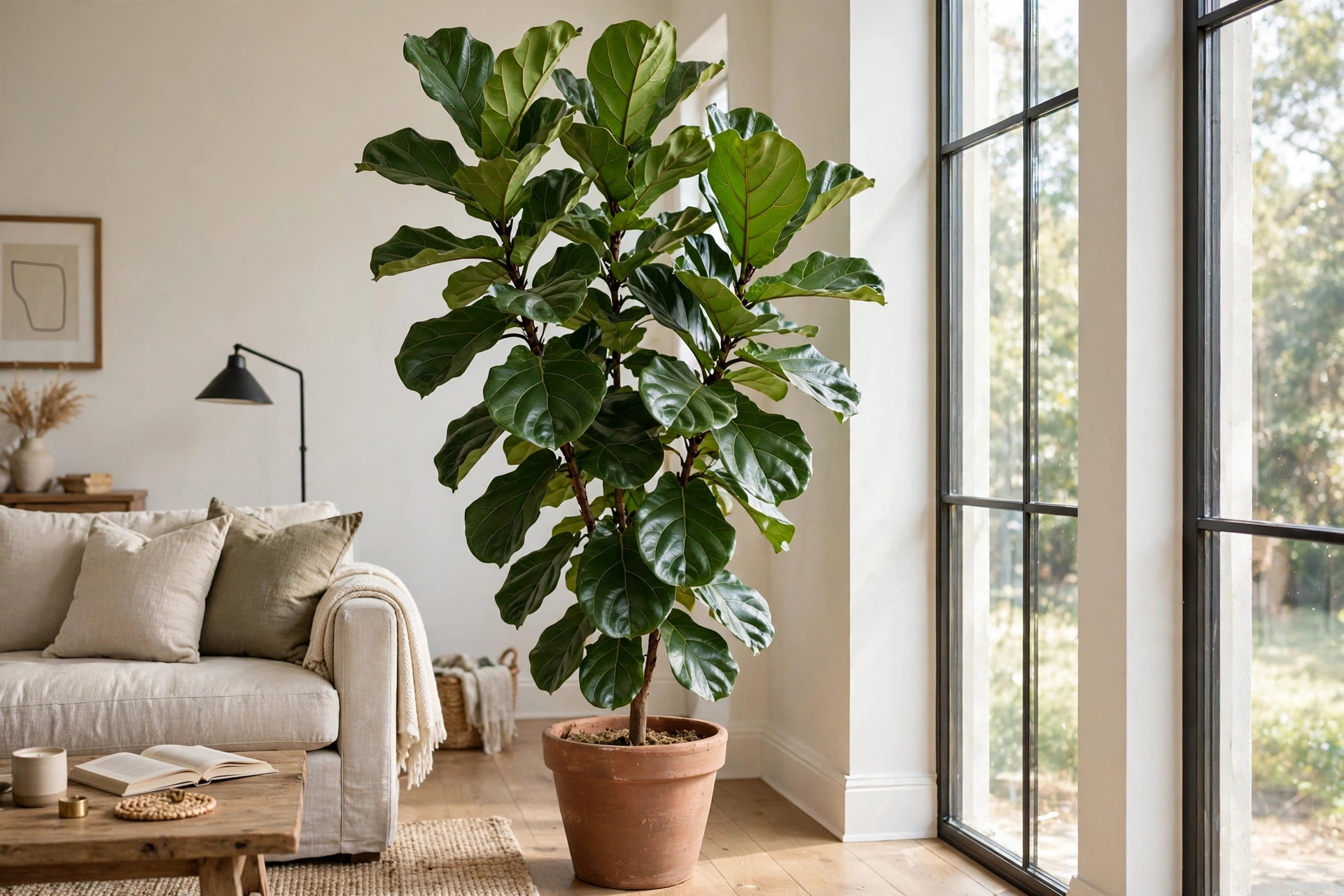
This fiddle leaf figs American homes guide is for any homeowner who wants a bold green plant indoors. The fiddle leaf fig, known to growers as Ficus lyrata, has large leaves shaped like a violin body. It comes from the warm forests of West Africa. In American homes it grows as a floor plant, often three to six feet tall. It gives a room the feel of an indoor tree.
Many people buy one because they see it in magazines. They place it in a corner. Then the leaves drop. This guide will help you avoid that. It covers how to choose a strong plant, where to put it, how to water it, and what it costs. It also covers safety for homes with children and pets.
Why Fiddle Leaf Figs Suit American Homes: Fiddle Leaf Figs American Homes Guide
American homes often have high ceilings and large windows. Living rooms, sunrooms, and open floor plans give these plants room to grow. A fiddle leaf fig fills empty space well. It stands straight. Its leaves are wide and dark green. One plant can change the look of a whole room.
The plant also fits American work habits. Many people now work from home. A large green plant near a desk makes the space feel calm. It does not need daily care. A few minutes a week is enough once you learn its needs.
The plant is easy to find in America. Garden centers carry it. Home stores carry it. Mail-order nurseries ship it in pots. Large nursery-grown ornamental plants are often tagged with care cards. You can read more about other large leafy choices in our monstera plant sale buying guide. But the fiddle leaf fig remains the most asked-about indoor tree in shops today.
How to Choose a Healthy Plant
Choose with care. A strong start saves trouble later.
Check the Leaves
Look for deep green leaves with no brown edges. Small spots can mean past stress. A few yellow leaves at the bottom are normal. They fall as the plant grows. Avoid plants with many fallen leaves in the pot. That can mean the plant was moved too often or kept in dark storage. Good perennial plant nurseries grade their stock before shipping, and a clean pot is a good sign of a well-kept plant.
Check the Stem
The main stem should be straight and firm. A woody lower stem is a good sign. It shows the plant is mature. Avoid stems that feel soft. Soft spots can mean rot.
Check the Size
Buy a plant that fits your space now, with room to grow. A three-foot plant in a ten-inch pot is a common size. It is easy to move. Larger plants cost more and are harder to carry. A related fiddle leaf fig buying guide lists sizes sold at most nurseries.
Check the Roots
Gently lift the plant from its pot at the store if you can. Roots should fill the soil but not circle in a hard mat. White or tan roots are healthy. Dark mushy roots are not. Gardening knowledge libraries show photos of healthy roots so you know what to look for. If you cannot check, look at the drain hole. Many fine roots coming out can mean the plant needs a bigger pot soon.
Types and Forms of Fiddle Leaf Figs
There are three main forms sold in America.
The standard tree form has one trunk and a crown of leaves at the top. It looks like a small tree. It suits formal living rooms and entry halls.
The bush form has several stems from the base. It is shorter and fuller. It suits corners and wide spaces. It costs less than the tree form of the same height.
The dwarf form, sometimes called compacta, grows slowly and stays small. Its leaves are close together. It suits desks and small apartments. It is a good choice if you have low ceilings.
All three need the same basic care. Pick the form that fits your room and your taste.
The dwarf form works well in apartments where floor space is tight. The tree form suits rooms with vaulted ceilings. The bush form fills a wide corner without blocking the window. Nurseries and seed and plant catalogs often list which form each pot holds, so read the tag before you buy.
Light and Placement in the Home
Light is the most important factor. The fiddle leaf fig needs bright, indirect light for most of the day. A spot near an east or south window is ideal. In American homes, a living room window that gets morning sun works well.
Keep the plant a few feet from the glass. Direct midday sun can burn the leaves. The plant will tell you it needs more light. Its leaves will point down or drop. Move it closer to the window in that case.
Do not move the plant often. It hates change. Pick a good spot and leave it there. Drafts from heating vents and air conditioners harm it too. Keep it away from doors that open to cold air in winter. Many American homes have dry winter air from furnaces. That is fine as long as the plant gets light and steady warmth.
Turn the pot a quarter turn each month. This keeps growth even. One side will not lean toward the window. Houseplant care guides from trusted home sites explain this habit in more detail.
Watering and Feeding
Water deeply but not often. Stick your finger one inch into the soil. If it feels dry, water. If it feels damp, wait. Overwatering is the most common cause of death. The roots sit in wet soil and rot.
When you water, pour until water runs from the drain hole. Empty the saucer after half an hour. Do not let the plant sit in standing water.
In summer the plant may need water once a week. In winter it may need water once every two weeks. Your home, your pot size, and your light all change this. Check the soil, not the calendar.
Feed the plant in the growing months, from spring through early fall. Use a balanced liquid fertilizer made for houseplants. Follow the label dose. Vegetable and flower seed suppliers also carry houseplant feeds, and their labels state the exact mix strength. Do not feed in winter. The plant rests then. Extra food can burn the roots.
Soil should drain well. A mix of potting soil with perlite or bark works. You can buy bagged indoor plant mix at any garden center. A gardening almanac with month-by-month tips can help you plan feeding through the seasons.
Cost and Price in America
Prices vary by size and store. A small plant in a six-inch pot often costs twenty to forty dollars. A three-foot plant in a ten-inch pot often costs sixty to one hundred twenty dollars. A six-foot tree in a large pot can cost two hundred dollars or more.
Prices are higher at specialty plant shops. They are lower at big home stores. Mail-order plant nurseries often charge for shipping. The plant may arrive smaller but well packed.
Set aside money for a pot, a saucer, soil, and fertilizer. A good clay or ceramic pot costs twenty to fifty dollars. These extras add up. Plan for the full cost before you buy.
Care and Upkeep Through the Seasons
The fiddle leaf fig needs steady care across the year.
Repotting
Repot every one to two years, or when roots fill the pot. Choose a pot two inches wider. Spring is the best time. Water the plant a day before. Slide it out gently. Set it in the new pot at the same depth. Fill with fresh mix. Water well. A clay pot dries faster than a plastic one. Plastic holds moisture longer. Pick clay if you tend to overwater. Pick plastic if your home air is very dry. Set the pot on a saucer that is easy to empty.
Pruning
Prune to shape the plant or control height. Cut just above a leaf node in spring. New growth will start below the cut. Wear gloves. The sap can irritate skin. Clean your shears with soap and water after.
Cleaning the Leaves
Dust blocks light. Wipe leaves with a damp soft cloth every few weeks. This keeps them glossy and helps the plant breathe. Do not use leaf shine sprays. They can clog the leaf pores.
Winter Care
American winters bring short days and dry air. Move the plant closer to the window in winter if light is weak. Water less. Stop feeding. Keep room temperature above fifty-five degrees. Watch for spider mites in dry air. They make fine webs under leaves. Wipe leaves and raise humidity with a tray of water and pebbles under the pot.
Extension research from American agricultural programs gives sound advice on indoor plant health in cold months.
Safety for Children and Pets
The fiddle leaf fig is not safe to eat. Its sap can irritate skin and mouths. The leaves are mildly toxic to cats and dogs. Chewing can cause drooling and stomach upset.
Place the plant where pets cannot reach the leaves. A tall stand or a closed sunroom works. Teach children not to pull leaves or taste the plant. If a child or pet eats part of the plant, call your doctor or vet. Keep the poison control number on your fridge.
For homes with curious pets, some owners prefer hardier choices. A guide to snake plants for indoor growing covers one tough plant that still needs care with pets.
Frequently Asked Questions
Why are my fiddle leaf fig leaves turning brown?
Brown edges often mean too much water or too little humidity. Check the soil first. Let it dry between waterings. Brown spots in the middle of leaves can mean sunburn. Move the plant a few feet from the window.
Why is my plant dropping leaves?
Leaf drop follows stress. Common causes are moving the plant, cold drafts, overwatering, or sudden light change. Fix the cause and leave the plant alone. New leaves will come in spring.
How fast does it grow?
In good light it can grow one to two feet a year. In low light it barely grows. Light is the main driver. Feeding in summer helps.
Can I put it outside in summer?
Yes, in most of America. Place it in a shaded patio spot. Bring it in when nights fall below fifty-five degrees. Move it out and in slowly over a week so it adjusts.
Should I mist the leaves?
Misting helps little. It dries fast. A pebble tray or a small humidifier works better. Wiping leaves clean does more good than misting.
How do I make it branch?
Cut the top stem above a leaf node in spring. The plant often sends out two or three new branches below the cut. Be patient. It can take weeks.
A Final Word
The fiddle leaf fig asks for three things: bright light, careful water, and a steady spot. Give it these and it will grow into a fine indoor tree. American homes with big windows are good places for it. Buy a healthy plant. Set it near the light. Check the soil before you water. Do the simple upkeep each season. The plant will repay you with bold green leaves for many years. It is a long-term guest, not a short-term decoration. Treat it with steady care and it will reward you with growth you can watch season by season.
References
Burpee. (n.d.). Seeds, plants, and gardening supplies. https://www.burpee.com Gardening Know How. (n.d.). Gardening guides and plant care. https://www.gardeningknowhow.com Gurney’s Seed & Nursery Co. (n.d.). Seeds, plants, and garden supplies. https://www.gurneys.com Monrovia. (n.d.). Plants for home gardens. https://www.monrovia.com National Institute of Food and Agriculture. (n.d.). Agricultural research and extension. https://www.nifa.usda.gov Park Seed. (n.d.). Seeds, plants, and gardening supplies. https://www.parkseed.com The Old Farmer’s Almanac. (n.d.). Gardening calendars and advice. https://www.almanac.com The Spruce. (n.d.). Home and garden advice. https://www.thespruce.com White Flower Farm. (n.d.). Plants, bulbs, and garden supplies. https://www.whiteflowerfarm.com
Was this guide helpful?

About David Wilson
The My Garden US editorial team writes practical, in-depth home and garden guides for American homeowners — tested advice, no fluff.
You May Also Like
How to Grow Coneflowers: A USA Beginner’s Guide
October 8, 2026 0 views
Dahlia Bulbs Bulk: Where to Buy in the USA
January 4, 2026 0 views
Morning Glory Seeds Reviews: A Buying Guide for American Gardeners
February 22, 2026 0 views