
Many gardeners search for daffodil bulb packs california homes usa when spring feels near and the garden beds sit empty. The daffodil is one of the most faithful flowers a homeowner can plant. A single bulb pack can turn a dull border into a bright band of yellow in one season. In California, where winters are mild and the soil often warms early, daffodils need a little extra care to bloom well. This guide explains how to pick a good pack, which types suit California yards, what they cost, how to plant and keep them, and how to stay safe while working with them.
Why Daffodils Suit California Homes
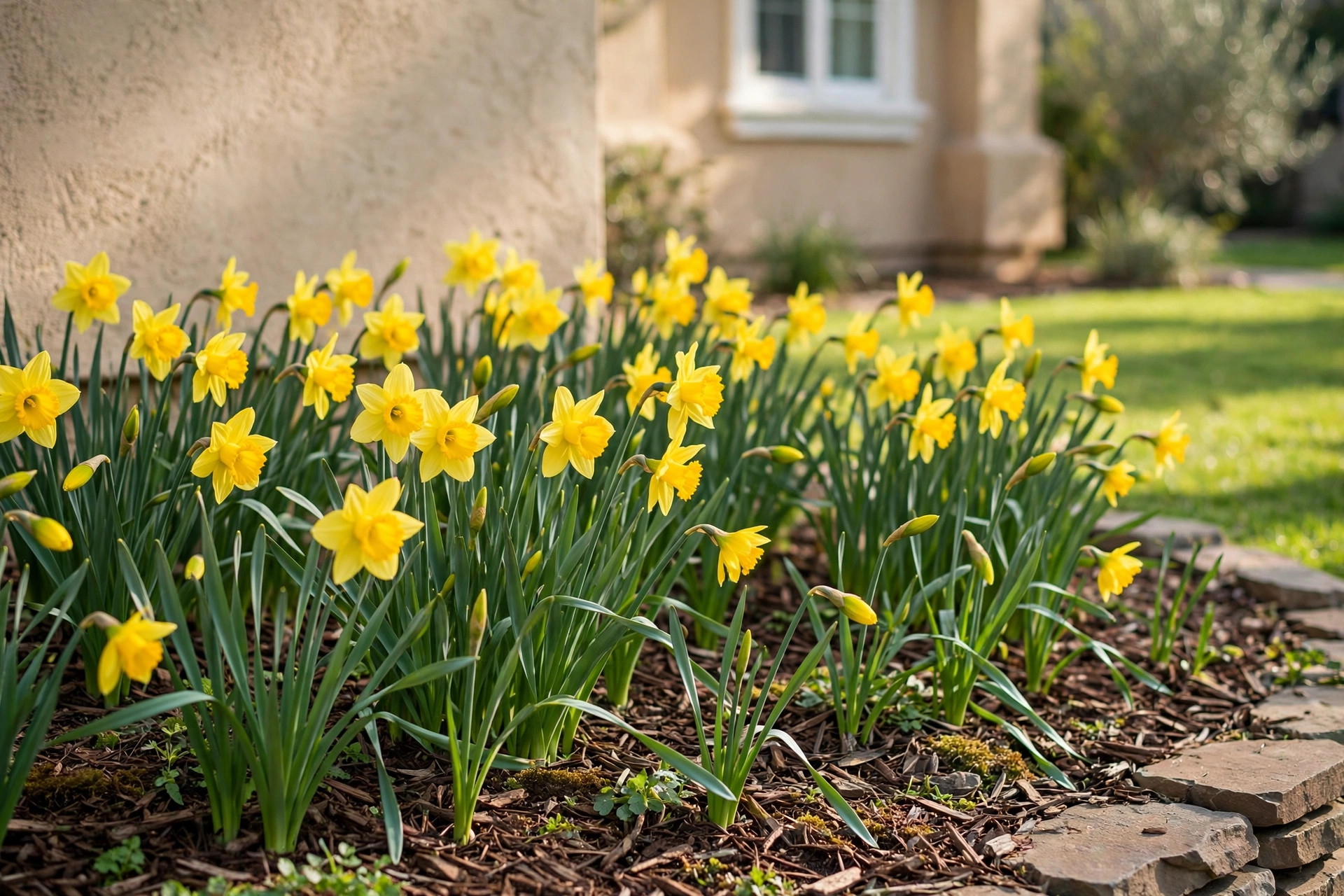
The daffodil has a long record as a home garden flower. It blooms early, it asks for little, and it comes back year after year. For a busy household, that mix is hard to beat. A pack of bulbs planted in the fall will send up green shoots in late winter and open its flowers in early spring, often before any other plant in the yard.
California presents a special case. Many parts of the state never get the long cold stretch that daffodils prefer. Bulbs need a chill period to set their buds. In coastal and southern areas, gardeners solve this with pre-chilled bulbs or by cooling the bulbs in a refrigerator before planting. A plain paper bag on a refrigerator shelf works well, and it costs nothing but a little planning. Just keep the bulbs away from apples and other fruit, since ripening fruit gives off a gas that harms flower buds.
Regional Notes Across California
Northern counties and the Sierra foothills see enough winter cold for most daffodil types. Gardeners there can plant almost any named variety and expect strong bloom. The Central Valley runs warmer, but winter nights still drop low, so mid-chill types do fine with a short spell in the refrigerator. Along the coast from San Francisco to San Diego, the winters stay mild and the soil warms early. Here the best results come from low-chill tazettas, paperwhites, and jonquils. Desert areas can grow daffodils in pots, where the gardener controls the chill and the watering by hand. The Old Farmer’s Almanac notes that daffodil bulbs in warm zones do best when they receive about twelve to fourteen weeks of cold, and Gardening Know How offers plain planting calendars that home gardeners can follow for their own zone.
Daffodils also resist deer and most rodents. The bulb holds a bitter compound that pests avoid, so the flowers survive where tulips get eaten. Many new planters learn this the hard way after losing a whole tulip bed in one night. Daffodils spare them that grief. That is one reason many families prefer daffodils when they compare tulip bulbs for fall planting with daffodil options for the same bed.
How to Choose a Good Bulb Pack: Daffodil Bulb Packs California Homes Usa
A bulb pack is only as good as the bulbs inside it. Shops sell packs from five bulbs to fifty. The count on the bag matters less than the health of each bulb. Here is what to check.
Size and Firmness
Pick up the bag and feel the bulbs through the netting. A good daffodil bulb feels heavy for its size and firm all around. Soft spots, mold, or a papery dry feel are signs of a weak bulb. Larger bulbs carry more stored food and usually throw a stronger first bloom. Most packs of large trumpet types ship in sizes marked 12/14 or 14/16, which refers to the bulb’s width in centimeters.
Variety and Bloom Time
Not all daffodils bloom at once. Early types open in February, mid types in March, and late types in April. A pack that mixes all three gives a longer show. Labels often use the words early, midseason, and late. For California, low-chill varieties such as paperwhites and some jonquils need less cold and are a safer pick in the warmest areas.
Pack Freshness
Buy packs in the fall from stores that move them quickly. A bag that has sat in warm air all summer may hold dried-out bulbs. Reputable growers like Burpee and Gurney’s ship bulbs at the right time for planting, and White Flower Farm prints clear variety names and bloom windows on each pack.
Related long-tail shoppers often compare daffodil packs with other fall bulbs, such as dahlia bulbs in bulk, before they settle on a spring plan. A broad daffodil bulb pack buying guide can also help sort the options.
Types of Daffodils for California Yards
Daffodils come in thirteen divisions, and a few groups do best in California’s mild climate.
Trumpet daffodils have one large cup as long as the petals. They are the classic spring picture and need a fair chill. They suit the Central Valley, the foothills, and northern counties.
Large-cupped daffodils look like trumpets with a shorter cup. They are tough and come in many colors, from gold to pink-rimmed white. Most California gardens can grow them with simple pre-chilling.
Jonquils and tazettas carry several small flowers per stem and smell sweet. Paperwhites, the indoor favorite, belong to this group. They need little or no chill and are the best choice for San Diego, Los Angeles, and other warm coastal spots. Monrovia and Proven Winners list varieties with notes on heat tolerance that help narrow the field.
Miniature daffodils stand six to eight inches tall and suit pots, rock gardens, and the fronts of borders. They cost less per bulb and make a fine first pack for a new gardener.
Bulb sellers such as Park Seed carry several divisions in one catalog, which lets a buyer mix early and late types in a single order.
Cost and Price
Daffodil bulb packs are one of the cheapest ways to fill a garden. Small packs of five to ten bulbs often sell for a few dollars. Packs of twenty-five to fifty bulbs bring the price per bulb down and suit large borders. Rare or named show varieties cost more, sometimes a dollar or more per bulb.
Price tells you something about grade. Bargain mixed bags may hold small bulbs of unknown variety. Labeled packs of named varieties cost a little more but give a known color and bloom time. For a first planting, a mid-priced named pack is the safer buy.
Homeowners in California should also count the cost of pre-chilling. A paper bag in the refrigerator costs nothing but space and planning. Pre-chilled bulbs bought ready to plant cost a bit more but skip the wait.
It helps to think of the purchase as a long-term one. A pack that blooms for five years or more costs only pennies per flower. Cheap mixed bags may bloom weakly in year one and fade fast. A slightly dearer pack of firm, named bulbs often proves cheaper over time because the clumps keep growing and can be divided for free.
Planting and Care Through the Seasons
When to Plant
Plant daffodil bulbs in the fall, about six to eight weeks before the ground gets hard. In much of California the soil never freezes, so the window runs from October into December. Gardeners in the mountains and far north should plant earlier, in September or early October, before the first frost. In mild areas, late planting still works as long as the bulbs get their chill first. The NIFA extension pages remind gardeners that soil temperature matters more than the calendar: plant when the soil stays near sixty degrees.
How Deep and How Far
Dig the hole three times as deep as the bulb is tall, usually five to six inches. Point the nose up. Space bulbs four to six inches apart. In heavy clay, which is common in parts of California, mix in coarse sand or compost so water drains away from the bulb. Wet bulbs rot fast.
Watering
Water once after planting. Fall rains usually do the rest. If the season runs dry, water every week or two until shoots appear. After the flowers fade, let the leaves stand until they turn yellow. The leaves feed the bulb for next year. Cutting them early is the most common reason a daffodil skips a bloom.
Feeding and Dividing
Daffodils need little food. A light scattering of bulb fertilizer at planting time is enough for most soils. Rich soils may need no feeding at all. Avoid high-nitrogen lawn fertilizer near the beds, since it pushes weak leaves at the cost of flowers. Every three to four years, crowded clumps stop blooming well. Dig them up after the leaves yellow, split the bulbs apart, and replant at once. Each new clump you plant is a free bulb pack of your own making. The Spruce garden guides give step-by-step notes on dividing that suit beginners.
Safety in the Garden
Daffodil bulbs hold natural compounds that irritate skin and can poison people or pets if eaten. Wear gloves when you handle many bulbs at once, especially if your skin is sensitive. Keep packs away from children and curious dogs. Never store bulbs near onions or garlic in the pantry; a mix-up can lead to a bad mistake.
The sap in cut stems can also irritate the skin. Wash your hands after arranging daffodils, and keep cut flowers out of reach of cats. Daffodils are safe and lovely as long as they stay in the garden and the vase, not on the table as food.
Frequently Asked Questions
Do daffodil bulbs need chilling in California?
In most of California, yes. Coastal and southern areas lack the winter cold daffodils need to set buds. Chill bulbs in a refrigerator for twelve to fourteen weeks before planting, or buy pre-chilled bulbs. Warm-zone types like paperwhites need little or no chilling.
How many bulbs come in a typical pack?
Packs range from five to fifty bulbs. Small packs suit pots and trial plantings. Large packs of twenty-five or more give a better price per bulb and fill a border in one season.
Can I plant daffodils in pots?
Yes. Use a deep pot with drainage holes, plant bulbs nose-up at the same depth as in the ground, and keep the pot in a cool spot. Miniature types do best in containers. Water lightly and let the pot dry a little between waterings.
Will daffodils come back every year?
Healthy bulbs return for many years. They spread slowly and form clumps. Divide crowded clumps every three to four years to keep the blooms strong. Let the leaves yellow on their own each spring.
Are daffodils safe around dogs?
The bulbs are toxic if a dog digs them up and chews them. Plant bulbs where dogs do not dig, or cover the bed with a light mulch. The flowers above ground pose little risk, but keep cut stems out of reach.
What is the best month to plant in California?
October through December suits most of the state. Wait until soil temperatures fall near sixty degrees. In the warmest areas, chill the bulbs first and plant in late December or January.
A Final Word
Daffodil bulb packs give California homes a bright and honest spring flower for very little money. Choose firm, named bulbs, give them their chill, plant at the right depth, and leave the leaves to do their work. Do this, and the same bed will greet you with gold each year, asking nothing more than a little patience in the fall.
References
Burpee. (n.d.). Seeds, plants, and gardening supplies. https://www.burpee.com Gardening Know How. (n.d.). Gardening guides and plant care. https://www.gardeningknowhow.com Gurney’s Seed & Nursery Co. (n.d.). Seeds, plants, and garden supplies. https://www.gurneys.com Monrovia. (n.d.). Plants for home gardens. https://www.monrovia.com National Institute of Food and Agriculture. (n.d.). Agricultural research and extension. https://www.nifa.usda.gov Park Seed. (n.d.). Seeds, plants, and gardening supplies. https://www.parkseed.com Proven Winners. (n.d.). Plants and gardening inspiration. https://www.provenwinners.com The Old Farmer’s Almanac. (n.d.). Gardening calendars and advice. https://www.almanac.com The Spruce. (n.d.). Home and garden advice. https://www.thespruce.com White Flower Farm. (n.d.). Plants, bulbs, and garden supplies. https://www.whiteflowerfarm.com
Was this guide helpful?

About Sarah Mitchell
The My Garden US editorial team writes practical, in-depth home and garden guides for American homeowners — tested advice, no fluff.
You May Also Like
Snake Plants Indoor for Sale USA: A Plain Guide to Buying
January 17, 2026 0 views
Onion Sets Planting Reviews: A Buying Guide for Gardeners in the USA
June 14, 2026 0 views
Morning Glory Seeds for Texas Homes: A Complete Growing Guide
May 14, 2026 0 views