
Every autumn, gardeners across America plant daffodil bulbs and wait for spring. The yellow trumpets are among the first flowers of the year. They ask little and give much. If you are wondering about daffodil bulb packs where to buy usa, this guide walks through the best sources, what to look for, fair prices, and how to plant with success.
Why Daffodils Are a Wise Buy
Daffodils are among the most reliable bulbs a gardener can buy. Plant them once in the fall and they return year after year. Unlike tulips, which often fade after a season or two, daffodils naturalize. They spread and form bigger clumps with time. A single pack of bulbs can give color for a decade or more.
Deer and rodents leave daffodils alone. The bulbs contain compounds that taste bitter, so squirrels and voles dig around them instead of through them. This makes daffodils a good pick for gardens with pest trouble. They also need no fussing once planted. They survive cold winters, need no summer watering, and ask only for a sunny or half-shady spot with soil that drains well.
Daffodils suit many styles of planting. They work in formal beds along a walkway. They look at home in a wild meadow. They brighten the base of trees where the grass is thin. Cut stems last a long time in a vase, which makes them useful for indoor color in early spring.
Where to Buy Daffodil Bulb Packs in the USA: Daffodil Bulb Packs Where to Buy Usa
Gardeners who ask about daffodil bulb packs where to buy usa have more choice today than in years past. Several kinds of sellers carry them.
Mail-order bulb specialists. These companies focus on bulbs and ship at the right planting time. Burpee and Park Seed are long-known names in the seed and bulb trade, and Gurney’s has sold to American gardeners for generations. White Flower Farm offers a wide range of daffodil varieties with detailed growing notes. Ordering by mail lets you pick from far more kinds than a store rack holds. Companies ship bulbs in early fall, which is the right window for planting.
Nursery and plant retailers. Big growers sell directly to home gardeners. Monrovia and Proven Winners are trusted names in the plant world, and their sites point buyers toward quality stock. Many local garden centers buy from such growers, so a visit in September or October often turns up fresh packs.
Home improvement and hardware stores. National chains stock daffodil bulb packs each fall. They are easy to find and often priced low. The trade-off is a narrow selection. You will find the common yellow types and mixed bags, but not the unusual doubles or small-cup varieties. Check the bins for firm bulbs and avoid packs with soft or moldy pieces.
Online marketplaces and big-box websites. Large online stores carry many brands. Prices can be good, but read the seller details. Bulbs should come from a known grower, not an unknown shipper. Look at reviews that mention bulb size and bloom results.
Local nurseries and garden clubs. A neighborhood nursery often stocks varieties that do well in that region. Staff can tell you which types bloom best in local soil and weather. Some garden clubs run bulb sales in the fall as fundraisers. The prices are fair and the bulbs are usually fresh.
When to Buy
Timing matters. Buy and plant daffodil bulbs in early to mid fall. Most of the country plants in September and October. In the deep South, plant later, in November or even December. Soil should be cool but not frozen. Buying early in the season gives you the widest choice. The common types sell out first. Rare varieties go fast at specialist sellers. The Almanac planting calendar is a handy place to check dates for your area.
What to Look for in a Bulb Pack
Not all packs are equal. A few points separate good bulbs from poor ones.
Bulb size. Daffodil bulbs are graded by size, often given in centimeters around the widest part. Bigger bulbs hold more stored food and make bigger flowers. Packs labeled with large sizes, such as 12 to 14 centimeters, tend to bloom strongly in the first spring. Small, cheap bulbs may bloom late or skip the first year.
Firmness. A good bulb feels hard, like an onion. Press it lightly. It should not give way. Soft spots, mold, or a sour smell are signs of rot. If you shop in a store, open the mesh bag and check a few bulbs before you buy.
Pack date and origin. Fresh bulbs are best. Packs should name the grower and the variety. Avoid packs with no variety name. A bag marked only “mixed daffodils” is fine for a meadow effect, but you will not know what colors to expect.
Count and price. Packs range from small counts of ten to large bags of one hundred. Larger packs cost less per bulb. If you want a drift of color, a big bag is the better buy.
Disease-free stock. Reputable sellers grow bulbs under clean conditions. This matters less for daffodils than for some other bulbs, but it is still wise to buy from a known source. Guidance from USDA research and extension services supports buying certified, disease-free planting stock.
Types of Daffodils to Consider
The word daffodil covers many kinds. The American Daffodil Society groups them into divisions, but a home gardener only needs the broad types.
Trumpet daffodils. The classic look. One large trumpet in the center, as long as or longer than the petals. King Alfred types are the best known. They bloom early and stand tall.
Large-cupped daffodils. The cup is shorter than the petals. Many have two-tone flowers, such as white petals with an orange cup. They bloom a little later than trumpets.
Small-cupped daffodils. The cup is short and often rimmed with a darker edge. These are delicate and suit borders and rock gardens.
Double daffodils. Layers of petals give a full, rose-like look. They make striking cut flowers.
Miniatures. Small plants with small flowers, good for pots, window boxes, and the front of beds.
Jonquils and poeticus types. Jonquils carry several fragrant flowers per stem. Poeticus types are late bloomers with white petals and a small red-rimmed cup. Both handle warm climates better than many large types. Growing guides at Gardening Know How describe each group in plain terms.
Mixing early, mid, and late types stretches the show across six weeks or more. A mixed pack is the simplest way to get this spread without buying many single varieties.
Cost and Price Expectations
Daffodil bulb packs are modest in price compared with most garden purchases. Common varieties in packs of 25 often sell for a few dollars per pack at big-box stores. That works out to well under a dollar a bulb. Specialist varieties from mail-order sellers cost more, often one to three dollars per bulb, and rare or new kinds can cost more still.
Bulk bags of 50 or 100 bulbs bring the per-bulb price down. For a gardener filling a large bed, bulk is the sensible route. Shipping adds to mail-order costs, so compare the total price, not just the sticker price. The Spruce publishes seasonal buying guides that compare typical bulb prices across sellers.
A fair price rule: expect to pay more for named varieties from specialists, and less for mixed bags at chain stores. Both can bloom well. The difference is choice and certainty of color.
How to Plant Daffodil Bulbs
Planting is simple. The steps below work for almost every part of the country.
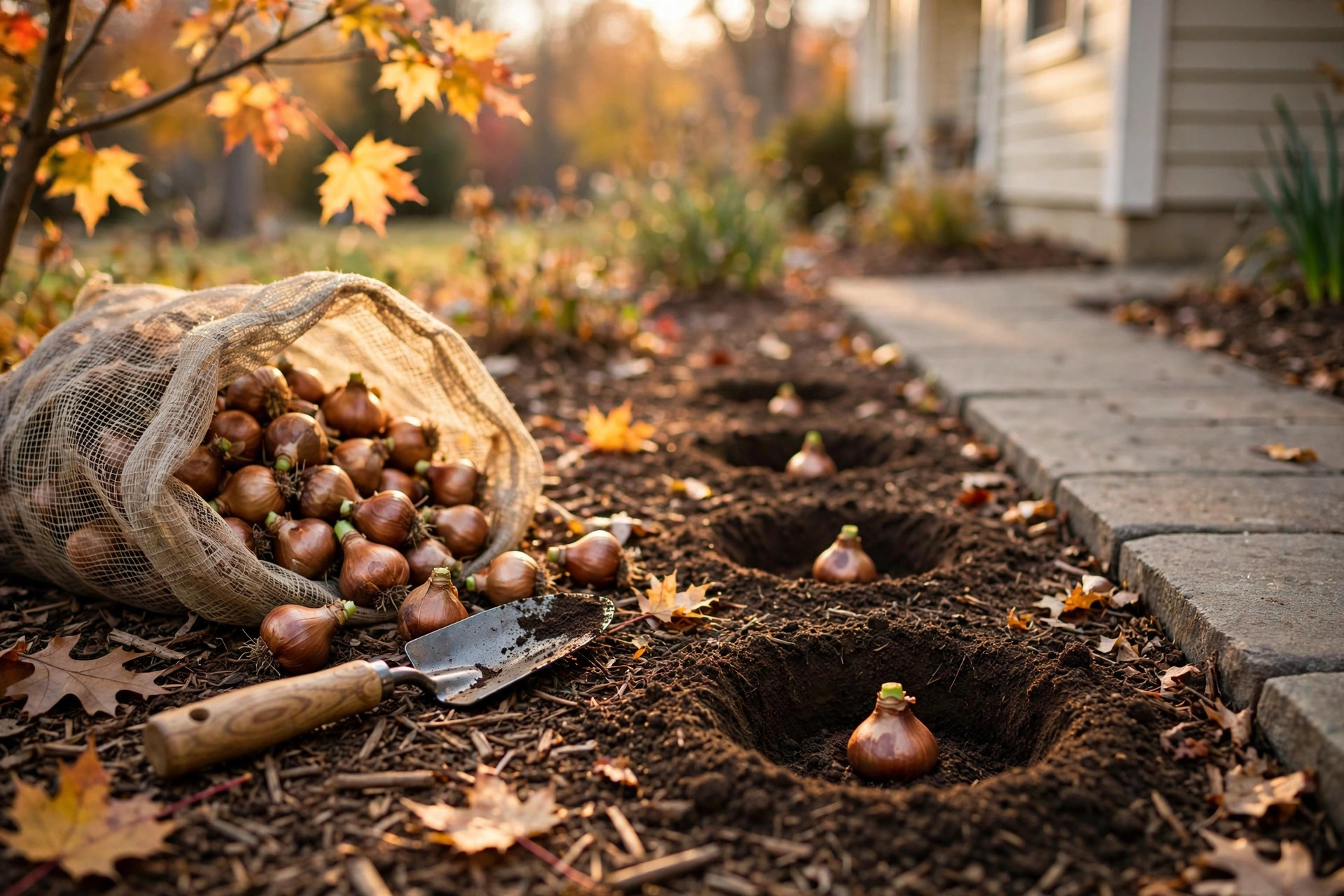
1. Pick a spot. Choose a place with at least half a day of sun. The soil must drain. Daffodils rot in standing water. Under deciduous trees is ideal, since the leaves fall before the trees leaf out and shade the flowers.
2. Dig to the right depth. Plant bulbs about three times as deep as the bulb is tall. For most daffodils, that is six to eight inches. In sandy soil, plant a little deeper. In heavy clay, plant a little shallower and add compost for drainage.
3. Space them well. Set bulbs four to six inches apart. For a natural look, toss handfuls and plant where they land. For a formal edge, line them up evenly.
4. Point the nose up. The pointed end goes up, the flat base down. If you are unsure, plant it on its side. The shoot will find its way up.
5. Water after planting. Soak the bed once. Fall rains usually do the rest.
6. Mulch lightly. A thin layer of shredded leaves keeps the soil cool and holds moisture.
In warm zones where winters are mild, some daffodils need a chill period to bloom. Choose low-chill types, such as many jonquils and tazettas, if your winters rarely freeze.
Care and Upkeep After Blooming
Daffodils ask little, but a few habits keep them strong year after year.
Leave the foliage. After the flowers fade, the leaves must stay. They make food for next year’s bloom. Wait until the leaves turn yellow and pull away easily, usually six weeks after flowering. Do not tie the leaves in knots or braid them. That cuts the light they catch.
Feed lightly. A sprinkle of balanced fertilizer or bulb food at planting time is enough. You can feed again in early spring as shoots emerge. Do not use fresh manure, which can burn the bulbs.
Divide crowded clumps. After several years, a clump may bloom less. Dig it up after the foliage dies back, pull the bulbs apart, and replant the largest ones at once. Replant promptly so they do not dry out.
Skip summer water. Once the foliage dies back, daffodils rest. Extra summer water can rot them. Let them stay dry.
Safety Notes
Daffodil bulbs are poisonous if eaten. Every part of the plant holds toxic compounds, and the bulbs are the most dangerous part. Keep packs and loose bulbs away from children and pets. Wear gloves when handling large numbers of bulbs. Some people get a skin rash from the sap. This is sometimes called “daffodil itch.” Wash your hands after planting.
Do not plant daffodils where food crops grow in the same bed, to avoid mix-ups at harvest time. Store unused bulbs in a cool, dry place out of reach of animals.
Frequently Asked Questions
Can I plant daffodil bulbs in pots? Yes. Use a pot at least eight inches deep with drainage holes. Plant bulbs closer together than in the ground, nearly touching. Keep the pot in a cold spot over winter, such as an unheated garage, so the bulbs get their chill.
What if I plant too late? Plant as soon as you can. Late-planted bulbs often still bloom, though flowers may be shorter. The soil must not be frozen solid. If the ground is frozen, store the bulbs in a cold, dark place and plant at the first thaw, or force them indoors in pots.
Will daffodils come back every year? Most do, for many years, if the foliage is left to ripen and the soil drains well. Some types are stronger perennializers than others. Trumpet and large-cupped types are among the most dependable.
Can I mix daffodils with tulips? Yes, and many gardeners do. Daffodils bloom at about the same time as early and mid tulips. Daffodils also protect tulips a little, since rodents avoid daffodil bulbs and tend to leave the whole bed alone.
Do I need to dig up daffodils in winter? No. Daffodils are hardy in most of the United States, roughly zones 3 through 8, and many types do well in zone 9 with low-chill varieties. Leave them in the ground year-round.
Are expensive bulbs worth it? It depends on your goal. For a big drift of yellow, inexpensive mixed packs do the job. For a collector’s bed or special color pairings, named varieties from a specialist are worth the higher price.
Final Word
Daffodils give more than almost any other bulb for the money. A fall afternoon of planting pays back in years of spring color. Buy firm, large bulbs from a seller you trust, plant them at the right depth in the fall, and leave the leaves alone after bloom. Whether you order from a mail specialist or pick up a pack at the store, the steps are the same. Spring will do the rest.
For related buying guides, see our articles on dahlia bulbs in bulk, fall tulip bulbs, and daffodil bulb pack buying tips.
References
Burpee. (n.d.). Seeds, plants, and gardening supplies. https://www.burpee.com Gardening Know How. (n.d.). Gardening guides and plant care. https://www.gardeningknowhow.com Gurney’s Seed & Nursery Co. (n.d.). Seeds, plants, and garden supplies. https://www.gurneys.com Monrovia. (n.d.). Plants for home gardens. https://www.monrovia.com National Institute of Food and Agriculture. (n.d.). Agricultural research and extension. https://www.nifa.usda.gov Park Seed. (n.d.). Seeds, plants, and gardening supplies. https://www.parkseed.com Proven Winners. (n.d.). Plants and gardening inspiration. https://www.provenwinners.com The Old Farmer’s Almanac. (n.d.). Gardening calendars and advice. https://www.almanac.com The Spruce. (n.d.). Home and garden advice. https://www.thespruce.com White Flower Farm. (n.d.). Plants, bulbs, and garden supplies. https://www.whiteflowerfarm.com
Was this guide helpful?

About David Wilson
The My Garden US editorial team writes practical, in-depth home and garden guides for American homeowners — tested advice, no fluff.
You May Also Like
Wildflower Seed Mixes for Sale USA: A Plain Guide for Home Gardeners
April 4, 2026 0 views
Fiddle Leaf Figs for Florida Homes: A Complete Guide for USA Growers
February 28, 2026 0 views
Fiddle Leaf Figs American Homes Guide: Growing Tall Trees Indoors
July 19, 2026 0 views