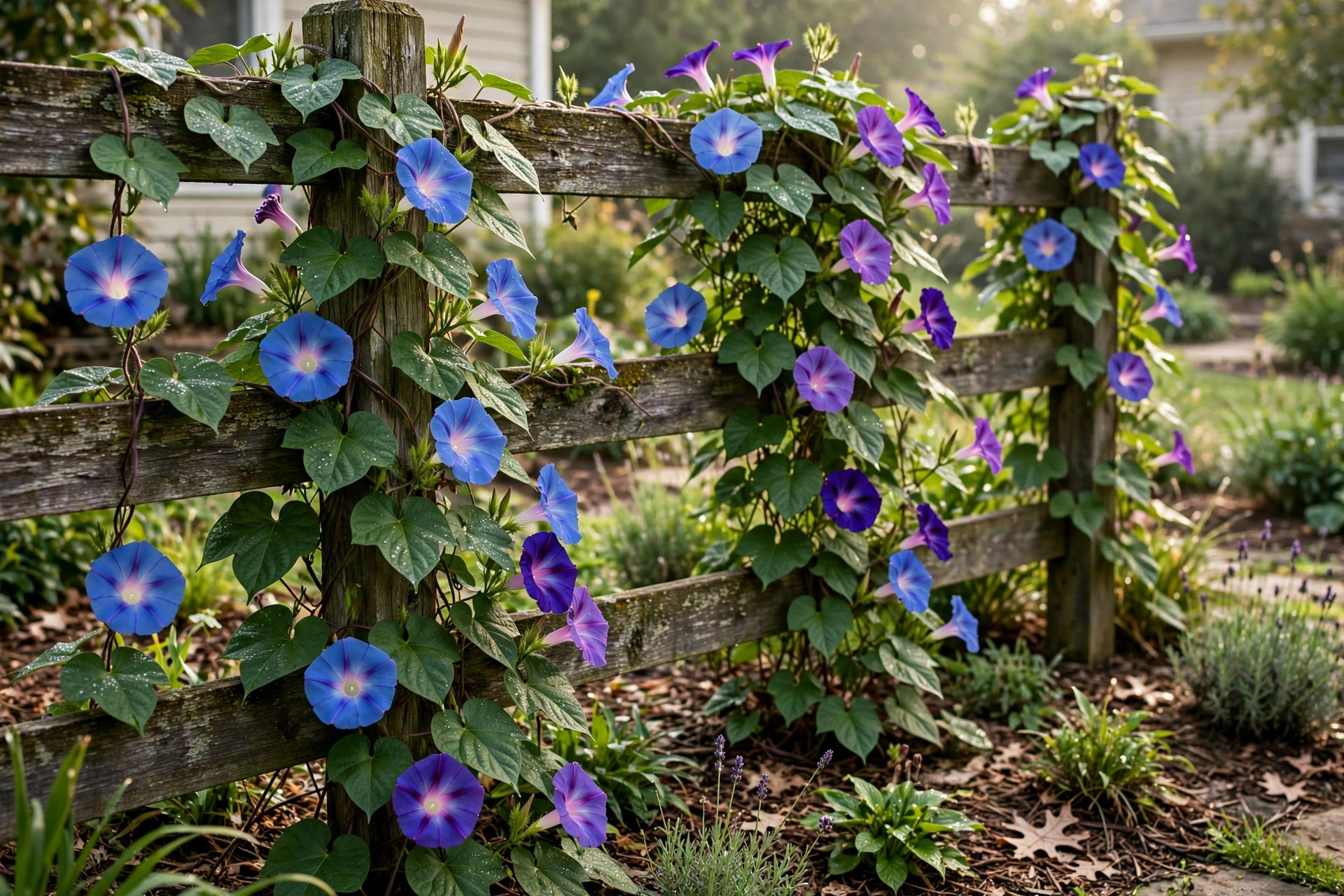

Few garden plants give as much color for so little money. Morning glory seeds for sale usa buyers can turn a plain fence or a bare trellis into a wall of blue, pink, and purple flowers by mid-summer. The seeds cost only a few dollars. They grow fast. They need little care. But not every seed packet is the same. Old seed, weak stock, or the wrong variety can leave you with thin vines and few blooms. This guide walks you through how to buy morning glory seeds in the United States with confidence. You will learn what to look for, where to shop, what prices to expect, and how to get the best start from the day the packet arrives.
Why It Matters
A morning glory is a fast annual vine. In one season it can climb ten feet or more. The trumpet-shaped flowers open in the morning and close by afternoon. New blooms appear each day for weeks. That kind of show makes the plant a favorite for fences, mailboxes, arbors, and porch railings.
Buying good seed matters more than most people think. Morning glory seed stays alive for several years if it is kept cool and dry. But seed sold in a hot shop or stored for too long may fail to sprout. A packet that looks fine on the rack can be mostly dead inside. When you know what to check, you pay once and get a full garden. When you do not check, you pay twice: once for the seed and once for the replant.
Quality also shapes the look of the plant. Named varieties such as Heavenly Blue grow true to color and form. Mixed packets are cheaper but less sure. If you want one clear blue wall of flowers, the name on the packet counts.
What to Look for When You Buy: Morning Glory Seeds for Sale Usa
A good morning glory seeds buying guide starts with the packet itself. Read it before you reach for your wallet. These points separate good seed from poor seed.
Freshness and the packed date
Look for a “packed for” year or a sell-by date on the packet. Morning glory seed usually keeps for three to four years. Seed packed for the current year is best. Seed two years old can still grow, but the sprout rate may drop. If the packet has no date at all, treat it as old. Many large seed houses, such as Burpee and Park Seed, print clear dates on every packet. Smaller sellers may not. That is a mark against them.
Germination rate
Some packets list a germination rate, such as 85 percent. This number tells you how many seeds sprouted in a lab test. A rate above 80 percent is strong. Below 70 percent is weak. If no rate is printed, you cannot know. In that case buy from a seller that lists it, or buy a larger packet to cover the loss.
Variety name
Packets that name the variety tell you what you will get. “Heavenly Blue” means sky-blue flowers on strong vines. “Grandpa Ott” means deep purple with a red star. “Scarlet O’Hara” means red-pink blooms. A packet that says only “morning glory, mixed” may hold several kinds at once. Mixed seed is fine for a wild cottage look. It is not fine when you want one color.
Seed count and packet size
Packets usually hold 30 to 100 seeds. A packet of 50 fresh seeds is enough for a six-foot trellis. Check the count, not just the price. A cheap packet with 15 seeds can cost more per seed than a larger packet that costs twice as much.
Source and seller
Buy from sellers who sell seed all year as their main trade. Seed companies that breed and test their stock stand behind it. Garden writers at Gardening Know How often remind readers to check a seller’s return policy before ordering. A seller who will replace failed seed is a seller who trusts its stock.
Types and Options
Morning glory is not one plant. It is a family of vines with different looks and habits. Here are the main kinds you will meet when you shop for morning glory seeds for sale usa listings.
Common morning glory (Ipomoea purpurea)
This is the classic. It grows fast, climbs ten to fifteen feet, and blooms in blue, pink, purple, red, and white. It reseeds itself, so you may see volunteers next spring. It is the best choice for a first-time grower. Most morning glory seeds online deals feature this type.
Heavenly Blue (Ipomoea tricolor)
This is the most loved blue morning glory. The flowers are a clear sky blue with a white throat. The vines are strong and can reach twelve feet. The seed is a bit slower to sprout, so many growers soak it overnight. If blue is your goal, buy the named variety, not a mix.
Moonflower (Ipomoea alba)
Moonflower is a cousin that blooms at night. The white flowers open in the evening and smell sweet. It pairs well with morning glory on the same trellis. Together they give you flowers in the morning and at night.
Where to Buy in the USA
American gardeners have many places to shop. Each has its strengths. A full guide on where to buy morning glory seeds can help you compare, but here is a short map of the main choices.
Seed company websites
Ordering direct from a seed house is the most sure way to get fresh stock. Companies such as Gurney’s, Burpee, and Park Seed ship across the country. They list variety names, seed counts, and growing notes. Many offer bulk seed for large fences. Prices are fair, and the seed is usually packed for the current year.
Garden centers and nurseries
Local garden centers carry seed racks in late winter and spring. The gain is speed: you can buy today and plant tomorrow. The risk is heat. Racks near a sunny window can cook seed before it sells. Pick packets from the back of the rack or from a shaded shelf. Staff at a good nursery can also tell you which varieties do well in your area. Plant breeders such as Monrovia and Proven Winners work with nurseries across the states to match plants to local zones.
Home improvement and big-box stores
Large stores stock seed from national brands at low prices. The range is wide but the staff may know little about seed. Check the packed date with care. These stores turn over stock fast in spring, which is good. Late in the season, old packets may linger.
Online marketplaces
Big online sellers offer low prices and wide choice. Read the reviews. Look for sellers who answer questions and state the packed year. Avoid listings with no variety name and no date. A low price means nothing if the seed does not sprout.
Seed swaps and local groups
Garden clubs and local swaps sometimes share morning glory seed for free. This seed is often fresh and suited to your area. Ask when it was saved. Seed saved last fall is best. You can find planting calendars and zone advice at The Old Farmer’s Almanac, which helps you time your sowing right.
Cost and Price
Morning glory seed is one of the cheapest ways to fill a garden. Here is what to expect in the United States.
– Small packet (25 to 50 seeds): 2 to 5 dollars. Enough for one trellis or a few pots. – Large packet (100 seeds or more): 5 to 9 dollars. Good for long fences. – Named varieties: 1 to 2 dollars more than mixes. Worth it for a sure color. – Bulk seed (by the ounce): 8 to 15 dollars per ounce. One ounce holds several hundred seeds. Best for big projects.
Shipping from an online seed house usually adds 4 to 6 dollars. Many sellers offer free shipping over a set order size, often 25 to 35 dollars. If you plan to buy other seeds too, one order saves money.
Price alone should not drive the choice. A two-dollar packet with a 50 percent sprout rate gives you fewer plants than a four-dollar packet with a 90 percent rate. Work out the cost per live plant, not per packet.
Watch for deals in late winter. Many seed houses run sales in January and February. Buying early also gives you the best pick of varieties before popular kinds sell out.
How to Plant for Strong Vines
Good seed still needs a good start. Morning glory is easy, but a few steps raise your odds of thick vines and full blooms.
Time it right
Morning glory seed needs warm soil. Wait until the soil is at least 60 degrees and the last frost has passed. In the South this may be March. In the North it may be late May. Planting too early in cold soil is the top cause of failure. The USDA’s food and agriculture institute supports research on planting times, and local extension offices can give you a date for your county.
Soak or nick the seed
The seed coat is hard. Soak seeds in room-temperature water for 12 to 24 hours before planting. Or nick each seed lightly with a nail file on the side away from the eye. Either step speeds sprouting by several days.
Plant shallow
Sow the seed half an inch deep in loose soil. Space seeds about six inches apart along the base of the trellis. Water well after planting. Keep the soil damp, not wet, until sprouts show in 7 to 14 days.
Give them something to climb
Set the trellis, fence, or string in place before the vines grow. Morning glory climbs by twining. It cannot grip a flat wall. Thin poles, netting, or strings work well. Once the vine finds the support, it climbs on its own.
Feed lightly
Morning glory blooms best in plain soil. Rich soil and heavy feeding grow leaves, not flowers. If the soil is very poor, mix in a little compost at planting time. Skip high-nitrogen fertilizer. A light bloom-type feed once in mid-summer is enough in most gardens.
Care and Upkeep
Once the vines are climbing, care is simple. Water during dry spells. Morning glory tolerates heat but wilts in long drought. A deep watering once or twice a week is better than a light daily sprinkle.
Mulch around the base with two inches of bark or straw. Mulch holds moisture and keeps weeds down. Keep the mulch a few inches from the stems.
Watch for aphids and spider mites. A strong spray of water knocks aphids off. For mites, wash the leaves and keep the plants watered. Most problems stay small if you catch them early. Care guides at The Spruce and White Flower Farm offer clear steps for common vine pests.
At the end of the season, let a few seed pods dry on the vine. You can save the seed for next year. Store dry seed in a paper envelope in a cool, dark place. Label it with the variety and the year. In warm states it can self-sow more than you want, so pull unwanted seedlings in spring while they are small.
Safety
This part matters. Morning glory seeds hold natural compounds that can cause nausea, vomiting, and other illness if eaten. The seeds are not food. Keep packets out of reach of small children. Do not plant them where toddlers play and might pick at the pods.
The seeds are also harmful to pets if chewed in number. Dogs and cats are usually drawn to leaves, not hard seeds, but it is wise to plant vines where pets cannot dig at the base. If a child or pet eats the seeds, call your local poison control center at once. Treated seed with a colored coating should never be eaten under any terms.
When you buy, keep the packet label. It lists the variety and the treatment, if any. That label helps a doctor or vet if there is ever an accident.
Frequently Asked Questions
How long do morning glory seeds last?
Kept cool and dry, they stay alive for three to four years. Sprout rates fall with age. For the best show, plant seed packed for the current year.
Can I plant morning glory seeds straight in the ground?
Yes. In fact, they dislike being moved. Direct sowing after the last frost gives the strongest plants. Soak the seed overnight first for faster sprouting.
How fast will they bloom?
From seed, most types bloom 8 to 12 weeks after sprouting. Early types can bloom sooner. Late planting pushes blooms into late summer, which is still fine. The flowers keep coming until frost.
Do morning glories come back every year?
They are annuals in most of the country. They die with frost. But they drop seed, and new plants often sprout on their own the next spring. In frost-free zones they can act like short-lived perennials.
What is the best variety for a beginner?
Heavenly Blue is the top pick for blue flowers. For mixed color, a packet of Ipomoea purpurea mix is cheap and sure. Both grow fast and forgive small mistakes.
Are morning glory seeds legal to buy?
Yes. They are legal to buy and grow in all fifty states. No permit is needed. They are sold as garden seed, not as food, and they must not be eaten.
A Short Final Word
Morning glory seeds for sale usa shoppers have more choice than ever. Seed houses, garden centers, and online sellers all carry strong stock at fair prices. Pick fresh, dated seed. Choose a named variety if color matters to you. Plant when the soil is warm, give the vines a trellis, and feed lightly. By July you will have a wall of morning blooms for the price of a cup of coffee. Few garden buys pay back so well.
References
Burpee. (n.d.). Seeds, plants, and gardening supplies. https://www.burpee.com Gardening Know How. (n.d.). Gardening guides and plant care. https://www.gardeningknowhow.com Gurney’s Seed & Nursery Co. (n.d.). Seeds, plants, and garden supplies. https://www.gurneys.com Monrovia. (n.d.). Plants for home gardens. https://www.monrovia.com National Institute of Food and Agriculture. (n.d.). Agricultural research and extension. https://www.nifa.usda.gov Park Seed. (n.d.). Seeds, plants, and gardening supplies. https://www.parkseed.com Proven Winners. (n.d.). Plants and gardening inspiration. https://www.provenwinners.com The Old Farmer’s Almanac. (n.d.). Gardening calendars and advice. https://www.almanac.com The Spruce. (n.d.). Home and garden advice. https://www.thespruce.com White Flower Farm. (n.d.). Plants, bulbs, and garden supplies. https://www.whiteflowerfarm.com
Was this guide helpful?

About Jennifer Lee
The My Garden US editorial team writes practical, in-depth home and garden guides for American homeowners — tested advice, no fluff.
You May Also Like
Native Grass Seed for Sale USA: A Practical Guide for Homeowners
January 2, 2026 0 views
Lavender Seed Packets Texas Homes USA: A Plain Guide
January 7, 2026 0 views
Dahlia Bulbs Bulk for Sale USA: How to Buy, Plant, and Enjoy Big Beds of Blooms
June 29, 2026 0 views