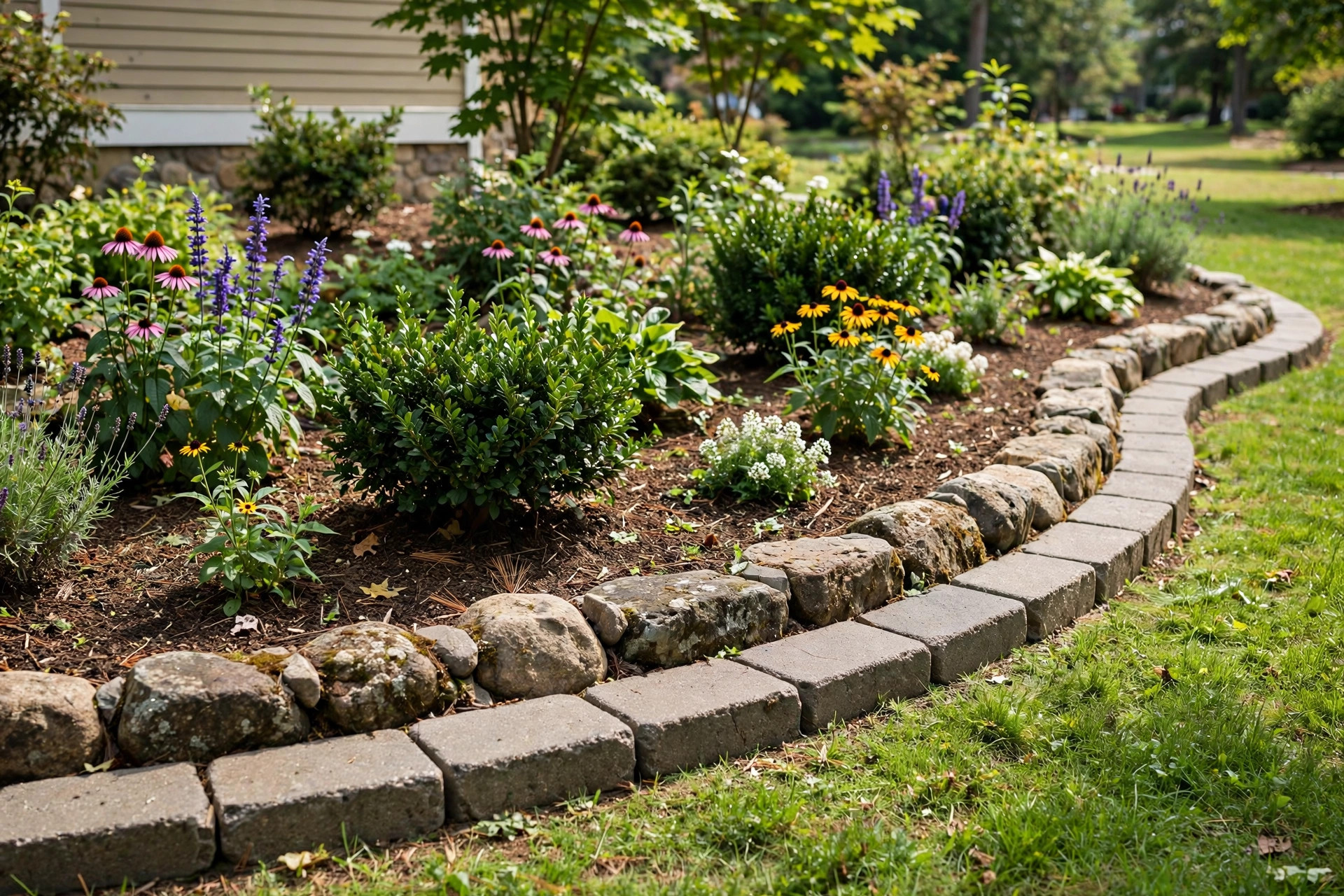

The stone border edging installation cost is one of the first questions a homeowner asks when planning a neater yard. A stone border is a row of stones set along the edge of a flower bed, a path, or a lawn. It keeps mulch in place. It stops grass from spreading into the beds. It gives the whole yard a clean, finished look.
Most homeowners pay between four and twenty five dollars per linear foot for stone border edging installation. The wide range exists because stone type, labor rates, and site work all change the price. A simple flat paver row costs little. A tall stacked natural stone wall costs far more.
This guide walks through every part of the stone border edging installation cost. It covers stone types, labor charges, extra fees, do it yourself savings, and care. It also answers the most common questions from homeowners.
Why Stone Edging Is Worth the Money
Stone edging does more than look good. It holds back mulch and soil after heavy rain. It creates a firm line for mowing, so the mower wheels ride along the stone instead of tearing up the bed edge. It slows weed spread from the lawn into the beds.
A stone border also raises curb appeal. Real estate agents often note that clean bed lines make a front yard look cared for. Buyers see tidy edging and assume the whole home is well kept.
Compared with plastic edging, stone lasts far longer. Plastic strips crack and heave out of the ground after a few winters. Stone stays put for decades. Compared with metal edging, stone needs no sharp cut edges and feels warmer in a garden setting.
How the Stone Border Edging Installation Cost Breaks Down
Three parts make up the total price: materials, labor, and site work. Understanding each part helps a homeowner read a quote with care.
Materials
The stone itself is the main material cost. Prices run from under one dollar per foot for basic concrete pavers to more than twenty dollars per foot for cut natural stone.
Homeowners also need base material. A layer of crushed stone or sand sits under the edging. It keeps the stones level and drains water away. Fabric or paper under the base stops weeds from growing up through the gaps. Most jobs need a few bags of sand or gravel, which adds one to two dollars per foot.
Labor
Labor is the largest cost in most professional jobs. Landscapers usually charge by the linear foot or by the hour. Per foot pricing for stone border edging installation runs about three to twelve dollars, not counting the stone.
Hourly rates for landscaping labor run about forty to eighty dollars per worker across much of the country. A two person crew sets about thirty to fifty feet of simple edging per hour. Tall or stacked stone moves slower.
Site Work
Site work covers digging the trench, removing old edging, and hauling away soil. A contractor may charge fifty to two hundred dollars for trench digging on a normal job. Removing old concrete or plastic edging adds time and a disposal fee.
Stone Types and What Each One Costs Installed
Not all stones cost the same. The choice of stone is the biggest lever a homeowner has on the stone border edging installation cost.
Concrete Pavers
Concrete pavers are the most common choice. They come in many shapes, sizes, and colors. A single soldier row of pavers set upright or flat gives a clean line. Installed, concrete paver edging costs about four to ten dollars per linear foot. Materials alone cost one to three dollars per foot.
Natural Fieldstone
Fieldstone has a rough, natural look that suits cottage gardens. Each stone has a different shape, so setting it takes more skill. Installed cost runs about eight to eighteen dollars per linear foot.
Flagstone
Flagstone pieces are flat and wide. They sit well as a mowed edge that the mower can ride on. Installed flagstone edging costs about ten to twenty dollars per linear foot.
Granite Cobbles
Granite cobbles, sometimes called Belgian block, give a formal look along driveways and walks. They are heavy and last for many decades. Installed cost runs about fifteen to twenty five dollars per linear foot.
River Rock
River rock is smooth and rounded. It suits dry creek beds and casual garden borders. Installed cost is about six to twelve dollars per linear foot. Because the stones are round, they need a deep trench and plenty of base to stay put.
Brick
Old brick gives a classic look that suits older homes. New brick costs a little more than concrete pavers. Installed brick edging runs about five to twelve dollars per linear foot.
Homeowners looking for design help can browse edging flower beds with stone ideas for ways to match stone style to bed shape.
Labor Rates by Job Size
The size of the job changes the price per foot. Small jobs cost more per foot because the crew still must travel, unload tools, and set up. A ten foot border might cost eight to fifteen dollars per foot installed. A hundred foot border on the same site might cost four to eight dollars per foot.
Many contractors set a minimum charge. Common minimums run from two hundred fifty to five hundred dollars. Homeowners with a small border should ask about the minimum before they book.
For driveways and long runs, driveway edging ideas for curb appeal shows how edging choices change the look of the whole front of the house.
Do It Yourself: How Much Can You Save?
A handy homeowner can cut the stone border edging installation cost by more than half. The savings come from doing the labor. Materials for a do it yourself paver border run about two to five dollars per foot.
A simple do it yourself plan looks like this. First, mark the line with a hose or spray paint. Dig a trench about six inches wide and four inches deep. Add two inches of crushed stone and tamp it flat. Set the stones tight together. Check the line with a level as you go. Fill the sides with soil and tamp again.
The work is not hard, but it takes time. A homeowner should plan on one to two hours per ten feet for a first try. Rental of a tamper or a wheelbarrow may add twenty to fifty dollars.
Those who want step by step paver methods can read how to install paver edging for lawn before they start digging.
What Raises the Price
Several conditions push the stone border edging installation cost above the normal range.
Curved beds take longer to lay out. Each stone on a curve needs care in placement. For tight curves, see best lawn edging for curved beds to compare stone with other options.
Sloped ground needs extra work. The crew must step the stones or cut them to follow the slope. Tall stacked borders act like small walls. They need a wider base and sometimes drainage behind them.
Hard soil, tree roots, and old concrete make digging slow. A contractor who finds roots or buried concrete may add a fee. Rocky soil can double the digging time.
Access matters too. If the crew must carry stone a long way from the truck, labor time rises. Bags of base material are heavy, and wheelbarrow runs across a soft lawn are slow.
Care and Upkeep
Stone edging needs little care, but a little care keeps it neat for years. Walk the border each spring. Look for stones that have tipped or sunk. Lift them, add base material, and reset them level.
Pull weeds that grow between stones. A hand tool works well for small gaps. Do not use a string trimmer hard against the stone. The line can chip soft stone and concrete over time.
Wash the stones once a year with a garden hose. Moss and dirt wash off with water and a stiff brush. For white or light stone, a mild soap helps. Avoid strong acids on limestone and marble type stones, since acid eats the surface.
Check the bed side too. Mulch washes against the stones in heavy rain. Pull the mulch back to its proper depth so it does not spill over the border.
Safety Notes
Stone work is heavy work. A single granite cobble can weigh ten pounds or more. Lift with the knees, not the back. Wear gloves to guard against sharp edges and pinched fingers. Steel toe boots help when setting heavy stone.
Call the local utility marking service before digging. The number 811 works in most states. The service marks buried gas, electric, and water lines for free. Hitting a buried line is costly and dangerous.
Keep children and pets away from the work area. Open trenches, stacked stone, and wheelbarrows can tip or shift. A stacked stone border should be stable before anyone leans on it.
Equipment makers publish safe use guides for yard tools used in edging work. Toro offers guidance on yard equipment care at Toro, and John Deere provides equipment safety material at John Deere. Briggs and Stratton covers small engine care at Briggs and Stratton.
Frequently Asked Questions
How much does stone border edging installation cost per linear foot?
Most jobs cost four to twenty five dollars per linear foot installed. Simple concrete paver borders sit at the low end. Natural stone and granite cobbles sit at the high end. Labor, stone type, and site work set the final number.
How long does it take to install stone edging?
A two person crew installs thirty to fifty feet of simple edging per hour. A typical front yard bed of sixty feet takes about two to three hours. Curved lines, slopes, and stacked stone take longer.
Can I install stone edging myself?
Yes. A do it yourself stone border needs only a shovel, a level, a tamper, and the stone. Materials cost two to five dollars per foot for pavers. Plan on one to two hours per ten feet for a first attempt.
Does stone edging need a concrete base?
Most low borders do not need concrete. A compacted crushed stone base works well for one or two course borders. Taller stacked borders, over two feet high, may need a concrete footing. Check local codes for wall rules.
How deep should the trench be for stone edging?
Dig the trench so one third to one half of the stone sits below grade. For a six inch paver, the trench should be about three to four inches deep, with two inches of base material under the stone. Deeper set stones resist frost heave.
Which stone looks best for a front yard?
It depends on the house style. Brick suits older homes. Granite cobbles suit formal homes. Fieldstone suits cottage gardens. Concrete pavers suit most modern homes because they come in many colors. Match the stone to the home and the other hard surfaces in the yard.
A Short Final Word
The stone border edging installation cost stays fair when a homeowner plans with care. Choose the stone for the house style. Get two or three written quotes. Ask each contractor what the price includes: trench, base, stone, and cleanup. A clear quote keeps the final bill close to the estimate.
Stone edging is one of the few yard projects that pays back every day. It looks neat, it lasts for decades, and it cuts mowing and weeding time. For many yards, it is money well spent.
References
Toro. (n.d.). Lawn care and yard equipment. https://www.toro.com Deere & Company. (n.d.). Yard and garden equipment. https://www.deere.com Briggs & Stratton. (n.d.). Small engines and outdoor power. https://www.briggsandstratton.com
Was this guide helpful?

About Robert Taylor
The My Garden US editorial team writes practical, in-depth home and garden guides for American homeowners — tested advice, no fluff.
You May Also Like
Electric Riding Mower Reviews for Small Acreage
September 5, 2026 0 views
Lawn Dethatcher Rental Prices Near Me: What You Will Pay
July 22, 2026 2 views
Best Handheld Spreader for Small Lawns: A Practical Buying Guide
April 1, 2026 0 views