
Spinach is one of the best crops for the autumn garden. Learning how to grow spinach in fall gives you fresh green leaves at a time when most summer plants have stopped bearing. The cool air of September and October suits this leafy green better than the heat of July. With simple planning and a little daily care, a small patch of ground can feed a family with salads and cooked greens for many weeks.
This guide walks through the whole process in plain terms. You will learn when to plant, how to ready the soil, which seed types do well in cool weather, and how to guard your crop against the first frosts.
Why Fall Spinach Matters
Most gardeners think of spinach as a spring crop. That is a fair thought, but it leaves half the harvest on the table. Spinach is a cool-season plant by nature. It sprouts best when soil is cool. It grows sweet leaves when the air is cool. Heat makes it bitter and sends it to seed too early. This process is called bolting. Once spinach bolts, the leaves turn harsh and the harvest ends.
Fall avoids this problem. As the days grow shorter and the nights grow colder, spinach slows down but does not quit. The flavor actually improves. Light frost sweetens the leaves. Many gardeners find that their autumn spinach tastes better than their spring spinach.
There is another reason to plant in fall. Most garden pests lose their strength as the season turns. The flea beetles and leaf miners that chew spring leaves are far less active in October. This means cleaner leaves and less work for you.
When to Plant: Timing Is Everything: How to Grow Spinach in Fall
The secret of how to grow spinach in fall is timing. Plant too early and the heat of late summer will kill the seedlings. Plant too late and the hard frost will arrive before the plants are strong enough.
Count back from your first hard frost. In most parts of the country, the first hard frost falls between late October and mid-November. Spinach needs about six to eight weeks of good growth before a hard freeze. So you should sow your seed six to eight weeks before that date.
Here is a rough guide by region:
– Northern zones: Sow between mid-August and early September. – Middle zones: Sow between late August and mid-September. – Southern zones: Sow between mid-September and early October.
The exact date matters less than the soil temperature. Spinach seed sprouts best when the soil is between 50 and 75 degrees Fahrenheit. A simple soil thermometer can remove the guesswork. If the soil is still above 75 degrees, wait a week and check again. Hot soil gives weak germination and thin stands.
Mark your calendar and watch the weather. A few days of cool rain in late August is the best planting window in many areas.
Preparing the Soil
Spinach asks for rich, loose soil that holds moisture but never stays soggy. Before you sow, work the bed well. Remove all weeds and old roots. Loosen the top six inches of soil with a fork or spade.
Mix in plenty of compost or well-rotted manure. Two to three inches of compost worked into the top layer will feed the plants through the short season. If your soil is heavy clay, add some coarse sand or extra compost to open it up. A good raised garden bed soil mix recipe will also serve spinach well, since raised beds drain cleanly and warm in spring while staying workable in fall.
Check the soil’s sourness, which gardeners call pH. Spinach likes a soil that is close to neutral, between 6.5 and 7.0. A cheap test kit from a home and garden retailer will tell you where you stand. If the soil is too sour, a little garden lime will correct it.
Level the bed with a rake. Water it well a day before sowing so the soil is moist through.
Choosing the Right Seed
Not all spinach is equal when the cold comes. For fall planting, pick types bred for cool weather and slow bolting. These are often sold under names that mention winter or cold. Look at the seed packet. Words like “winter,” “cold hardy,” and “slow bolt” are good signs.
Savoy types have crinkled leaves and stand up well to cold. Smooth-leaf types are easier to wash and are popular for salads. Semi-savoy types sit in the middle and are a fine choice for most gardeners.
Buy fresh seed each year. Spinach seed loses its strength in storage faster than many other seeds. A fresh packet gives even sprouting and a full stand.
Sowing the Seed
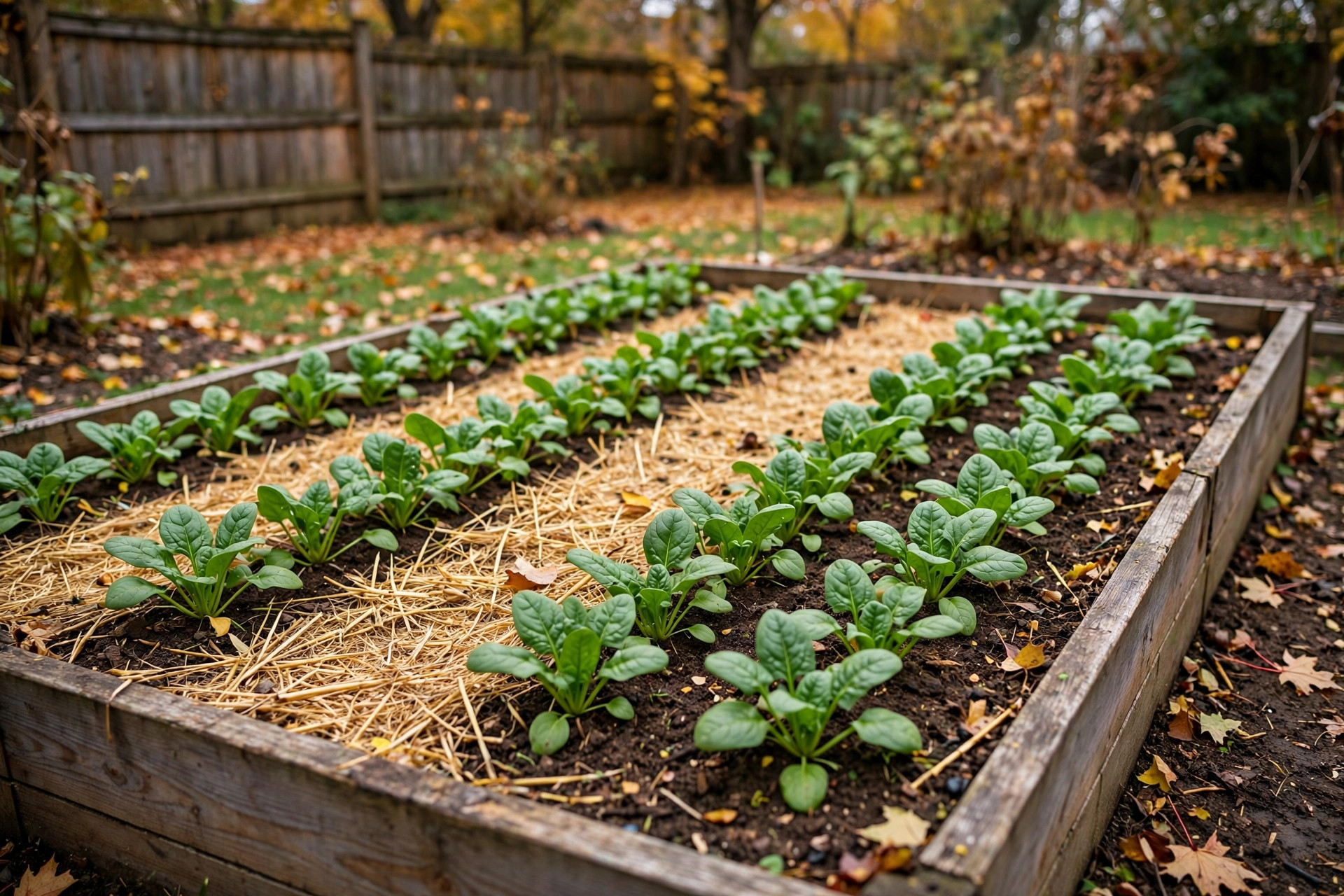
Plant spinach seed directly in the garden. It does not like to be moved. For seed-handling basics, see this guide on how to start seeds indoors. Sow the seed half an inch deep. Space the seeds about two inches apart in rows twelve inches apart. Many gardeners use a simple garden line or a board to keep the rows straight.
After sowing, water the rows gently. Keep the soil evenly moist until the seedlings appear. In warm weather this can take a week or more. If the sun is strong, you can shade the rows with a board or a strip of cloth for a few days to keep the soil cool. Lift the cover as soon as the sprouts show.
When the seedlings are two inches tall, thin them to four inches apart. This step is hard to do, since it means pulling out healthy plants. But crowded spinach grows thin and weak. The plants you pull can go straight into a salad.
Watering and Feeding
Spinach needs steady water. Let the soil dry out and the leaves will turn bitter and the plants will bolt. Water deeply once or twice a week, and more often if the weather is dry and windy. Morning watering is best. It lets the leaves dry before night, which cuts down on disease.
Mulch helps a great deal. Once the plants are four inches tall, spread two inches of straw or shredded leaves around them. Mulch holds moisture, cools the soil, and keeps the leaves clean.
A light feeding at midseason will keep the leaves dark green. Side-dress the rows with a balanced fertilizer or sprinkle compost tea along the row. Do not overfeed. Too much nitrogen late in the season makes soft growth that frost will damage.
Good tools make this work easier. A watering wand with a gentle rose setting waters young plants without washing out the seed. Reviews of garden equipment can help you pick gear that lasts.
Protecting Against Frost
Light frost, down to about 28 degrees, does not harm spinach. In fact, it sweetens the leaf. But hard freezes in the low twenties will kill unprotected plants. The goal is to stretch the harvest as long as you can.
Row covers are the simplest tool. A light floating row cover laid over hoops will buy you two to four weeks of extra harvest. Heavier covers give more guard. Anchor the edges with bricks or soil so the wind cannot lift them.
A cold frame is an even better answer. It is simply a box with a clear lid that sits over the bed. Cold frames can carry spinach through much of the winter in middle zones. If you are handy, a basic cold frame can be built in an afternoon from scrap lumber and an old window. For plans, see DIY garden project ideas.
Close the cover at night when frost threatens. Open it or vent it on sunny days. Warm still air under a closed cover can bake the plants, so never leave it sealed on a bright warm afternoon.
Keep your tools clean. Sharp clean pruning and garden tools and quality hand tools make the work quicker and cut down the spread of disease.
Harvesting Your Crop
You can start cutting leaves when the plants have six or more leaves and stand about four inches tall. Use scissors or a sharp knife. Cut the outer leaves first and leave the small center leaves to keep growing. This cut-and-come-again method gives a harvest that stretches over many weeks.
Do not take more than a third of the leaves at one time. The plant needs its leaves to make food and keep growing. If a hard freeze is coming and you cannot guard the bed, cut everything. A final big harvest is better than a lost one.
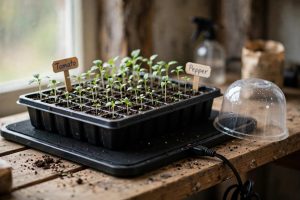
For gardeners who raise seedlings in trays, the steps in this transplanting guide explain how to harden off young plants, a skill that also helps when shifting fall crops under cover.
Cost and Price
Fall spinach is one of the cheapest crops to grow. A packet of seed costs a few dollars and will plant a bed four feet wide and twenty feet long. Compost is the main cost if you must buy it. A bag of balanced fertilizer is a small extra cost.
Row covers cost more up front but last for years if stored dry. A simple hoop set and cover for one bed costs about the same as a week of store-bought greens. After the first season, it pays for itself.
Compared with buying fresh spinach at the store through autumn, a home bed usually saves money by the second harvest week. Price guides at low-cost garden suppliers and seed houses like Burpee show how little the seed itself costs.
Care and Upkeep Through the Season
Once the bed is growing, the weekly work is small. Check the soil moisture with your finger. If the top inch is dry, water. Pull any weeds while they are small. A quick pass with a hoe every week keeps the bed clean and takes only minutes.
Watch the weather report in late autumn. When night temperatures start to drop near freezing, put the row cover in place. Check the cover after wind storms and re-anchor any loose edges.
In late fall, stop feeding the plants. Late fertilizer makes tender growth that frost kills. Let the plants harden off naturally as the cold deepens.
Clean up the bed when the harvest ends. Pull the old plants and add them to the compost pile if they are disease-free. Top the bed with compost or shredded leaves for the winter. This feeds the soil for next spring.
Garden writers at The Spruce and Bob Vila offer season-by-season checklists that fit well with this routine.
Safety in the Fall Garden
Garden safety in autumn deserves a short note. Days grow short, so plan your work for daylight hours. Wet leaves on paths are slippery. Wear boots with good grip.
Store sharp tools in a dry shed, out of reach of children. Clean soil from the blades after each use. This stops rust and keeps the edges safe to handle.
If you use any garden sprays, read the label and follow it word for word. Keep sprays away from the spinach leaves you plan to eat, and wash all harvest well. Wash your hands after handling soil and compost.
FAQ
Can spinach survive the winter under cover? In many middle zones, yes. With a cold frame or a heavy row cover, spinach can live through much of the winter. Growth stops in the darkest weeks, but the plants wake up in late winter and give an early spring harvest.
How late is too late to plant fall spinach? If the plants do not reach three or four inches before a hard freeze, the crop will likely fail. Six to eight weeks before your first hard frost is the safe rule. In a mild year you can push it, but do not count on it.
Why did my fall spinach sprout poorly? The most common cause is warm soil. Seed sown when the soil is above 75 degrees sprouts slowly or not at all. Shade the rows, keep them moist, or wait for cooler weather and sow again.
Can I grow fall spinach in containers? Yes. Use a pot at least eight inches deep with drainage holes. Fill it with a rich potting mix, sow the seed, and keep it watered. Containers are easy to move under cover when frost comes.
Do I need fertilizer if I use compost? For a short fall crop, good compost is often enough. If the leaves turn pale yellow, a light side-dressing of balanced fertilizer will green them up within a week.
Is fall spinach safe to eat raw? Yes. Wash the leaves well in cold water to remove soil and grit. Homegrown spinach picked at peak freshness is excellent in salads.
A Short Final Word
Learning how to grow spinach in fall is one of the most rewarding skills a home gardener can pick up. The work is small. The cost is small. The reward is a bed of sweet green leaves at the very time the store shelves grow thin. Start with timing, feed the soil well, choose a cold-hardy seed, and guard the bed when frost comes. Do this, and your autumn table will be richer for it.
References
Bob Vila. (n.d.). Home improvement advice. https://www.bobvila.com Burpee. (n.d.). Seeds, plants, and gardening supplies. https://www.burpee.com Consumer Reports. (n.d.). Product reviews and ratings. https://www.consumerreports.org Corona Tools. (n.d.). Garden and landscape tools. https://www.corona-tools.com Family Handyman. (n.d.). DIY home repair and maintenance. https://www.familyhandyman.com Fiskars. (n.d.). Garden and cutting tools. https://www.fiskars.com Gardener’s Supply Company. (n.d.). Gardening tools and supplies. https://www.gardeners.com Lowe’s. (n.d.). Home improvement products. https://www.lowes.com The Home Depot. (n.d.). Home improvement products. https://www.homedepot.com The Spruce. (n.d.). Home and garden advice. https://www.thespruce.com
Was this guide helpful?

About Emily Rodriguez
The My Garden US editorial team writes practical, in-depth home and garden guides for American homeowners — tested advice, no fluff.
You May Also Like

Best Garden Gloves for Sensitive Skin: How to Choose the Right Pair
May 7, 2026 0 views
Best Garden Wagon for Kids Reviews: What Parents Should Know
August 28, 2026 0 views
How to Prune Hydrangeas by Type
June 18, 2026 0 views