---
Table of Contents
Table of Contents
Nothing says "cared-for yard" like a crisp edge where the lawn meets the driveway. It is a small detail with a big payoff. A clean edge makes the whole property look sharper, keeps grass from creeping onto the concrete, and stops the driveway from looking swallowed by the lawn. If you are new to edge a lawn along the driveway, start with the basics below.
Learning how to edge a lawn along the driveway cleanly is simple. You need the right tool, a steady hand, and a little patience the first time. After that, upkeep takes minutes. This guide covers tool choices, the step-by-step cut, and how to keep the edge sharp all season.
Edge a Lawn Along the Driveway: Why Edging Matters
When it comes to edge a lawn along the driveway, getting the details right makes all the difference.
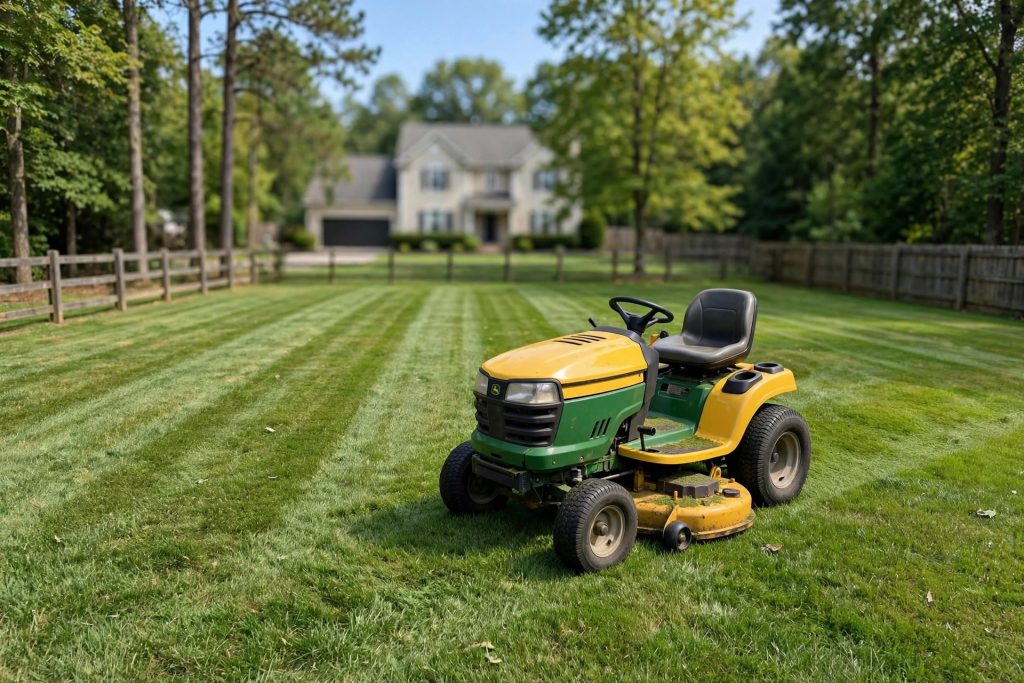
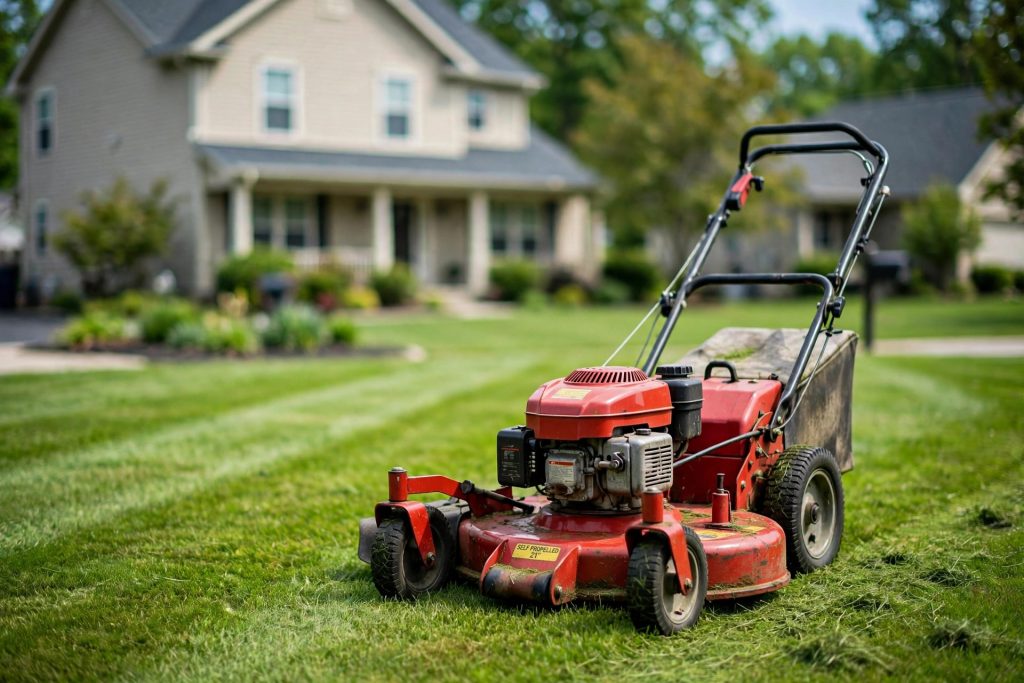
Many homeowners find that edge a lawn along the driveway is easier than they expected once they know the basics.
Grass does not respect boundaries. It spreads by runners above ground and rhizomes below. Without an edge, it marches onto the driveway a little more each week. The result is a ragged, overgrown look that mowing alone cannot fix.
A clean edge does three things. It defines the line between lawn and hardscape. It makes mowing and trimming faster, because you have a clear boundary to follow. And it boosts curb appeal more than almost any other single yard task. Real estate folks will tell you the edge is one of the first things buyers notice.
Choosing Your Edging Tool
Many homeowners find that edge a lawn along the driveway is easier than they expected once they know the basics.
The key to edge a lawn along the driveway is choosing the right approach for your space and budget.
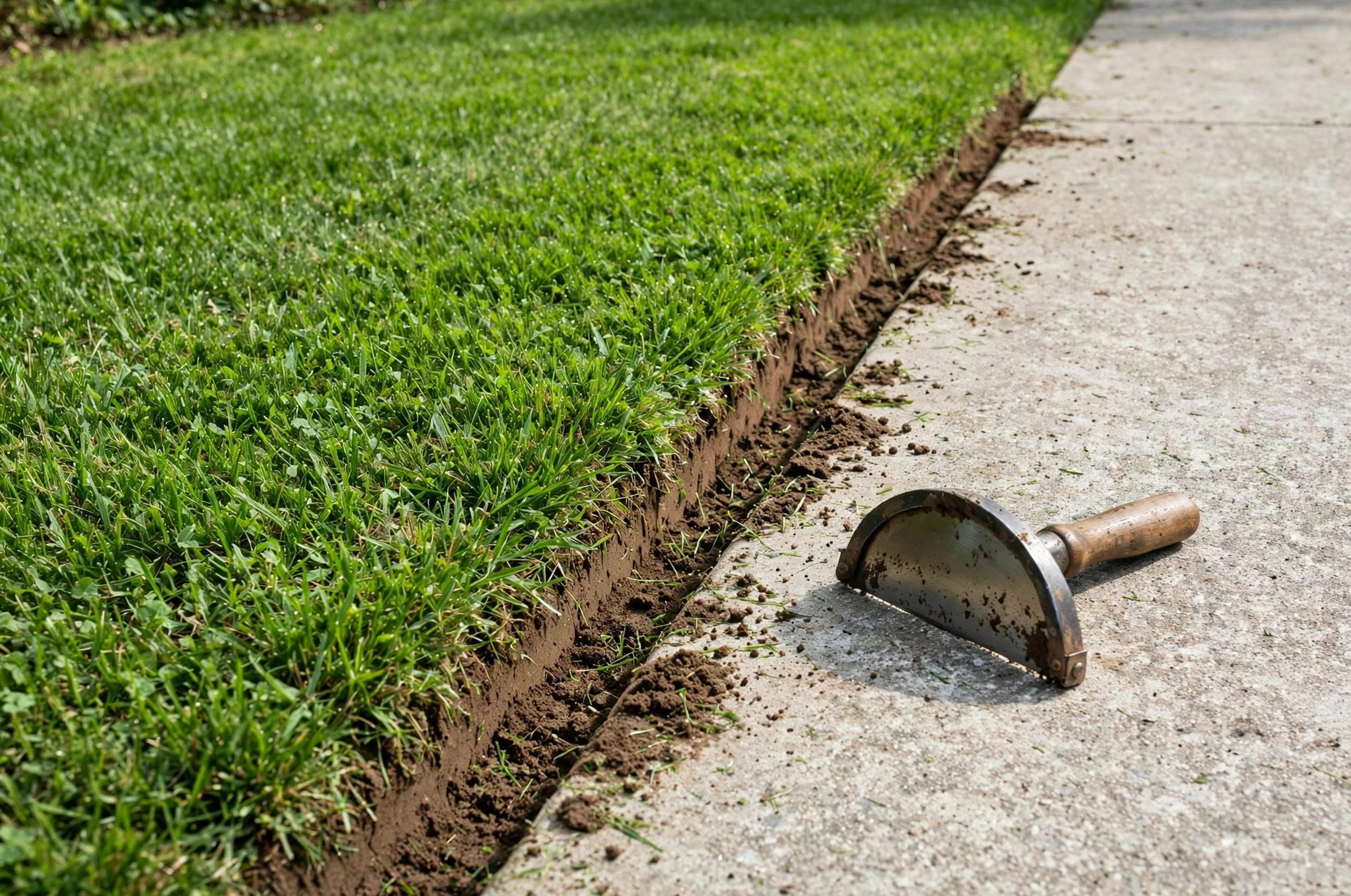
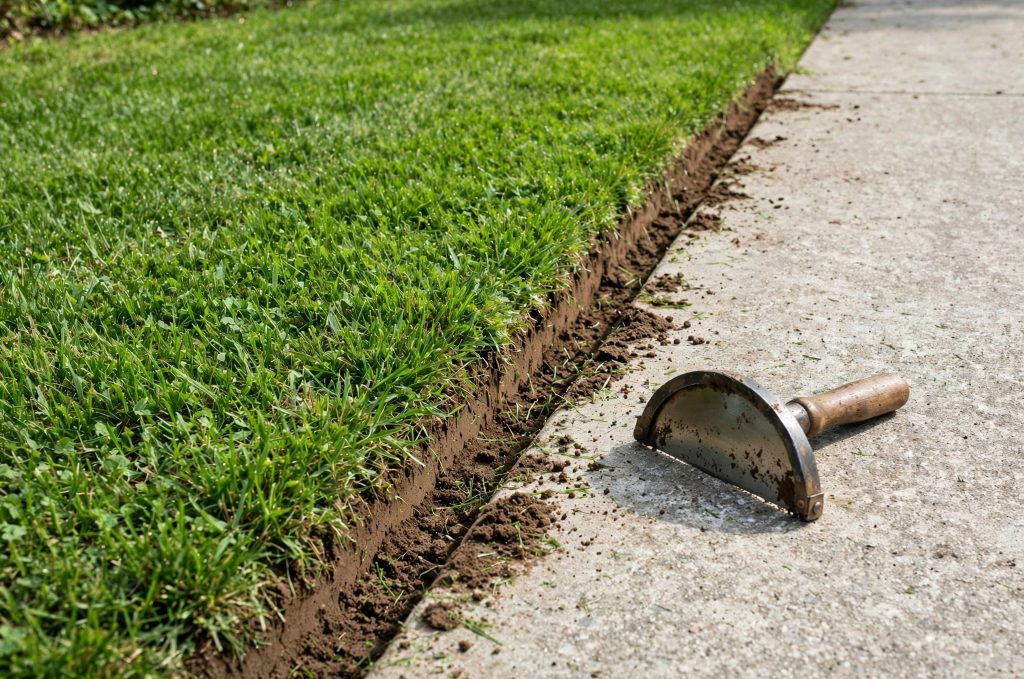
Manual half-moon edger. A flat, half-circle blade on a long handle. You step on it to drive it into the soil and rock it to cut. Cheap, quiet, and precise. Best for short driveways and touch-ups. The workout is real on long runs.
Manual rotary edger. A star-shaped wheel blade you roll along the edge. Faster than a half-moon on straight runs. Works best on edges that are already in decent shape.
String trimmer held vertical. Turn your trimmer on its side and walk the edge. Fast and good for maintenance, but hard to keep perfectly straight. Best for weekly touch-ups, not for cutting a new edge.
Stick edger (power edger). A dedicated tool with a spinning metal blade and a guide wheel. It cuts a clean, deep groove fast. Gas, corded, and battery versions exist. This is the pro choice for long driveways. Our cordless vs gas edger comparison breaks down the options.
Lawn mower with edging wheel. Some mowers have a wheel that drops into the edge groove. Fine for maintenance once the edge exists.
For cutting a fresh edge along a driveway, a stick edger or a half-moon edger gives the cleanest result. For keeping it up, a string trimmer is fastest. Lowe's lawn edging guide covers the tool types with photos, and Better Homes and Gardens explains edging sidewalks, driveways, and paths with a flat spade.
Before You Cut: Prep
The key to edge a lawn along the driveway is choosing the right approach for your space and budget.
With a little planning, edge a lawn along the driveway can fit even a busy schedule.
Mow first. Cut the grass to its normal height a day or two before edging. Long, floppy grass makes it hard to see the line. The University of Georgia's grasscycling guide covers mowing heights, the one-third rule, and why sharp blades matter for a clean cut.
Work dry. Edge when the soil is moist but not soggy. Bone-dry soil fights the blade. Mud smears and tears. A day after rain is ideal.
Mark the line. For a straight driveway, the concrete edge is your guide. For the lawn side of a new edge, run a string line or lay a garden hose to mark a smooth line. Step back and check it. A wavy edge looks worse than no edge.
Clear the strip. Rake sticks, stones, and thick thatch off the edge line. Stones chip edger blades.
Cutting the Edge Step by Step
With a little planning, edge a lawn along the driveway can fit even a busy schedule.
Before you start, it helps to understand how edge a lawn along the driveway works in real homes.
With a Stick Edger
1. Start at one end of the driveway. Set the blade depth to about one to one and a half inches. 2. Place the guide wheel on the driveway surface. The wheel keeps your depth and line consistent. 3. Walk forward at a steady pace. Let the blade do the cutting. Do not force it or rush. 4. Keep the wheel on the concrete the whole way. If the wheel drops into the groove, the blade dives too deep. 5. At the end, lift out cleanly. Do not twist.
Make two passes on badly overgrown edges. The first pass at one inch, the second at one and a half. Two shallow passes beat one deep gouge.
With a Half-Moon Edger
1. Stand on the lawn side facing the driveway. 2. Line the blade up on your marked line. 3. Step down hard on the foot plate to drive the blade in full depth. 4. Rock the handle back and forth slightly to sever the roots. 5. Lift the cut strip of sod out with the blade or a trowel. 6. Move over one blade width and repeat, overlapping slightly.
This is slower but gives you total control. It is the best method for short runs and for edges near flower beds where a power tool would be risky.
With a String Trimmer
1. Turn the trimmer so the head is vertical, cutting plane facing the edge. 2. Walk backward slowly along the driveway, keeping the line at the grass-concrete joint. 3. Let the tip of the line do the cutting. Burying the head tears grass instead of cutting it.
Trimmers are for maintenance. If the edge has grown over by inches, cut it with a blade tool first, then maintain with the trimmer.
Cleaning Up
Before you start, it helps to understand how edge a lawn along the driveway works in real homes.
A good plan for edge a lawn along the driveway saves time, money, and frustration.
Edging makes a mess. That is normal. Sweep or blow the cut sod, soil, and grass off the driveway right away. Do not wait until tomorrow, because damp soil sticks to concrete and stains it. Rake the lawn side smooth and pick up any loose strips the edger threw into the yard.
If you cut deep, the groove may need a season to settle. The grass on the lawn side will lean into the groove at first and then stand back up. Water the edge lightly to help the grass recover, and avoid parking tires on the fresh edge for a few days.
Bag or compost the sod strips. Do not leave them on the lawn or they will smother the grass underneath. Thin strips break down fast in a compost pile, where they count as nitrogen-rich greens.
Keeping the Edge Sharp
A good plan for edge a lawn along the driveway saves time, money, and frustration.
A fresh edge lasts a few weeks before the grass starts creeping back. The maintenance routine is simple:
- Trim weekly with the string trimmer held vertical. Two minutes per side.
- Re-cut with the blade once or twice a season, or whenever the groove fills in.
- Do not let it go. An edge ignored all season needs a full re-cut. An edge touched up weekly never does.
Sharp blades cut cleaner. A dull edger blade tears grass and leaves brown tips. Our lawn edger blade replacement guide shows when and how to swap blades. And a sharp mower blade matters for the whole lawn. See our mower blade sharpening guide for that.
Dealing With Problem Edges
For most people, edge a lawn along the driveway comes down to a few smart choices.
Grass growing over the driveway by inches. Cut it back in stages over two sessions rather than all at once. Scalping the edge shocks the grass.
Roots in the edge line. Tree roots near the driveway make edging hard. Cut small roots with loppers. Do not cut large roots close to the tree.
Crumbling driveway edge. If the concrete edge is broken, the edger wheel has nothing to ride on. Repair the concrete first or edge by hand with the half-moon tool.
Sloped driveway. Edge across the slope in short sections. Water runs down the groove on slopes, so keep the groove shallow.
Should You Install Permanent Edging
If you are new to edge a lawn along the driveway, start with the simplest option and build from there.
A cut edge needs regular upkeep. Permanent edging, like steel, aluminum, or stone, holds the line with less work. You still cut the initial edge, then set the edging in the groove. It costs more up front and takes a day to install, but it nearly eliminates re-cutting.
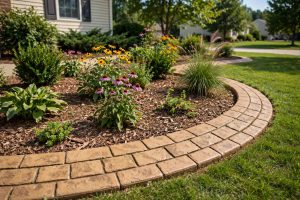
For most driveways, though, a well-kept cut edge looks better than cheap plastic edging and costs nothing but time. Save permanent edging for beds where the line curves and the mower cannot follow. Yellow Pages' tips for maintaining your lawn edge describe another low-upkeep option: a mowing strip of bricks or pavers set flush with the soil, which lets mower wheels roll right over the boundary. For the bigger picture of healthy lawn care around your edges, the EPA's lawn and garden guidance is worth a read. A little care goes a long way with edge a lawn along the driveway.
References
When it comes to edge a lawn along the driveway, getting the details right makes all the difference.
- Better Homes and Gardens. (n.d.). How to edge your lawn for a professionally manicured look. https://www.bhg.com/how-to-edge-lawn-11986047
- Lowe's. (n.d.). Edging a lawn: DIY guide for a cleaner appearance. https://www.lowes.com/n/how-to/how-to-edge-lawn
- U.S. Environmental Protection Agency. (n.d.). Lawn and garden pest control. https://www.epa.gov/safepestcontrol/lawn-and-garden
- University of Georgia Cooperative Extension. (n.d.). Grasscycling: Let the clippings fall where they may. https://fieldreport.caes.uga.edu/publications/C1031/grasscycling-let-the-clippings-fall-where-they-may/
- Vevor. (n.d.). How to edge a lawn in 5 easy steps. https://www.vevor.com/diy-ideas/how-to-edge-a-lawn/
- Vintage Vinyl News. (n.d.). Best lawn edgers for driveway edges: Detailed reviews. https://vintagevinylnews.com/best-lawn-edgers-for-driveway-edges/
- Yellow Pages. (n.d.). Tips for maintaining your lawn edge. https://www.yellowpages.ca/tips/tips-for-maintaining-your-lawn-edge/?theme=yellowpages/
Was this guide helpful?

About My Garden US
The My Garden US editorial team writes practical, in-depth home and garden guides for American homeowners — tested advice, no fluff.
You May Also Like

Edging Flower Beds with Stone Ideas That Lift Any Yard
March 20, 2026 20 views
Ornamental Grasses for Texas Heat Reviews: 10 Tough Varieties That Survive the Summer
August 1, 2026 18 views
Lawn Care Service for Rental Properties: What Every Landlord Should Know
January 27, 2026 20 views