You cannot change the square footage of your bedroom. But you can change how big it feels. Designers do this every day in city apartments and small houses, and their tricks are not expensive. They are about light, scale, and what you choose not to put in the room.
Table of Contents
Table of Contents
Small Bedroom: Lighten the Colors
When it comes to small bedroom, getting the details right makes all the difference.
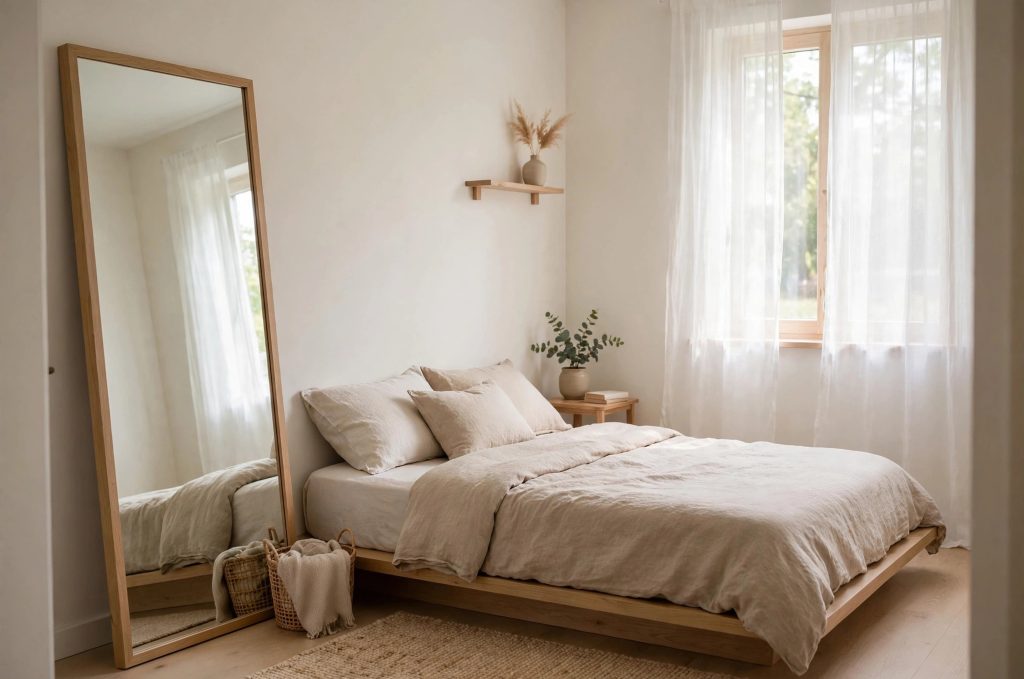
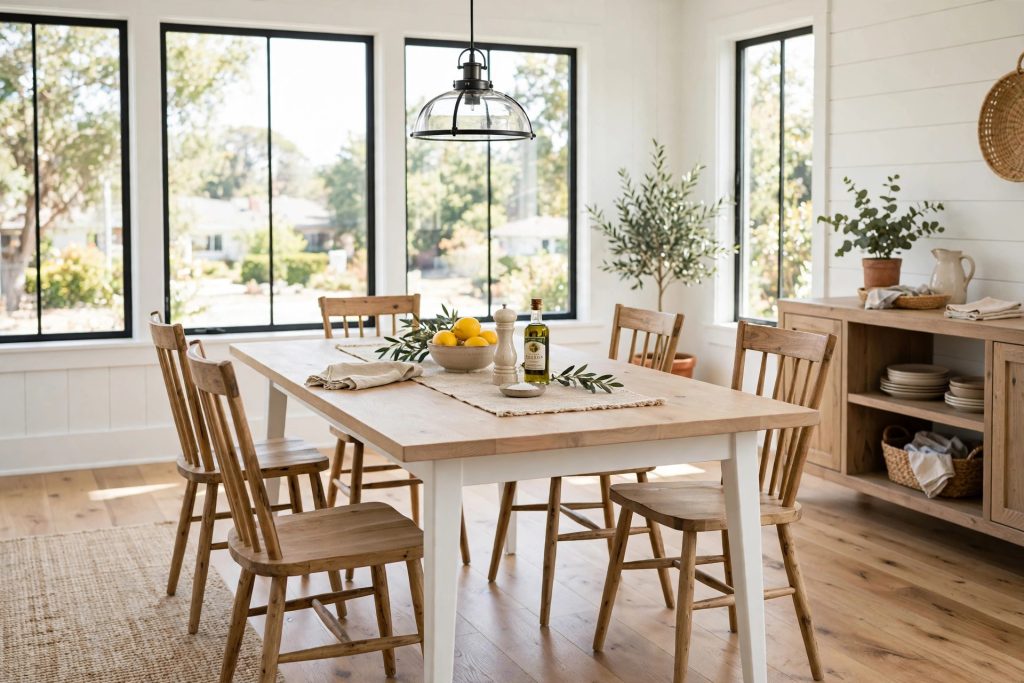
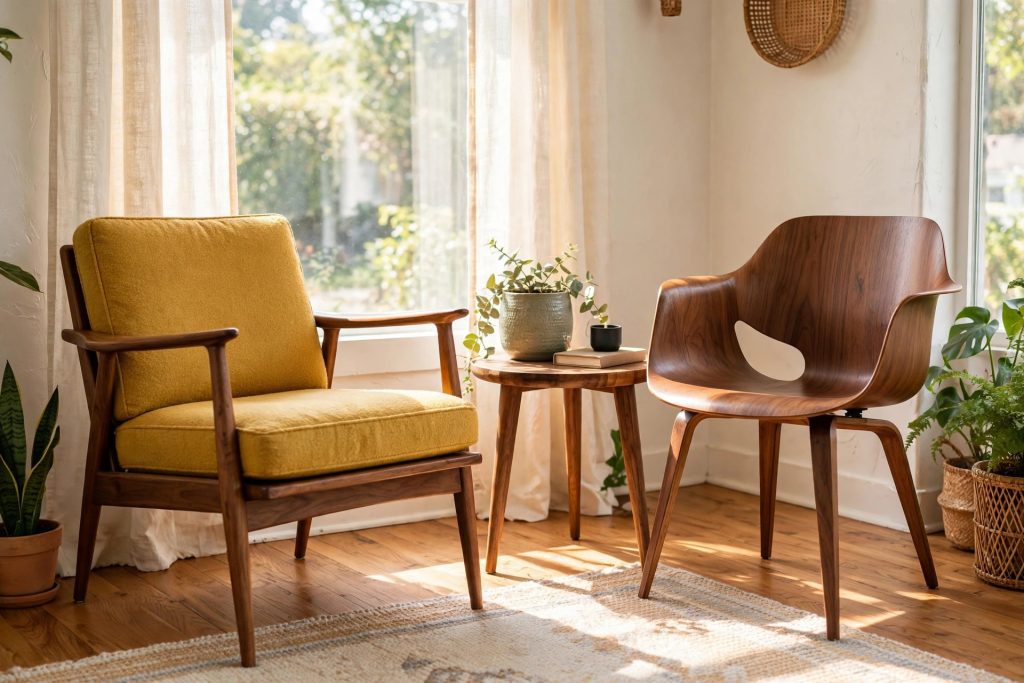
Color is the fastest lever you have. Light walls reflect light back into the room. Dark walls absorb it. In a small bedroom, soft white, warm beige, pale gray, and light sage keep the room feeling open. The Spruce notes that lighter, softly reflective finishes amplify natural light and push the walls outward.
One designer trick that sounds backward: paint the walls and the ceiling the same color. It blurs the line where the wall ends and the ceiling begins, and the room feels larger and more cohesive. Apartment Therapy reports designers recommending exactly this as the single best trick for a small bedroom. A dark color can even work here, because it makes the edges of the room disappear.
Keep bedding in the same family. Tone-on-tone layering, where the walls, curtains, and bedding sit in similar tones, tricks the eye into reading the space as more generous than it is. If you love bold color, bring it in small doses: one pillow, one piece of art, one throw.
Let the Light In
Many homeowners find that small bedroom is easier than they expected once they know the basics.
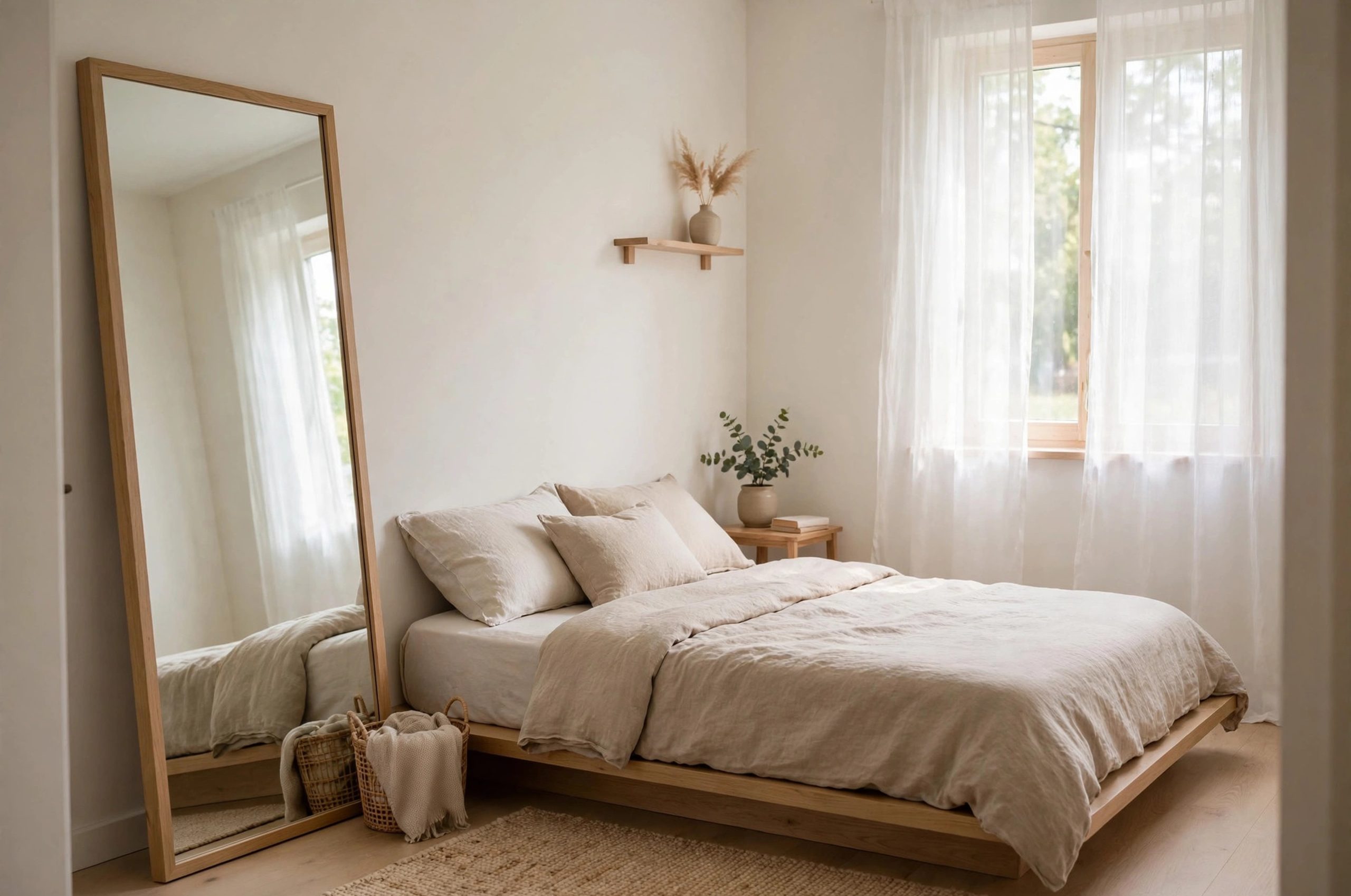
Nothing shrinks a bedroom faster than bad lighting. Start with the window. Sheer curtains or light-filtering shades keep the room bright during the day while giving you privacy. Hang the curtain rod at ceiling height, not just above the window frame. This draws the eye up and makes the walls look taller. Livingetc counts this among the top moves for small bedrooms.
Add light sources in layers. One overhead light gives flat, harsh light. A lamp on each nightstand, or wall-mounted sconces beside the bed, creates a warm glow at eye level. In a very small room, mount the sconces on the wall instead of putting lamps on the nightstand. You free up the whole nightstand surface. Apartment Therapy designers suggest sconces and floating shelves as space-saving swaps in tight rooms.
If your bedroom gets little natural light, a full-spectrum bulb in the main fixture helps. It mimics daylight and keeps the room from feeling like a cave.
Use Mirrors Strategically
A mirror is the oldest small-room trick in the book, and it still works. A large mirror opposite the window doubles the light. A mirror facing the door stretches the entry. Even a leaning floor mirror in a corner adds depth. The Spruce lists hanging a large mirror opposite the window as one of the highest-impact moves for a small bedroom.
Mirrored closet doors are worth considering if your closet needs new doors anyway. They bounce light all day and make the room feel twice its size. Avoid placing a mirror where it reflects clutter. A mirror aimed at a messy corner just doubles the mess.
Choose Low, Light, and Leggy Furniture
Furniture scale decides how big a room feels. A tall, bulky bed frame eats the room visually. A low-profile platform bed leaves more wall showing, which reads as more space. Apartment Therapy advises skipping bulky headboards and footboards in the tiniest bedrooms, since they take up visual real estate.
Furniture with legs beats furniture that sits flat on the floor. When you can see the floor under a nightstand or dresser, the room feels larger because the eye reads more continuous floor. A few inches of visible flooring around the furniture makes a real difference.
Scale matters more than size. One oversized piece, like a big rug or a large piece of art, can actually make a small room feel bigger. Many tiny pieces scattered around do the opposite. Pick fewer, slightly larger items and give them room to breathe.
Free the Floor
Floor space is the currency of a small bedroom. Every square foot of visible floor makes the room feel bigger. Move storage up and off the floor. Under-bed drawers or bins hold off-season clothes. Wall-mounted shelves replace a bookcase. Hooks on the wall hold bags and robes that would otherwise land on a chair.
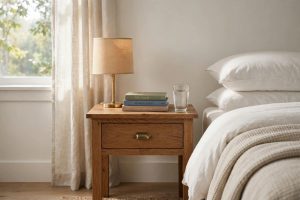
Choose a nightstand that is just big enough. A small floating shelf beside the bed holds a lamp, a book, and a glass of water. That is all a nightstand needs to do. Bedroom side tables come in slim sizes made for tight spaces, and a small desk for the bedroom corner can double as a nightstand and a workspace.
If the room must hold a dresser, use a tall, narrow one instead of a wide, low one. It takes the same floor space but stores more, and the vertical line draws the eye up.
Get the Rug Right
A rug that is too small chops up the floor and makes the bed look oversized. In a small bedroom, the rug should extend at least 18 inches past the sides of the bed. Coohom gives this as the standard guideline for a balanced look.
Homes and Gardens adds a useful proportion rule: the longest side of the rug should be at least six inches longer than your largest piece of furniture. For a queen bed, an 8 by 10 rug usually works. For a twin or full, a 5 by 8 or 6 by 9 fits.
Leave some floor visible around the rug's edges, about 18 inches, so the floor and rug read as layers instead of one wall-to-wall mass. A light-colored rug in a small room also helps reflect light upward.
Lighting Tricks That Add Space
Beyond the basics, a few lighting tricks can change how a small bedroom reads. Plug-in wall sconces beside the bed free up the nightstand and add warm pools of light at eye level. A pendant hung low in a corner creates a cozy reading spot that does not need floor space. LED strip lights behind the headboard or under a floating shelf add a soft glow that makes the wall feel farther away.
Keep bulb color consistent. Mixing warm and cool bulbs makes a small room feel restless. Warm white, around 2700 to 3000K, suits bedrooms best. It flatters skin, calms the eye, and makes even a small room feel like a retreat instead of a cell.
If you have one window, treat it like gold. Keep the sill clear, choose light curtains, and let daylight do the heavy lifting during the day. A small room with good natural light and a big mirror can feel larger than a big room with one dim bulb.
Declutter With Systems
A small bedroom has no hiding places. Clutter on the dresser, clothes on the chair, and papers on the nightstand each shrink the room a little. The fix is not willpower. It is systems.
Give everything a home: a hamper for dirty clothes, a hook for tomorrow's outfit, a tray for the nightstand clutter. Close the closet door. Make the bed every morning. A made bed is the single fastest way to make a small bedroom feel calm and larger. An unmade bed dominates the room visually.
Edit your possessions with a curator's eye. Every piece has to earn its place. If the room still feels tight after all the tricks, the answer is usually fewer things, not more cleverness.
What About the Bed Size?
A common question: should you downsize the bed to fit the room? A smaller bed does free space, but a cramped bed ruins sleep, and sleep is the point. Most designers say keep the bed size you need and make the rest of the room work around it. A queen bed in a small room beats a full bed you cannot sleep on.
If you must go smaller, a daybed or a murphy bed can work in a guest room. In your own bedroom, prioritize the bed and shrink everything else: narrower nightstands, a wall-mounted light instead of a lamp, a dresser in the closet instead of the room.
Quick Wins This Weekend
If you want results fast, do these in order. Make the bed and clear every surface. Hang the curtain rod at ceiling height. Add the largest mirror you can fit opposite the window. Swap the dark rug for a lighter, bigger one. Raise the furniture on legs or choose leggy pieces. Paint the ceiling the same color as the walls. Each move takes an afternoon or less, and together they can change how the room feels more than any single purchase.
References
Apartment Therapy. (n.d.). How interior designers make small spaces look larger. https://www.apartmenttherapy.com/designers-vertical-rule-for-small-spaces-37535385
Apartment Therapy. (n.d.). The best space-saving ways to style a tiny bedroom. https://www.apartmenttherapy.com/how-to-decorate-a-tiny-bedroom-36943851
Apartment Therapy. (n.d.). This designer trick always makes a small bedroom feel bigger. https://www.apartmenttherapy.com/designer-bedroom-trick-37562780
Apartment Therapy. (n.d.). How to max out a small space. https://www.apartmenttherapy.com/small-space-design-ideas-from-designers-36821879
Coohom. (n.d.). Small bedroom rug too small? Choose the right size. https://www.coohom.com/article/choosing-the-perfect-rug-for-your-small-bedroom
Homes and Gardens. (n.d.). How to choose the right size area rug for your bedroom. https://www.homesandgardens.com/interior-design/bedrooms/how-to-choose-the-right-size-area-rug-for-a-bedroom
Livingetc. (n.d.). How to make a small bedroom look bigger. https://www.livingetc.com/ideas/how-to-make-a-small-bedroom-look-bigger
The Spruce. (n.d.). We asked a designer how to make a small bedroom feel bigger. https://www.thespruce.com/how-to-make-a-small-bedroom-feel-bigger-12065140
The Spruce. (n.d.). Small bedroom ideas that do more with less. https://www.thespruce.com/small-bedroom-ideas-7090569
Was this guide helpful?

About My Garden US
The My Garden US editorial team writes practical, in-depth home and garden guides for American homeowners — tested advice, no fluff.