---
Table of Contents
Table of Contents
- Extension Cord Safety for Portable Heaters: Why Heaters and Extension Cords Are a Bad Mix
- Rule One: Plug Directly Into the Wall
- When You Truly Cannot Reach an Outlet
- Understanding Gauge, Length, and Ratings
- Other Heater Safety Rules Worth Knowing
- What to Do If Something Goes Wrong
- The Bottom Line
- References
The outlet is across the room. The heater cord is six feet long. There is an extension cord in the junk drawer. Problem solved, right? The rest of this guide covers extension cord safety for portable heaters in plain language.
Not quite. Plugging a portable heater into an extension cord is one of the most common and most dangerous electrical mistakes in American homes. Space heaters draw enormous current, far more than a lamp or a phone charger. A thin household extension cord cannot handle that load. The wire overheats, the insulation melts, and a fire starts, often behind furniture where nobody notices until it is too late.
Fire departments and safety agencies are blunt about it. Plug the heater directly into the wall outlet. Never use an extension cord. Fire safety officials give the same advice every winter: heaters go straight into the wall.
But real homes are not always that simple. Sometimes the outlet is too far, the room layout fights you, or you are dealing with a garage or workshop. This guide explains the rules, the exceptions, and how to choose a cord that will not burn your house down if you truly have no other option.
Extension Cord Safety for Portable Heaters: Why Heaters and Extension Cords Are a Bad Mix
When it comes to extension cord safety for portable heaters, getting the details right makes all the difference.
Many homeowners find that extension cord safety for portable heaters is easier than they expected once they know the basics.
It comes down to current. Most portable electric heaters draw around 1,500 watts on high. At standard household voltage, that is about 12.5 amps flowing continuously for hours. That is near the limit of a typical 15-amp household circuit all by itself.
A standard indoor extension cord, the thin kind sold for lamps and holiday lights, is usually 16 gauge or even 18 gauge wire. That thin wire resists the heavy current, and resistance makes heat. The longer the cord, the worse it gets. The cord warms along its whole length, the plastic insulation softens, and eventually it can melt or ignite. Coiling the cord or running it under a rug traps that heat and speeds the process.
Power strips and surge protectors are no better. They are not built for a continuous 1,500-watt load either, and many are rated well below it. Safety specialists warn that extension cords and multi-outlet strips are simply too weak for high-wattage heaters.
The numbers tell the story. Heating equipment is a leading cause of home fires, and portable heaters account for a large share of the deaths. Fire service data shows tens of thousands of heating fires each year, with portable heaters heavily represented. The National Fire Protection Association's heater safety sheet lists "plug directly into the wall outlet, never use an extension cord" among its core rules.
Rule One: Plug Directly Into the Wall
Many homeowners find that extension cord safety for portable heaters is easier than they expected once they know the basics.
The key to extension cord safety for portable heaters is choosing the right approach for your space and budget.
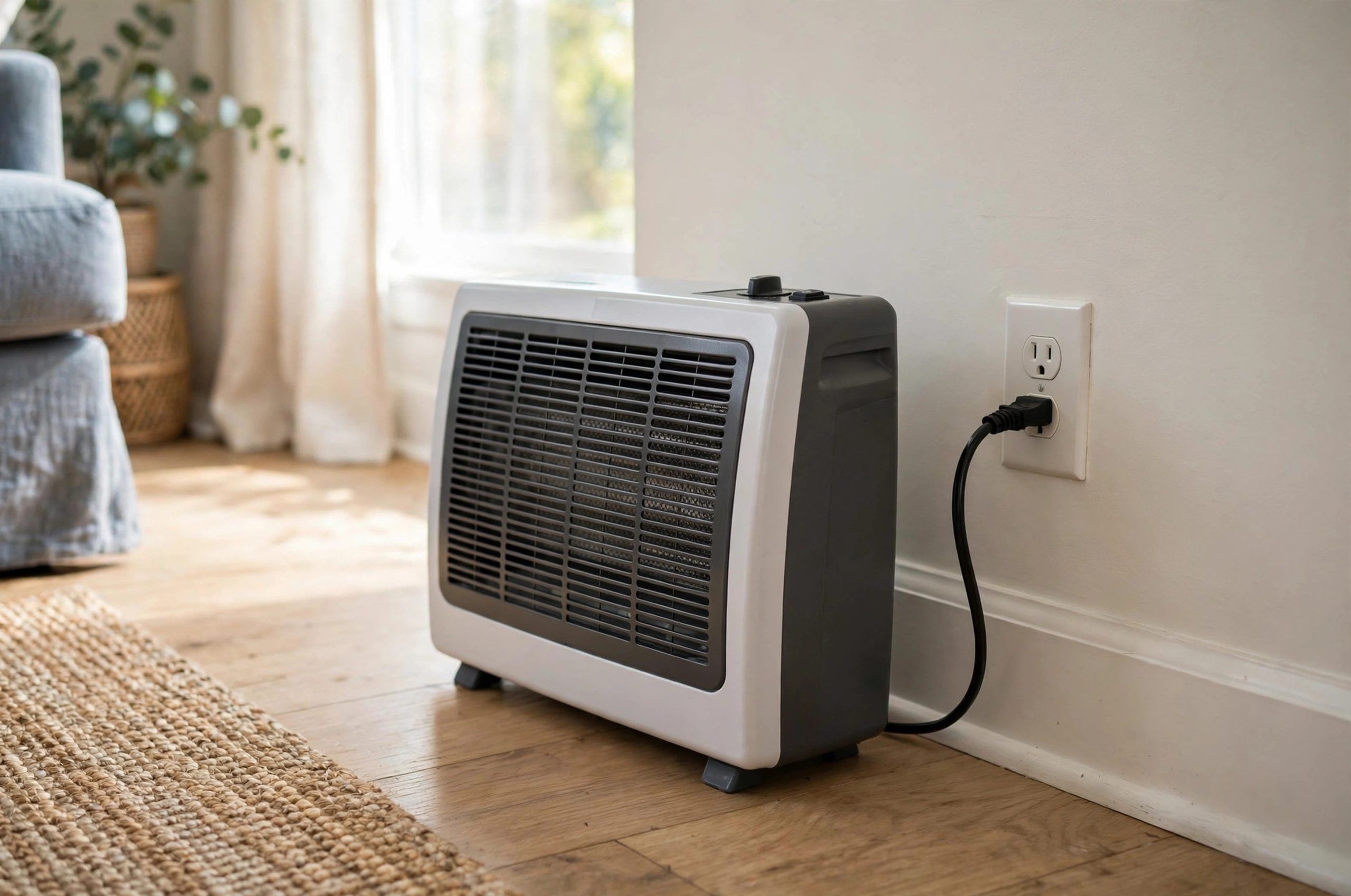
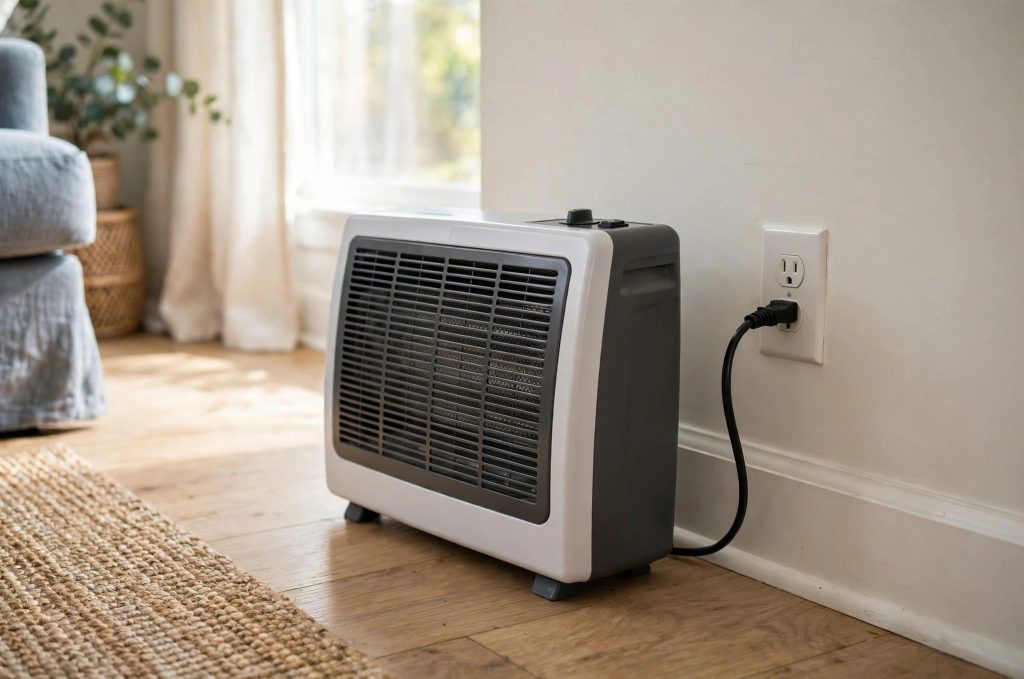
The safest setup is also the simplest. Plug the heater into a wall outlet, by itself, with nothing else on that outlet. Here is the full safe-use checklist that fire departments recommend:
- Plug the heater directly into a wall outlet. No extension cords, no power strips.
- Keep everything flammable at least three feet away on all sides. Curtains, bedding, furniture, papers, and clothing all count.
- Place the heater on a solid, flat surface on the floor. Never on a table, a bed, or a counter.
- Choose a heater with a tip-over shutoff and overheat protection, and buy only models tested by a recognized laboratory.
- Turn the heater off when you leave the room and when you go to sleep. Unplug it too.
- Keep children and pets away from the heater.
- Inspect the cord and plug before each season. If the plug feels hot during use, or fits loosely in the outlet, stop using it and have an electrician check the wiring.
If you heat a garage or workshop, the same rules apply, and the stakes are higher around sawdust, paint, and fuel. See our guide to the best garage heaters for winter for models suited to those spaces, and keep them on dedicated outlets.
When You Truly Cannot Reach an Outlet
The key to extension cord safety for portable heaters is choosing the right approach for your space and budget.
With a little planning, extension cord safety for portable heaters can fit even a busy schedule.
Safety agencies say never. But suppose the only outlet is fifteen feet away and moving the heater is not an option. If you must use a cord, treat it as a calculated risk and follow every rule below. A wrong cord here is worse than no heat at all.
Use the shortest cord that reaches. Every extra foot adds resistance and heat. Measure the distance and buy a cord that just makes it, not a 50-footer for a 12-foot gap.
Use heavy gauge wire. Gauge numbers run backward: lower means thicker. For a 1,500-watt heater, use 14 gauge at minimum for short runs, and 12 gauge for anything longer. Never use 16 or 18 gauge for a heater. Gauge charts show how quickly thin cords fall short of heater loads, especially as length grows.
Check the wattage math. Multiply amps by volts to get watts. A 1,500-watt heater at 120 volts draws 12.5 amps. Your cord must be rated for at least that, with margin to spare. A 14-gauge cord handles about 15 amps, which barely covers a full-power heater on a short run. Longer runs need thicker wire to fight voltage drop.
Use a single-outlet, heavy-duty cord. Choose a cord with one outlet, rated for the load, and marked by a testing laboratory. Avoid multi-outlet cords that invite someone to plug in a second device.
Keep the cord fully uncoiled and visible. Never run it under rugs, through doorways, or behind furniture where heat builds unseen. Do not staple or nail it. Keep it out of foot traffic so it cannot be tripped over or pinched.
Feel it often. During use, periodically touch the cord along its length and at both plugs. Warm is a warning. Hot means unplug immediately and stop using that cord.
Make it temporary. A cord is a stopgap, not a solution. If the heater lives in that spot all winter, have an electrician add an outlet where you need it. That is the real fix.
Even with all these precautions, many safety experts still say do not do it. Extension cord sizing guides stress that undersized cords overheat, and heaters are the appliance most likely to expose the mistake. When in doubt, rearrange the room instead.
The key to extension cord safety for portable heaters is to take it one step at a time.
Understanding Gauge, Length, and Ratings
With a little planning, extension cord safety for portable heaters can fit even a busy schedule.
Before you start, it helps to understand how extension cord safety for portable heaters works in real homes.
A quick primer so you can read a cord package with confidence.
Gauge (AWG). American Wire Gauge rates wire thickness. Common cord gauges are 18, 16, 14, 12, and 10. Lower number, thicker wire, more current capacity. For heaters, 14 is the floor and 12 is the smart choice.
Length. Longer cords have more resistance, so a gauge that is fine at 25 feet may be unsafe at 100 feet. Length derates capacity, which is why short and thick beats long and thin.
Amperage rating. The package should state the maximum amps. Match or exceed the heater's draw with comfortable margin. If the rating is missing, do not buy it.
Indoor versus outdoor. Outdoor cords have tougher jackets for weather and sunlight. For indoor heater use, an indoor-rated heavy-duty cord is fine, but never use a damaged cord of any type.
Testing lab marks. Look for UL, ETL, or a similar independent testing mark. It means the cord was actually tested to its stated rating.
Other Heater Safety Rules Worth Knowing
Before you start, it helps to understand how extension cord safety for portable heaters works in real homes.
A good plan for extension cord safety for portable heaters saves time, money, and frustration.
Extension cords are one risk among several. Keep the whole picture in mind.
Give every heater its own circuit breathing room. A 1,500-watt heater plus a hair dryer on the same circuit will trip the breaker, and repeated trips wear the breaker out. Know which outlets share a circuit.
Never use a heater to dry clothes or warm bedding. Draping fabric over a heater is one of the classic fire starters. Keep the three-foot zone clear at all times.
Unplug heaters when not in use. Not just switched off, unplugged. This removes the risk of a faulty switch or a pet knocking it on.
Test smoke alarms monthly and keep a fire extinguisher accessible. If you rely on portable heat often, make sure your detection is solid. Our picks for hardwired smoke detectors and smart smoke and CO alarms cover reliable options.
For outdoor heating, choose equipment made for it. Our roundup of outdoor patio heaters sticks to models designed for open-air use, which follows different safety rules than indoor portables.
What to Do If Something Goes Wrong
A good plan for extension cord safety for portable heaters saves time, money, and frustration.
For most people, extension cord safety for portable heaters comes down to a few smart choices.
If you smell hot plastic, see the cord discoloring, or notice the plug or outlet is hot, turn the heater off and unplug it at once. Do not use that outlet again until an electrician inspects it. A hot outlet can mean loose wiring in the wall, which is a fire risk with or without a heater.
If a heater tips over, the tip-over switch should kill it. If it does not, unplug it and retire that heater. If bedding or curtains ignite, get out and call emergency services. Do not try to fight more than a tiny, contained flame.
After any scare, replace the cord and have the heater inspected. Heat-damaged insulation does not heal.
The Bottom Line
For most people, extension cord safety for portable heaters comes down to a few smart choices.
The rule is simple because the physics is unforgiving. Portable heaters draw huge, continuous current, and ordinary extension cords cannot carry it safely. Plug the heater straight into the wall, keep three feet of clear space, and turn it off when you leave.
If you absolutely must bridge a gap, use the shortest, thickest, lab-tested cord you can buy, keep it visible and uncoiled, check it for heat, and plan to add a proper outlet soon. Electricity does not negotiate. Give it the respect of the right connection, and your heater will keep you warm without putting your home at risk. Keep this guide handy the next time extension cord safety for portable heaters comes up.
References
If you are new to extension cord safety for portable heaters, start with the simplest option and build from there.
- FireRescue1. (n.d.). How to prevent a space heater fire. https://www.firerescue1.com/firefighter-safety/articles/space-heaters-how-to-stay-warm-without-burning-down-the-house-A95eOPqJx1Wk4UiL/
- Mech Forged. (n.d.). Extension cord size guide with chart. https://mechforged.com/extension-cord-size-guide/
- National Fire Protection Association. (n.d.). Portable heater safety tips [Safety tip sheet]. https://content.nfpa.org/-/media/project/storefront/catalog/files/safety-tip-sheets/portableheatersafetytips.pdf
- Raleigh Fire Department. (n.d.). Use space heaters safely. https://raleighnc.gov/fire/news/use-space-heaters-safely
- The Power All. (n.d.). Extension cord gauge/length chart: Amp rating and size. https://www.thepowerall.com/extension-cord-gauge-chart/
- TRADESAFE. (n.d.). Extension cord gauge chart: Amps, length and AWG guide. https://trdsf.com/blogs/news/extension-cord-gauge-guide
- West Virginia University Extension. (n.d.). Space heater safety. https://extension.wvu.edu/community-business-safety/home-safety/space-heaters
- Wiring Solver. (n.d.). How many watts can a 14 gauge extension cord handle? https://wiringsolver.com/how-many-watts-can-a-14-gauge-extension-cord-handle/
When it comes to extension cord safety for portable heaters, getting the details right makes all the difference.
Many homeowners find that extension cord safety for portable heaters is easier than they expected once they know the basics.
The key to extension cord safety for portable heaters is choosing the right approach for your space and budget.
Was this guide helpful?

About My Garden US
The My Garden US editorial team writes practical, in-depth home and garden guides for American homeowners — tested advice, no fluff.