Your first craft fair is exciting and a little scary. You have boxes of handmade goods. You have a table. Now you need to turn that table into a booth that stops shoppers in their tracks.
Table of Contents
Table of Contents
- Craft Fair Booth Setup: Before the Fair: Plan Your Space
- The Display: Think Like a Store
- Signage That Sells
- Pricing for Profit
- Accept Cards With a Reader
- The Packing List
- Set Up a Checkout Zone
- Lighting Makes or Breaks Indoor Booths
- Talk to Shoppers (Without Hovering)
- Weather and Outdoor Fair Tips
- After the Fair: Follow Up
- References
These craft fair booth setup tips for beginners cover the whole job: layout, displays, pricing, signage, and the packing list that keeps the day smooth. Set up right and your first show can pay for itself many times over.
Craft Fair Booth Setup: Before the Fair: Plan Your Space
When it comes to craft fair booth setup, getting the details right makes all the difference.
When it comes to craft fair booth setup, getting the details right makes all the difference.
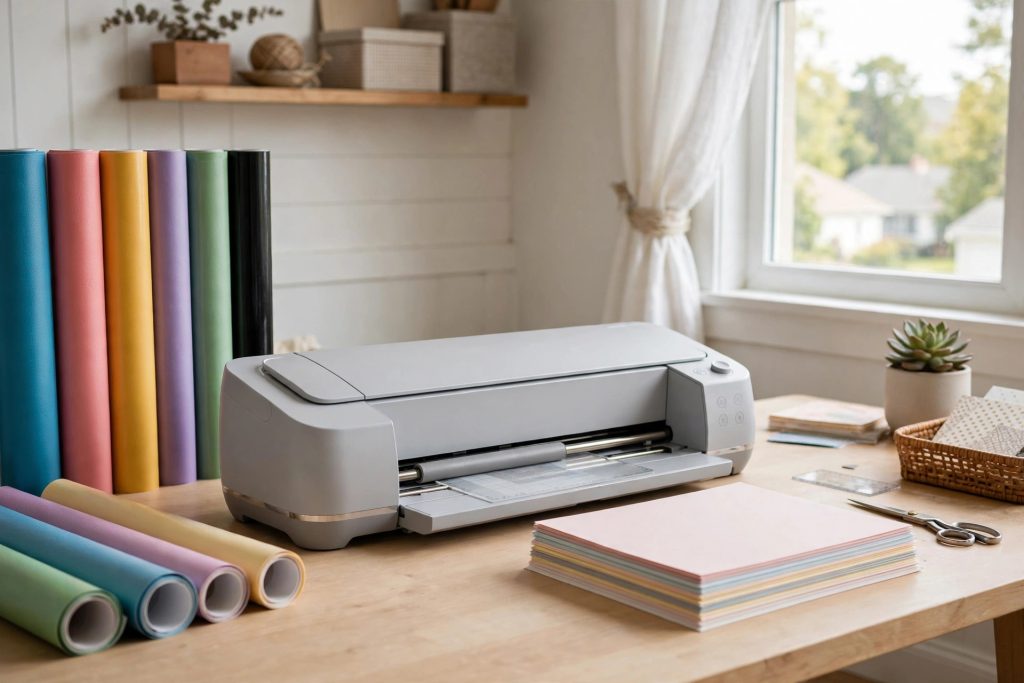
Many homeowners find that craft fair booth setup is easier than they expected once they know the basics.
Find out your booth size before you pack. Most fairs assign a ten-by-ten-foot space. Some give you a single six-foot table. Ask the organizer for the exact setup.
Sketch your layout on paper. Mark where the tables go. Mark where you will stand. Leave room for shoppers to step in and browse. A cramped booth drives people away.
Walk your plan at home. Set up in your garage or living room. Time yourself. Your first setup will take twice as long as you think. Practice cuts that time in half.
The Display: Think Like a Store
Many homeowners find that craft fair booth setup is easier than they expected once they know the basics.
The key to craft fair booth setup is choosing the right approach for your space and budget.
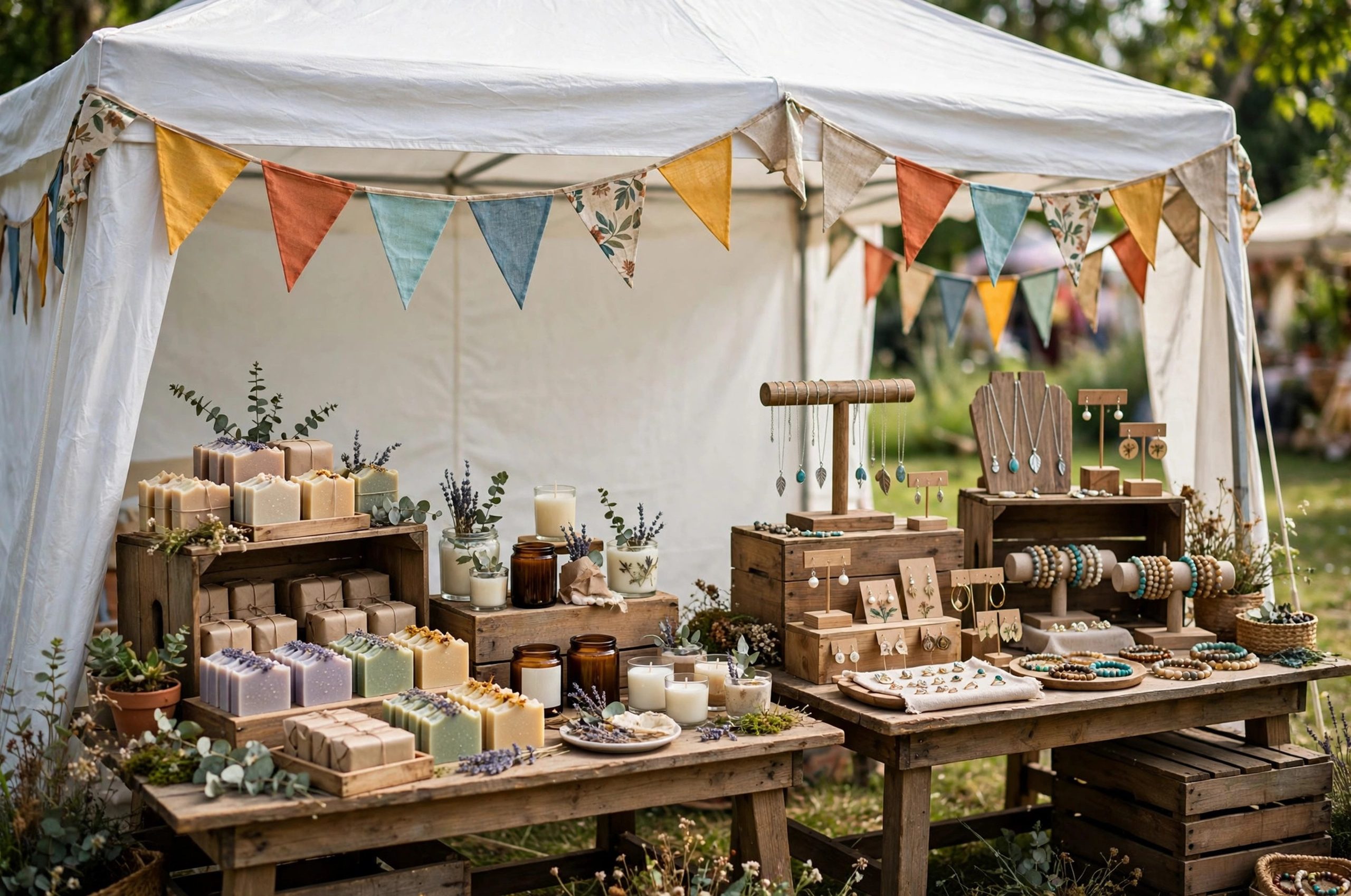
Shoppers buy with their eyes first. Your booth should look like a small boutique, not a garage sale.
Cover every table with a cloth that reaches the floor. A plain colored sheet works. The cloth hides your storage bins underneath and gives the booth a clean base. Pick a color that matches your brand.
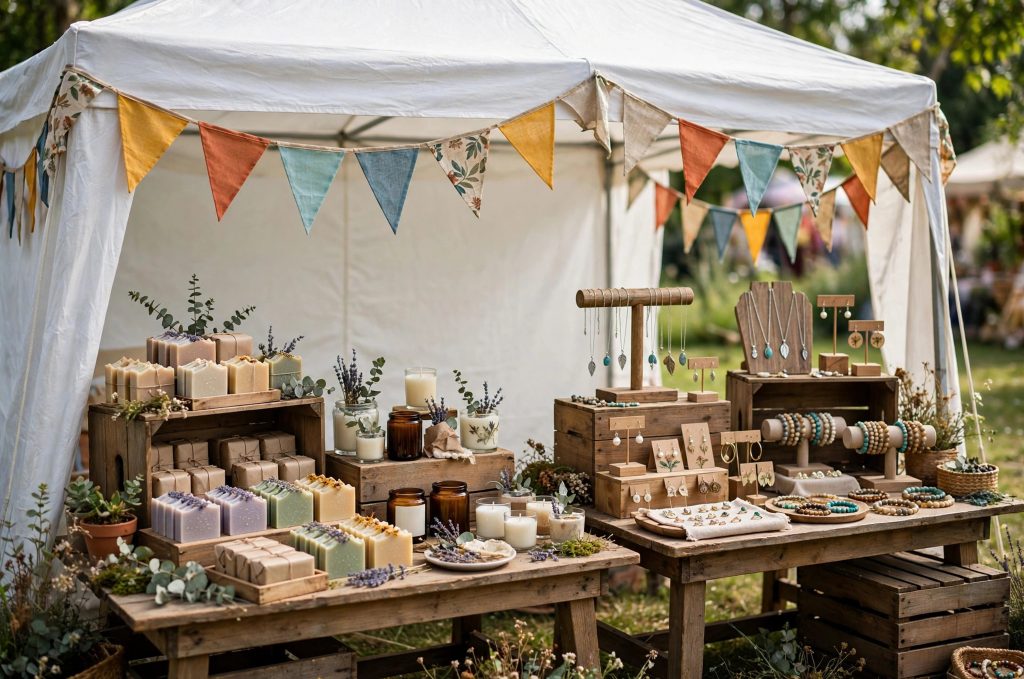
Add height. Flat tables bore the eye. Use wooden crates, small shelves, or risers to lift products to different levels. Group items in threes and fives at varying heights. The GotPrint vendor booth guide suggests pegboards, bookshelves, and metal grids to use vertical space, plus tabletop banners and acrylic signs for branding.
Keep it shoppable. Do not crowd the table. Leave breathing room between product groups. Shoppers should be able to pick up an item without knocking over its neighbors.
Signage That Sells
The key to craft fair booth setup is choosing the right approach for your space and budget.
With a little planning, craft fair booth setup can fit even a busy schedule.
Your booth needs three signs at minimum. A banner with your business name. Price signs on every product group. And a small sign with your payment options.
Make prices easy to read. Tiny handwritten tags frustrate shoppers. Use tent cards or small chalkboards with large, clear numbers. Price every item. Unpriced items rarely sell. Shoppers will not ask. They will just walk on.
Add a sign with your story. One sentence about what you make and why. People buy handmade because they like the maker. Give them a reason to like you.
Business cards go everywhere. Stack them at the front of the table. Tuck one into every bag. Include your shop link and social media. A sale today can become an online customer tomorrow.
Pricing for Profit
With a little planning, craft fair booth setup can fit even a busy schedule.
Before you start, it helps to understand how craft fair booth setup works in real homes.
Price before the fair, not at the fair. Know your numbers cold.
Add up your material cost and your time. Most makers aim for a price that covers materials, pays a fair hourly rate, and leaves a profit margin. Do not race to the bottom. Handmade is not competing with factory prices.
Offer a range of price points. A few small items under ten dollars catch impulse buyers. Mid-range items form your core sales. One or two premium pieces show off your skill and anchor the display. The Growing Your Craft Etsy guide notes that handmade shoppers are less price-sensitive than bargain hunters, so price with confidence.
Bring change and small bills. Not every buyer pays by card. A cash box with plenty of ones, fives, and tens keeps the line moving.
Accept Cards With a Reader
Before you start, it helps to understand how craft fair booth setup works in real homes.
Most shoppers expect to pay by card. A mobile card reader costs little and works with your phone. Set it up and test it before the fair. Charge it fully the night before.
Post a small sign that says which payments you take. Cash, card, and mobile pay covers almost everyone. The faster the checkout, the more you sell during busy rushes.
Keep a backup. A second charged phone or a battery pack saves you if your main device dies. Fairs rarely have outlets to spare.
The Packing List
A good plan for craft fair booth setup saves time, money, and frustration.
Pack the night before. Use this list.
- Tables, chairs, and a canopy if outdoors
- Tablecloths and display risers
- All products, plus restock boxes underneath
- Price signs, banner, and business cards
- Cash box with change, card reader, and charger
- Shopping bags and tissue paper for wrapping
- Tape, scissors, pens, and a notepad
- Snacks, water, and sunscreen
- A hand truck or dolly for hauling
The Ceramic Arts Network craft fair guide breaks down a full show load, including canopy weights and tub counts, which helps first-timers grasp how much gear a real booth needs.
Label every box. When you arrive, you will unload fast and find things faster. Number the boxes in setup order. Box one holds the tablecloths and banner. Last box holds the snacks.
Set Up a Checkout Zone
For most people, craft fair booth setup comes down to a few smart choices.
Give checkout its own spot. A small side table or one end of your main table works. Keep the card reader, cash box, bags, and wrapping supplies there.
A dedicated checkout area keeps the line clear of browsers. Shoppers can pay without blocking the display. It also looks professional. The Little Frugal House checkout stand tutorial shows how to build a folding stand that organizes supplies and gives you a real counter.
Wrap every purchase nicely. Tissue paper and a sticker cost pennies. They make a handmade item feel like a gift. Happy buyers come back and bring friends.
Lighting Makes or Breaks Indoor Booths
If you are new to craft fair booth setup, start with the simplest option and build from there.
Convention halls and indoor venues often have dim, flat light. Your products will look dull without help.
Bring battery-powered LED lights. Clip lights on your canopy frame. String fairy lights along the table edge. A few warm lights make colors pop and draw eyes from across the room.
Test your lights at home in a dim room. You want a warm glow, not a harsh glare. Aim lights at the products, not at shoppers' eyes.
Outdoor booths need less help, but shade matters. A canopy keeps sun off your goods. Sun fades colors and melts candles, chocolate, and wax products. Sidewalls block wind and add privacy for your storage area.
Talk to Shoppers (Without Hovering)
When it comes to craft fair booth setup, getting the details right makes all the difference.
Stand, do not sit. A standing vendor looks open and ready. A seated vendor reading a book looks closed for business.
Greet people with a smile and one line. "Everything here is handmade in my studio" works. Then let them browse. Hovering pushes people away. Silence with a smile invites them in.
Tell your story when asked. People love knowing who made their purchase. Keep it short. Two sentences about your craft beats a five-minute speech.
Take custom orders. Bring an order book. Some shoppers want a different color or size. A custom order is a sale you would have missed.
Weather and Outdoor Fair Tips
Outdoor fairs add weather to the mix. Check the forecast the night before and the morning of.
Weigh down your canopy. Wind flips unweighted tents. Use proper canopy weights on every leg. Water jugs and sandbags work in a pinch.
Protect your products. Bring plastic bins with lids for sudden rain. Keep a tarp handy. Elevate anything that cannot get wet.
Dress for the day. Sunscreen, a hat, and layers. You will stand for eight hours. Comfortable shoes are not optional.
After the Fair: Follow Up
The fair ends. Your work does not. Count your cash and reconcile your card sales the same day. Note what sold and what did not.
Email or message new contacts within a few days. Thank them for visiting. Share your online shop link. A short note turns a one-time buyer into a repeat customer.
Review your setup. What worked? What slowed you down? Write it down while it is fresh. Your second fair gets easier because your first one taught you.
Restock and repair. Fix damaged displays. Reprint signs that looked tired. Each fair sharpens your system.
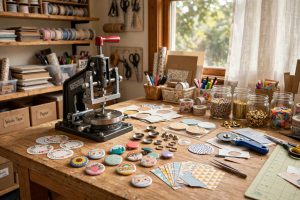
Sellers scaling up often invest in production tools. A best button maker machine for crafts business speeds up pin and button lines, while a best embroidery machine for small business helps apparel sellers keep up with demand. Print-on-demand sellers can look at a best sublimation printer for home craft business setup, and tote sellers at the diy tote bag kit for painting and crafts guide for product ideas.
References
BizSugar. (n.d.). 7 essential tips for craft fair booth setup. https://bizsugar.com/handmade-business/craft-fair-booth-setup/
Ceramic Arts Network. (n.d.). Transporting work to craft fairs, plus craft fair booth setup ideas. https://ceramicartsnetwork.org/daily/article/Transporting-Work-to-Craft-Fairs-Plus-Craft-Fair-Booth-Setup-Ideas
Chef Success. (n.d.). First craft fair booth setup ideas for homemade for the holidays. https://www.chefsuccess.com/threads/first-craft-fair-booth-setup-ideas-for-homemade-for-the-holidays.28751/
DIY Doer. (n.d.). 15 indoor craft fair booth ideas to inspire. https://www.diydoer.com/blog/indoor-craft-fair-booth-ideas
GotPrint. (n.d.). Vendor booth ideas for a successful craft fair display. https://blog.gotprint.com/tips-inspirations/craft-fair-booth-ideas/
Growing Your Craft. (n.d.). Top 20+ tips and tricks to kick start your Etsy shop. https://www.growingyourcraft.com/blog/top-tips-starting-etsy-shop
Heart Hook Home. (n.d.). 18 craft fair tips for beginners. https://hearthookhome.com/beginners-craft-fair-tips-how-to-run-a-successful-craft-show-booth/
The Little Frugal House. (n.d.). How to build a DIY craft fair checkout stand for your craft show booth. https://www.thelittlefrugalhouse.com/diy-folding-craft-fair-checkout-stand/
Was this guide helpful?

About My Garden US
The My Garden US editorial team writes practical, in-depth home and garden guides for American homeowners — tested advice, no fluff.
You May Also Like
DIY Mosaic Tile Kit for Garden Art Projects: A Plain Guide for Home Crafters
April 9, 2026 16 views
A Candle Wick Kit for Soy Candle Making Home Candle Makers
September 25, 2026 21 views
Best Watercolor Brushes Set for Beginners Art: A Plain Guide
August 7, 2026 20 views