---
Table of Contents
Table of Contents
- Yarn from Tangling: Why Yarn Tangles in the First Place
- Start With the Right Ball
- Use a Yarn Bowl or a Simple Holder
- One Container Per Color
- Mind Your Habits While You Knit
- How to Untangle Without Tears
- Store Your Stash So It Stays Tangle-Free
- Special Cases Worth Knowing
- Your Tangle-Free Checklist
- References
Few things break a knitter's rhythm like a tangled mess of yarn. You are in the groove, the pattern is flowing, and then the working yarn locks up into a knot the size of a walnut. Ten minutes of knitting turns into twenty minutes of untangling. The good news is that tangles are not bad luck. They come from how the yarn is wound, held, and fed. Fix those three things and you will spend your time knitting, not untangling. Here is how to keep yarn from tangling while knitting.
Yarn from Tangling: Why Yarn Tangles in the First Place
When it comes to yarn from tangling, getting the details right makes all the difference.
When it comes to yarn from tangling, getting the details right makes all the difference.
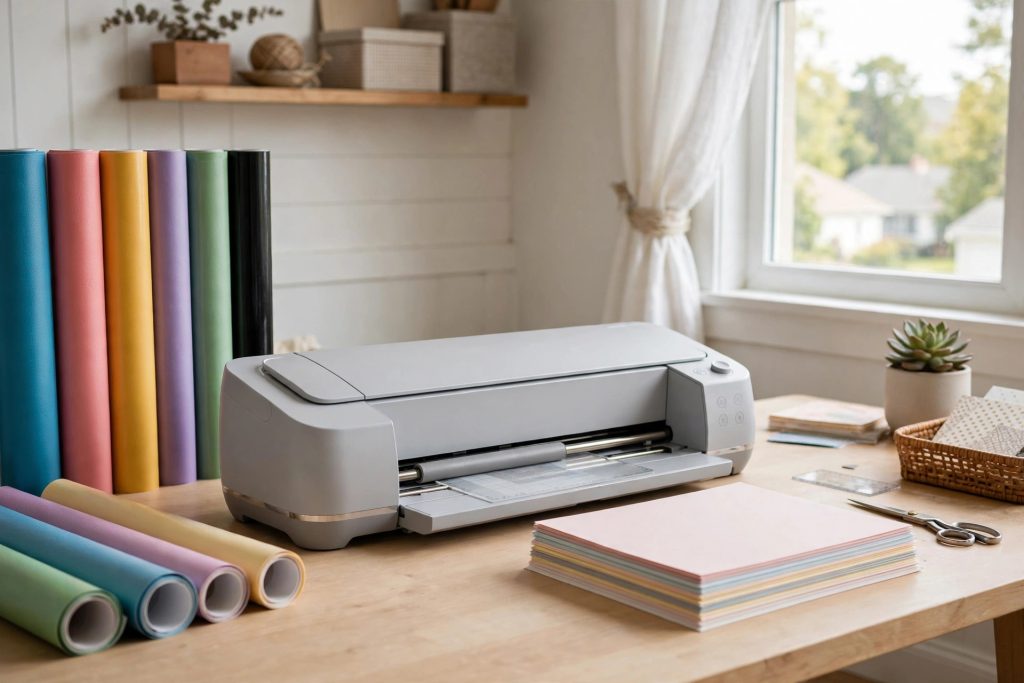
Many homeowners find that yarn from tangling is easier than they expected once they know the basics.
Yarn tangles because it moves. A ball that rolls across the floor picks up twists with every turn. A skein pulled from the outside flops around and loops over itself. Two strands working side by side cross and recross until they lock. Add a cat, a chair leg, or a gust from a fan, and you have a recipe for knots.
Twist is the hidden culprit. Every time you turn your work, you add a small twist to the working yarn. Those twists build up along the strand. Eventually the yarn starts to kink and loop back on itself. That is why a project that starts smoothly can turn tangly halfway through. The yarn did not change. The twist accumulated.
Understanding this changes how you solve the problem. You cannot stop twist entirely. But you can keep the yarn from moving freely, feed it in a controlled way, and release built-up twist before it becomes a knot. Every fix below does one of those three jobs.
Start With the Right Ball
Many homeowners find that yarn from tangling is easier than they expected once they know the basics.
Many homeowners find that yarn from tangling is easier than they expected once they know the basics.
The key to yarn from tangling is choosing the right approach for your space and budget.
How the yarn is wound decides how it behaves. A center-pull ball or cake is the gold standard. The yarn feeds from the middle, so the ball sits still while you knit. No rolling. No flopping. Many skeins sold today are already wound for center-pull use. Find the end tucked in the middle and pull gently. If a big clump comes out with it, do not yank. Set the clump aside and tease it loose with your fingers. Yanking a center-pull clump just makes a tighter knot.
If your yarn comes as a twisted hank, never knit straight from it. A hank is a big loop that will tangle the moment it loosens. Wind it into a ball or a cake first. A yarn swift holds the hank open while you wind. A ball winder turns it into a neat center-pull cake in minutes. No swift? Drape the hank over the back of a chair and wind by hand. It takes longer, but the result knits far better than a loose hank. The Edinburgh Yarn Festival guide recommends winding yarn into balls or cakes as the first line of defense against tangles (Edinburgh Yarn Festival).
Hand-wound balls have one advantage over store cakes. You control the tension. Wind firmly but not tight. A ball wound too tight stretches the yarn and springs into kinks later. A ball wound too loose collapses. Aim for a firm, springy ball that holds its shape.
Use a Yarn Bowl or a Simple Holder
The key to yarn from tangling is choosing the right approach for your space and budget.
With a little planning, yarn from tangling can fit even a busy schedule.
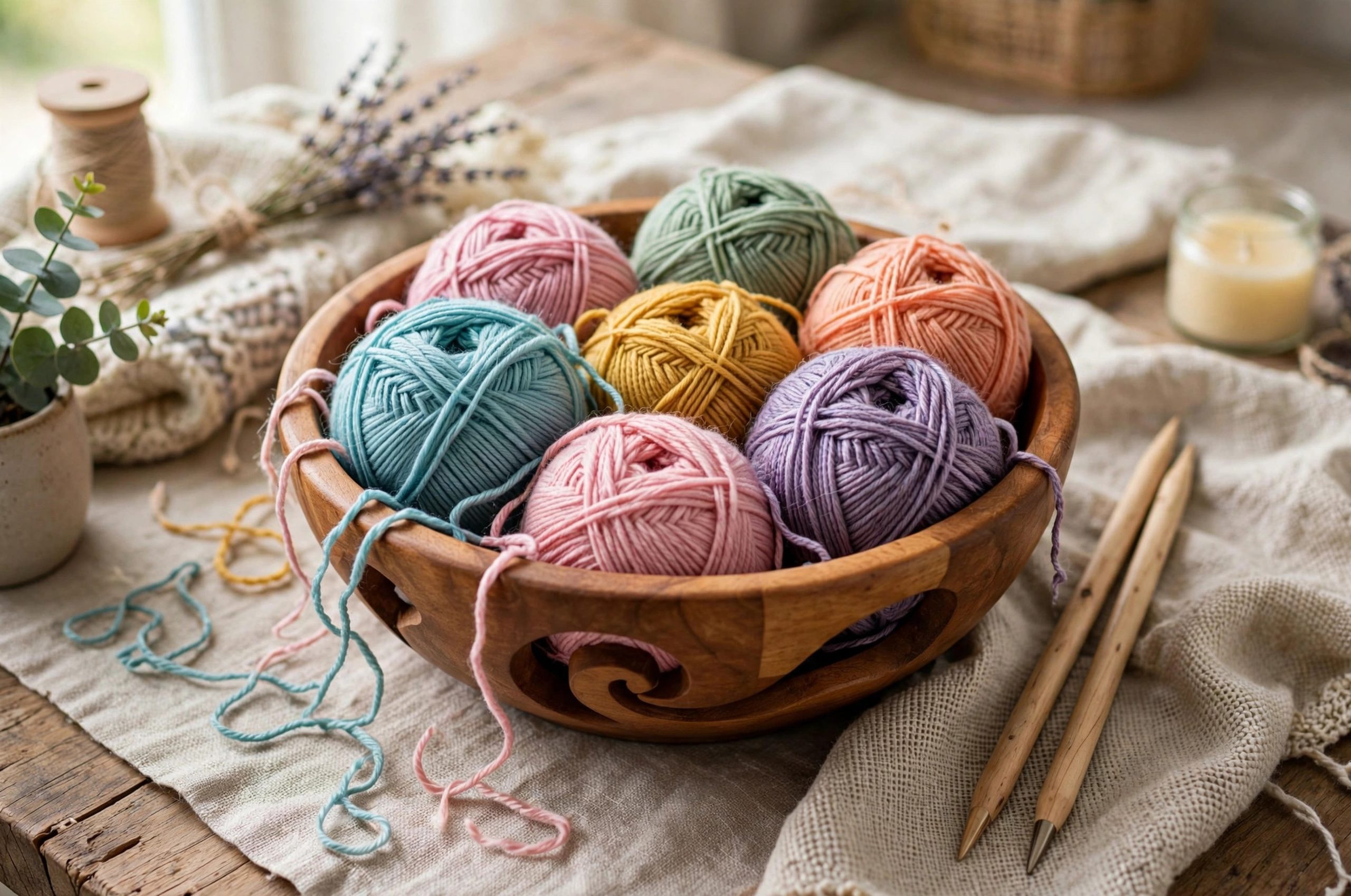
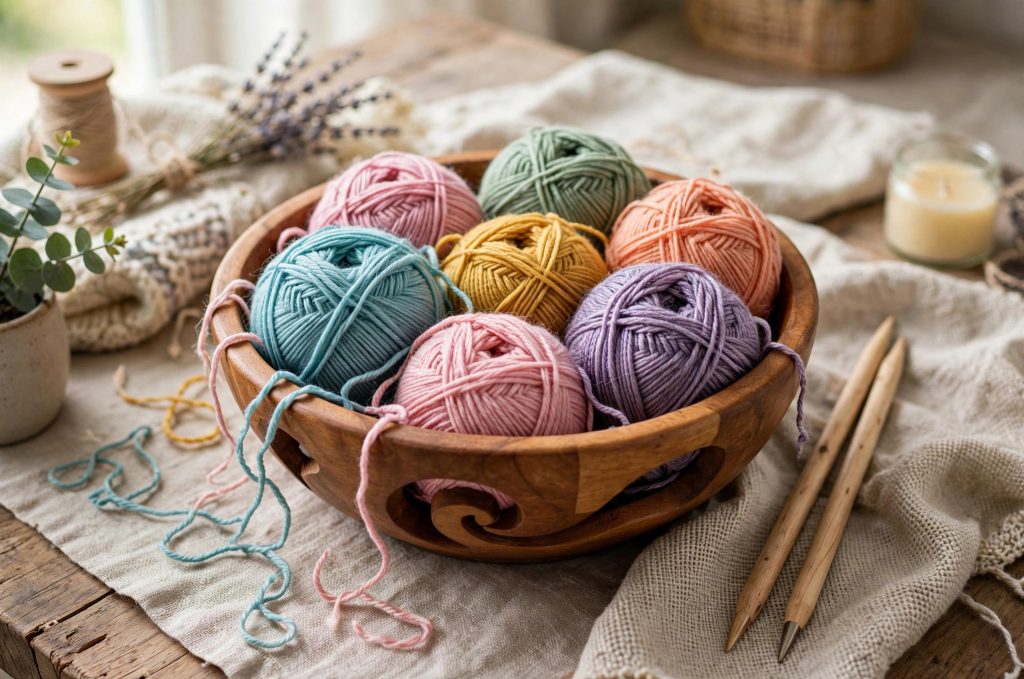
A yarn bowl is a bowl with a curved slot or holes in the side. The ball sits inside. The working yarn feeds through the slot. The ball cannot roll away. It cannot fall on the floor. The feed stays smooth and steady. Wooden and ceramic bowls both work. Pick one heavy enough that it does not tip when you tug.
No yarn bowl? Improvise. A small colander works. A clean plastic food container with a hole cut in the lid works. A zip-top bag with a corner snipped off works. The principle is the same in every case. Contain the ball. Feed the yarn through a small opening. Yarn Trader's tangle guide suggests putting each skein in its own bag or container with the yarn threaded through a small hole, which also keeps the yarn clean (Yarn Trader).
Keep the holder close to your work but not under it. Beside your chair on the floor, or on the table next to you, is ideal. If the holder is too far, every stitch drags the yarn across a long path where it can catch on things. Short feed path, fewer problems.
One Container Per Color
With a little planning, yarn from tangling can fit even a busy schedule.
Before you start, it helps to understand how yarn from tangling works in real homes.
Multi-color knitting doubles the tangle risk. Two strands twist around each other with every row. The fix is separation. Give each color its own container. Two balls go in two bags, two bowls, or two corners of a divided tote. The strands meet only at the needles, where you control them.
For small amounts of contrast colors, wind each onto a bobbin. A bobbin is just a small card or clip that holds a short length of yarn. It is light enough to dangle from the work without dragging. Clothespins work as free bobbins. Wrap each color around its own pin and clip the pin to the working strand when you pause. The pins keep the colors from wandering off and tangling between sessions.
When you switch colors, pay attention to how you lay the old strand down. Always lay it on the same side. Consistent placement means the strands twist in a predictable pattern instead of a random knot. Every few rows, pause and let the work dangle. Hold the balls up and let the strands untwist themselves. Urbaki's colorwork guide recommends pausing to untwist and alternating the direction you cross strands to keep twists from building (Urbaki).
Mind Your Habits While You Knit
Before you start, it helps to understand how yarn from tangling works in real homes.
A good plan for yarn from tangling saves time, money, and frustration.
Small habits make a big difference. Do not turn your work in the same direction every row. Alternate, or give the yarn a counter-twist now and then. Watch your tension. Yarn that is pulled too tight kinks more. Yarn fed smoothly stays smooth.
Keep the working yarn short between the ball and the needles. A long, loose span of yarn is a playground for tangles. Sit close to your yarn holder. Let the yarn feed with just enough slack to knit comfortably.
Take untwist breaks. Every twenty minutes or so, stop and look at the strand between the ball and your work. If it is twisting into little pigtails, hold the work up and let it spin free. Ten seconds of prevention beats ten minutes of untangling. Joy of Motion's tangle guide calls this mindful unwinding, and it works for crochet as well as knitting (Joy of Motion).
If you knit on the go, use a project bag with structure. A soft tote lets balls bounce around inside. A bag with dividers or separate zip pockets keeps each ball in its own lane. Weekend Knitter's project bag guide suggests clips, bobbins, or straw separators inside the bag to keep multiple yarns physically apart (Weekend Knitter).
How to Untangle Without Tears
A good plan for yarn from tangling saves time, money, and frustration.
For most people, yarn from tangling comes down to a few smart choices.
Despite your best efforts, a tangle will happen. Do not pull. Pulling tightens knots. Here is the calm method.
First, stop knitting and set the work down. Find the working end and the ball end of the tangled section. Work from the outside of the tangle inward, loosening loops with your fingers or a blunt needle. Shake the tangle gently. Often loops will open on their own if you stop forcing them.
For a bad knot, try the gravity trick. Hold the two ball ends up in the air and let the knitting dangle. The weight of the work slowly spins the twist out. This works best on smaller projects. A heavy sweater will not dangle and spin, so for big projects, wind the loose yarn back onto the balls as you work toward the knot.
If a section is truly hopeless, cut it out. Snip above and below the knot, then rejoin the yarn with a small overlap or a Russian join. Losing six inches of yarn beats losing an hour of your evening. A Bee in the Bonnet's tangle tricks include this honest advice: sometimes letting a small tangle happen and fixing it calmly beats fighting it mid-row (A Bee in the Bonnet).
Store Your Stash So It Stays Tangle-Free
For most people, yarn from tangling comes down to a few smart choices.
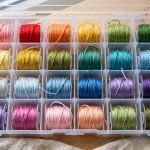
Tangles often start in storage, long before you cast on. Skeins tossed loose in a bin rub together and swap loops. The fix is simple. Bag each skein or ball separately. Zip-top bags work. The original ball band stays on inside the bag, so you keep the fiber and color information.
Store bagged yarn in clear bins so you can see what you have. Keep the bins in a cool, dry spot away from sunlight. Moths love wool, so cedar blocks or lavender sachets in the storage area are cheap insurance. North Shore Crafts' ultimate tangle guide covers both storage and in-progress techniques in one place (North Shore Crafts).
Rotate your stash. Use older yarn first. And when you buy new yarn, wind hanks into cakes before they join the stash. Future you will be grateful. For larger storage needs, our fabric storage cubes guide covers cube systems that work well for yarn too, and our clear storage bins comparison helps you pick the right size.
Special Cases Worth Knowing
If you are new to yarn from tangling, start with the simplest option and build from there.
Novelty yarns tangle more. Eyelash, boucle, and chenille yarns grab onto themselves. Wind them loosely. Knit them at a relaxed tension. Keep the feed path very short. Accept that these yarns need more babysitting.
Very fine lace yarn tangles if you look at it wrong. Wind it into a tight, smooth cake. Use a yarn bowl with a narrow slot. Some lace knitters thread the yarn through a drinking straw taped to the table edge. The straw guides the fine strand and stops it from looping. Ten Rows a Day documents this straw trick in detail for knitters fighting fine-yarn tangles (10 Rows a Day).
If pets share your home, the yarn holder becomes essential, not optional. A ball on the floor is a toy. A ball in a lidded container with a feed hole is safe. Keep spare yarn in closed bins, not open baskets, if a cat hunts your stash.
Your Tangle-Free Checklist
When it comes to yarn from tangling, getting the details right makes all the difference.
- Wind hanks into center-pull balls or cakes before knitting.
- Feed the working yarn from a bowl, bag, or container with a small opening.
- Give each color its own container when knitting with multiples.
- Use bobbins or clothespins for short contrast strands.
- Keep the feed path short between holder and needles.
- Pause every twenty minutes to let built-up twist spin out.
- Alternate how you turn your work to avoid adding twist one way.
- Never pull a knot tighter. Loosen from the outside in.
- Bag each skein separately in storage and keep the ball bands.
- Protect wool from moths with cedar or lavender.
Tangle-free knitting is not about fancy gear. It is about controlling the yarn's movement from stash to stitch. Wind it well, hold it steady, feed it cleanly, and release the twist before it builds. Do those four things and your knitting time stays about knitting. For a dedicated workspace to keep it all organized, see our craft table with pegboard picks.
References
Many homeowners find that yarn from tangling is easier than they expected once they know the basics.
A Bee in the Bonnet. (n.d.). How to avoid tangling yarn while knitting. https://www.abeeinthebonnet.com/blog/how-to-avoid-tangling-yarn-while-knitting/
Edinburgh Yarn Festival. (n.d.). How to keep yarn from tangling: Essential guide for hassle-free knitting. https://edinyarnfest.com/how-to-keep-yarn-from-tangling/
Joy of Motion Crochet. (n.d.). Secret hacks to keep your yarn from tangling. https://joyofmotioncrochet.com/keep-your-yarn-from-tangling/
North Shore Crafts. (n.d.). How to keep yarn from tangling: The ultimate guide. https://northshorecrafts.com/how-to-keep-yarn-from-tangling/
10 Rows a Day. (n.d.). Why your yarn keeps tangling (and easy ways to prevent it). https://tenrowsaday.com/tangling/
Urbaki. (n.d.). How to knit with multiple colors without tangling yarn. https://urbaki.com/knitting/how-to-knit-with-multiple-colors-without-tangling-yarn/
Weekend Knitter. (n.d.). How to keep yarn from tangling in a project bag. https://weekendknitter.com/how-to-prevent-yarn-tangling-in-project-bags/
Yarn Trader. (n.d.). How to keep yarn from twisting when knitting. https://www.yarntrader.com.au/how-to-keep-yarn-from-tangling/
The key to yarn from tangling is choosing the right approach for your space and budget.
Was this guide helpful?

About My Garden US
The My Garden US editorial team writes practical, in-depth home and garden guides for American homeowners — tested advice, no fluff.
You May Also Like
Best Sketching Pencils Set for Drawing Art
July 30, 2026 15 views
Sewing Machine Needles Assortment for Fabrics USA: A Complete Buyer Guide
April 17, 2026 17 views
Craft Felt Sheets Assortment for Kids Projects: A Parent's Guide
March 12, 2026 17 views