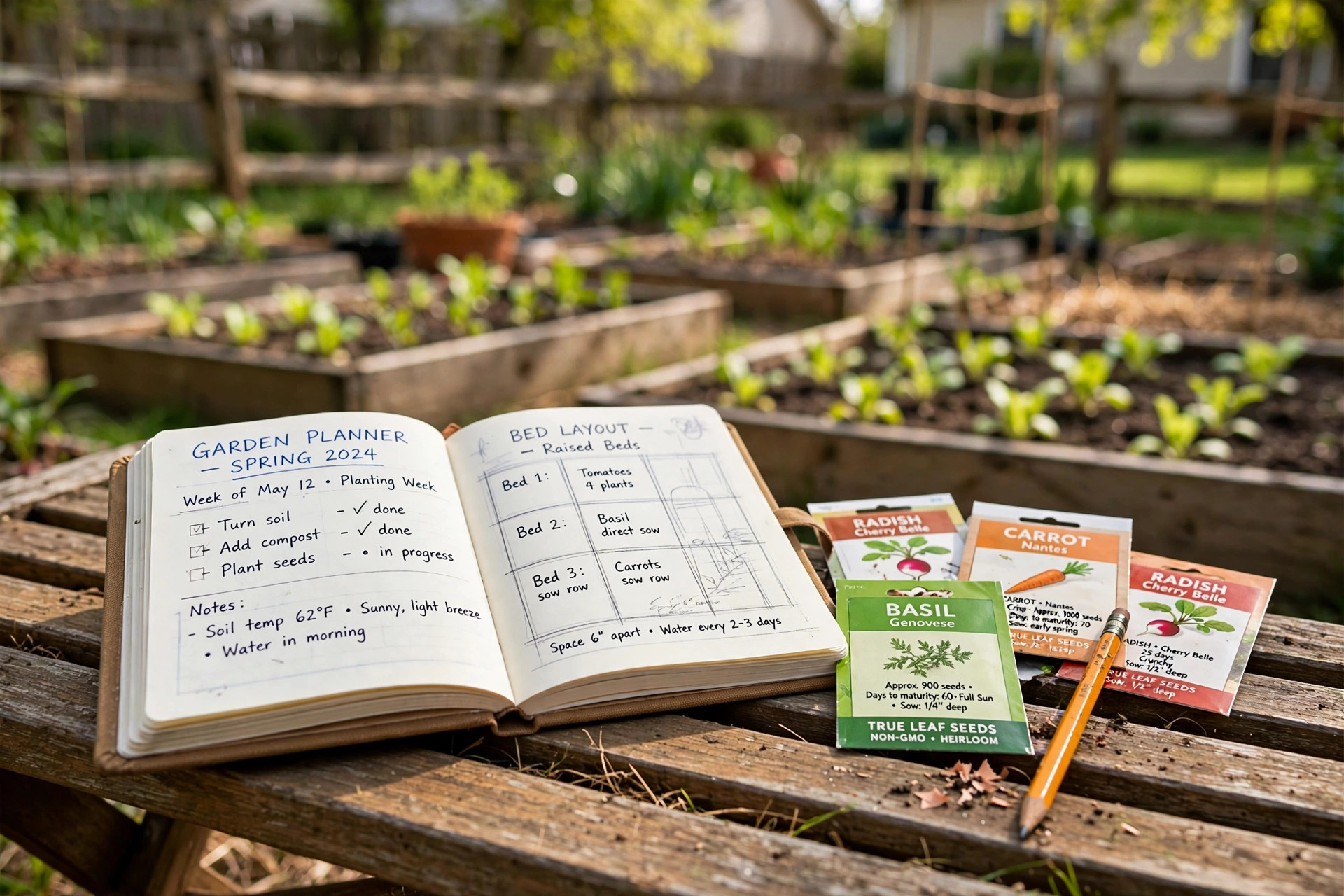

A blank garden notebook can change how a beginner grows. The best garden planner notebook for beginners turns guesses into a clear plan. It holds planting dates, seed names, and notes in one place. A new gardener often forgets what was planted and when. Memory fails by mid summer. A notebook keeps the facts safe. This guide shows what to look for, how to choose, and how to use a garden diary from the first seed to the last harvest. It also covers cost, care, and safety. With a good planner, even a first year garden can feel calm and well run.
Why a Garden Planner Matters for a Beginner
A beginner faces many small choices each week. When did the tomatoes go in? How much water did the beans get? Why did the lettuce bolt? Without notes, every season starts over. With notes, every season builds on the last. The best garden planner notebook for beginners acts like a quiet teacher. It shows what worked and what did not.
A planner also saves money. Seed packets get lost. Plant labels wash away. A written record keeps track of every variety. If one type of pepper fails, the note explains why. If another type thrives, the note says to buy it again. Over two or three years, these notes become a garden history. That history is worth more than any single book.
A notebook helps with timing as well. Most gardens run on dates. Last frost dates, seed start dates, and transplant dates all matter. A planner with a calendar helps a beginner see the whole season at once. It turns a long list of jobs into small steps. This makes the work less tiring and more fun.
What to Look For in a Garden Planner Notebook: Best Garden Planner Notebook for Beginners
Size and Paper Quality
A good planner should be easy to carry into the yard. A size near eight by ten inches works well for most people. It is large enough for a weekly plan but small enough to hold in one hand. Very small notebooks save space but feel cramped. Very large ones stay on the desk instead of going outside.
Paper quality matters more than most buyers think. Look for thick paper that takes ink and pencil. Thin paper bleeds when a pen is used. It also tears when the page gets damp. A beginner may write with dirty hands, so the paper should be tough. Look for a cover that stands up to water spots. A hard cover or a thick card cover lasts longer than a soft thin one.
Layout and Sections
The best garden planner notebook for beginners has clear sections. A monthly calendar is the heart of the book. Weekly or daily pages give room for short notes. A section for each bed or row helps keep plantings straight. Many good planners also include pages for seed lists, weather notes, and harvest records.
Check that the layout is simple. Some planners try to do too much. They add charts and forms that confuse a new user. A beginner needs open space and clear lines. Date boxes should be large enough for a short note. If the book feels like a school exam, it will sit unused. Choose a layout that invites writing.
Extras That Help
Some planners include extras that are truly useful. Graph paper pages help draw bed layouts. A pocket in the back cover holds seed packets and plant tags. A ribbon marker keeps the right page open. A sturdy elastic band keeps the book shut in a tote bag.
Pair your notebook with a solid garden tool set chosen for beginners so you are ready for real work the day you plant. A planner alone cannot dig a hole, and tools alone cannot keep a record. Together they make a strong start.
Types of Garden Planner Notebooks
Bound Journals
A bound journal has sewn or glued pages. It lies flat on a table. It looks neat and lasts for years. Many gardeners keep one journal per year. The bound style feels serious and encourages daily notes. The drawback is that pages cannot be moved. If a bed plan changes, the old drawing stays where it is.
Ring Binders
A ring binder lets pages move. A gardener can add new forms, move bed maps, and pull out full pages. Refill packs are easy to find at garden centers such as Home Depot and Lowe’s. The binder is less neat than a journal. Rings can snag on gloves. Still, for a beginner who likes to change plans, the binder is a fine choice.
Printable Pages
Some gardeners print their own planner pages at home. This costs little and allows full control. Each week gets a fresh sheet. The pages go into a binder or a folder. The risk is that loose sheets scatter. A beginner should keep them in one binder from the start.
Calendar Style Planners
A calendar style planner looks like a wall calendar in book form. Each month fills two pages. It is best for dates and little else. A beginner who wants deep notes should pick a journal instead. A gardener who wants only a quick view of the season may find the calendar style enough.
How to Choose the Right One
Start with your habits. Do you write every day, or once a week? Daily writers need more pages. Weekly writers need larger boxes. Think about where you will write. If you write at a desk, a large journal works. If you write in the garden, choose something tough and easy to carry.
Next, count your beds. A small patio garden needs little space. A large yard with ten beds needs many bed maps. The best garden planner notebook for beginners should match the size of the garden. Too much blank space feels like failure. Too little space feels like a burden.
Look at sample pages before you buy. Read the headings. Check the month grids. If the sample pages feel clear, the book will feel clear all season. Sites like Gardener’s Supply show page samples online. Reviews on The Spruce and Bob Vila often show photos of the inside pages.
A seed starting section matters for many beginners. Starting seeds indoors is a common first project. Record start dates, germination days, and light hours. Read this guide to seed starting mistakes so you know what to watch for, then use your notebook to record what worked in your own home. Seed notes from one year make the next year far easier.
Think about your land as well. If your yard is not flat, bed layout takes extra thought. A guide to building raised beds on a slope helps you plan bed placement before you plant a thing. Draw the final plan in your notebook so it is ready on planting day.
Finally, set a budget and stick to it. A planner is a tool, not a treasure. The notes inside matter far more than the cover. Many fine planners cost less than a bag of fertilizer.
Cost and Price Range
Garden planner notebooks range from about five dollars to about forty dollars. Simple bound journals sit at the low end. They offer clean pages and a calendar. Mid range planners, near fifteen to twenty five dollars, add bed maps, seed logs, and pockets. High end planners, near thirty to forty dollars, use thick paper and strong bindings. They may include monthly tips and reference charts.
A beginner rarely needs the top end. A mid range planner gives the best value. It has the sections a new gardener needs without extra cost. Watch for sales at seed houses like Burpee and tool makers like Fiskars and Corona. End of season sales often cut prices in half.
Also count the cost of pens. A waterproof pen costs a few dollars and writes on damp pages. A pencil works in rain and never runs dry. Many gardeners carry both. These small costs add up, but they stay well under ten dollars.
Care and Upkeep of Your Notebook
A garden planner works outdoors, so it gets dirty. Keep it in a zip bag when rain threatens. Wipe mud off the cover before it dries. If pages get wet, open the book and let it dry flat. Do not use heat. A damp book left in the sun will warp.
Store the notebook on a shelf between uses. Keep it away from fertilizer bags and open seed trays. Dust and fine powder stick to paper. At the end of the season, read through the whole book. Mark the best pages with sticky tabs. This review takes an hour and doubles the value of the notes.
When a book is full, do not throw it away. Old planners are the best garden books you will ever own. They record your soil, your weather, and your results. Keep them on a shelf in date order. Advice sites like Family Handyman suggest the same habit for home repair logs. A garden log works the same way.
A Short Note on Safety
A garden planner is a safe tool, but a few habits keep it that way. Use a pencil or a capped pen in the garden. Open blades and sharp tools do not belong near a book you hold in your lap. Keep the notebook away from sprays and chemicals. Paper soaks up liquids fast. If a spill happens, throw out any page that touched the chemical.
Outdoor writing means sun and heat. Wear a hat and take water when you work in the yard. The Consumer Reports site has guides on garden tools and gear that remind readers to pace themselves in summer heat. The planner can wait a few minutes while you rest in the shade.
Frequently Asked Questions
How is a garden planner different from a plain notebook?
A plain notebook gives blank pages. A garden planner gives shaped pages. It has calendars, bed maps, and seed logs built in. These forms save time. They also remind a beginner what to record. A plain notebook works if you make your own forms. Most beginners do better with a planner that leads them.
How often should a beginner write in the planner?
Write on planting days and on harvest days. Add short notes once a week. A few lines are enough. Long essays are not needed. The habit matters more than the length. After one season, the pages will show a clear story of the garden.
Should I track weather in my planner?
Yes. Weather shapes every garden. Note the first and last frost. Note heat waves and heavy rain. These facts explain why some plants did well and others did not. Many beginners skip weather notes and regret it later. A small weather line on each weekly page is enough.
What is the best garden planner notebook for beginners on a tight budget?
A simple bound journal with a calendar is the best value. It costs little and holds a full season of notes. Spend the savings on seeds and soil. The notes will teach you what features you want next year. Then you can buy a richer planner with knowledge of your own needs.
Can I use a phone app instead of a paper notebook?
An app can work, but paper has real strengths. Paper never runs out of power. It works with dirty gloves. It opens to any page at once. Many gardeners use both. They keep quick phone photos and deep paper notes. For a beginner, paper alone is often simpler and more lasting.
How long should I keep old planner notebooks?
Keep them for as long as you garden. Five years of notes show clear patterns. You will see which varieties suit your soil. You will see when your last frost really comes. Old books also carry a quiet joy. They hold the memory of first harvests and fine summer days.
A Short Final Word
The best garden planner notebook for beginners is the one you will actually use. It should be simple, tough, and the right size for your garden. It does not need to cost much. What it needs is your honest notes, week after week. Start with planting dates. Add weather and harvest records. Review the book when the season ends. In one year, a beginner with a planner knows more than a beginner without one. In three years, the planner is a personal garden book no store can sell. Buy the notebook, take it outside, and write the first page today.
References
Bob Vila. (n.d.). Home improvement advice. https://www.bobvila.com Burpee. (n.d.). Seeds, plants, and gardening supplies. https://www.burpee.com Consumer Reports. (n.d.). Product reviews and ratings. https://www.consumerreports.org Corona Tools. (n.d.). Garden and landscape tools. https://www.corona-tools.com Family Handyman. (n.d.). DIY home repair and maintenance. https://www.familyhandyman.com Fiskars. (n.d.). Garden and cutting tools. https://www.fiskars.com Gardener’s Supply Company. (n.d.). Gardening tools and supplies. https://www.gardeners.com Lowe’s. (n.d.). Home improvement products. https://www.lowes.com The Home Depot. (n.d.). Home improvement products. https://www.homedepot.com The Spruce. (n.d.). Home and garden advice. https://www.thespruce.com
Was this guide helpful?

About Emily Rodriguez
The My Garden US editorial team writes practical, in-depth home and garden guides for American homeowners — tested advice, no fluff.
You May Also Like
Best Garden Hose Reel Cart Reviews: Which One Is Worth Your Money
January 11, 2026 0 views
Best Garden Caddy for Carrying Tools: A Practical Guide
July 3, 2026 0 views
Greenhouse for Backyard Beginners Guide
April 9, 2026 0 views