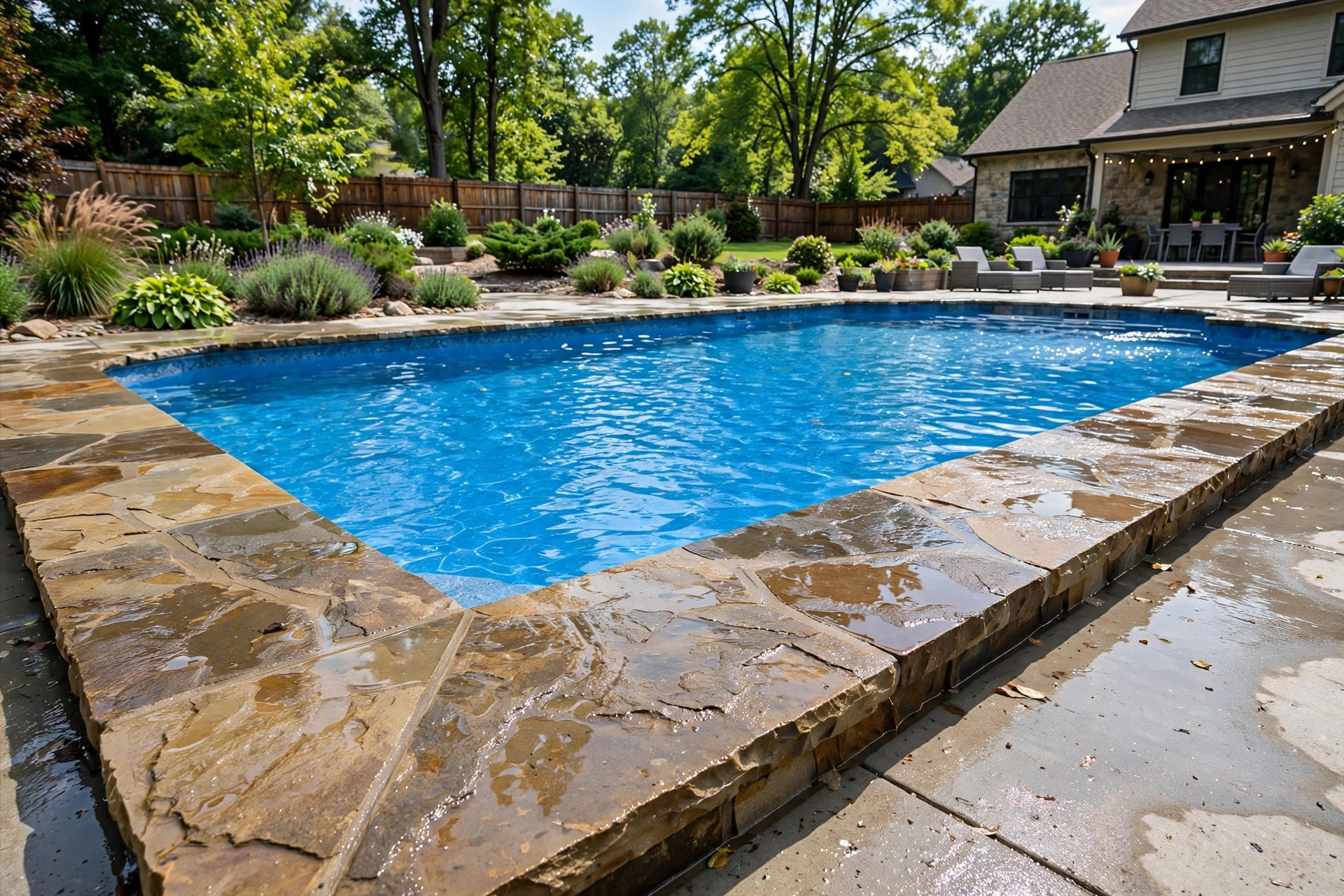

The stone edge around a swimming pool takes more wear than most people think. Sun, pool water, sunscreen, and leaves all land on it day after day. If you want to learn how to clean pool coping tiles, the good news is that the work is simple. It needs no special skill. With the right tools and a little care, you can bring back the color and finish of the coping in one afternoon. This guide shows you how to clean pool coping tiles made of natural stone, brick, and concrete. It also covers costs, safety, and long term care.
Why Clean Coping Tiles Matter
Pool coping is the cap or edge that sits around the rim of the pool. It hides the joint between the pool shell and the deck. It also gives swimmers a place to hold and sit. Because it sits right at the water line, it catches splashed pool water, body oils, sunscreen, and dirt from the deck. Over time these leave marks. Calcium from hard water builds up as white crust. Algae can grow in shaded corners. Mold and mildew can darken rough stone.
Dirty coping is not just a looks problem. A slick film of algae or oil can make the edge slippery. Slips near a pool are a real danger, and Www.cpsc.gov matter for every family. Grime can also work into the grout joints and loosen them. When water gets behind the coping, it can cause damage that costs far more than a simple cleaning. Many pool owners clean the tile line but forget the coping. A full pool coping cleaning plan keeps both the tile and the coping in good shape.
Regular cleaning also saves money. A coping that is cleaned often does not need harsh chemicals later. Strong acid can etch stone and fade brick color. Gentle care keeps the surface strong for many years. Pool experts at Www.swimuniversity.com stress that routine care beats rare deep cleanings for most pool surfaces.
Know Your Coping Material: How to Clean Pool Coping Tiles
Before you start, find out what your coping is made of. The material sets the rules for how to clean pool coping tiles. Using the wrong method can stain or pit the surface.
Natural Stone
Travertine, limestone, sandstone, and flagstone are common choices. They look warm and natural. They are also porous. This means they soak up water and oil. Never use strong acid on soft stone like limestone or travertine without testing first. Acid can etch the face and leave rough spots. Use a mild stone cleaner or a mix of water and mild dish soap for most jobs.
Brick and Pavers
Brick coping is hard and dense. It handles most cleaning products well. Still, strong acid can fade the color of brick over time. A stiff brush and soap will handle most dirt. For stubborn stains, a mild acid wash may work. Always rinse well with fresh water after.
Concrete and Cast Stone
Poured concrete and cast stone coping are common around modern pools. They are tough but can still stain from rust, leaves, and fertilizer. Concrete handles mild acid cleaning better than soft natural stone. Even so, it is best to start with the gentlest method and move up only if needed.
Tools and Supplies You Will Need
Gather your tools before you begin. Most of these are items you may already own. You can buy the rest at any home store such as Www.homedepot.com or Lowe’s.
– A stiff nylon or plastic bristle brush – A soft brush for stone – A garden hose with a spray nozzle – A bucket – Mild dish soap or a pH neutral stone cleaner – Baking soda for light stains – White vinegar or a pool scale remover for hard water scale – A plastic scraper for thick buildup – Rubber gloves and eye protection – A spray bottle
Avoid wire brushes on natural stone. Wire can leave rust marks and scratch the face. For soft stone, use only nylon brushes and pads.
Step by Step: How to Clean Pool Coping Tiles
Regular Cleaning
This light wash is the core of pool coping cleaning. Do it every week or two during the swim season.
1. Remove loose leaves, dirt, and debris from the coping with a broom or your hand. 2. Wet the coping well with the hose. Wetting first stops dirty water from soaking into dry stone. 3. Fill a bucket with warm water and add a small amount of mild dish soap. 4. Scrub the coping with a nylon brush. Work in small sections, about three feet at a time. 5. Pay extra care to the grout joints, where dirt hides. 6. Rinse each section with the hose before moving on. Do not let soapy water dry on the stone. 7. Rinse the whole coping one final time from the house side toward the pool.
This simple routine answers the question of how to clean pool coping tiles for most owners. It removes sunscreen, dust, and light algae before they can set in.
Deep Cleaning for Stains
For stains from leaves, rust, or dark mold, you need a stronger plan.
1. Wet the stained area well. 2. Make a paste of baking soda and water. Spread it over the stain. 3. Let the paste sit for fifteen to twenty minutes. 4. Scrub with a stiff nylon brush. 5. Rinse well and check the result.
If the stain stays, try a pool grade tile and scale cleaner from a supplier like Www.lesliespool.com or Www.poolwarehouse.com. Follow the label. Test any new product on a small hidden spot first. Work in the shade so the cleaner does not dry too fast. Rinse at once when done.
Dark algae spots may need a diluted bleach mix. Add one part household bleach to four parts water in a spray bottle. Spray the spot, wait five minutes, scrub, and rinse very well. Do not let bleach run into the pool in large amounts. It will affect your water chemistry. Check your Www.thespruce.com after cleaning if any wash water reached the pool.
Removing Scale and Calcium Buildup
Hard water leaves white crust on coping. This is common in dry regions and on pools that use calcium chloride.
1. Wet the area and keep it wet. 2. Spray the crust with white vinegar or a store bought scale remover. 3. Wait five to ten minutes. Do not let it dry on the surface. 4. Scrub with a nylon brush or a plastic scraper for thick crust. 5. Rinse well with fresh water.
For thick scale, a diluted muriatic acid wash may be needed. Mix one part acid to ten parts water. Always add acid to water, never water to acid. Apply with a sponge, scrub lightly, and rinse at once. This step needs gloves and eye protection. If your coping is soft natural stone, test a hidden spot first or call a pool service. Acid can etch travertine and limestone in seconds. U.S. Environmental Protection Agency reminds homeowners to store and mix these products with care.
Cost and Price
Learning how to clean pool coping tiles does not cost much. A basic do it yourself kit costs between twenty and sixty dollars. This covers brushes, soap, gloves, and a gallon of scale remover. A quality nylon brush costs about ten dollars. A pH neutral stone cleaner runs fifteen to twenty five dollars per gallon. White vinegar and baking soda cost only a few dollars at the grocery store.
Hiring a pool service is the other choice. A one time professional coping cleaning costs about one hundred fifty to four hundred dollars, based on pool size and stain level. Many pool companies fold coping cleaning into a Www.hotspring.com, which may cost more. If your coping has thick scale or deep stains that home methods cannot fix, a pro can use a low pressure washer or steam cleaner without harming the stone.
A pressure washer is a middle path, but it needs care. Too much pressure can gouge soft stone and blast out grout. Keep the pressure low, under one thousand five hundred PSI, and hold the tip at least a foot from the surface. For natural stone, many pros skip the pressure washer and scrub by hand.
Care and Upkeep
Good care after cleaning is what keeps coping fresh for years. A few small habits make a large difference.
Rinse After Splash Days
On heavy swim days, rinse the coping with the hose when the fun is done. This washes off sunscreen, oils, and chlorinated water before they bake into the stone in the sun. It takes five minutes.
Seal the Stone
Sealing natural stone coping once every one to two years is smart. A penetrating sealer fills the tiny pores and makes future cleaning easier. Stains wash off instead of soaking in. Buy a sealer made for pool stone, not a film forming sealer that can turn slippery. Apply it on a dry day and keep traffic off the coping for a day. Reviews and test results from Consumer Reports can help you compare sealers and cleaners before you buy.
Watch the Water Line
High calcium in pool water speeds up scale on the coping. Test your water often and keep calcium hardness in the range your pool maker or The Spruce suggests. When you learn how to fix cloudy pool water, you will also learn how water balance affects every surface around the pool. Balanced water is easier on coping, tile, and deck alike.
Trim Nearby Plants
Leaves and berries stain coping fast. Trim bushes and trees that hang over the pool. Sweep the deck often. This small habit cuts your scrubbing time in half.
Safety
Pool cleaning products deserve respect. Wear rubber gloves and eye protection when you use any cleaner stronger than soap. Work in open air so fumes clear. Keep children and pets away from the work area until you rinse and the surface is dry.
Never mix bleach with acid or with ammonia based cleaners. The fumes can be deadly. Use one product at a time and rinse well between steps. Store acid and bleach far apart in a cool dry place, out of reach of children.
Wet coping is slippery. Wear shoes with good grip, not flip flops. The U.S. Consumer Product Safety Commission warns that falls are a leading cause of pool area injuries. Take your time and keep the hose from snaking across walkways.
If wash water runs into the pool, test the water after. Soap can cause foam. Acid can drop pH. A quick test and small fix keep swimmers safe. For spa owners, the same care applies around Www.bullfrogspas.com, where chemicals can damage finishes.
Frequently Asked Questions
How often should I clean pool coping tiles?
Scrub the coping every one to two weeks during the swim season. Rinse it with the hose after heavy swim days. Do one deeper clean each spring and one each fall. This rhythm keeps buildup from ever getting bad.
Can I use bleach on pool coping?
Yes, for mold and dark algae spots. Use a weak mix of one part bleach to four parts water. Spray, wait five minutes, scrub, and rinse very well. Do not soak the coping in bleach. Rinse at once so bleach does not run into the pool or kill nearby plants.
Will muriatic acid harm my coping?
It can harm soft stone such as travertine and limestone. Use a weak mix, one part acid to ten parts water, and test a hidden spot first. Brick and concrete coping handle it better. Rinse at once. When in doubt, call a pool service instead of risking an etched edge.
What causes white crust on coping tiles?
Hard water and high calcium levels leave white crust, also called scale. Salt pools can add to it. Splashing water dries on the coping and leaves the minerals behind. Vinegar or a store bought scale remover takes it off. Keeping pool water balanced slows it down.
Should I seal my pool coping?
Sealing is a good idea for natural stone coping. A penetrating sealer blocks stains and makes cleaning easy. Reapply every one to two years. Skip film forming sealers that make the edge slick when wet.
How do I keep algae off the coping?
Brush often, keep water balanced, and trim shade plants that hold damp air over the edge. The same habits that help you remove algae from pool walls help on the coping too. If green water keeps feeding the problem, learn how to clean green pool water fast so the whole pool stays clear.
A Final Word
Knowing how to clean pool coping tiles is one of the easiest ways to care for a pool. A weekly wash with soap and water handles most dirt. Baking soda and vinegar handle most stains and scale. Save strong acid for the worst cases, and use it with care. Seal natural stone, keep water balanced, and rinse after swim days. These small steps keep the coping bright, safe, and strong for many years. Your pool will look better, and your edge will be ready for many summers to come.
References
Bullfrog Spas. (n.d.). Hot tubs and spas. https://www.bullfrogspas.com Consumer Reports. (n.d.). Product reviews and ratings. https://www.consumerreports.org Hot Spring Spas. (n.d.). Hot tubs and spas. https://www.hotspring.com Leslie’s Pool Supplies. (n.d.). Pool supplies and equipment. https://www.lesliespool.com Lowe’s. (n.d.). Home improvement products. https://www.lowes.com Pool Warehouse. (n.d.). Pool equipment and supplies. https://www.poolwarehouse.com Swim University. (n.d.). Pool and hot tub care guides. https://www.swimuniversity.com The Home Depot. (n.d.). Home improvement products. https://www.homedepot.com The Spruce. (n.d.). Home and garden advice. https://www.thespruce.com U.S. Consumer Product Safety Commission. (n.d.). Product safety information. https://www.cpsc.gov U.S. Environmental Protection Agency. (n.d.). Protecting human health and the environment. https://www.epa.gov Www. (n.d.). Home and garden information. https://www
Was this guide helpful?

About David Wilson
The My Garden US editorial team writes practical, in-depth home and garden guides for American homeowners — tested advice, no fluff.
You May Also Like
Best Hot Tub Insulation for Winter: A Complete Guide
January 18, 2026 0 views
Pool Closing Checklist for Fall Season: A Step-by-Step Guide
October 5, 2026 1 views
Best Pool Ladder for Above Ground Pools: How to Choose the Right One
April 16, 2026 0 views