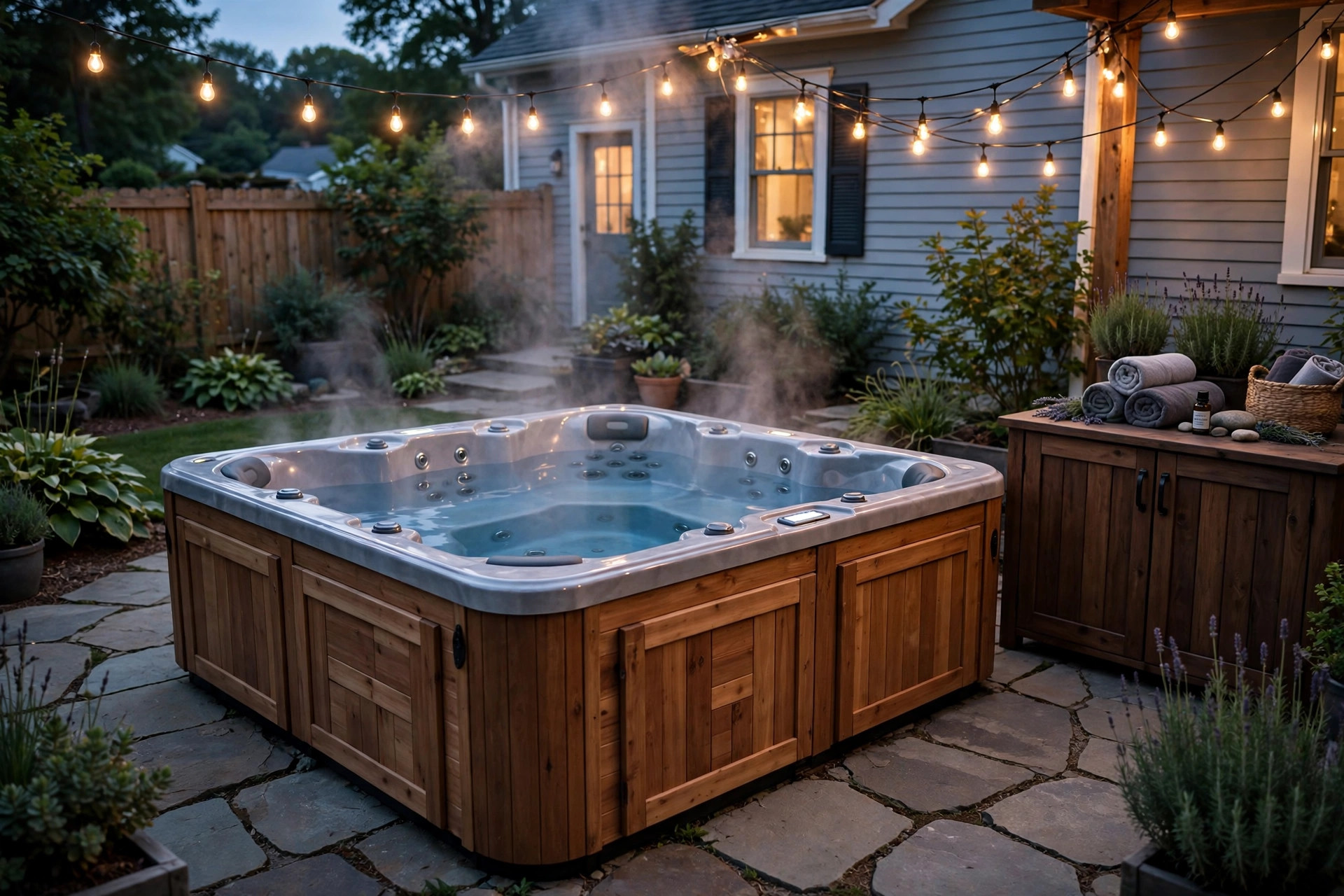

Finding the best hot tub for sore muscles starts with a simple truth. Warm water and moving water help tired bodies feel better. People who work on their feet all day, gardeners who lift heavy bags of soil, weekend athletes with stiff legs, and older adults with aching joints all turn to the same old remedy. A soak in warm, moving water loosens what the day has tightened. But not every hot tub does this job well. Some models look nice and cost less, yet their jets are weak and their seats do not support the back. Others are built with therapy in mind. They have strong adjustable jets, deep seats that hold the body still, and insulation that keeps the water hot from the first minute to the last. This guide explains what to look for, what the main types cost, how to keep the water clean, and how to soak safely. By the end, you will know how to pick a model that truly eases sore muscles instead of one that only fills the backyard.
Why Warm Water Helps Sore Muscles
Heat has been used to treat sore muscles for as long as people have written down their remedies. When muscles work hard, tiny tears form in the fibers. The body repairs them, and the repair process brings stiffness and soreness. Warm water helps in three ways. First, heat widens the blood vessels. More blood reaches the muscles, and the blood carries oxygen and takes away waste. Second, the warmth relaxes the muscle fibers themselves. A tight calf or a knotted shoulder loosens under steady heat. Third, floating in water takes the weight off the body. The buoyancy of the water lifts about ninety percent of a person’s weight. Joints rest. The spine rests. The muscles no longer fight gravity to hold the body upright.
Moving water adds to this effect. The jets in a hot tub push streams of warm water against the body. This is called hydrotherapy. A jet aimed at the lower back presses into muscles that carry much of the day’s load. Jets at the shoulders ease the tension that builds from lifting and reaching. Jets at the feet and calves help people who stand on hard floors. Health writers and spa makers agree on the basic point. The combination of heat, buoyancy, and massage does more than any one of them alone. That is why people looking for the best hot tub for sore muscles should judge a model by its therapy features first and its looks second.
What to Look For in the Best Hot Tub for Sore Muscles
A hot tub that truly helps sore muscles has certain features. Shoppers should check each one before they buy. A low price is tempting, but a tub that leaves you still sore is no bargain.
Jet Power and Placement
Jets are the heart of muscle relief. Look for pumps with strong output, measured in horsepower. Two pumps often beat one large pump because they let the owner run the jets in one zone at full power while keeping other seats gentle. Adjustable jets matter more than a high jet count. A tub may advertise fifty jets, but if they cannot be aimed or turned up, they do little. The best seats let you point the stream at the lower back, the neck, and the calves. Rotary jets that circle are good for large muscles. Directional jets that push straight are good for deep knots.
Seat Design
A good therapy seat cradles the body so the water can do its work. Deep bucket seats with raised backs support the spine. Loungers let a person stretch out full length so the whole body floats. Look for seats of different heights and shapes in one tub. That way each member of the family finds a seat that fits. the jets run at full power. Makers such as HotSpring and Bullfrog Spas build their seats around the human body, and their seating designs show how much thought goes into a single corner seat.
Water Temperature Control
The most helpful soak for sore muscles is usually between 100 and 104 degrees Fahrenheit. The tub should reach that range fast and hold it steady. Good insulation in the cabinet and under the shell keeps heat from escaping, which matters most in winter. A hot tub built for cold climates will hold its temperature even when snow sits on the cover. Weak insulation forces the heater to run all the time, and the water may drop a degree or two during a long soak. That drop is enough to change a relaxing bath into a lukewarm one.
Size and Depth
Deeper water covers more of the body, which means more buoyancy and more warmth on the shoulders. A tub that is 34 to 38 inches deep lets most adults soak to the neck while seated. Small tubs can still help if they are deep. Larger families may want a five or six person model so two people can soak at once without crowding. People with limited space should look at models made for a small backyard, which keep the therapy features in a compact shell.
Types and Options
Hot tubs come in several forms. Each suits a different home and budget. Knowing the types helps a buyer match the tub to the need.
Portable Acrylic Hot Tubs
These are the most common type. They have a hard acrylic shell, a wooden or synthetic cabinet, and a full set of jets. They plug into a 220 volt line and need a strong base, usually a concrete pad. Prices run from about four thousand to fifteen thousand dollars. For sore muscles, this type is the best choice. The shells are deep, the jets are strong, and the seats are shaped for therapy. Companies such as Bullfrog Spas offer models where the jet packs can be moved between seats, so each person gets the massage they want.
Inflatable Hot Tubs
Inflatable tubs cost far less, often between four hundred and one thousand dollars. They heat water with a small electric heater and push it through air jets around the walls. They are easy to set up and can be stored in winter. But their jets are air bubbles rather than strong water streams. They do not press into muscles the way real jets do. They also lose heat quickly in cold weather. An inflatable tub can relax a mildly tired body on a summer night, but it is not the best hot tub for sore muscles in any serious sense.
Plug and Play Models
These sit between the two. They have hard shells and real water jets but run on a standard 110 volt outlet. They heat more slowly and the jets are gentler than full 220 volt models. They suit a renter or a first time buyer who wants real therapy without new wiring. Expect to pay between two thousand and five thousand dollars.
Swim Spas
Swim spas are long tanks, often twelve to nineteen feet, with a current to swim against and a hot tub section at one end. They cost twenty thousand dollars and up. For most sore muscle sufferers, they are more than needed.
Cost and Price
The price of a hot tub has three parts. The purchase price, the installation cost, and the running cost. A buyer should count all three before deciding.
A quality portable tub that helps sore muscles usually costs between six thousand and twelve thousand dollars. Cheaper models exist, but they often cut the very features that matter for therapy, such as the second pump and full foam insulation. Installation adds several hundred to a few thousand dollars. An electrician must run a 220 volt line with a ground fault breaker. A crane may be needed to lift the tub over a fence. A concrete pad or reinforced deck must hold the weight, which can reach five thousand pounds when the tub is full.
Running costs come from electricity, water, and chemicals. A well insulated tub in a mild climate may add thirty to sixty dollars a month to the electric bill. In cold regions the figure can be higher. Chemicals cost about twenty to forty dollars a month if bought in bulk. Water changes every three to four months use several hundred gallons. Retailers like Leslie’s and online stores such as Pool Warehouse sell chemical kits and filters at fair prices.
A used hot tub can save money, but the buyer should test the jets, the heater, and the pump before paying. A cracked shell or a dead pump can turn a bargain into a costly repair.
Care and Upkeep
Clean water is safe water. A hot tub that is not cared for grows bacteria fast because the water is warm and shared. The good news is that the routine is simple and takes only a few minutes a day.
Test the water two or three times a week with strips or a drop kit. Keep the sanitizer level steady. Most owners use chlorine or bromine. Keep the pH between 7.2 and 7.8. When the pH drifts, the sanitizer works poorly and the water can irritate the skin and eyes. A hot tub chemicals starter kit has everything a new owner needs, and guides from Swim University walk through the steps in plain language.
Shock the water once a week to burn off the oils and sweat that filters miss. Rinse the filters every week or two and replace them once a year. Drain and refill the tub every three to four months, or sooner if the water looks cloudy and will not clear. Wipe the waterline with a soft cloth to stop scum from building up. Keep the cover clean and in good shape, because a worn cover lets heat escape and lets dirt fall in.
Safety
A hot tub is a strong tool, and strong tools need care. The heat that helps sore muscles can harm if it is overdone. The U.S. Consumer Product Safety Commission publishes safety guidance for pools and spas, and every owner should read it.
Keep the water at or below 104 degrees Fahrenheit. Soak for fifteen to twenty minutes at a time, then cool down before going back in. Long soaks raise the body temperature and can cause dizziness, nausea, and fainting. Drink water before and during the soak. Alcohol and hot water are a dangerous mix because alcohol hides the signs of overheating and slows the judgment.
Pregnant women, people with heart disease, and people with high blood pressure should talk to a doctor before using a hot tub. The heat changes how the heart works, and for some conditions that change is risky. Children should never use a hot tub alone. Keep the cover locked when the tub is not in use so a child cannot climb in. Anyone with an open cut or a skin infection should stay out until it heals.
Step in and out with care. Wet steps are slippery. A handrail and a non slip mat beside the tub prevent most falls.
Frequently Asked Questions
How hot should the water be for sore muscles?
The sweet spot for most people is between 100 and 104 degrees Fahrenheit. This range is warm enough to loosen tight muscles and wide enough to keep the soak comfortable for fifteen to twenty minutes. Water above 104 degrees raises the risk of overheating and is not advised by safety agencies.
How long should I soak to help sore muscles?
Fifteen to twenty minutes is enough for most people. The muscles relax, the blood flows, and the jets do their work in that time. Longer soaks can lead to dizziness and dry skin. If the soreness is deep, a second short soak later in the day is better than one very long session.
Do hot tub jets really help muscle pain, or is it just the heat?
Both help, and they help more together. Heat alone relaxes muscles and widens blood vessels. The jets add pressure that works like a massage, pushing against knots and stiff spots. People who buy for therapy should give the jets as much weight as the heater when they shop.
Is an inflatable hot tub good enough for sore muscles?
An inflatable tub can take the edge off mild tiredness, but its air jets do not press into muscles the way real water jets do. It also cools down faster, especially outdoors in cool weather. For real, lasting relief of sore muscles, a hard shell tub with strong water jets is the better buy.
How much does it cost to run a hot tub each month?
A well insulated model in a mild climate usually adds thirty to sixty dollars a month for electricity, plus twenty to forty dollars for chemicals. Poor insulation, very cold weather, and heavy use push the number higher. A good cover and a steady care routine keep the cost down.
Can I use a hot tub every day for sore muscles?
Most healthy adults can soak daily as long as the water stays at or below 104 degrees and each session stays near twenty minutes. Daily soaks are common among people with hard physical jobs. Anyone with a heart condition, high blood pressure, or a pregnancy should ask a doctor first.
A Short Final Word
The best hot tub for sore muscles is not the flashiest model on the showroom floor. It is the one with strong, aimable jets, deep supportive seats, steady heat, and a size that fits the home. Shoppers who test the seats, run the jets at full power, and ask about insulation will find the right tub. The reward is waiting at the end of every hard day. Warm water, moving water, and twenty quiet minutes while the soreness of the day melts away. Home improvement writers at The Spruce and big retailers like Home Depot both carry buyer guides that help compare models side by side before the final choice is made.
References
Bullfrog Spas. (n.d.). Hot tubs and spas. https://www.bullfrogspas.com Hot Spring Spas. (n.d.). Hot tubs and spas. https://www.hotspring.com Leslie’s Pool Supplies. (n.d.). Pool supplies and equipment. https://www.lesliespool.com Pool Warehouse. (n.d.). Pool equipment and supplies. https://www.poolwarehouse.com Swim University. (n.d.). Pool and hot tub care guides. https://www.swimuniversity.com The Home Depot. (n.d.). Home improvement products. https://www.homedepot.com The Spruce. (n.d.). Home and garden advice. https://www.thespruce.com U.S. Consumer Product Safety Commission. (n.d.). Product safety information. https://www.cpsc.gov
Was this guide helpful?

About Michael Thompson
The My Garden US editorial team writes practical, in-depth home and garden guides for American homeowners — tested advice, no fluff.
You May Also Like

Salt Water Pool for Beginners Guide
April 25, 2026 0 views
How to Drain Pool for Repairs: A Safe Step-by-Step Guide
June 5, 2026 0 views
Best Pool Alarm for Child Safety: What Every Pool Owner Should Know
February 16, 2026 0 views