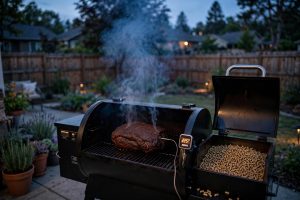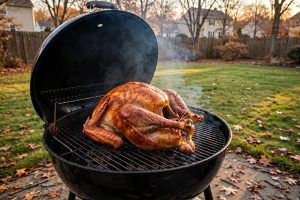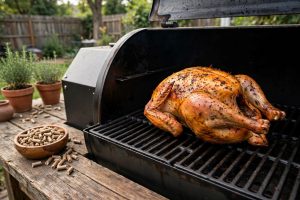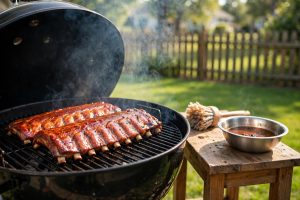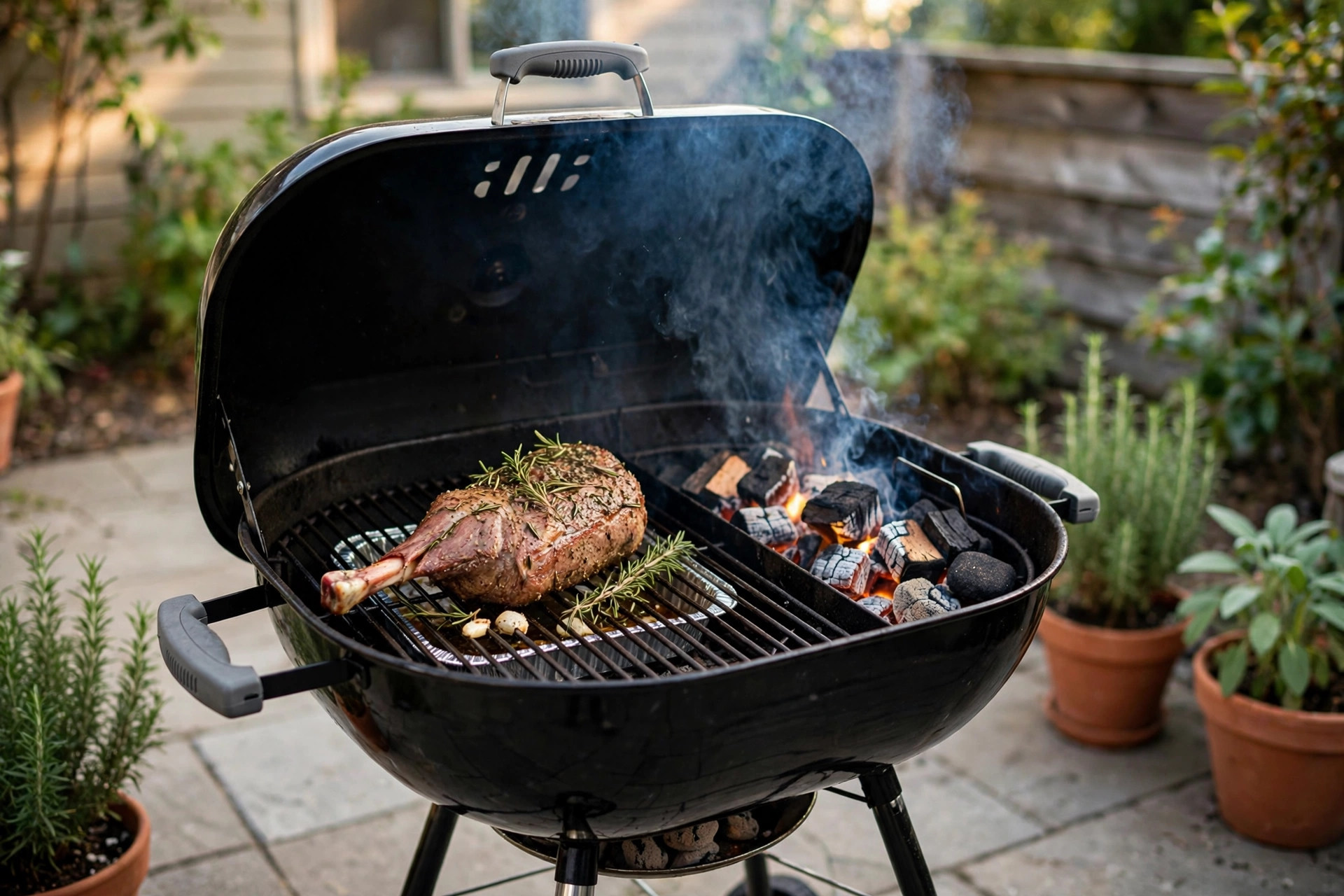
Learning how to smoke lamb on charcoal grill is easier than most home cooks think. Lamb takes well to smoke. Its rich meat stands up to wood flavor without getting lost the way lean poultry can. And a charcoal grill can do the job just as well as a big, costly smoker. All you need is a kettle grill with a lid, a bag of charcoal, some wood chunks, a good thermometer, and patience. This guide walks through every step in plain terms. By the end, you will know how to set up your grill, pick the right cut, manage the fire, and pull tender, smoky lamb off the grate.
Why Smoking Lamb on Charcoal Is Worth the Effort
Lamb is a strong-flavored meat. It carries fat in a way that stays moist through a long, slow cook. Smoke adds a second layer of flavor on top of the natural richness. The result is different from roasted lamb. Roasting gives a browned crust and mild interior. Smoking gives a pink smoke ring under the crust, a gentle wood note in every bite, and meat that pulls apart with little effort.
Charcoal is the best fuel for this kind of cooking. It brings its own flavor to the fire, and it holds low heat for hours once you learn the two-zone setup below. If you already know how to smoke ribs on a charcoal grill, you will find the method here very familiar.
Choosing the Right Cut of Lamb: How to Smoke Lamb on Charcoal Grill
The cut you choose shapes the whole cook.
Best Cuts for Smoking
Leg of lamb. A bone-in leg, usually five to eight pounds, is the most common choice. It has enough fat to stay moist for hours. It feeds a crowd. It also shows a clear smoke ring when sliced.
Lamb shoulder. Shoulder is tougher and fattier than leg. It rewards a long, low cook the same way pork shoulder does. It is often the cheapest cut in the case.
Rack of lamb. A rack is smaller and more tender. It does not need hours of smoke. Give it forty to sixty minutes of gentle smoke, then finish it over direct heat to crisp the outside.
Lamb ribs. These cook much like pork ribs. They take two to three hours and are a good first project if you want practice.
What to Look For
Buy lamb that looks fresh and well-trimmed. The fat should be white and firm, not gray or sticky. Ask the butcher to leave about a quarter inch of fat cap on the leg or shoulder. That fat will baste the meat as it renders. If the label says “spring lamb,” the meat will be milder. Yearling lamb has a stronger flavor that pairs well with heavy smoke.
Bone-In or Boneless
Bone-in is better for smoking. The bone slows the cook and keeps the meat moist. A boneless leg cooks faster but dries out more easily.
Gear and Fuel You Will Need
You do not need a large inventory of tools. The list below covers the basics.
– A kettle-style charcoal grill with a tight-fitting lid – A charcoal chimney starter – Lump charcoal or briquettes – Wood chunks, not chips (apple, cherry, or hickory work well with lamb) – A reliable meat thermometer, ideally a wireless one you can read from inside the house; see this roundup of the best BBQ thermometer wireless for grilling – Long tongs and heat-resistant gloves – A drip pan and aluminum foil – A spray bottle filled with water or apple juice
If you are new to charcoal, read a charcoal chimney starter how to use guide before cook day. Lighting coals the right way is half the battle.
Charcoal or Briquettes
Lump charcoal burns hotter and cleaner. It leaves less ash. Briquettes burn longer and more evenly, which helps on a long cook. Either works. Many cooks mix them: briquettes for the base bed, a few lumps of lump charcoal on top for heat.
Wood chunks should be about fist size. Soak them is not needed.
Setting Up a Two-Zone Fire
The single most important skill in this guide is the two-zone fire. Lamb must cook with indirect heat. Direct heat will burn the outside long before the inside is done.
1. Fill the chimney starter three-quarters full of charcoal. Light it and let the coals ash over, about fifteen to twenty minutes. 2. Bank the hot coals to one side of the grill. That is the hot zone. 3. Place a drip pan with an inch of water on the empty side. That is the cool zone. The lamb goes here. 4. Add two or three wood chunks on top of the hot coals. 5. Put the grate on, close the lid, and let the grill come to temperature with the vents half open.
Aim for 225 to 250 degrees Fahrenheit at grate level. Use the bottom vent to control heat: open it wider to raise the temperature, close it down to lower it. The top vent should stay at least half open so smoke does not turn stale and bitter.
Preparing the Lamb
Take the lamb out of the refrigerator about an hour before cooking. Cold meat on a hot grill cooks unevenly.
Trimming
Trim off any thick hard fat and the thin silver skin on the surface. Leave the soft outer fat cap. Hard fat does not render well and can taste waxy.
Seasoning
Keep the rub simple. Lamb likes salt, black pepper, garlic, and rosemary. A basic rub:
– 2 tablespoons coarse salt – 1 tablespoon cracked black pepper – 1 tablespoon garlic powder – 1 tablespoon dried rosemary, crushed – 1 teaspoon dried thyme
Rub a thin coat of olive oil or yellow mustard on the meat first. The oil helps the rub stick. Then coat all sides with the seasoning. Let it sit for thirty to forty-five minutes while the grill heats up.
Do not season lamb the night before with a salt-heavy rub unless the cut is very thick, or the salt will draw out moisture.
Smoking the Lamb, Step by Step
Now comes the main event. Follow these steps and keep the lid closed as much as possible. Every peek adds fifteen minutes to the cook.
1. Place the meat. Set the lamb on the cool side of the grate, fat side up, over the drip pan. The bone side goes down if there is one. 2. Insert the thermometer. Push the probe into the thickest part of the meat. Keep it away from bone. 3. Close the lid. Leave it closed for at least the first hour. Watch the grill thermometer instead of lifting the lid. 4. Add fuel as needed. Every forty-five to sixty minutes, add six to eight fresh coals and one wood chunk through the hinged grate or by lifting the grate edge with tongs. Do not add wood after the first three hours. Meat stops taking on smoke flavor after that point. 5. Spritz if you like. After the second hour, spray the surface lightly every hour with water or apple juice. This keeps the crust from drying out. 6. Wrap at the stall. A leg or shoulder may stall around 150 to 160 degrees, where the temperature stops rising for an hour or more. Wrap the meat tightly in foil or butcher paper with a splash of broth. Return it to the grill. Wrapping pushes the cook through the stall. 7. Cook to temperature, not time. Pull a leg or shoulder at 195 to 203 degrees for pull-apart meat. Pull a rack at 130 to 135 degrees for medium-rare, then sear it over direct heat for two minutes per side. 8. Rest. This step is not optional. Do not skip the rest. Rest the meat for at least thirty minutes, tented in foil, before slicing. Resting lets the juices settle back into the meat.
Rough Timings
– Lamb rack: 1 to 1.5 hours at 250 degrees – Lamb ribs: 2 to 3 hours at 250 degrees – Leg of lamb: 5 to 7 hours at 225 to 250 degrees – Shoulder: 6 to 8 hours at 225 to 250 degrees
These are guides only. Thickness, weather, and wind all change the timing. Trust the thermometer.
Types of Wood and Flavor Choices
Not all wood tastes the same. Lamb pairs well with mild fruit woods and a few stronger options.
– Apple: Mild, sweet smoke. Safe for beginners. – Cherry: Mild and slightly sweet. Gives a rich red color to the crust. – Oak: Medium strength. A good middle ground for long cooks. – Hickory: Strong and bacon-like. Use it sparingly with lamb or it will overpower the meat. – Mesquite: Very strong. Most cooks skip it for lamb.
A mix of apple and cherry is a fine default. Use two to three chunks for a rack and four to five for a leg. Weber sells wood chunks sized for kettle grills, and many big-box stores stock them in the grill aisle. If you are shopping for gear, Char-Broil also offers a wide range of charcoal equipment.
Cost and Price
Smoking lamb is cheaper than many people expect. Here is a rough breakdown in U.S. dollars.
| Item | Typical cost | |—|—| | Bone-in leg of lamb (6 lbs) | $45 to $70 | | Bag of charcoal (16 lbs) | $12 to $18 | | Wood chunks (one bag) | $8 to $12 | | Basic rub ingredients | $3 to $5 |
A single cook for six to eight people often lands between sixty and one hundred dollars. Home Depot carries charcoal, wood, and kettle grills in one trip; check Home Depot for current prices before cook day. If you are comparing grill models, independent tests from Consumer Reports can help you pick a kettle that holds heat well.
Care and Upkeep of Your Grill
A clean grill cooks better and lasts longer. Build these habits into every cook.
– After each cook, burn off leftover residue with the lid closed and vents open for fifteen minutes. Brush the grate while it is hot. – Empty the ash catcher before every long smoke. Ash chokes airflow and drops the temperature. – Oil the grate lightly before each cook to keep meat from sticking. – Once a season, wash the inside of the kettle with warm soapy water. Check the vents for rust. Replace the cooking grate when the coating flakes. – Store the grill under a cover. Water and sun are the two things that kill a kettle grill fastest.
Kingsford publishes helpful upkeep tips for charcoal equipment; their site is Kingsford. Napoleon and Broil King also keep care guides for their charcoal lines.
Safety
Charcoal cooking is safe when you respect the fire. Keep these rules in mind.
– Never use a charcoal grill indoors, in a garage, or under a covered porch. Charcoal makes carbon monoxide, which is odorless and deadly. – Keep the grill at least ten feet from the house, deck rails, and overhanging branches. – Dispose of ashes only after they are fully cold. Ashes can stay hot for two days. Put them in a metal can with a lid. – Use long tools and heat-resistant gloves. Kettle grills are short, and the heat radiates up. – Keep children and pets away from the cooking area. – Have a spray bottle and a hose nearby in case of flare-ups.
Serious barbecue sites like AmazingRibs.com stress the same fire-safety basics in their guides.
Frequently Asked Questions
How long does it take to smoke lamb on a charcoal grill?
It depends on the cut. A rack takes about an hour. A leg of lamb takes five to seven hours. A shoulder takes six to eight hours. Always cook to internal temperature, not to the clock.
What temperature should I smoke lamb at?
Hold the grill between 225 and 250 degrees Fahrenheit for low and slow cooking. For a rack that you plan to sear at the end, 275 degrees works fine and shortens the cook.
What is the best wood for smoking lamb?
Apple and cherry are the safest picks. They are mild and sweet and suit lamb well. Oak is a good medium option. Use hickory in small amounts, and skip mesquite, which is too strong for most lamb cuts. The Spruce Eats keeps a large library of smoking guides if you want to compare more wood pairings.
Do I need to wrap lamb while smoking?
Wrapping is optional but useful for large cuts. A leg or shoulder often stalls at 150 to 160 degrees. Wrapping in foil or butcher paper with a little broth pushes it through the stall and keeps the meat moist.
Can I smoke lamb on a gas grill?
Yes, but it is harder. Use a smoker box filled with wood chips over one burner, and cook the lamb over the unlit burners. You will get a milder smoke flavor than with charcoal. Traeger makes pellet smokers that hold temperature on their own if you want a set-and-forget option, and Food Network has smoked lamb recipes written for several grill types.
How do I know when smoked lamb is done?
Use a thermometer. For pull-apart leg or shoulder, aim for 195 to 203 degrees. For a rack served medium-rare, aim for 130 to 135 degrees before searing. Rest the meat thirty minutes before slicing.
A Final Word
Smoking lamb on a charcoal grill is one of the most rewarding cooks a backyard cook can learn. The setup is simple. The fuel is cheap. The meat is forgiving. Start with a rack or a small leg for your first cook. Keep the lid closed, trust your thermometer, and use mild wood. Once you taste lamb with a real smoke ring and a crisp, seasoned crust, you will wonder why you waited so long to try it.
References
AmazingRibs.com. (n.d.). Barbecue and grilling science. https://www.amazingribs.com Broil King. (n.d.). Gas and charcoal grills. https://www.broilkingbbq.com Char-Broil. (n.d.). Gas and charcoal grills. https://www.charbroil.com Consumer Reports. (n.d.). Product reviews and ratings. https://www.consumerreports.org Food Network. (n.d.). Recipes and cooking shows. https://www.foodnetwork.com Kingsford. (n.d.). Charcoal, grilling fuel, and outdoor cooking. https://www.kingsford.com Napoleon. (n.d.). Fireplaces, grills, and heating products. https://www.napoleon.com The Home Depot. (n.d.). Home improvement products. https://www.homedepot.com The Spruce Eats. (n.d.). Recipes and cooking guides. https://www.thespruceeats.com Traeger. (n.d.). Wood pellet grills. https://www.traeger.com Weber. (n.d.). Grills and outdoor cooking. https://www.weber.com
Was this guide helpful?

About Lisa Anderson
The My Garden US editorial team writes practical, in-depth home and garden guides for American homeowners — tested advice, no fluff.