Storms, shade, and dead wood leave most yards full of fallen limbs. For many years the only real answer was a gas saw. Today our cordless chainsaw for tree limbs reviews show that battery saws can do most limb work with less noise, less smell, and less trouble to start. A homeowner with a few acres, or even a small city lot, can clear branches with a tool that starts with a button and runs on a battery pack. This guide walks through what these saws do well, how to choose one, what they cost, and how to keep yours safe and sharp. It is written in plain terms so that any reader can follow it and make a sound choice.
Why a Cordless Saw Fits Limb Work
Tree limbs are not trunks. Most limbs in a yard run from one inch to six inches across. A gas saw built for logs is far more than this job needs. A cordless saw matches the task. It is lighter, and a light saw is easier to hold up at chest height or above where limbs grow.
Noise is another gain. Gas saws roar. Battery saws hum. You can cut limbs on a Saturday morning without waking the street. Neighbors notice, and most are glad.
There is also the matter of upkeep. A gas engine needs mixed fuel, air filters, spark plugs, and winter storage care. A battery saw needs a charged pack and a sharp chain. For the weekend user this is a large saving in time and trouble.
Run time is the main limit. A battery gives you thirty to forty five minutes of hard cutting, depending on the wood and the pack size. For limb work this is often enough. Most people cut for a while, stack the brush, and rest while the battery charges. If your yard holds a full day of storm cleanup, two packs or a fast charger solve the problem.
What to Look for Before You Buy: Cordless Chainsaw for Tree Limbs Reviews
Reviews differ because saws differ. The numbers below matter more than the brand name on the side. Read them before you compare prices.
Bar Length
The bar is the flat steel arm the chain runs around. Bars on limb saws run from four inches to eighteen inches. A good rule is simple. Buy a bar a little longer than the thickest limb you plan to cut. For most yards a ten or twelve inch bar is right. It handles the common two to four inch limbs with ease and still manages a six inch limb if you cut from two sides.
Longer bars reach farther but add weight and cost. Shorter bars, found on mini pruning saws, are made for one handed work on small branches. They are fine for garden care but poor for storm cleanup.
Battery Size and Run Time
Cordless saws run on packs marked in volts and amp hours. Most yard saws use 18 to 40 volt packs. Larger voltage usually means more power. Amp hours tell you how long the pack lasts. A five amp hour pack cuts about twice as long as a two and a half amp hour pack of the same voltage.
Some makers share packs across all their tools. If you already own a mower or trimmer from one brand, a saw that uses the same pack can save real money. Many cordless chainsaw for tree limbs reviews point out that the battery platform matters as much as the saw. A cheap saw on a dead-end battery line costs more in the end than a dearer saw on a line you already own.
Chain, Oil, and Tension
The chain does the cutting, and a sharp chain matters more than motor size. Look for a saw that lets you set chain tension with a knob or dial instead of tools. You will tighten the chain often in the first hour of a new chain, and a tool-free dial turns a chore into a ten second job.
Almost all full-size cordless saws have automatic oilers. The oiler feeds bar oil to the chain as you cut. This keeps the chain cool and the bar alive. Check the oil level before each use, just as you check the battery. Mini pruning saws often skip the oiler and ask you to rub oil on the chain by hand. That is fine for light garden cuts but tiresome in long sessions.
Types of Cordless Saws for Limbs
Not every battery saw is shaped the same. Three shapes cover nearly all limb work.
Mini pruning saws. These are small one handed saws with bars of four to six inches. They weigh about three pounds with a battery. They are made for pruning fruit trees, cutting dead branches on shrubs, and trimming small limbs while you stand on the ground. They are not meant for thick storm wood.
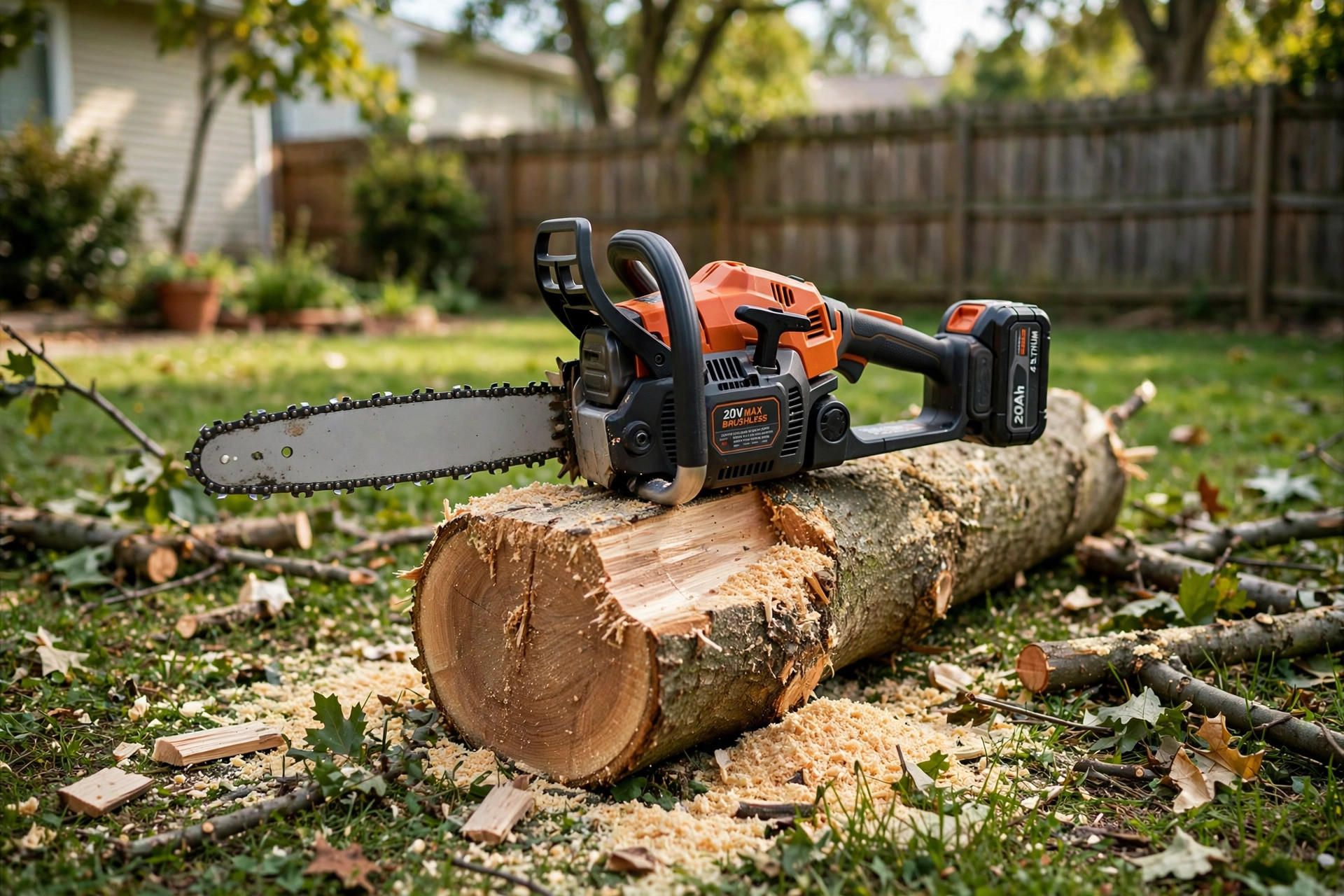
Rear-handle saws. This is the standard shape, like a small gas saw. Two hands hold it, the bar runs ten to eighteen inches, and the power suits limbs up to the bar length. This is the saw most buyers want. Cordless chainsaw for tree limbs reviews focus on this type because it does the most work for the money.
Pole saws. A pole saw puts a small saw head on the end of a long pole, some with powered extension to ten or twelve feet. It lets you cut high limbs while your feet stay on the ground. The cut is slower than with a rear-handle saw, and the pole is heavy at full reach, but the safety gain is large. No ladder, no climbing, no saw near your face.
Some brands sell kits with two heads, one for low cuts and one for high cuts. If you have old trees, a pole saw may save you a tree service bill.
Cost and Price
Prices in the United States run in clear bands. Mini pruning saws cost forty to ninety dollars for the tool alone, and sixty to one hundred twenty dollars in a kit with one battery and charger. Rear-handle saws run one hundred fifty to three hundred fifty dollars for a kit, depending on bar length and battery size. Pole saws sit between one hundred eighty and four hundred dollars for a kit.
The kit price includes the battery and charger. Tool-only prices leave them out. A tool-only saw looks cheap until you add a ninety dollar battery and a forty dollar charger. Do the full math before you compare.
Running costs are low. Electricity for a charge costs a few cents. A quart of bar oil costs about five dollars and lasts many sessions. Chains cost ten to twenty dollars each, and a careful user sharpens a chain many times before it needs to be thrown away. Over five years a cordless saw often costs less than a gas saw of the same class, because there is no fuel, no spark plugs, and no shop tune-ups.
Big box stores and online sellers move prices often. Many cordless chainsaw for tree limbs reviews note that fall sales bring the best prices, since makers clear stock before winter. Spring prices rise with demand.
Care and Upkeep
A battery saw asks little, but it asks it every time. Give it this care and it will last many years.
Keep the chain sharp. A sharp chain throws long curls of wood. A dull chain throws dust and pulls hard. Sharpen with a round file and guide, or carry the chain to a shop for a few dollars. Most owners learn to file by hand after two or three tries.
Keep the chain at the right tension. A loose chain can jump the bar and whip back. A tight chain heats up and wears fast. The right setting lets you pull the chain a quarter inch away from the bar with two fingers and have it snap back.
Clean the bar groove. Sawdust packs into the slot where the chain rides. Scrape it out with a thin stick after each use. Turn the bar over now and then so both edges wear even.
Store the battery right. Keep packs indoors at room temperature, near half charge, when the saw sits for months. Heat and full charges left for weeks shorten battery life. Cold packs cut weaker; warm a cold pack in your pocket before use.
Wipe the saw clean and check the oil before each session. These two habits take a minute and prevent most trouble.
Safety
A small saw is still a saw. Treat it with full respect.
Wear eye guards, gloves, and sturdy boots. A hard hat is wise when cutting above your head, since cut limbs fall where they fall. Many owners pair their saw with the same gear they use for a top rated string trimmer for thick weeds, because yard tools share the same risks.
Plan each cut. Stand to the side of the falling limb, never under it. Hold the saw with both hands unless it is a mini saw made for one hand. Keep your thumb wrapped under the front handle. Never cut above shoulder height with a rear-handle saw. That is pole saw work.
Mind the kickback zone. The tip of the bar, the upper quarter of the nose, can throw the saw back toward you if it touches wood. Cut with the bottom of the bar near the motor end whenever you can.
Keep the chain brake working. The brake is the lever in front of your left hand. Push it forward to stop the chain at once. Test it before each use.
Work with a partner when you can. A second person can steady limbs, carry brush, and call for help if something goes wrong. Read the safety pages at Consumer Reports for product-review topics before you buy, since their testers measure kickback and braking on many models.
Frequently Asked Questions
How thick a limb can a cordless saw cut?
Most rear-handle battery saws cut limbs up to their bar length with ease, and a little beyond with two-sided cuts. A twelve inch bar handles a ten inch limb without strain. A six inch mini saw tops out near four inches. Match the bar to your trees before you buy.
How long does a battery last?
A standard four or five amp hour pack gives thirty to forty five minutes of steady cutting in soft wood like pine, and less in oak or hickory. Most home sessions fit in one pack. Heavy storm cleanup needs two packs or a fast charger.
Are cordless saws as strong as gas saws?
For limbs, yes. A good 40 volt saw cuts four inch limbs as fast as a small gas saw. Gas still wins for all-day felling of large trees, where tank refills beat battery swaps. If your work is limbs and firewood from limbs, cordless is enough.
Do I need bar oil in a battery saw?
Yes, unless your mini saw is oiled by hand. The chain moves fast and rubs steel on steel. Without oil it heats, dulls, and wears out the bar. Fill the oil tank when you charge the battery and it becomes a habit.
Can I cut overhead limbs with a cordless saw?
Use a pole saw for high work. Never lift a rear-handle saw above your shoulders. Falling limbs, kickback, and loss of footing make overhead cutting with a short saw one of the riskiest jobs in the yard. Pole saws were made for this exact task.
What other tools pair well with a chainsaw for yard care?
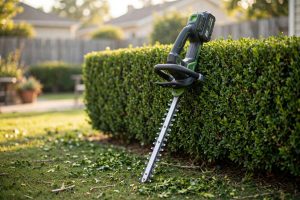
A saw handles wood, but brush and leaves need their own tools. Many buyers add a battery powered hedge trimmer reviews 2026 model for shrubs, and a leaf vacuum for large yards buying guide plan for fall cleanup. Engine makers such as Briggs and Stratton and equipment makers like Toro sell whole battery lines so one set of packs can run the saw, the trimmer, and the mower.
A Short Final Word
A cordless chainsaw for tree limbs suits the way most of us work. It starts at once, cuts quietly, and asks little care. Pick a bar a touch longer than your thickest limb, buy into a battery line you can grow with, and keep the chain sharp. Do that, and the saw will be ready every time a storm drops wood in your yard. Read a few cordless chainsaw for tree limbs reviews, compare two or three models on the points in this guide, and buy with confidence.
References
Briggs & Stratton. (n.d.). Outdoor power equipment and engines. https://www.briggsandstratton.com Consumer Reports. (n.d.). Product reviews and buying guides. https://www.consumerreports.org Toro. (n.d.). Lawn and garden equipment. https://www.toro.com
Was this guide helpful?

About Emily Rodriguez
The My Garden US editorial team writes practical, in-depth home and garden guides for American homeowners — tested advice, no fluff.