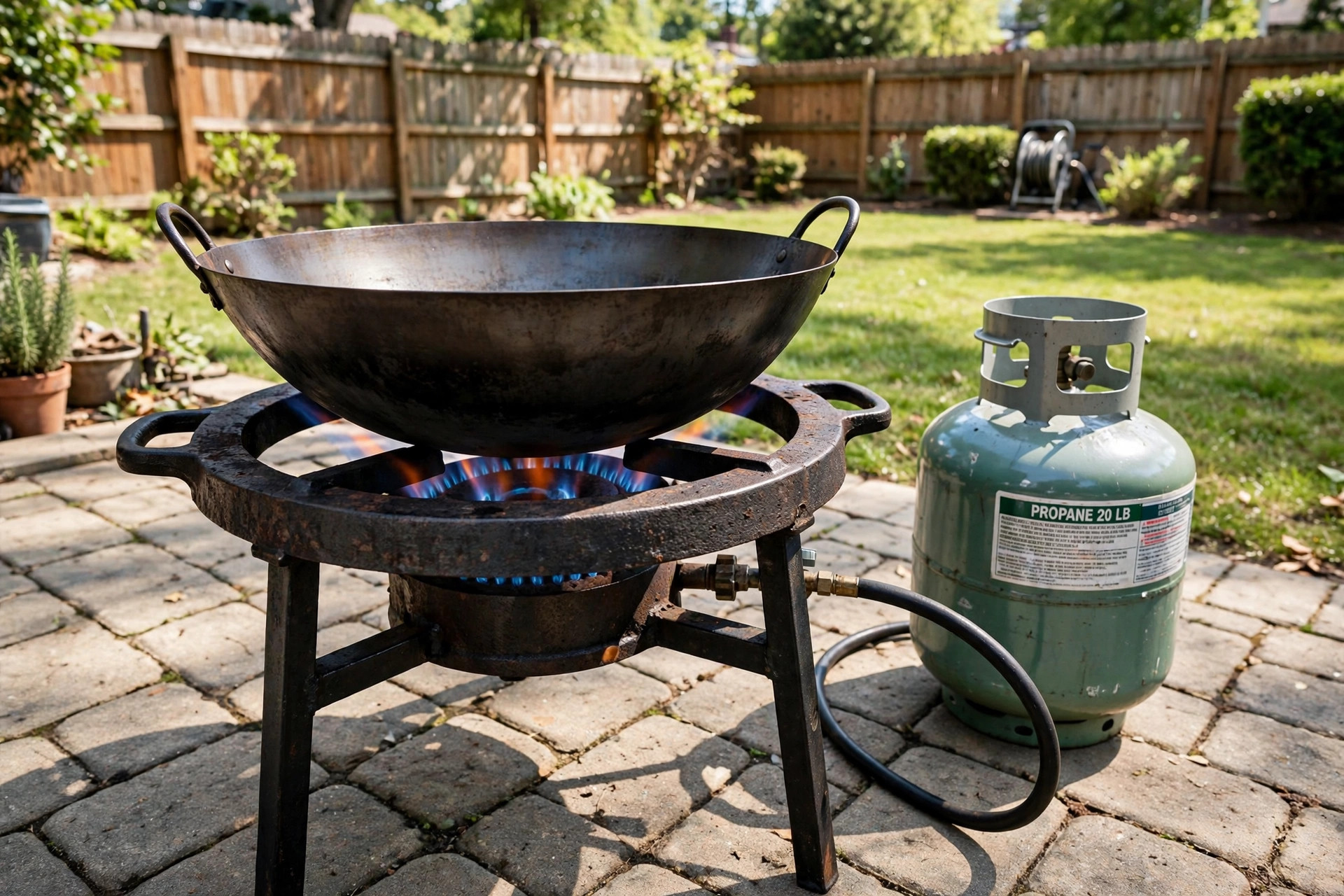

The best outdoor wok burner for patio use is a simple machine with one job. It must make strong, steady heat in the open air. A good burner lets you stir fry, sear, and boil outside the kitchen. It keeps smoke and strong smells out of the house. It also gives the wok the fierce heat that a home stove can not reach.
Many cooks learn this the hard way. They try to use a round bottom wok on a flat kitchen stove. The wok wobbles. The heat is weak. The food steams instead of sears. A patio wok burner fixes all three problems at once. It holds the wok in a ring. It burns hot and fast. And it sits outside where grease and smoke do no harm.
Why a Patio Wok Burner Matters
Wok cooking needs heat. Real heat. A standard home range puts out about seven thousand to twelve thousand BTU per burner. A dedicated outdoor wok burner can put out fifty thousand to two hundred thousand BTU. That gap is the difference between limp vegetables and crisp, smoky stir fry.
The high heat does two things. First, it heats the wok metal fast. Second, it keeps the food from cooling the pan. When cold meat hits a weak pan, the temperature drops and the meat boils. When cold meat hits a strong pan, the surface stays hot. The meat browns and picks up the smoky taste that wok cooks love.
There is a second reason to cook outside. Wok cooking makes smoke. Oil at high heat throws off fumes. Peppers and spices can fill a kitchen with a harsh smell. On the patio, the wind carries it all away. Your smoke alarm stays quiet. Your curtains stay clean.
A third reason is space. A wok burner stands on its own. It needs only a flat spot and a propane tank. On a busy cookout day, it works as a second kitchen. You can fry rice on the burner while burgers cook on the flat top grill in your outdoor kitchen.
How to Choose the Best Outdoor Wok Burner for Patio Use
Not all burners are equal. Some are built for heavy daily use. Some are light and made for camping. The right choice depends on how you cook and how often. The points below cover what to check before you buy.
Heat Output and BTU Rating
BTU is the main number to watch. It measures heat output per hour. For wok cooking on a patio, look for fifty thousand BTU or more. A burner in the sixty-five thousand to one hundred thousand range suits most home cooks.
Very high BTU sounds good, but more is not always better. A two hundred thousand BTU burner can warp a thin wok. Beginners do better with a mid-range burner and a good regulator. Control matters as much as power.
Check whether the BTU figure is for the burner alone or the full kit. Reviews from owners, such as those found on Consumer Reports, can tell you how a burner behaves in practice.
High Pressure Versus Low Pressure
Outdoor wok burners come in two gas styles. High pressure burners run at higher gas pressure. They make intense heat with a small flame head. They need a special high pressure regulator and hose. Most serious patio wok burners are high pressure.
Low pressure burners run like a normal grill. They make less heat but are simpler and gentler. They work fine for boiling and light stir fry. They do not give the sear that wok fans want.
If you plan to buy one burner for real wok cooking, choose high pressure. Make sure the kit includes the right regulator. Never swap regulators between high and low pressure units. The wrong match can make a dangerous flame.
Burner Head and Wok Ring Design
The burner head is where the flame forms. Cast iron heads are the common choice. They are heavy, cheap, and stand up to heat. Brass heads cost more but resist rust and give an even flame. For patio use in wet climates, brass or coated heads last longer.
Above the head sits the wok ring. This ring holds the round bottom wok over the flame. A good ring fits your wok size. Most rings suit fourteen to eighteen inch woks. Some burners ship with a flat grate too, so you can set a pot or kettle on top.
Wind guards matter on a patio. Open flame dies in a gust. Look for a burner with a wind shield or a deep frame around the head. A simple shield can double the useful heat on a breezy day.
Stand, Frame, and Stability
A patio burner must stand steady. Look for a welded steel frame with wide legs. The frame should not rock on flat concrete. Short, squat burners are more stable than tall, narrow ones. If your patio has pavers with small gaps, wide feet bridge them better.
Some burners come as a table or cart unit. These cost more but add a work shelf. A shelf holds oil, sauce, and cut meat within reach. When you stir fry, speed matters.
Weight is a trade-off. Heavy frames stay put in wind. Light frames move to storage with ease. If the burner will live on the patio, weight is a plus.
Regulator, Hose, and Ignition
The regulator controls gas flow from the tank. A good kit includes an adjustable regulator with a clear dial. The hose should be at least four feet long. That keeps the propane tank a safe distance from the flame.
Ignition type varies. Some burners light with a match or lighter. Some have a push-button spark igniter, which is handy in wind. But spark units can fail after a season of rain. Keep a long lighter on hand either way.
Check the hose and fittings once a year. Look for cracks, soft spots, and loose threads. A soapy water test finds leaks fast. Brush soapy water on each joint and open the gas. Bubbles mean a leak. Fix it before you light.
Types of Outdoor Wok Burners
Patio wok burners fall into a few clear types. Each suits a different cook.
Single ring cast iron burners are the most common. They are simple, strong, and cheap. A heavy iron ring burner on a steel stand does the job for most families. Prices start low. They last for years with basic care.
High output jet burners make a ring of many small flames. They heat the wok sides as well as the bottom. They cost more and use more gas. They suit cooks who want the closest thing to a restaurant wok range.
Wok burner carts and stations add shelves, hooks, and sometimes a second small burner. They turn the patio corner into a real outdoor wok station. They cost the most and need the most space. They are a good pick if you cook Asian food several times a week.
Portable tabletop burners are small and light. They sit on a table and run off a small propane bottle, much like a portable grill for camping. They make less heat than a full patio unit.
Natural gas conversion kits exist for homes with a gas line. They remove the need for tank swaps. They need a plumber or gas fitter to install. Check local codes first.
Cost and Price
Outdoor wok burners span a wide price range. A basic cast iron single burner kit costs about thirty to sixty dollars. It includes the burner, stand, regulator, and hose. This is enough for most beginners.
Mid-range burners with better frames, wind guards, and brass heads run sixty to one hundred fifty dollars. This is the sweet spot for regular patio cooks. You get stable build and better flame control.
High output and cart-style stations run one hundred fifty to four hundred dollars or more. You pay for shelves, heavier steel, and hotter heads. A serious cook who uses the burner weekly may find the cost fair.
Running cost is mostly propane. A standard twenty pound tank holds about four and a half gallons. A one hundred thousand BTU burner uses roughly one gallon per hour at full blast. Most families get many cookouts from one tank.
Shop around before you buy. Big stores like Home Depot carry several models in season. Sites like The Spruce Eats publish buying guides that compare models side by side. Late summer sales can cut costs by a third.
Care and Upkeep
A patio wok burner lives outside. Rain, dust, and grease wear it down. A little care keeps it working for years.
Clean the burner head after every few uses. Let it cool first. Brush off food bits and ash with a stiff brush. Check that the flame holes are open. A thin wire clears a blocked hole.
Cover the burner when not in use. A simple grill cover keeps rain off. Water in the gas line causes sputter and rust. Store the propane tank upright and away from the burner. Never store a tank indoors.
At the start of each season, check the whole unit. Tighten bolts. Test the hose with soapy water. Light the burner and watch the flame. It should be mostly blue with small yellow tips. A lazy yellow flame means low gas flow or blocked holes.
The wok needs care too. Season a carbon steel wok before first use. Heat it, oil it, and wipe it out. Repeat until the metal darkens. After cooking, wash with hot water and a soft brush. Dry it on heat and oil it lightly before storage.
Safety on the Patio
An outdoor wok burner is safe when used with care. Gas and high heat demand respect. Follow these rules every time.
Place the burner on flat, hard ground. Concrete or pavers are best. Keep it away from wood decks unless the maker rates it for deck use. Heat from below can scorch wood. Use a heat mat under the stand if you are unsure.
Keep space around the burner. Three feet of clear space on all sides is a good rule. Move chairs, toys, and dry plants away. Never use a wok burner under a low roof, awning, or inside a garage. Carbon monoxide builds up fast in closed spaces.
Keep the propane tank upright and at hose length from the flame. Close the tank valve when you finish cooking. This one habit prevents most gas accidents.
Stay with the burner while it is lit. Keep children and pets back from the hot zone. A wok full of hot oil tips easily.
Keep a fire extinguisher near the patio. A dry chemical unit rated for grease fires is best. Know where it is before you light. Water makes a grease fire worse. Smother small flare-ups by cutting the gas, not by pouring water.
The U.S. Consumer Product Safety Commission is not in the grill lists above, but general grill safety guidance from makers like Weber and Char-Broil applies to wok burners too. Read the manual that ships with your unit. It lists the clearances and limits for your exact model.
Frequently Asked Questions
Can I use an outdoor wok burner on a wood deck? It depends on the model. Many makers warn against wood decks. The burner throws heat down as well as up. If you must use a deck, put a large heat-resistant mat under the stand. Stone or concrete is safer.
What size wok fits a patio burner? Most patio burners fit fourteen to eighteen inch round bottom woks. Check the ring diameter in the specs. The wok should sit deep in the ring without wobbling. Match the wok to the ring, not the other way around.
How much propane does a wok burner use? A one hundred thousand BTU burner burns about one gallon of propane per hour at full heat. A twenty pound tank holds about four and a half gallons. Turn the flame down between batches to save gas.
Is a high pressure burner safe for home use? Yes, when it is used as directed. Use the regulator that ships with the unit. Keep the hose in good shape. Cook in the open air. Close the tank valve after each use.
Do I need a special wok for outdoor burners? A round bottom carbon steel wok is the best match. It sits in the ring and heats fast. Avoid thin nonstick woks. The high heat ruins the coating and can give off fumes.
A Short Final Word
The best outdoor wok burner for patio cooking is not the hottest or the priciest one. It is the one that fits your wok, stands steady on your patio, and lights every time you need it. Pick a solid frame, a true high pressure regulator, and a wind guard. Spend a little time on setup and safety checks. Then cook.
Start simple. Heat the wok. Add oil. Listen for the sizzle. With a good patio burner, that sound comes fast and stays strong. Your stir fries will taste closer to the restaurant kind. And your kitchen will stay cool and clean while you do it.
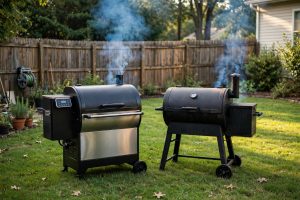
If you are building out the whole patio kitchen, plan the layout as one project. A wok burner pairs well with a smoker for beginners and a main grill. Give each station its own space. Good layout makes cookout day calm instead of crowded.
For more on outdoor cooking methods, the guides at AmazingRibs and Traeger cover fire and heat control in depth. For frame and build comparisons, Napoleon and Broil King publish detailed specs. Take your time, compare two or three models, and buy once.
References
AmazingRibs.com. (n.d.). Barbecue and grilling science. https://www.amazingribs.com Broil King. (n.d.). Gas and charcoal grills. https://www.broilkingbbq.com Char-Broil. (n.d.). Gas and charcoal grills. https://www.charbroil.com Consumer Reports. (n.d.). Product reviews and ratings. https://www.consumerreports.org Napoleon. (n.d.). Fireplaces, grills, and heating products. https://www.napoleon.com The Home Depot. (n.d.). Home improvement products. https://www.homedepot.com The Spruce Eats. (n.d.). Recipes and cooking guides. https://www.thespruceeats.com Traeger. (n.d.). Wood pellet grills. https://www.traeger.com U.S. Consumer Product Safety Commission. (n.d.). Product safety information. https://www.cpsc.gov Weber. (n.d.). Grills and outdoor cooking. https://www.weber.com
Was this guide helpful?

About David Wilson
The My Garden US editorial team writes practical, in-depth home and garden guides for American homeowners — tested advice, no fluff.
You May Also Like
How to Grill Chicken Thighs With Crispy Skin
June 17, 2026 0 views
The Best Portable Grill for Camping Reviews: A Plain Guide
September 28, 2026 0 views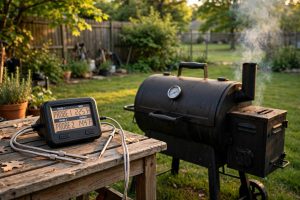
Best Smoker Thermometer Dual Probe Reviews
June 17, 2026 0 views