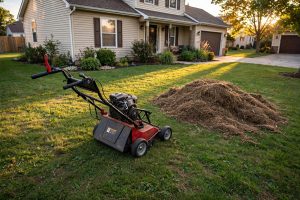

Brown patches in a lawn are a common sight. They show up in summer. They show up in spring. They can spoil the look of a whole yard. The good news is that most patches can be fixed. If you want to learn how to fix brown patches in lawn, this guide will help. It covers the causes. It covers the repair steps. It covers cost and care. With a little work, your grass can be green again.
Why Brown Patches Matter
A lawn is more than grass. It is part of the home. A green lawn raises the value of a house. It gives children a place to play. It cools the air around the home in summer.
Brown patches do more than look bad. Dead spots let weeds move in. Weeds spread fast. A small patch can turn into a large weed bed in one season. Patches can also mean a deeper problem. Disease, insects, or poor soil may be at work. If you ignore the patches, the problem grows.
Fixing brown patches early saves money. Seed and sod are cheap. A full lawn replacement is not. Early repair also keeps the yard safe. Bare spots turn to mud when it rains. Mud washes into paths and driveways. A thick lawn holds the soil in place.
Common Causes of Brown Patches: How to Fix Brown Patches in Lawn
Before you fix the patches, you must find the cause. Different causes need different fixes. Here are the most common reasons for brown spots.
Drought and Heat Stress
Dry weather is the top cause of brown patches. Grass needs about one inch of water per week. In hot months, it needs more. Sprinklers may miss some areas. Corners near driveways dry out fast. Heat from concrete can burn the grass edges.
Signs of drought stress include dry, curled blades. The grass turns gray-green first. Then it turns brown. Footprints stay visible on dry grass. If you walk on the lawn and the prints do not spring back, the grass needs water.
Lawn Diseases
Several diseases cause round brown patches. Brown patch disease is common in warm, humid weather. It forms circles of dead grass. Dollar spot makes small silver-brown spots. Take-all patch kills grass in cool, wet seasons.
Diseases spread in still, damp air. Thick thatch holds moisture and feeds disease. Mowing too short also weakens the grass. Weak grass gets sick more often.
Grubs and Insects
White grubs live in the soil. They eat grass roots. A grub-damaged lawn feels spongy. You can lift the brown sod like a carpet. Skunks and birds dig in grub-heavy lawns. They tear up the turf to reach the grubs.
Chinch bugs are another pest. They suck sap from grass blades. They leave yellow and brown patches in sunny areas. Sod webworms chew the blades at night. Look for moths flying low over the lawn at dusk.
Dog Urine and Foot Traffic
Dog urine burns grass. It leaves round brown spots with green rings. Female dogs cause more damage than males. The damage is worse in dry weather.
Heavy foot traffic also kills grass. Paths between the gate and the door wear thin. Children playing in one spot trample the turf. The soil under worn paths becomes hard. Water cannot soak in.
Mower Problems
A dull mower blade tears grass instead of cutting it. Torn tips turn brown. The lawn looks ragged. Low mowing scalps the grass. Scalped spots turn brown in the sun. Fuel or oil spills from a mower can also kill grass in patches.
Good mower care tips from equipment makers can help you keep blades sharp and decks clean.
How to Diagnose the Problem
Start by looking at the shape of the patches. Round spots may point to disease or dog urine. Irregular patches may point to drought or grubs. Check the edges of the patch. A dark ring around a brown center often means disease.
Next, test the soil. Push a screwdriver into the brown area. If it goes in hard, the soil is dry or compacted. Water the area well. Check again the next day. If the grass starts to green up, drought was the cause.
Do the tug test. Grab a handful of brown grass. Pull gently. If the grass lifts away with no roots, grubs may have eaten the roots. Dig up a square foot of turf in the patch. Count the grubs in the soil. More than five grubs per square foot is a problem.
Look at the blades up close. Chewed edges point to insects. White or pink threads on the blades point to disease. Yellow streaks may point to chinch bugs. Take notes. A clear diagnosis leads to the right fix.
Check your watering habits too. Place empty cans on the lawn. Run the sprinklers for fifteen minutes. Measure the water in the cans. Low spots in the cans show dry zones. Adjust the sprinkler heads to cover those zones.
Repair Methods: How to Fix Brown Patches in Lawn
Once you know the cause, choose the repair method. Small patches need seed. Large patches need sod. Pests and disease need treatment first.
Reseeding a Small Patch
Reseeding works for patches under one foot wide. It is cheap and simple. Follow these steps.
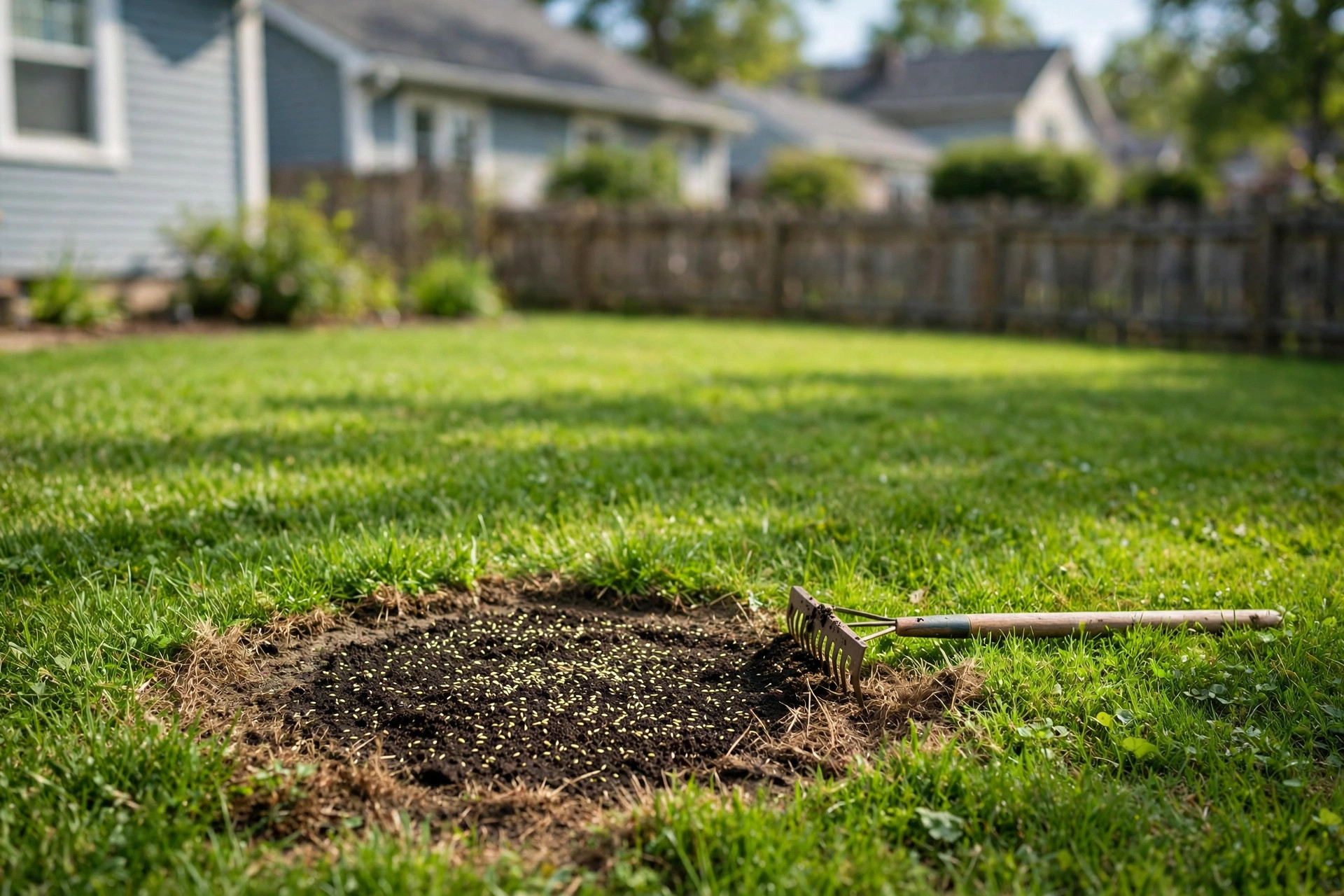
1. Remove the dead grass. Use a rake to clear the patch. Pull out loose thatch and dead blades. Rake down to bare soil. 2. Loosen the soil. Use a hand fork or garden tool. Break the top inch of soil. Add a thin layer of compost if the soil looks poor. 3. Spread the seed. Choose seed that matches your lawn type. Cool-season grasses include Kentucky bluegrass and fescue. Warm-season grasses include Bermuda and zoysia. Spread the seed at the rate on the bag. 4. Cover lightly. Press the seed into the soil. Add a thin layer of straw or peat moss. This holds moisture. 5. Water daily. Keep the seed bed moist for two to three weeks. Do not let it dry out. Do not flood it. 6. Mow high. Wait until new grass is three inches tall. Then mow it to two and a half inches. Keep new grass a little taller than old grass.
New seed needs patience. It may take four to six weeks to fill in. Keep foot traffic off the new grass.
Patching with Sod
Sod gives instant results. It works best for patches over one foot wide. Buy fresh sod from a local nursery. Choose the same grass type as your lawn.
Cut the dead patch into a square. Use a flat spade. Remove the dead sod and two inches of old soil. Add fresh topsoil. Level it so the new sod will sit even with the old lawn.
Lay the sod piece in place. Press the edges tight against the old grass. Water it well right away. Water daily for two weeks. Avoid walking on the new sod until it roots. Test by tugging a corner after ten days. If it resists, the roots have taken hold.
Treating Disease
Fungicides can stop lawn disease. Apply them at the first sign of trouble. Follow the label rates exactly. Water the product into the soil if the label says so. Do not mow for two days after treatment.
Cultural fixes matter as much as chemicals. Mow at the right height. Water early in the morning. Morning watering lets blades dry by noon. This slows disease. Dethatch if thatch is over half an inch thick. Good air flow keeps the lawn healthy.
Treating Grubs and Insects
Grub control works best in late summer. That is when young grubs feed near the surface. Apply grub killer to the whole lawn, not just the patches. Water it in well.
For chinch bugs, insecticidal soap can help in small areas. Larger areas may need a labeled insecticide. Always read the label. Keep children and pets off treated grass until it is dry.
After treatment, reseed or sod the dead spots. The grass will not come back on its own once the roots are gone.
Cost of Fixing Brown Patches
Repair costs vary by method. A bag of grass seed costs five to twenty dollars. One bag treats many small patches. Topsoil and compost add ten to thirty dollars.
Sod costs more. A single piece of sod costs two to five dollars. Larger areas cost one to two dollars per square foot installed. Doing it yourself saves labor cost.
Fungicide and insecticide cost fifteen to forty dollars per bag or bottle. One container often covers five thousand square feet. That is more than most patches need. You can save the rest for later use.
Tool costs are low if you own the basics. A rake, a hand fork, and a garden hose are enough. If you need to rent gear, check lawn dethatcher rental prices near me before you book. Renting a dethatcher or aerator for a day is far cheaper than buying one.
A full professional lawn repair can cost two hundred to six hundred dollars. This includes diagnosis, treatment, and reseeding. For most homeowners, a do-it-yourself repair is enough.
Care and Upkeep After Repair
New grass needs steady care. Water is the top need. Give new seed or sod one inch of water per week. Split it into two or three sessions. Deep, rare watering builds deep roots.
Mow at the right height. Most lawns do best at three inches. Tall grass shades the soil. Shade holds moisture and blocks weeds. Never cut more than one third of the blade at once. Sharp blades make clean cuts. See mower maker Deere guides for blade care basics.
Feed the lawn at the right time. Fertilizer helps new grass grow thick. Apply a starter fertilizer when you seed. Follow with regular feeding in spring and fall. If you grow warm-season turf, read up on the best fertilizer for St. Augustine grass in Texas or the right product for your own grass type and region.
Watch your pre-emergent weed killer application timing closely. Pre-emergent products stop weed seeds from sprouting. They also stop grass seed from sprouting. Do not apply pre-emergent on newly seeded areas. Wait until the new grass has been mowed three times.
Aerate once a year. Aeration pulls small plugs from the soil. This lets air, water, and food reach the roots. Fall is the best time to aerate cool-season lawns. Spring works for warm-season lawns.
Overseed thin areas each fall. A thick lawn fights weeds on its own. Keep pets off new grass for two weeks. Train dogs to use one corner of the yard. This limits urine damage.
Safety Tips
Lawn products need care in handling. Read every label before you open a bag or bottle. Wear gloves when you spread seed, fertilizer, or chemicals. Wear eye protection when you spray liquids.
Keep children and pets off treated areas. Follow the label for re-entry times. Most products are safe once dry. Store all products in a locked shed or high shelf. Keep them in their original containers.
Watch for heat when you work. Repair work in summer is hard. Work in the early morning. Drink water often. Take breaks in the shade.
Check local rules before you spray. Some towns limit pesticide use near wells or streams. If you are unsure, ask your county extension office. They give free lawn advice.
Product review sites like Consumer Reports test spreaders and other lawn gear, which can help you pick safe, reliable tools.
Frequently Asked Questions
Will brown grass come back on its own?
Dormant grass can come back. Dead grass cannot. Dormant grass turns brown in heat or cold but the roots live. Water it and it greens up. Dead grass pulls up easily and has no green at the base. Dead patches need reseeding or sod.
How long does it take to fix a brown patch?
Small seeded patches take four to six weeks to fill in. Sod patches look good in one day but need two to three weeks to root. Disease or grub damage takes longer. You must treat the problem first, then repair the bare spots.
Can I just put topsoil over a brown patch?
No. Topsoil over dead grass will not fix the problem. The dead grass blocks the seed from touching soil. Always remove dead grass first. Loosen the soil. Then seed or sod.
Why do brown patches keep coming back in the same spot?
The cause is still there. It may be a buried rock, poor soil, a sprinkler gap, or a grub hot spot. Dig into the spot. Look for rocks or hard clay. Fix drainage and soil before you reseed again.
Is it better to seed or sod a brown patch?
Seed is cheaper and works for small spots. Sod is faster and better for large bare areas. Sod also fights weeds better in the first weeks. Choose seed if you have time and a small budget. Choose sod if you want instant cover.
When is the best time to repair brown patches?
Fall is best for cool-season grasses. Spring is best for warm-season grasses. Avoid seeding in peak summer heat. New seedlings dry out fast in July and August. Early morning planting and steady water give the best results.
A Final Word
Brown patches are a normal part of lawn care. Every yard gets them. The key is to act early. Find the cause. Pick the right fix. Seed or sod the bare spots. Then care for the new grass.
A little steady work beats a big rescue job. Water deep. Mow high. Feed on time. Watch for pests. Your lawn will reward you with thick green grass. The patches will fade. The yard will look its best again.
References
Consumer Reports. (n.d.). Lawn care and garden product reviews. https://www.consumerreports.org Deere & Company. (n.d.). John Deere lawn and garden products. https://www.deere.com Toro. (n.d.). Lawn care products and support. https://www.toro.com
Was this guide helpful?

About Michael Thompson
The My Garden US editorial team writes practical, in-depth home and garden guides for American homeowners — tested advice, no fluff.
You May Also Like

River Rock Landscaping Ideas for the Front Yard
May 26, 2026 0 views
Gravel vs Mulch for Landscaping Beds: Which One Should You Choose?
January 18, 2026 0 views
Best Lawn Edging for Curved Beds: A Buyer’s Guide
February 17, 2026 0 views