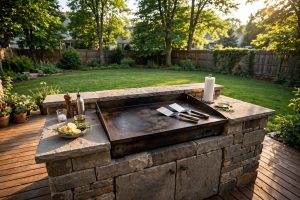
Finding the best outdoor grill for townhouse patio life takes more care than shopping for a big backyard cookout station. A townhouse patio is small. The walls are close. Neighbors sit only a few feet away. Smoke drifts into open windows. Heat builds up fast on a narrow slab of concrete. The right grill gives you real barbecue flavor without filling the whole block with smoke or breaking the rules of your homeowners association.
This guide walks through the whole decision. It explains why patio size and rules shape the choice, what features to look for, which types of grills suit small outdoor spaces, what they cost, how to keep them safe, and how to keep them in good shape for years. The advice follows plain common sense, the kind found in the home guides of the 1980s and 1990s, when a grill was expected to last and a cookout was a simple affair.
Why the Right Grill Matters on a Townhouse Patio
A townhouse patio is not a backyard. Most measure only eight to twelve feet wide. The grill stands close to the house wall, the fence, and the neighbor’s door. Smoke from a charcoal chimney starter will travel straight into someone’s bedroom window. A hot grill near vinyl siding or a wood fence is a real fire risk.
The best outdoor grill for townhouse patio use respects these limits. It heats up fast and holds a steady temperature. It gives off little smoke. It fits in a corner and leaves room for chairs. Many models fold their side tables away when the food comes off. A well-chosen grill also keeps neighbors on good terms, which matters more in a townhouse community than almost anything else.
There is another reason to choose with care. Many townhouses belong to a homeowners association, and many associations write rules about grills. Some allow only gas or electric grills. Some ban charcoal outright. A few set a minimum distance from the building. Before you spend money, read your lease or association handbook. A grill that breaks the rules is money wasted.
What to Look for When You Choose: Best Outdoor Grill for Townhouse Patio
Start with size. Measure your patio before you shop. A grill that is two feet wide and three feet deep can swallow a third of a small patio. Leave at least three feet of clear space on every side of the grill for safe walking. The cooking surface should match how you cook. Two or three burgers at a time need far less space than dinner for eight. A grate of about 300 square inches serves most townhouse cooks well.
Look at the fuel type next. Gas grills light with a push button and reach cooking heat in ten minutes. Charcoal grills take longer and make more smoke, but many cooks love the flavor. Electric grills make almost no smoke at all and suit patios with strict rules. Pellet grills and kamado grills cook well but run large and heavy, so they rarely fit the townhouse pattern.
Weight and wheels matter too. You will move the grill for cleaning, for storms, and for storage in winter. A model with sturdy locking wheels rolls with one hand. Check the build quality as well. A grill made of thick steel or cast aluminum holds heat better and lasts longer than thin sheet metal. The lid should close with a solid feel, not a rattle.
Other features earn their keep. A built-in thermometer in the lid saves you from lifting the lid to check heat. Warming racks hold cooked food while the rest finishes. Grease management systems, found on models from makers like Weber and Char-Broil, pull drippings into a small tray and make cleanup simple. If your patio has no gas line, a standard twenty-pound propane tank must fit in the cabinet or sit beside the grill.
For cooks who want to learn more about the science of heat and smoke, AmazingRibs.com offers deep guides on how different fuels behave. Reviewers at The Spruce Eats test grills in real backyards and write honest reports on build quality and cooking results.
Types of Grills That Suit a Townhouse Patio
Gas Grills
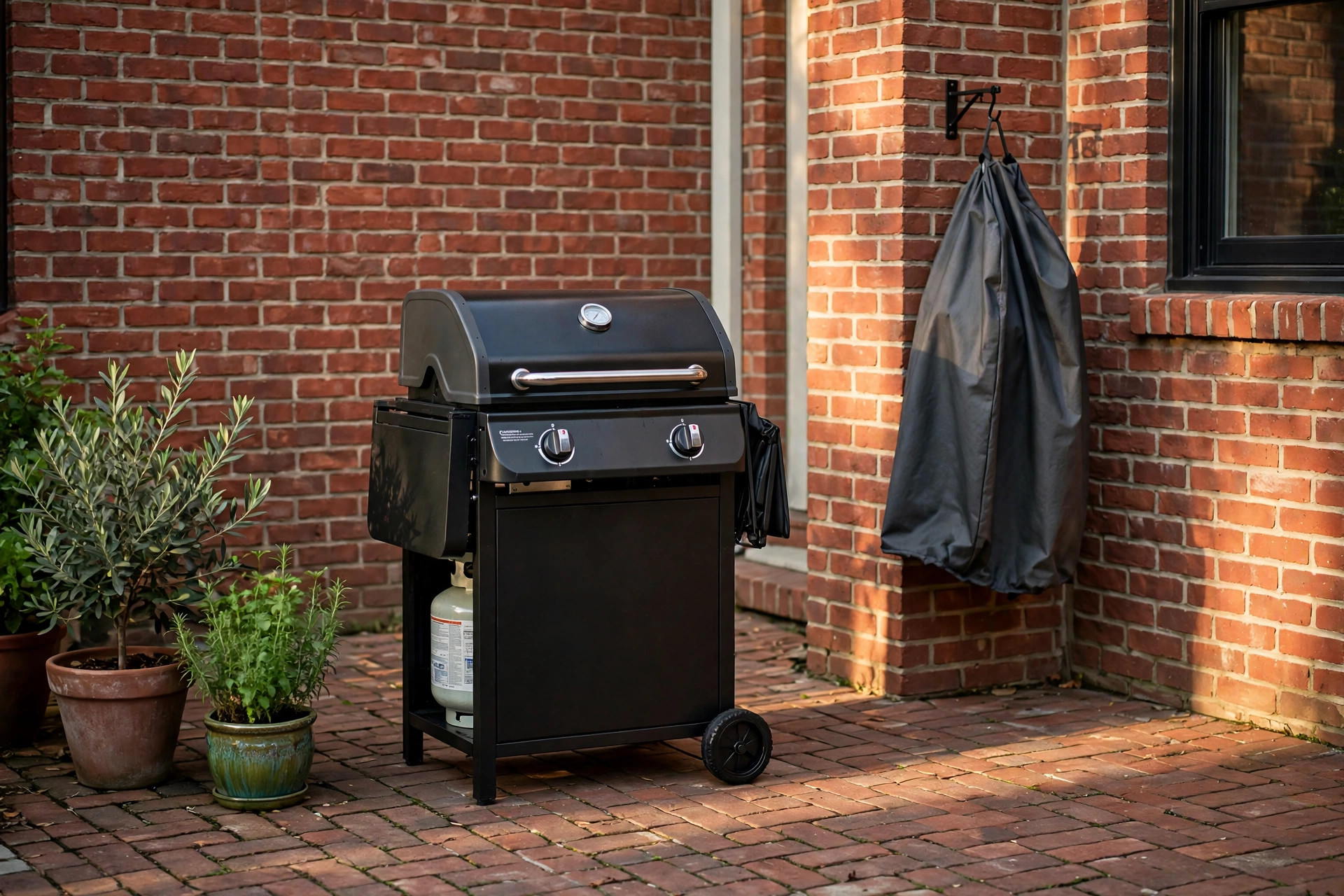
Gas is the most common answer to the townhouse question. A gas grill lights fast, controls heat with a knob, and shuts off just as fast. Smoke stays low. Most models run on a propane tank, which sits under the grill in a neat cabinet. Two-burner models fit tight spaces and cost less than large three-burner units. Brands such as Broil King and Napoleon build compact gas models that punch above their size in heat and build quality.
The main drawback is cost. A good gas grill costs more up front than a charcoal kettle. Propane tanks need refills, and the burners need cleaning each season. Still, for daily use on a small patio, gas wins on ease.
Electric Grills
Electric grills plug into a standard outlet. They make almost no smoke, which makes them the safest choice where rules are tight. Many are tabletop size and sit on a small cart. They reach cooking temperature in minutes and cool down fast. Cooks with a balcony or a covered patio often prefer them. Our guide to the best electric grill for apartment balcony covers similar ground, since balcony and townhouse patios share the same limits on smoke and space.
The trade-off is flavor and heat. Electric grills rarely reach the searing heat of gas or charcoal. They also need a weather-safe outlet, and the cord limits where the grill can stand.
Charcoal Grills
Charcoal brings the classic barbecue taste. Small kettle grills cost little and fit almost anywhere. But charcoal is the smokiest fuel, the slowest to light, and the hardest to control. On a townhouse patio, the smoke can anger neighbors fast. Some associations ban charcoal grills entirely. If your rules allow charcoal and you love the flavor, a small kettle with a lid works, but grill on calm days and keep a spray bottle handy for flare-ups.
Pellet and Kamado Grills
Pellet grills burn wood pellets and add real smoke flavor with push-button ease. Kamado grills, made famous by the Big Green Egg, hold heat for hours and grill, smoke, and bake. Both are excellent cookers. Both are also heavy, wide, and pricey. They suit a large deck better than a small townhouse patio. The Traeger lineup shows what pellet cooking can do, but check the footprint before you buy.
Portable Grills
Portable grills fold up and store in a corner or a closet. They suit cooks who grill once a week and want the patio clear the rest of the time. Our review of the best portable grill for camping reviews looks at models that also work well on small patios. The compromise is cooking space and stability in wind.
Cost and Price: What to Expect
Prices for the best outdoor grill for townhouse patio use span a wide range. A small charcoal kettle costs under one hundred dollars. A decent two-burner gas grill costs between two hundred and five hundred dollars. Premium compact gas models from name brands run five hundred to nine hundred dollars. Electric grills range from one hundred to four hundred dollars.
Do not judge by price alone. A cheap grill with thin metal rusts through in two seasons. A mid-priced grill from a known maker often lasts eight to ten years with basic care. Check what the price includes. Some grills ship with a cover, tools, and a tank gauge. Others charge extra for every item. Independent testers at Consumer Reports rate grills for durability and cooking evenness, which helps you see where the money goes.
Plan for running costs too. A twenty-pound propane tank costs about twenty dollars to refill and lasts roughly twenty hours of grilling. Charcoal costs a few dollars per cook. Electric grills add a small amount to the power bill. Add a quality cover to your budget. A good best grill cover for weber kettle style cover costs thirty to sixty dollars and doubles the life of any grill left outdoors.
Shop at retailers with wide selections and fair return policies. Home Depot stocks gas, charcoal, and electric models in most stores and lets you see the size in person before you buy.
Care and Upkeep
A grill lasts as long as you care for it. The basics take fifteen minutes after each cook. While the grates are still warm, brush them clean with a stiff grill brush. Empty the grease tray before it fills. Wipe the outside with a damp cloth and mild soap. These small habits stop rust and keep food tasting clean.
Once a month during grilling season, do a deeper clean. Remove the grates and flavorizer bars. Scrape the inside of the firebox. Check the burner tubes for clogs, and clear blocked ports with a thin wire. For gas grills, check the hose for cracks and test connections with soapy water. Bubbles mean a leak, and a leaking connection must be fixed before the next cook.
Cover the grill between uses. Sun and rain are the great enemies of steel. A fitted cover keeps water out of the burners and the grease tray. In winter, clean the grill well, cover it, and roll it to a sheltered spot. Some owners in cold states store the propane tank outside the garage, standing upright, away from heat. Never store a tank indoors.
Charcoal users should empty ash after every cook. Ash holds moisture and speeds rust. Electric grill owners should keep the heating element dry and wipe the drip tray after each use. Pellet grill owners must keep pellets dry, since wet pellets swell and jam the feed system.
Safety on a Small Patio
Safety comes first on a townhouse patio because everything sits close together. Keep the grill at least three feet from the house wall, the fence, and any railing. Some fire codes and association rules ask for ten feet from the building, so check your local rules. Never grill in a garage, under a low awning, or on a covered porch with a low ceiling. Heat rises, and a wood ceiling can catch fire long after you notice.
Keep a fire extinguisher or a box of baking soda within reach. Baking soda smothers a grease fire. Water spreads burning grease, so never throw water on a grease fire. Keep children and pets at least three feet from the hot grill. The outside of a grill stays hot for an hour after cooking.
For gas grills, learn the signs of trouble. A yellow or orange flame instead of blue means the burners need cleaning. The smell of gas when the grill is off means a leak. Turn off the tank, move away, and call for help if you cannot find and fix the leak. For charcoal grills, let coals cool fully before you dump them, and dump them only in a metal can. Live coals stay hot for a full day.
Frequently Asked Questions
Can I use a charcoal grill on a townhouse patio?
It depends on your rules. Many townhouse associations ban charcoal because of smoke and fire risk. Some cities ban it too. Check your lease, your association handbook, and your local fire code before you buy. If charcoal is allowed, a small kettle with a lid is the safest choice.
What size grill fits a townhouse patio?
Most townhouse patios suit a grill two to three feet wide. Measure your space and leave three feet clear on all sides. A cooking grate of 300 to 400 square inches handles dinner for four to six. Bigger grills cook more food but crowd a small patio.
Are electric grills allowed where gas is not?
Often yes. Electric grills make almost no flame and almost no smoke, so many associations that ban gas and charcoal still allow them. Read the exact wording of your rules. Some rules ban all grills no matter the fuel.
How do I keep smoke away from my neighbors?
Choose a low-smoke fuel like gas or electric. Grill when the wind blows away from neighboring windows. Keep the lid closed as much as you can, since an open lid lets smoke rise and drift. Trim fat from meat before grilling to cut flare-ups and smoke.
How long should a patio grill last?
A well-built gas grill lasts eight to ten years with regular cleaning and a cover. Charcoal kettles last five to eight years. Electric grills last about five years. Cheap thin-metal grills may fail in two. The cover and the cleaning habit matter more than the brand name.
Should I buy a grill with a side burner?
A side burner heats sauces and side dishes, which is handy on a small patio where kitchen trips are short. But it adds cost and width. Most townhouse cooks do fine without one. If you often cook full meals outside, the burner earns its place.
A Short Final Word
The best outdoor grill for townhouse patio living is the one that fits your space, follows your rules, and matches how you cook. For most townhouse owners, that means a compact two-burner gas grill or a quality electric grill. Both light fast, make little smoke, and store in a corner. Measure your patio, read your association rules, and buy the best build you can afford. Then cook simple food, keep the grill clean, and enjoy the small outdoor room that a townhouse patio can be.
References
AmazingRibs.com. (n.d.). Barbecue and grilling science. https://www.amazingribs.com Big Green Egg. (n.d.). Kamado grills and outdoor cooking. https://www.biggreenegg.com Broil King. (n.d.). Gas and charcoal grills. https://www.broilkingbbq.com Char-Broil. (n.d.). Gas and charcoal grills. https://www.charbroil.com Consumer Reports. (n.d.). Product reviews and ratings. https://www.consumerreports.org Napoleon. (n.d.). Fireplaces, grills, and heating products. https://www.napoleon.com The Home Depot. (n.d.). Home improvement products. https://www.homedepot.com The Spruce Eats. (n.d.). Recipes and cooking guides. https://www.thespruceeats.com Traeger. (n.d.). Wood pellet grills. https://www.traeger.com Weber. (n.d.). Grills and outdoor cooking. https://www.weber.com
Was this guide helpful?

About Sarah Mitchell
The My Garden US editorial team writes practical, in-depth home and garden guides for American homeowners — tested advice, no fluff.